How to Open Multiple AdSense Accounts to Avoid Losing Everything
By JoshWP Team | Updated: | ~40 min read | Multiple AdSense Risk Separation US LLC Channel Protection
You generally cannot open unlimited personal AdSense accounts under the same individual identity. Google’s rules around one personal AdSense account are real, and trying to create duplicate personal accounts is a common path to bans. What many multi-channel businesses do instead is different: they operate separate legal entities (often U.S. LLCs), each with its own EIN, business email, business bank account, and organization AdSense account — then split channels across those entities so one enforcement event is less likely to destroy the entire portfolio.
This guide explains why a single shared AdSense account is a business risk, how entity-based separation works, how creators like Noah Morris (@noahmorris on X) have publicly described multi-AdSense structures after severe channel losses, and the full setup stack: Northwest LLC formation, Payoneer or Wise banking, private U.S. SMS verification, YouTube AdSense change flow, organization AdSense setup, tax forms, and ongoing compliance.
Important: This is risk management through legitimate business structure — not a loophole tutorial. Do not create fake companies, fake owners, shared public SMS inboxes for monetized accounts, or multiple personal AdSense accounts under one person to dodge policy. Google can still enforce against related accounts when it detects abuse, circumvention, or policy violations. Structure reduces concentration risk; it does not make you invincible.
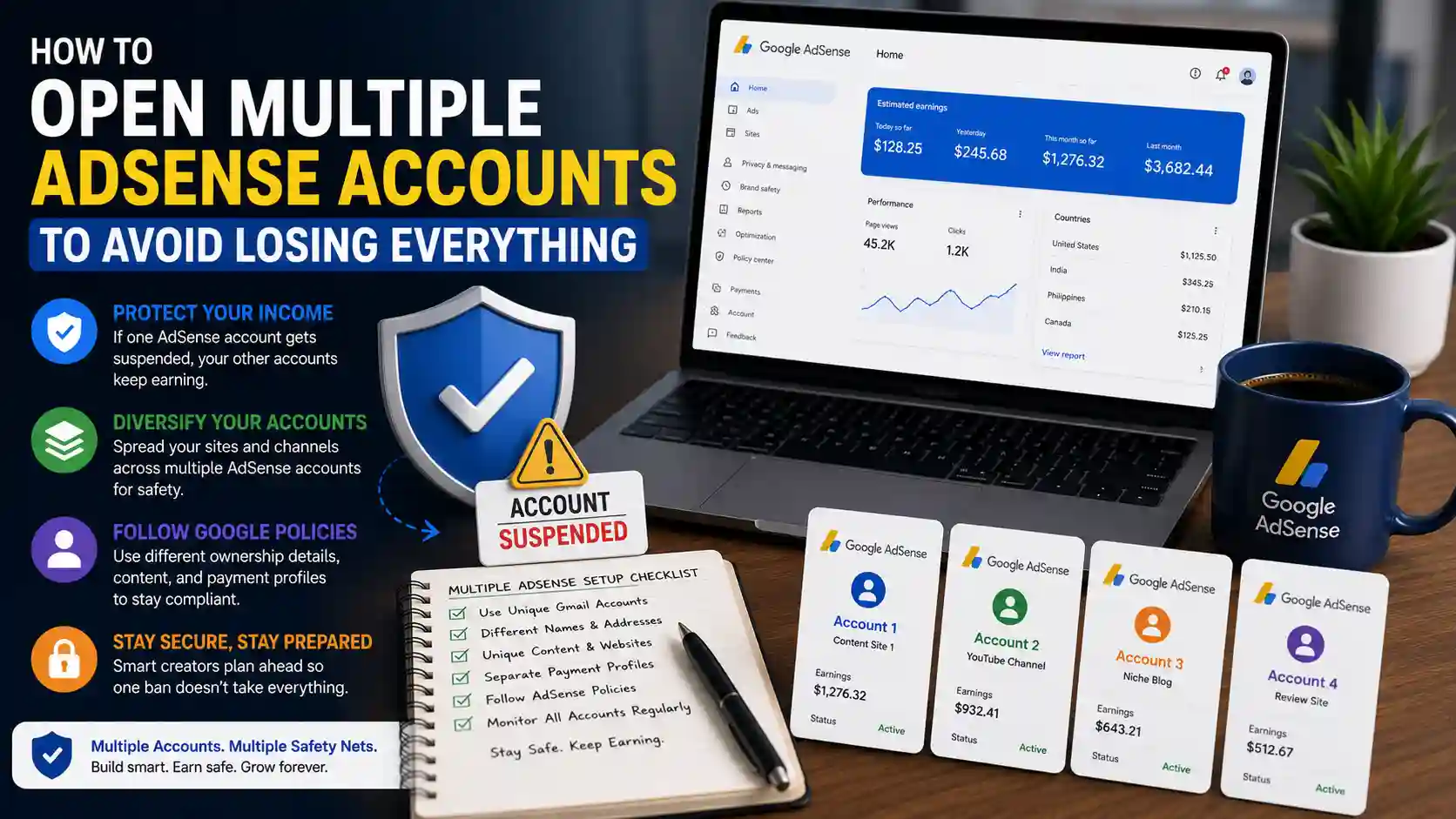
Table of Contents
- Why one AdSense account can wipe everything
- Personal AdSense limits vs business entities
- Real-world wake-up calls (incl. Noah Morris)
- The multi-LLC multi-AdSense structure
- What must stay separate
- Manager email pattern for operations
- Who should (and should not) do this
- End-to-end setup roadmap
- Step 1: Create separate U.S. LLCs with Northwest
- Northwest formation screenshots
- Step 2: EIN for every entity
- Step 3: Bank setup per LLC
- Payoneer vs Wise for multi-entity payouts
- Step 4: Private U.S. SMS per account
- Step 5: Link channels via YouTube
- Step 6: Organization AdSense setup
- AdSense setup screenshots
- Tax forms & annual compliance
- Cost vs risk math
- Charts & statistics
- Mistakes that re-couple your risk
- Master checklist
- FAQs
- Sources
- Affiliate disclosure
Why One AdSense Account Can Wipe Everything
AdSense does not “live” at the individual YouTube video level. Monetization is attached to an AdSense account. When multiple channels share one AdSense account, they share enforcement destiny.
That means a serious problem on Channel A can become a crisis for Channels B, C, and D — even if those other channels never posted the content that triggered review. In severe cases, creators report that disabled ads accounts or terminated channels connected through the same monetization identity take the rest of the portfolio with them.
| Trigger on one channel | What can cascade | Business impact |
|---|---|---|
| Repeated strikes / terminations | Connected channels under same AdSense relationship | Multiple brands offline at once |
| Severe policy enforcement | AdSense account restrictions or disablement | Revenue for every linked property stops |
| False positive automated action | Appeals rejected quickly; slow human review | Cash-flow shock while waiting |
| Shared email ownership graph | Related properties easier to associate | Harder operational isolation |
Automation reality: YouTube moderation is heavily automated. False positives happen. Appeals can be rejected quickly. You cannot fully control that system — so serious operators design structures where one bad day cannot zero the whole company.
Personal AdSense Limits vs Separate Business Entities
A common statement among publishers is: “You can only have one AdSense account.” That idea is directionally true for personal accounts under one individual. Creating multiple personal AdSense accounts for the same person is a classic policy risk.
A company, however, is a separate legal person. When a real LLC applies for AdSense as an organization, Google is not looking at “the same personal AdSense account duplicated.” It is looking at a business entity application with its own legal name, tax identity, and verification trail.
Usually not allowed / high risk
- Multiple personal AdSense accounts under one person
- Fake names or borrowed identities
- Shell “companies” with no real documents
- Public SMS inboxes for monetized recovery
- Circumvention after a prior ban
Legitimate multi-entity approach
- Real LLCs with real formation records
- Separate EINs and business emails
- Separate business bank accounts
- Organization AdSense per entity
- Channels split intentionally across entities
Plain English: Do not “make three personal AdSense accounts.” Build three real businesses if your portfolio needs three risk buckets — then give each business its own monetization account.
For the detailed single-entity AdSense walkthrough (formation through tax forms), use our companion guide: How to Create an LLC for YouTube Channel & Google AdSense.
Real-World Wake-Up Calls (Including Noah Morris)
Serious creators do not invent multi-AdSense structures for fun. They usually adopt them after seeing — or living through — concentration risk.
Scenario A: Multi-channel wipe via shared monetization
A common creator story looks like this: several channels are earning strongly under one AdSense account. One enforcement event hits. Appeals fail fast. Creator support replies are automated. Suddenly monthly AdSense income that felt stable — five figures in some cases — drops to zero because every channel was hanging from the same monetization hook.
Scenario B: Noah Morris on X (@noahmorris)
Creator Noah Morris (X: @noahmorris) has publicly discussed large revenue damage after false strikes and the cascading risk of shared AdSense association. In posts and creator discussions around his situation, a key theme appears repeatedly:
- Channel-level attacks or strikes can become existential if monetization is centralized.
- When a channel is terminated, related channels tied through the same AdSense relationship can be exposed.
- Operators respond by running multiple AdSense accounts under a cleaner ownership/operations design.
- Some operators describe a holding LLC + subsidiary LLCs pattern, each with its own AdSense.
- A separate manager email can be added to channels for operational access without making that email the owner of every property.
Why this matters: Noah’s public discussion is useful because it translates abstract “risk separation” into creator language: if everything shares one AdSense pipe, one strike sequence can threaten the whole business. Structure is how media companies think — not how hobby channels think.
| Lesson | Operational response |
|---|---|
| AdSense is a shared risk surface | Split channels across separate organization accounts |
| Appeals can be slow or automated | Design so one loss is survivable |
| Email graphs matter | Separate owner emails; use manager roles carefully |
| Legal entities create clean boundaries | One LLC → one bank → one AdSense → subset of channels |
The Multi-LLC Multi-AdSense Structure Explained
Here is the model used by many multi-channel operators. You remain the ultimate owner. Under you sit multiple LLCs (directly or under a holding company). Each LLC has its own AdSense account and receives payouts into its own business bank account. Channels are distributed across those AdSense accounts.
Why this creates separation
- Each AdSense account is an organization account belonging to a distinct legal entity.
- Each entity has its own tax ID (EIN) and payment destination.
- Channel groups are isolated into risk buckets.
- A failure in Bucket A is less likely to automatically zero Bucket B and Bucket C — though related-party enforcement can still happen in abuse cases.
Build Risk Buckets Before You Scale Further
If you already have multiple channels under one AdSense account, start by forming the next LLC and moving only new or lower-risk channels first. Do not panic-migrate everything overnight without a plan.
What Must Stay Separate Across AdSense Risk Buckets
Half-separation is how creators re-create the same single point of failure with extra paperwork. If two “separate” AdSense accounts still share the same Gmail owner graph, same personal bank, and same recycled documents carelessly, isolation is weaker.
| Layer | Keep unique per LLC / AdSense | Why |
|---|---|---|
| Legal entity | Company name, formation docs, registered agent file | Creates the legal person Google evaluates |
| Tax ID | EIN per entity | Business identity for banking and tax forms |
| Google identity | Business Google account not already tied to another AdSense | AdSense attaches to a Google identity |
| Owner email per entity / channel ownership plan | Email is a major association graph edge | |
| Banking | Business account in the LLC name | Payouts should match the organization |
| Phone | Stable private number strategy per account | Verification + recovery security |
| Channels | Assigned only to one risk bucket | This is the actual isolation of revenue streams |
Manager Email Pattern: Convenience Without Re-Coupling Ownership
One operational pattern discussed by multi-channel operators (including structures similar to what Noah Morris has described publicly) looks like this:
- Each channel has an owner Google account aligned with its risk bucket.
- Each LLC has its own AdSense organization account.
- A separate fourth (or central) Google account is added as a Manager on multiple channels.
- Day-to-day team work happens through manager access.
- The manager account is not used as the universal AdSense owner for everything.
Why this helps: You can still run the portfolio from one operational login while keeping legal ownership and AdSense accounts separated. Convenience does not have to mean “one AdSense for all channels.”
Do not over-share: If your manager account is also the payment owner, recovery owner, and AdSense login for every entity, you have rebuilt a single point of failure at the identity layer. Keep roles intentional.
Who Should (and Should Not) Open Multiple AdSense Accounts This Way
Strong fit
- Operators with multiple monetized channels
- Networks earning enough that one wipe is catastrophic
- Creators planning brand-safe niche diversification
- Teams ready to maintain annual LLC compliance
- Founders willing to keep real bookkeeping per entity
Probably wait
- One small channel still testing product-market fit
- Anyone unwilling to pay formation + agent renewals
- People seeking “ban evasion” after policy enforcement
- Operators who will reuse one Gmail/bank for every LLC
If you only need one clean LLC + AdSense setup first, start with the single-entity guide and expand later: LLC for YouTube & AdSense.
End-to-End Setup Roadmap (Repeat Per Risk Bucket)
Every additional AdSense risk bucket is basically the same stack, repeated cleanly.
Form a new U.S. LLC
Unique name, registered agent, formation docs via Northwest or another reputable provider.
Get a unique EIN
One EIN per entity. Store the confirmation letter with that entity’s vault.
Open business banking
Payoneer, Wise, Mercury, Relay, or a traditional business bank — in the LLC name.
Prepare phone verification
Use a private, stable number strategy. Avoid public shared SMS inboxes for monetized accounts.
Create organization AdSense
New Google identity → United States → Organization → LLC legal name → verify everything.
Assign channels to the bucket
Link only the planned channel set. Keep owner email and manager roles intentional.
Watch: Video Guide
Recommended watch: This video provides a helpful walkthrough of How to Open Multiple AdSense Accounts and complements the information covered in this guide. It’s a useful resource if you prefer a visual explanation before or after reading the article.
Create Separate U.S. LLCs with Northwest Registered Agent
The foundation of multi-AdSense separation is multiple real entities — not multiple logins. For most online creators, U.S. LLCs are popular because formation can be done remotely, Google accepts U.S. organization accounts, and banking options exist for both residents and many non-residents.
Popular remote-friendly states often discussed by online founders include Wyoming and New Mexico (privacy and maintenance profiles differ; confirm current fees and reporting rules). U.S. residents who operate primarily in one state should usually consider home-state formation first to avoid dual compliance surprises.
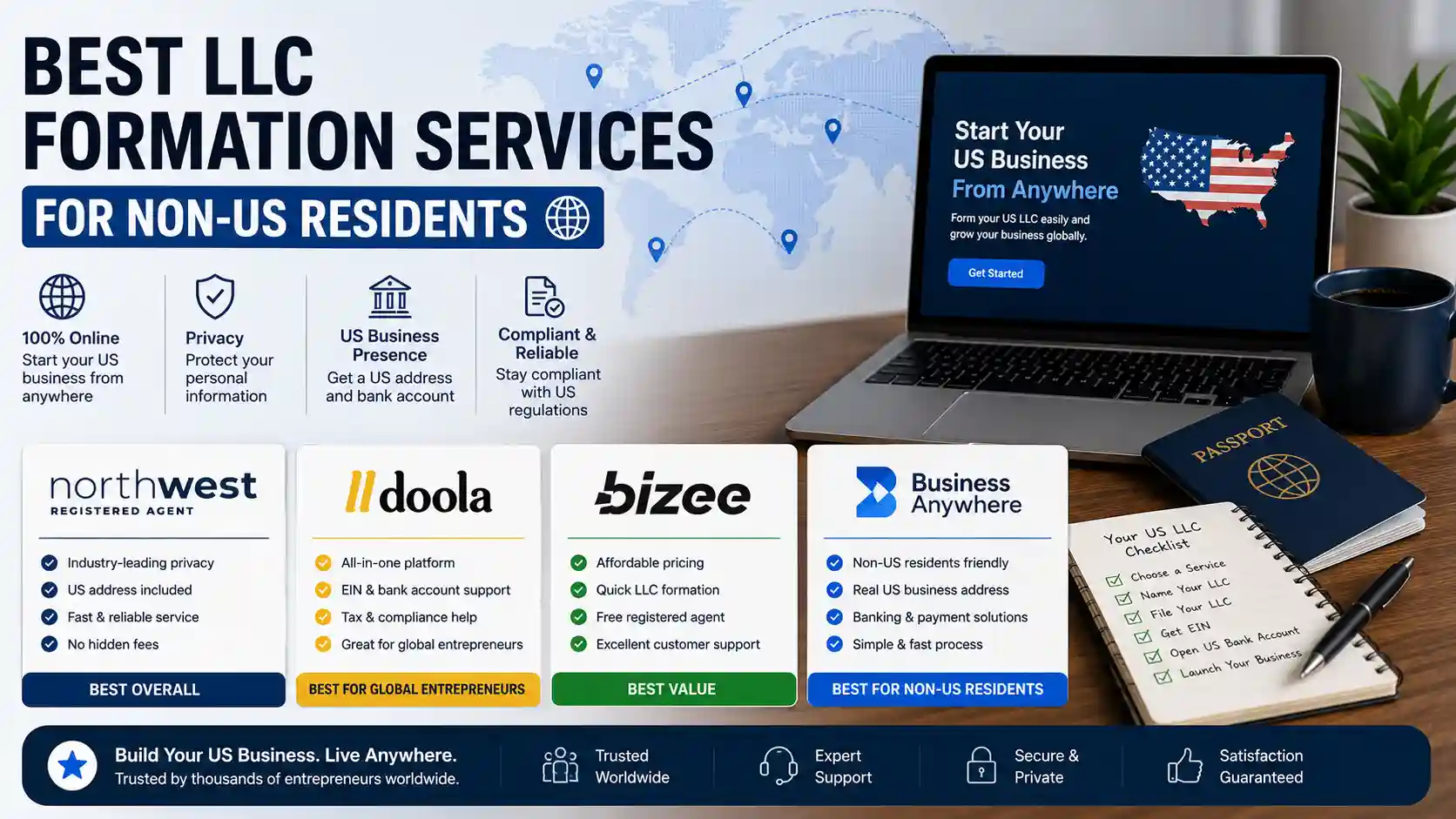
Northwest Registered Agent is a practical formation + registered agent provider for repeating this process cleanly across entities. Read the Northwest Registered Agent review, compare options in our best LLC formation services for non-US residents guide, or evaluate Doola if you want an alternative formation/compliance style.
Rules when forming multiple LLCs
- Use a different legal name for each entity.
- Use a different business email for each entity’s admin identity.
- Keep separate document folders (Articles, EIN, bank KYC pack, AdSense IDs).
- Budget for registered agent renewals on each entity every year.
- Do not form five LLCs on day one if you only have one channel — scale the number of buckets to real portfolio risk.
Form the Next Risk Bucket
Each additional LLC is an insurance layer for channel groups that should not share one AdSense fate.
Northwest Formation Screenshots (Repeat for Each LLC)
Use this flow once per entity. The goal is not speed-clicking — it is creating a clean, documentable company that can later own an AdSense organization account and a business bank profile without contradictions.
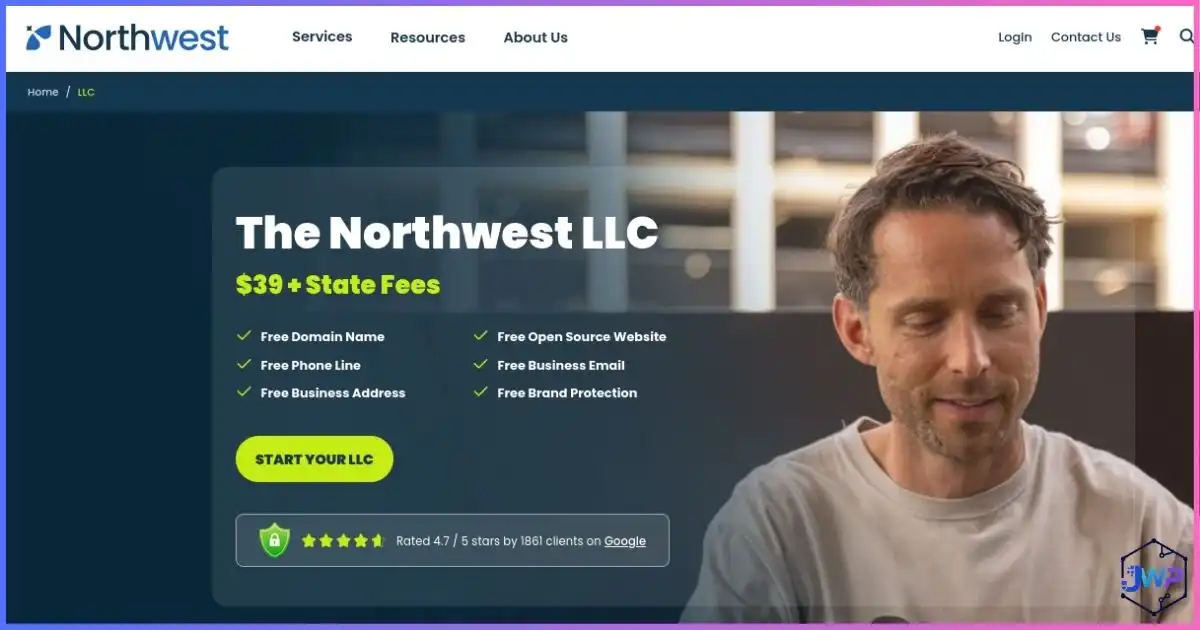
1) Northwest homepage
Start formation from Northwest’s homepage when you are ready to create a new legal entity that will become one AdSense risk bucket.
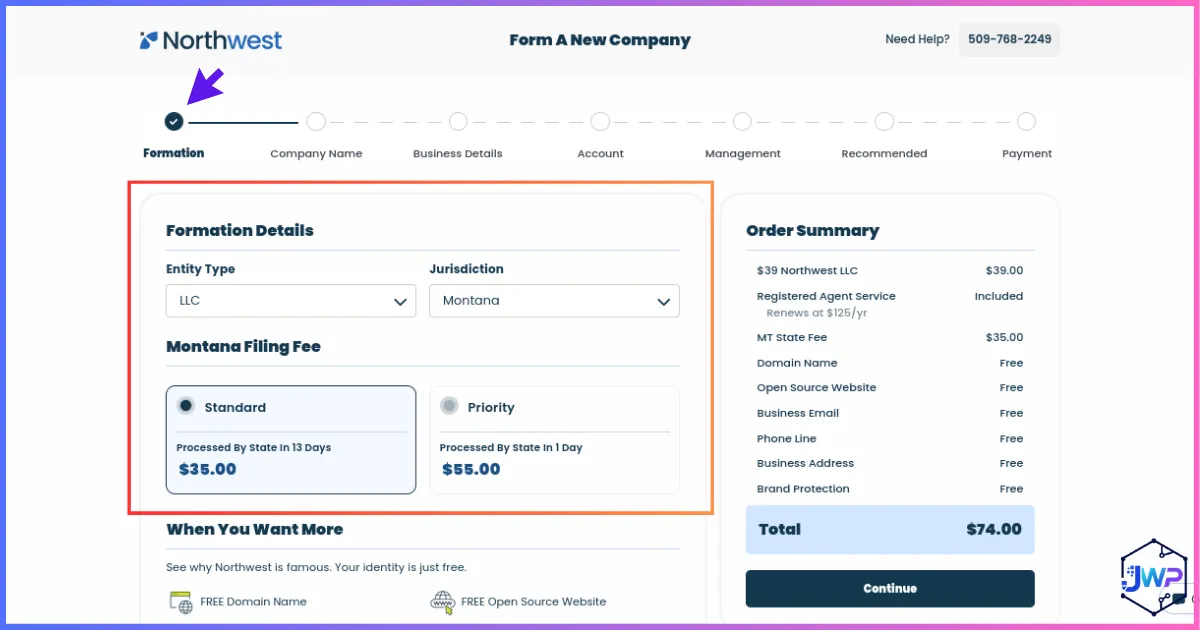
2) Formation details
Select LLC and your formation state. For multi-entity setups, stay consistent in process quality even if state choice differs by strategy.
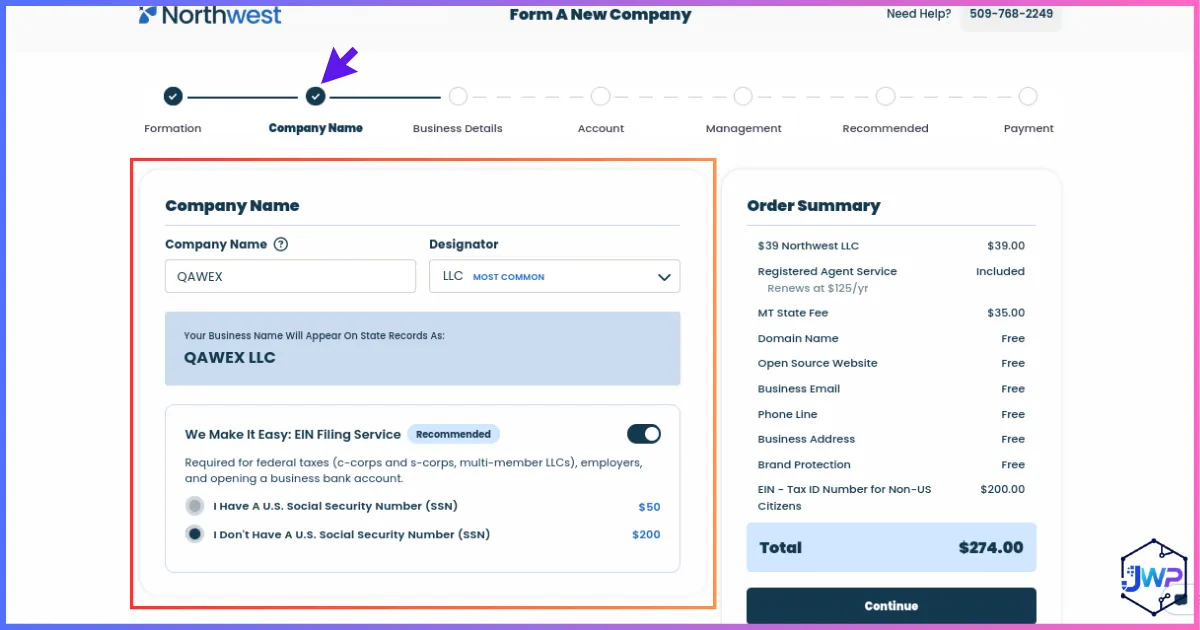
3) Company name + EIN option
Pick a unique name not reused across your portfolio. EIN assistance is often worth it for non-U.S. founders repeating this process for several companies.
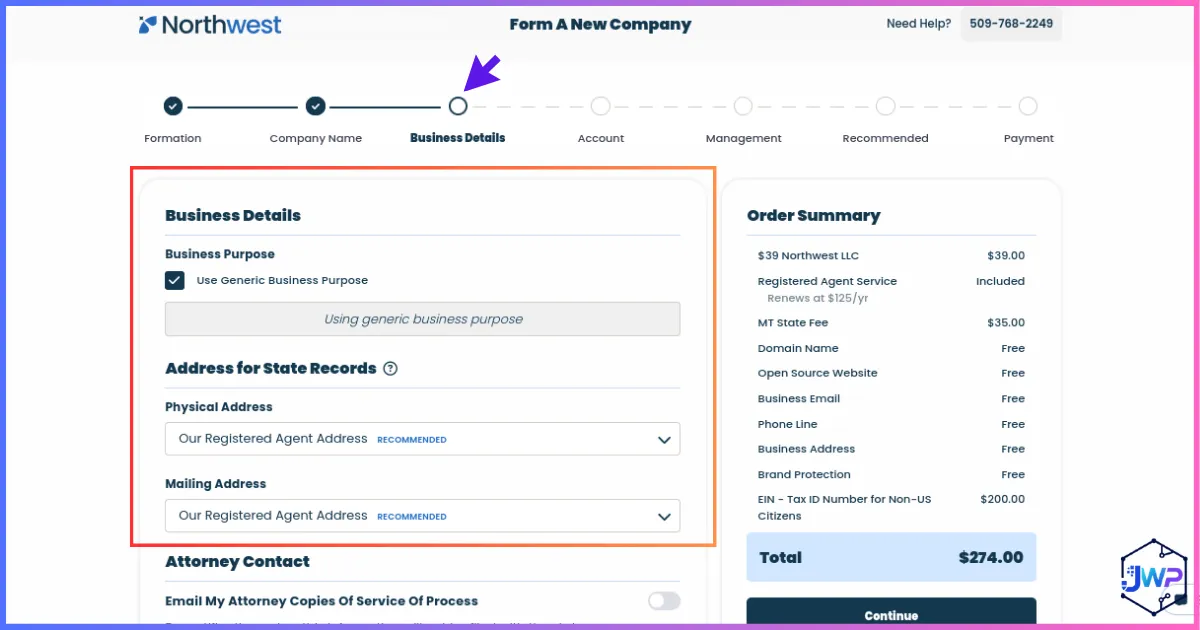
4) Business details
Describe the business accurately (digital media, content production, advertising). Keep descriptions aligned with the channels that will sit under this entity.
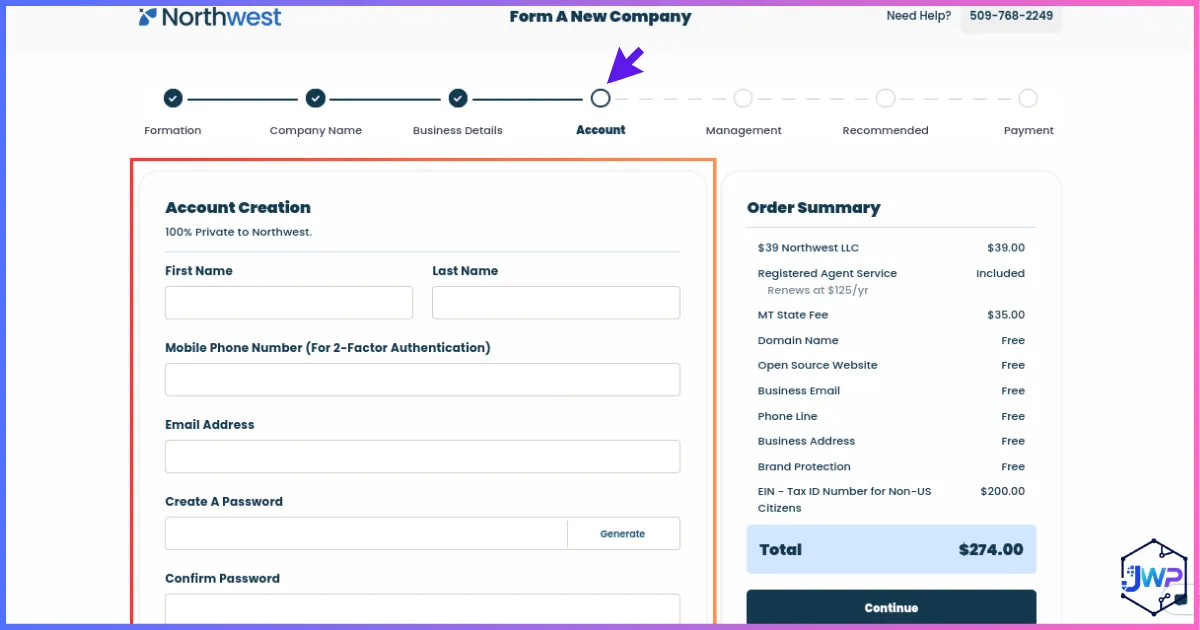
5) Account creation
Create or use the provider login carefully. For multi-LLC operators, maintain a password manager vault labeled by entity.
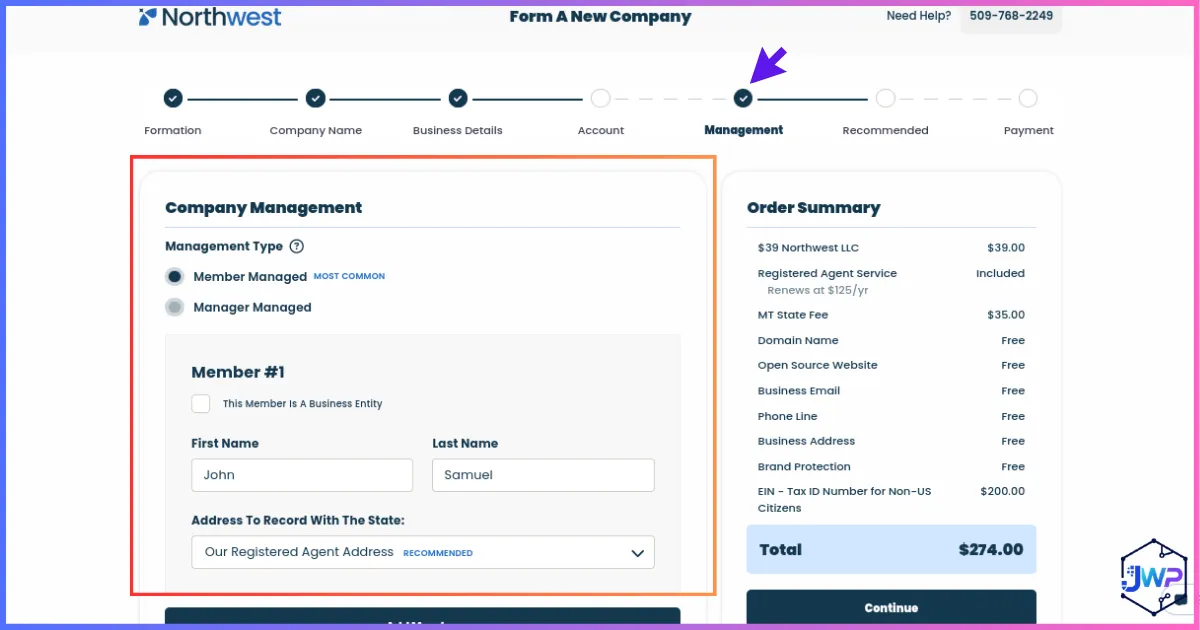
6) Company management details
Ownership/management data should match bank KYC and AdSense beneficial-owner reality. Inconsistencies across entities invite reviews.
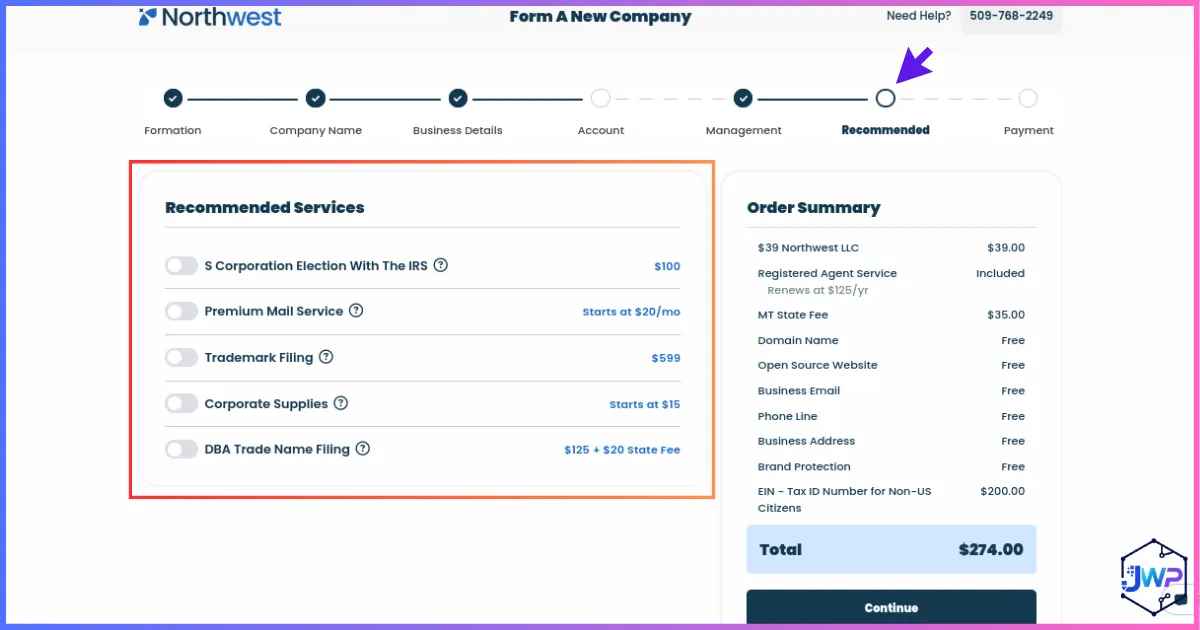
7) Optional services
Buy what you will use (often EIN help). Skip noise add-ons that do not improve AdSense separation.
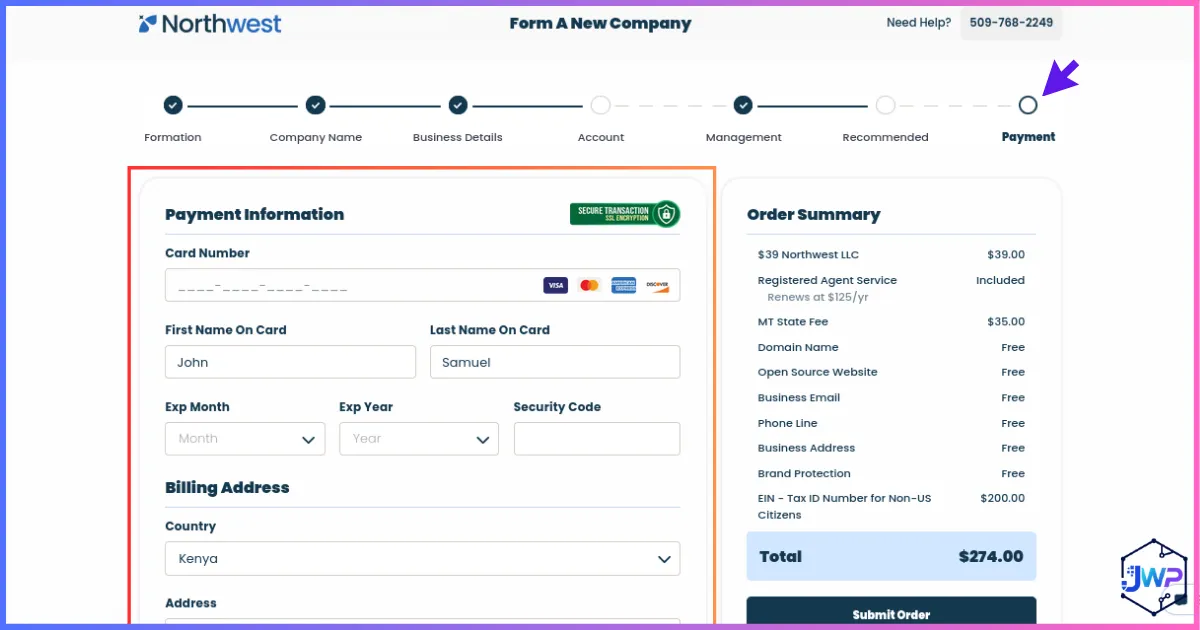
8) Payment information
Pay state and service fees, save the receipt under that LLC’s folder, and track the annual agent renewal date immediately.
Get a Unique EIN for Every Entity
An EIN is the federal tax identifier for each LLC. In a multi-AdSense design, reusing one tax identity across “separate” accounts destroys the point of separation.
- LLC 1 → EIN 1 → Bank 1 → AdSense 1
- LLC 2 → EIN 2 → Bank 2 → AdSense 2
- LLC 3 → EIN 3 → Bank 3 → AdSense 3
| Method | Best for | Notes |
|---|---|---|
| Formation provider EIN service | Non-U.S. founders, busy operators | Extra cost; reduces process friction |
| IRS channels (online/phone/fax/mail as eligible) | Applicants who meet IRS criteria | Follow current SS-4 instructions exactly |
Never invent an EIN or recycle another company’s tax ID. Banks and Google verification are not the place for creative writing.
Business Bank Setup: One Account Per LLC
Each organization AdSense account should pay out into a bank or receiving account that matches the LLC. Shared personal bank accounts across entities re-couple your financial identity and create bookkeeping chaos.
Common options
- U.S. residents: Traditional business checking (national/regional banks, credit unions).
- Non-U.S. operators: Payoneer, Wise, Mercury, Relay, and similar platforms (eligibility varies).
Full setup walkthroughs:
- How to Open a Payoneer Account
- How to Open a Wise Account
- How to Create a US PayPal Account as a Non-US Resident (for brand-deal payout stacks)
Open Banking Rails for Each Risk Bucket
If you are building three AdSense entities, plan three banking profiles — not one personal account with three nicknames.
Payoneer vs Wise for Multi-Entity Creator Payouts
| Factor | Payoneer | Wise Business |
|---|---|---|
| Multi-entity ops | Useful receiving stack for online businesses | Strong multi-currency business accounts |
| Creator fit | Marketplaces, clients, publisher payouts | FX-heavy teams moving money across borders |
| Documentation | LLC docs + ID + business profile per account needs | LLC docs + ID + business profile per account needs |
| Separation tip | Do not casually reuse one profile for every LLC if policies require entity match | Keep entity naming and ownership consistent with formation docs |
| Deep guide | Payoneer guide | Wise guide |
Private U.S. SMS Verification for Each Organization AdSense
U.S. AdSense organization setup commonly requires a U.S. phone number for verification and recovery. For multi-account operators, phone strategy matters because recovery access is part of account security — and shared public inboxes are a terrible fit for revenue accounts.
Do not use public shared SMS numbers for monetized AdSense accounts. Anyone can read those messages. Use private dedicated numbers you control.
A practical option is Receive-SMS.com. Rent a private number, receive the Google code, complete verification, and store number ownership credentials in your entity vault.
Discount code: JOSHWP — use where supported at checkout on Receive-SMS.com.
Link YouTube Channels to the Correct AdSense Risk Bucket
When moving a channel onto a new organization AdSense account, use YouTube Studio’s Partner Program change flow so the association is intentional.
Critical: You generally cannot convert an existing personal AdSense account into an LLC organization account. Create a new AdSense under a Google identity that is not already linked to AdSense, then associate the channel through the change flow.
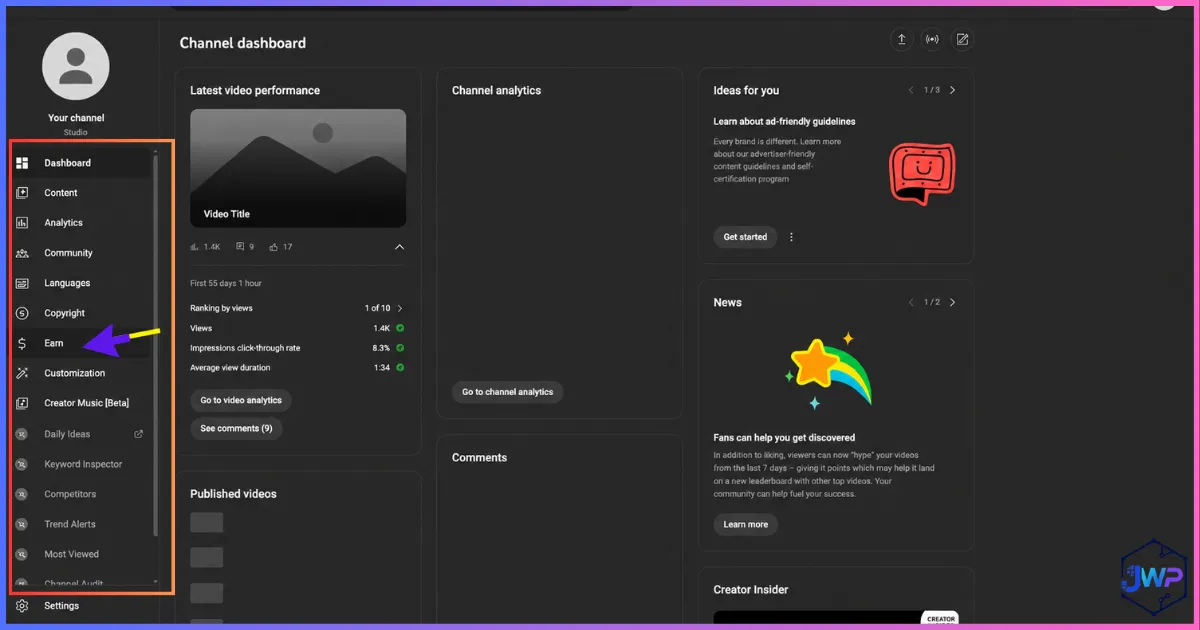
Open Earn in YouTube Studio
Go to YouTube Studio → Earn. This is where monetization status and AdSense association are managed for the channel you want to isolate into a new risk bucket.
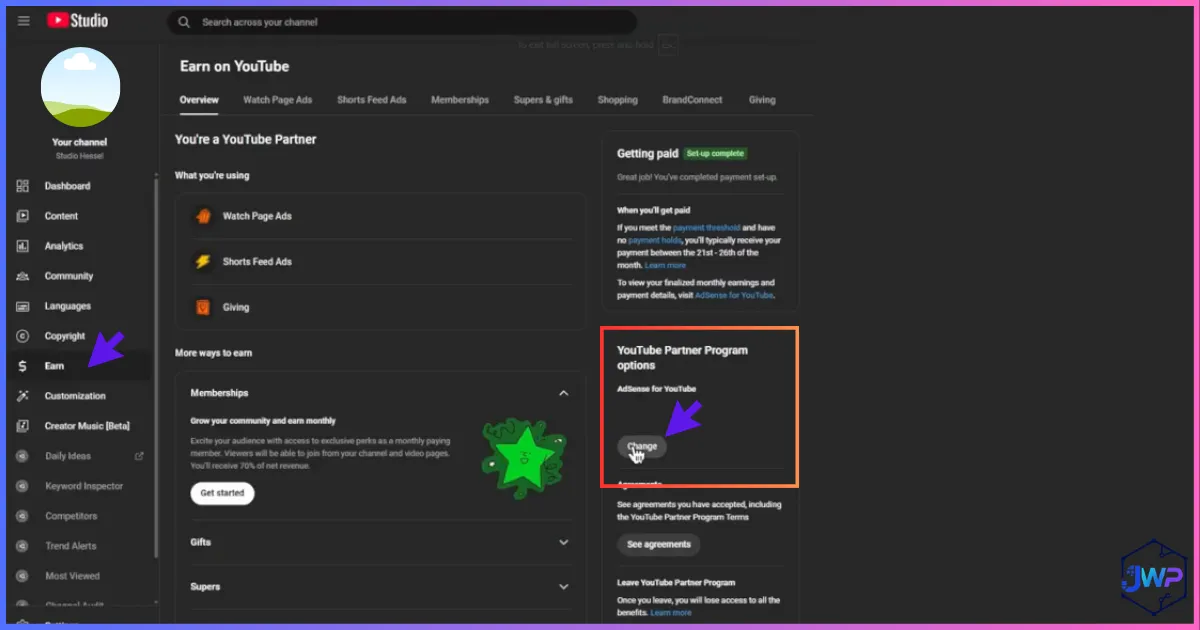
Partner Program → Change AdSense
Open Partner Program options and choose to change the AdSense account. This is how you attach the channel to a different organization AdSense instead of the old shared one.
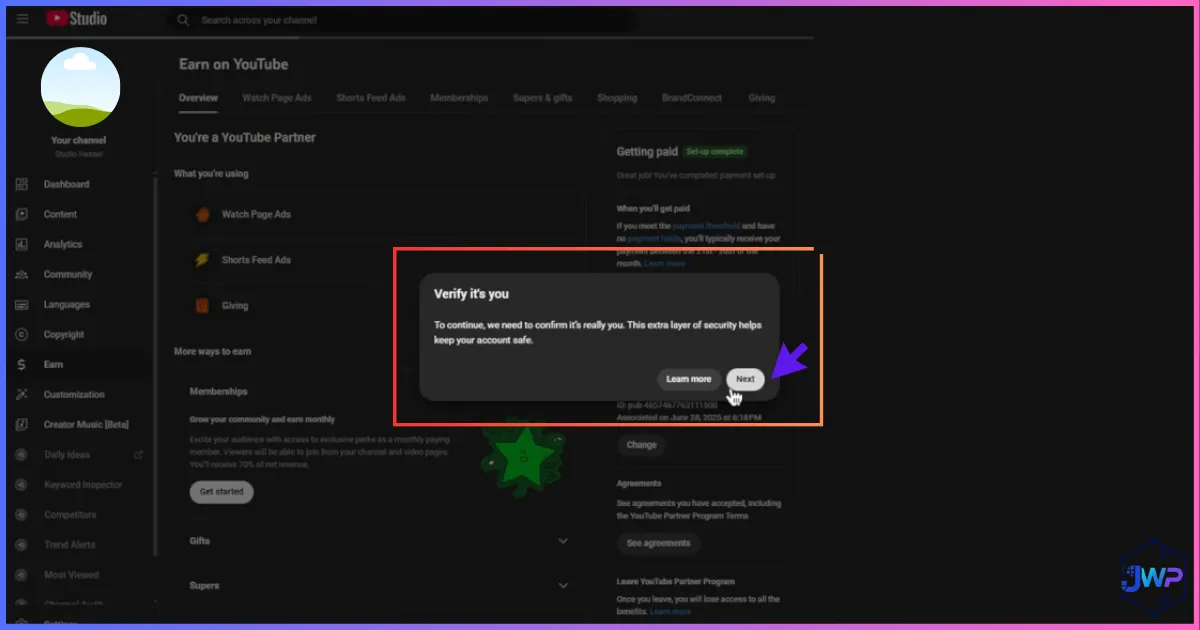
Verify identity and continue
Confirm it is you, then sign in with the Google identity that should own the new organization AdSense for that LLC. Do not reuse a Google account already tied to another AdSense.
Organization AdSense Setup for Each LLC
Repeat this carefully for every entity. Rushing creates typos that later look like fraud signals.
- Start from the YouTube change flow (preferred) or the correct association path for your property.
- Use a Google account not already linked to AdSense.
- Select billing country: United States for a U.S. LLC organization account.
- Choose account type: Organization.
- Enter the exact legal LLC name (include “LLC”).
- Enter contact person details that match reality.
- Use a coherent address strategy (U.S. residents: receivable address; non-residents: registered agent / documented mailing plan).
- Verify with a private U.S. phone number.
- Submit for review and wait for approval.
- Complete identity verification if requested.
- Complete address PIN verification when triggered.
- Add the matching business payment method.
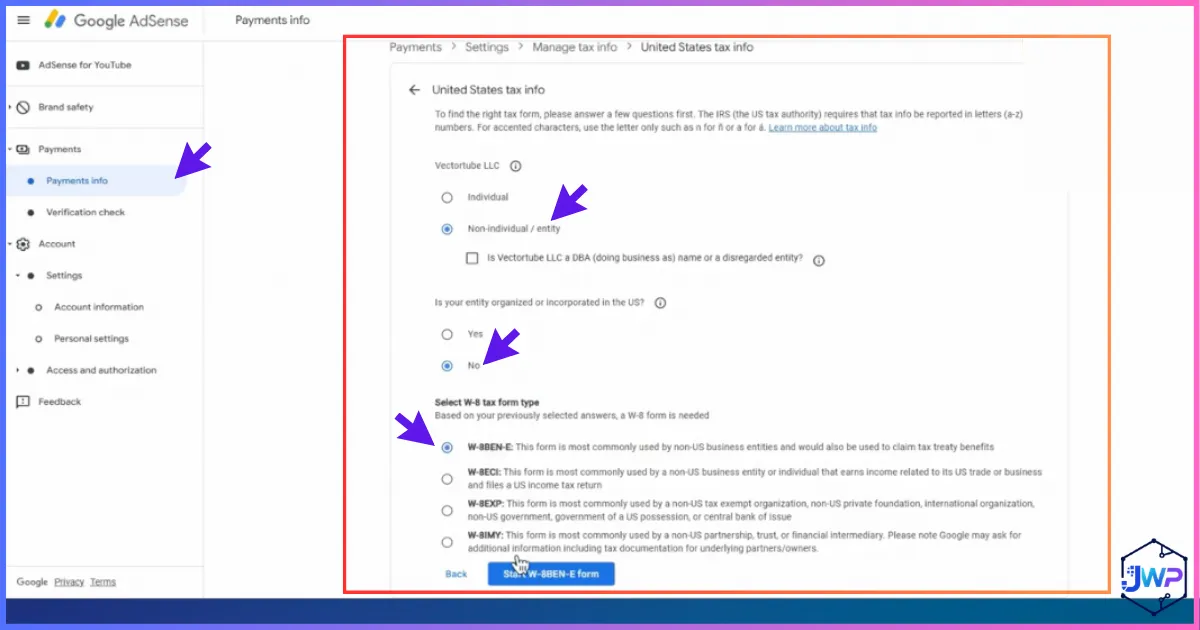
- Submit tax info (W-9 or W-8BEN-E path as applicable).
- Assign only the planned channels to this AdSense bucket.
Need Docs or Phone Before AdSense?
Finish entity + banking + private SMS first. AdSense is the last major brick, not the first.
Google AdSense Setup Screenshots (Organization Account)
These screens apply each time you stand up a new LLC-backed AdSense risk bucket. Treat every field as part of your separation architecture.
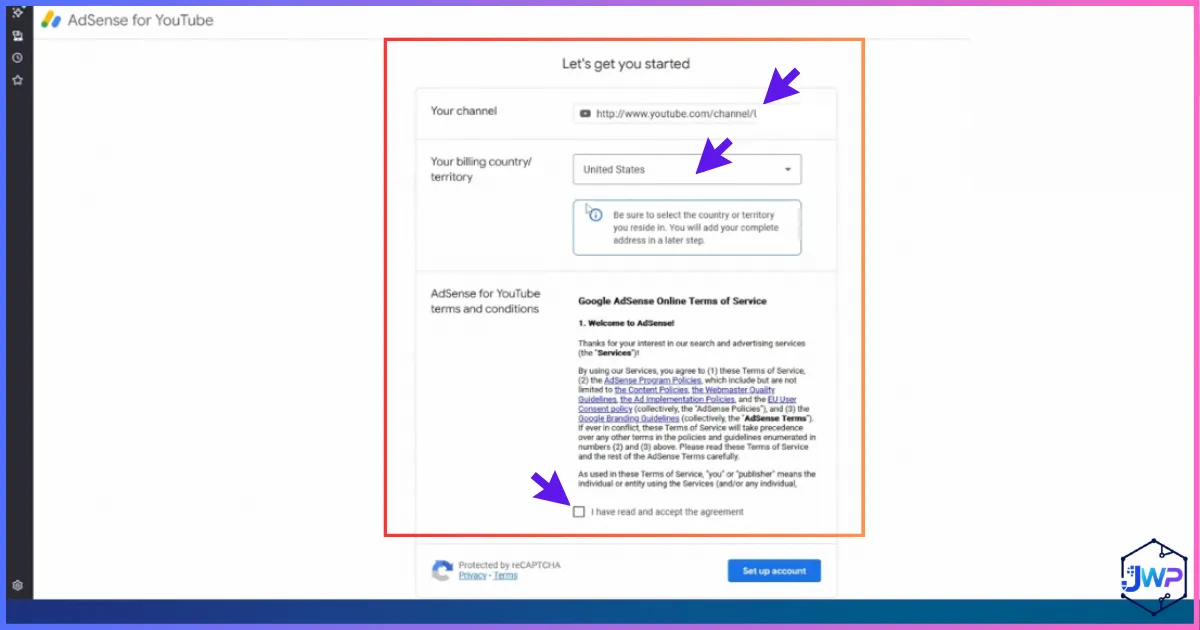
Step 1 — Channel AdSense setup
Confirm the correct YouTube channel is entering setup. In multi-channel networks, linking the wrong channel to the wrong bucket is an expensive mistake.
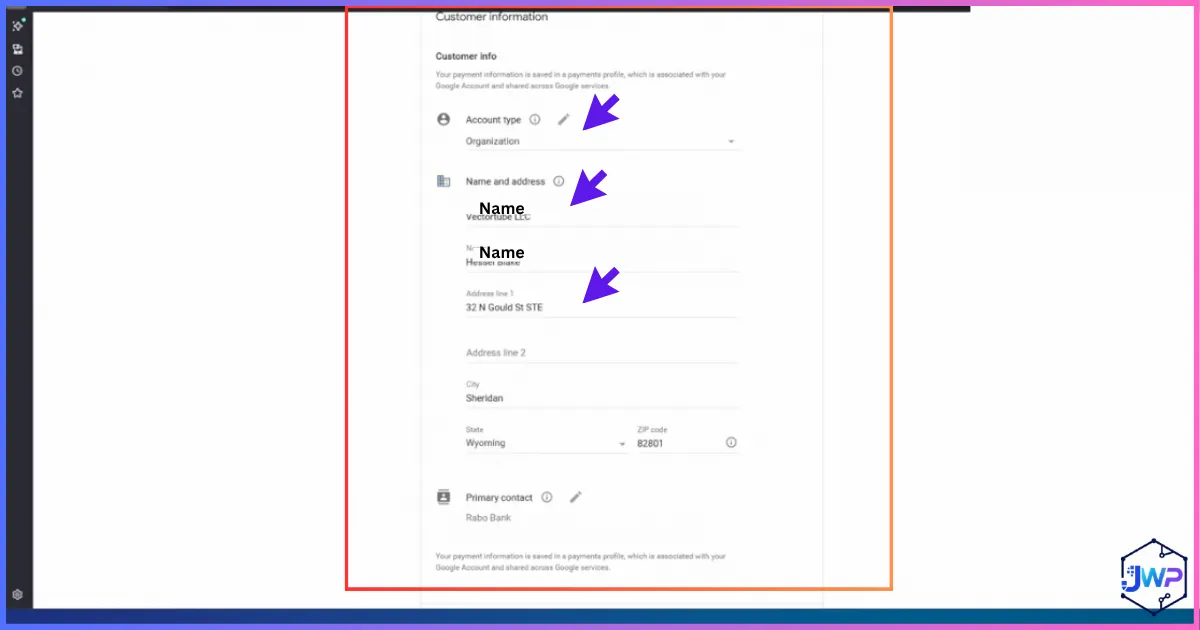
Step 2 — Contact information
Enter organization details that match formation documents for this LLC only — not a sister entity’s name.
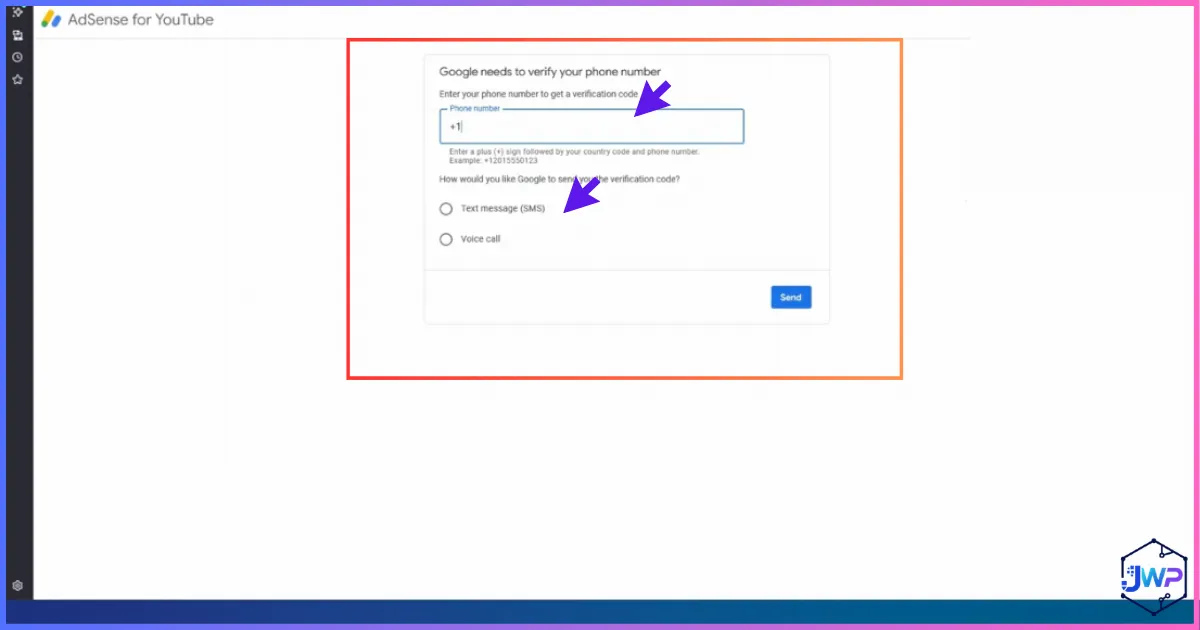
Step 3 — U.S. phone verification
Verify with a private U.S. number controlled by your team. Record which number belongs to which AdSense entity.
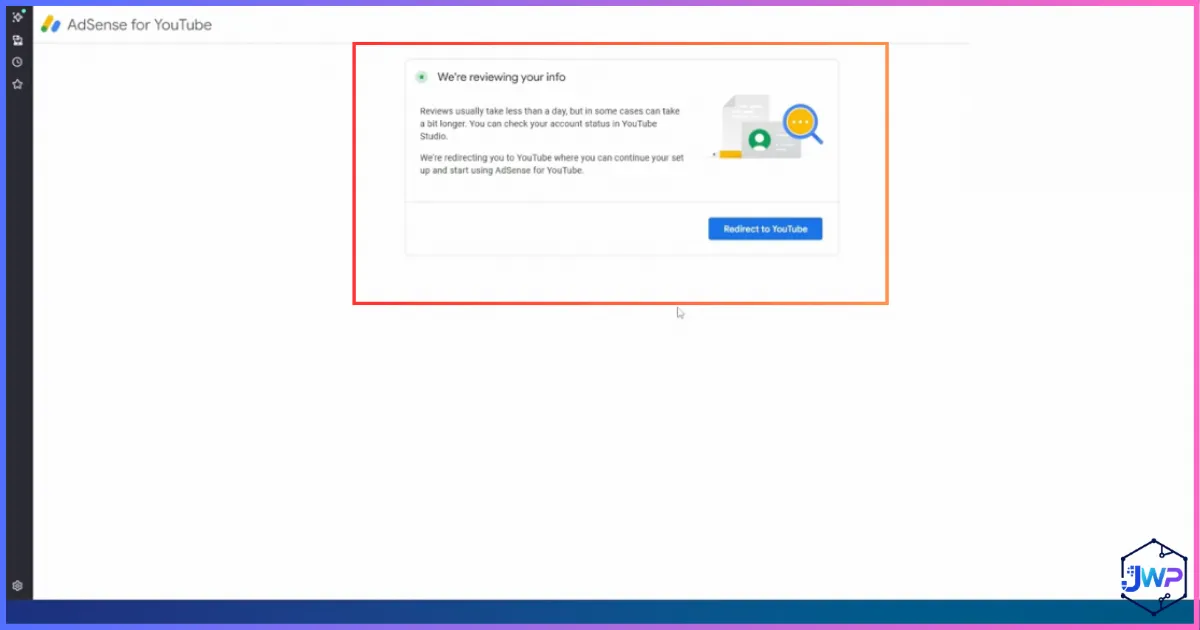
Step 4 — Submitted for review
Wait for review. Do not open duplicate applications for the same entity while pending.
Step 5 — Approved dashboard
After approval, label this publisher account internally (e.g., “LLC 2 / Niche B”) so your team never deposits the wrong channels into it.
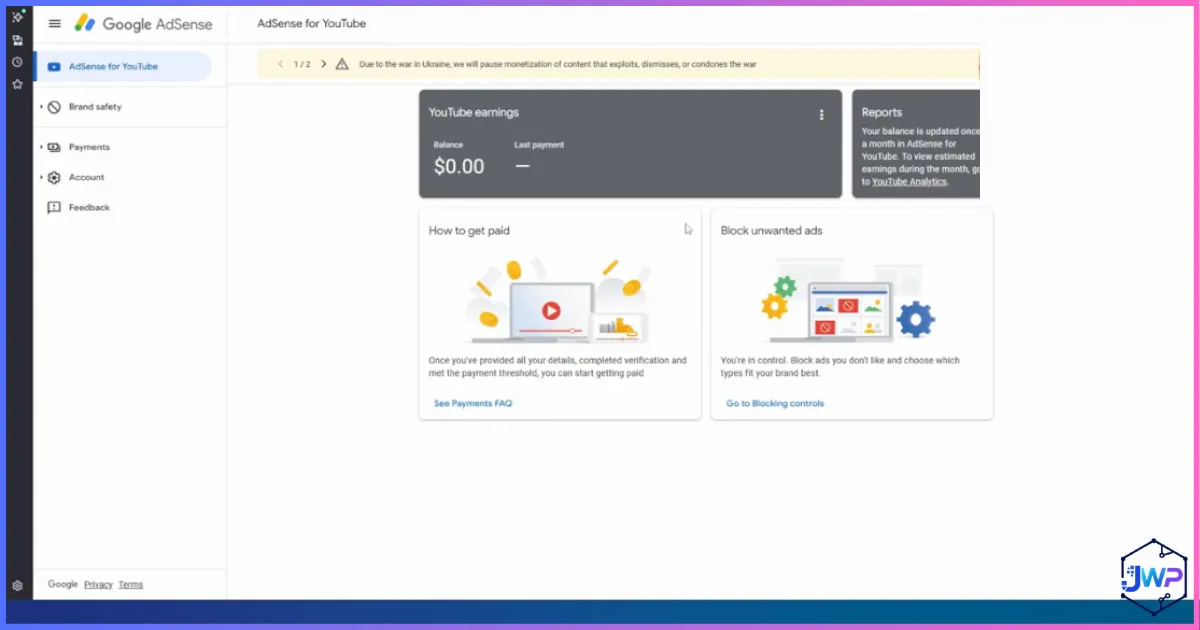
Step 6 — Identity verification
Upload government ID for the controlling individual when requested. Multi-entity operators should expect identity checks more than once across the portfolio.
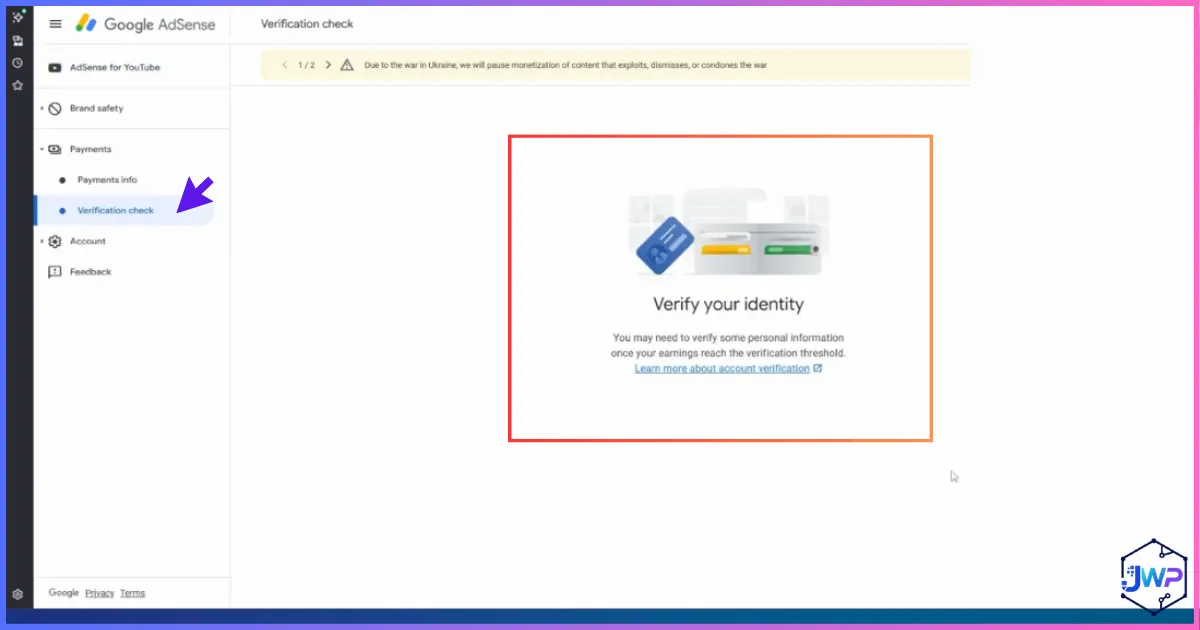
Step 7 — Identity email
Monitor the correct business inbox. Mixed inboxes across LLCs are how verification emails get missed.
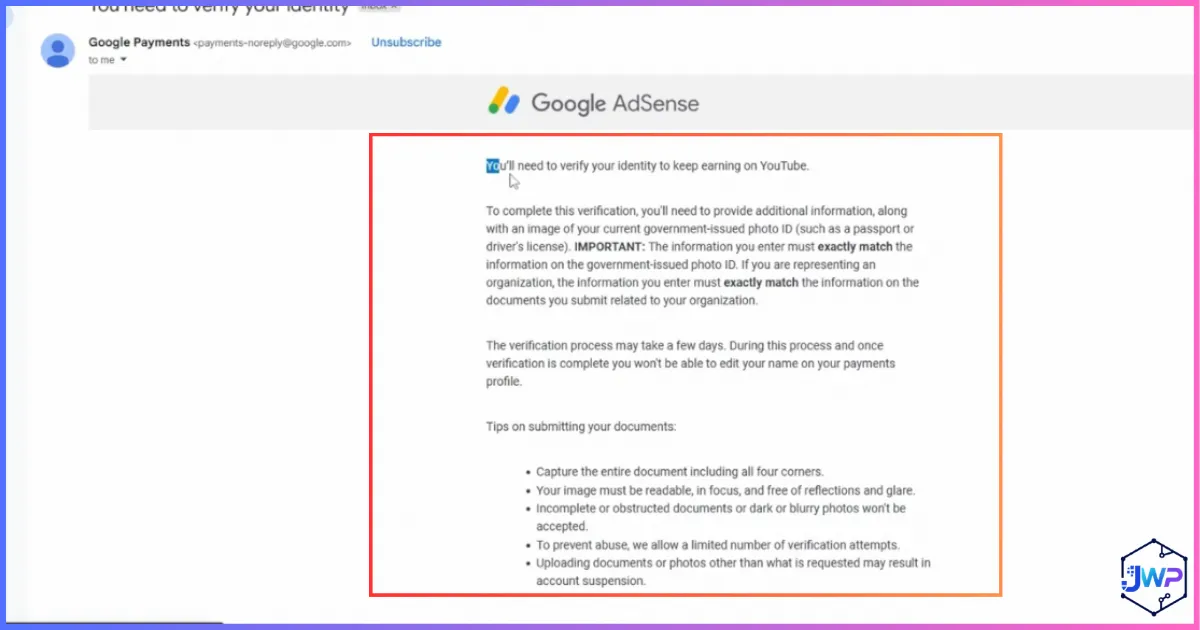
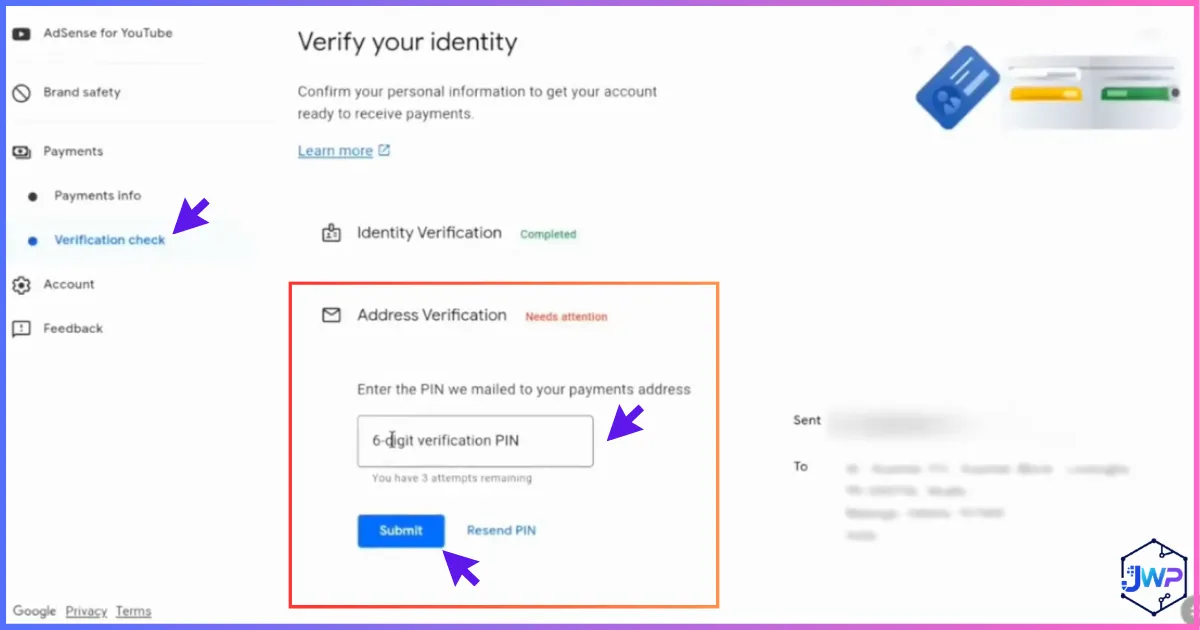
Step 8 — Address verification threshold
PIN mailers often appear as payout readiness approaches. Plan mail handling separately if entities use agent addresses.
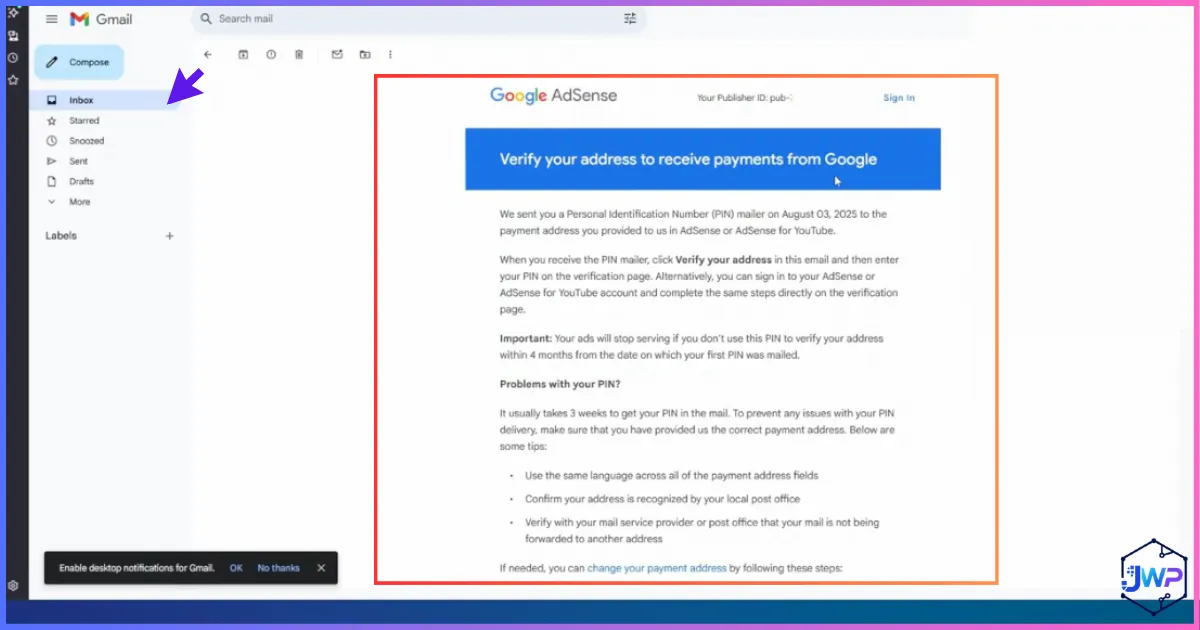
Step 9 — Enter PIN
Enter the 6-digit PIN for the correct AdSense account. PIN mix-ups across entities create unnecessary support loops.
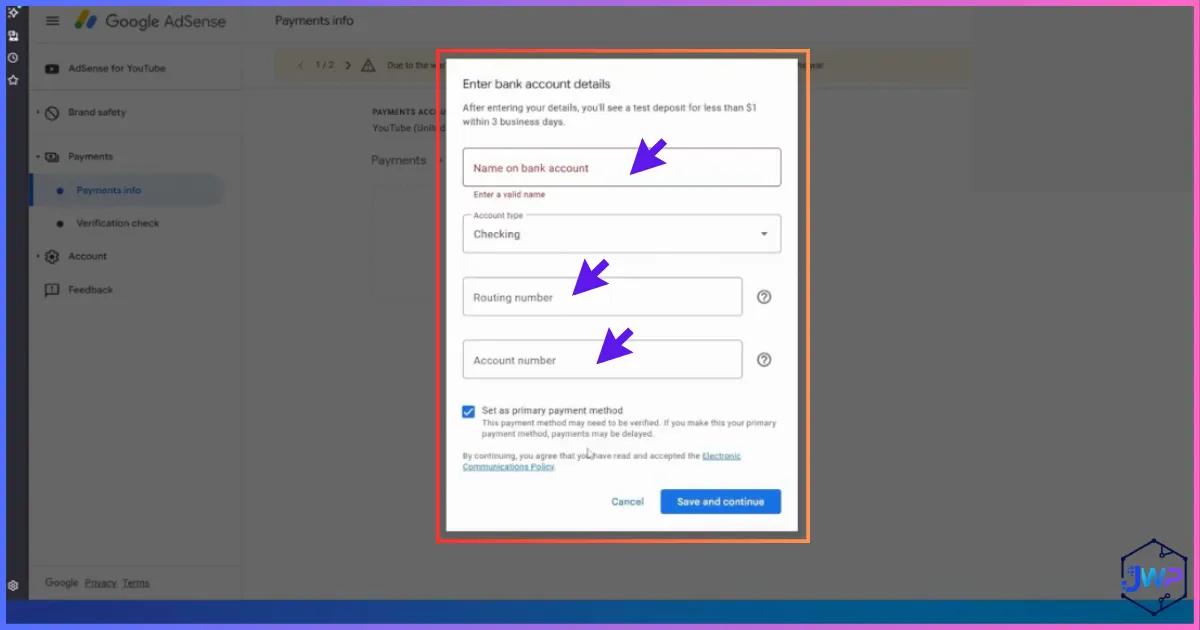
Step 10 — Payment method
Attach the business bank/receiving account that belongs to this LLC. This is a core separation control.
Step 11 — Tax information
Complete entity tax forms for this LLC. Do not copy-paste another entity’s tax profile without checking every field.
Tax Forms, Pass-Through Basics, and Annual Filings
Multi-entity structures create multi-entity paperwork. That is the tradeoff for risk separation.
Inside each AdSense account
| Situation | Common form path | Notes |
|---|---|---|
| U.S. person / applicable U.S. tax path | W-9 | Follow the AdSense interview answers carefully |
| Foreign entity path | W-8BEN-E | Entity form, not individual W-8BEN |
U.S. federal tax mythology vs reality
Many non-U.S. founders use U.S. LLCs because of pass-through treatment in common default classifications: the company often does not pay a separate federal corporate income tax the way a C-corporation would. Income may be reported according to owner residency and classification rules. That does not mean “no compliance.”
- Foreign-owned U.S. disregarded LLCs often have Form 5472 + pro forma 1120 information reporting duties when required.
- State annual reports / fees still apply.
- Registered agent renewals still apply per entity.
- Your home-country tax obligations still exist.
Not tax advice: Multi-LLC creator groups should budget for a CPA who understands foreign-owned U.S. entities and digital media income. The cost of compliance is usually smaller than the cost of a total AdSense wipe — but only if you actually stay compliant.
Cost vs Risk: Is Multiple AdSense Worth It?
Formation is not free. A single U.S. LLC setup commonly lands in the low hundreds of dollars depending on state fees, registered agent pricing, and EIN help — and each additional entity multiplies that baseline plus annual maintenance.
Compare that with the downside: multi-channel operators can lose five-figure monthly AdSense income overnight when everything is centralized. In that light, entity separation is less a “growth hack” and more a cheap insurance policy for a media business.
| Portfolio monthly AdSense | Single-account downside | Multi-bucket rationale |
|---|---|---|
| Under $1,000 | Painful but maybe recoverable | Often wait; master one clean entity first |
| $5,000–$20,000 | Serious cash-flow shock | Consider 2 buckets by niche/risk |
| $20,000+ | Business-threatening event | Multi-entity separation becomes standard ops |
Spend on Structure Before You Scale Exposure
If one policy event can erase a year of work, formation fees are not the expensive part.
Charts & Statistics for Multi-AdSense Planning
These charts are educational planning visuals for risk architecture. They are not official Google metrics.
Illustrative revenue exposure under one vs three AdSense buckets
Example assumes $30,000/month total. One shared AdSense exposes 100% to a single enforcement event; three equal buckets expose ~33% each (illustrative, not a guarantee of isolation outcomes).
Where multi-entity operators spend ongoing effort
Qualitative effort mix for maintaining clean separation over time.
Setup complexity by layer
Relative complexity index (1–10 illustrative) when repeating the stack for additional entities.
Suggested bucket count by portfolio size
Planning heuristic only — match buckets to real channel risk clusters, not vanity entity counts.
Mistakes That Re-Couple Your Risk (or Get You Banned)
Policy landmines
- Multiple personal AdSense accounts under one person
- Fake companies / fake owners
- Ban evasion packaging as “new LLC”
- Public SMS inboxes for recovery
False separation
- Same owner Gmail on every channel and AdSense
- One personal bank for all LLCs
- Copy-pasted legal names with typos
- All channels still linked to old AdSense
Ops mistakes
- No password manager / entity vault
- Manager account becomes universal owner
- Missing PIN mailers across addresses
Compliance mistakes
- Ignoring Form 5472 style duties when required
- Letting registered agents lapse
- Wrong W-8/W-9 path per entity
Master Checklist: From One Failure Point to Multiple Risk Buckets
| Item | Done when |
|---|---|
| Unique LLC formed | Formation docs received; agent active |
| Unique EIN | Confirmation letter stored |
| Unique business email + Google identity | 2FA enabled; not linked to other AdSense |
| Business bank / receiving account | Account in LLC name ready for payouts |
| Private phone strategy | SMS verification works reliably |
| Organization AdSense approved | Dashboard live for this entity only |
| Identity + address + tax complete | Payments not blocked by verification tasks |
| Channels assigned | Only planned channels linked to this AdSense |
| Manager access designed | Ops convenience without ownership re-coupling |
| Compliance calendar | Annual report / agent / tax reminders set |
Start Building Your Second Risk Bucket
Form the LLC, open banking, verify phone, then create the organization AdSense account and move only the intended channels.
Frequently Asked Questions
Can I open multiple personal AdSense accounts under my own name?
Generally, no — that is the high-risk approach. The multi-account strategy discussed here is based on separate legal entities applying as organizations, not cloning personal accounts.
Is a multi-LLC multi-AdSense structure legal?
Operating multiple real businesses with their own accounts is normal corporate structuring. What is not acceptable is fake identities, ban evasion, or policy circumvention. Keep entities real and activity policy-compliant.
Who is Noah Morris and why is he mentioned?
Noah Morris (@noahmorris on X) is a creator who has publicly discussed major revenue loss from strikes and the importance of not tying an entire portfolio to one AdSense association. His situation is a useful real-world illustration of concentration risk.
How many AdSense accounts do I need?
Match buckets to risk clusters. Two or three well-maintained entities beat ten neglected shell companies. Many operators split by niche, brand safety profile, or channel maturity.
Do non-U.S. residents need a U.S. LLC for this?
A U.S. LLC is a common tool because organization AdSense + remote formation + banking options are familiar to online businesses. It is not the only possible structure worldwide, but it is the stack this guide details. See How to Form an LLC for Non-US Residents.
Can one strike still affect multiple entities?
Separation reduces shared-account cascade risk. It does not make related businesses invisible if Google detects connected abuse, fraud, or circumvention. Good structure plus good content policy hygiene both matter.
Should every channel get its own LLC?
Not always. Many networks group 2–3 related channels per entity. Too many entities creates compliance overhead that teams fail to maintain.
What discount code works for Receive-SMS?
Use JOSHWP where supported via Receive-SMS.com.
Payoneer or Wise for multiple LLCs?
Does this replace content policy compliance?
No. Structure is risk management. Policy-safe content operations remain mandatory. A perfect LLC stack cannot save repeatedly violative channels.
You Are Running a Media Business — Structure It Like One
If all of your channels share one AdSense account, you are running a single point of failure. The professional response is not fake accounts. It is entity separation:
- Form real U.S. LLCs for each risk bucket.
- Give each entity its own EIN, email, and bank profile.
- Create organization AdSense accounts per entity.
- Split channels intentionally.
- Use manager access for operations without re-coupling ownership.
- Stay compliant every year.
That is how you open multiple AdSense accounts the right way — and dramatically reduce the odds that one bad day costs you everything.
Build Your Separation Stack Now
Sources & further reading
- Internal: How to Create an LLC for YouTube Channel & Google AdSense
- Internal: How to Form an LLC for Non-US Residents
- Internal: Best LLC Formation Services for Non-US Residents
- Internal: Northwest Registered Agent Review
- Internal: Doola Review
- Internal: How to Open a Payoneer Account
- Internal: How to Open a Wise Account
- Internal: How to Create a US PayPal Account as a Non-US Resident
- Creator context: Noah Morris on X — @noahmorris
- Primary: Google AdSense program policies and Help Center docs on account management, payments, and verification
- Primary: YouTube Help — Partner Program, strikes, and channel termination processes
- Primary: IRS materials on EINs (SS-4) and foreign-owned U.S. disregarded entity reporting (Form 5472)
Educational content only — not legal, tax, or financial advice. Google, YouTube, bank, and IRS rules change. Verify current requirements for your situation.
Affiliate Disclosure
Some links in this article are affiliate links, including links to Northwest, Payoneer, Wise, and related offers. If you click and purchase or sign up, we may earn a commission at no additional cost to you. This compensation may influence which products appear and where they appear, but we aim to keep recommendations practical and transparent. Always evaluate fees, eligibility, and policy risks for your own business before buying. Receive-SMS discount code JOSHWP may provide savings where supported by the merchant.