How to Receive SMS Online Without a SIM Card : The Complete Guide
By JoshWP Team | Updated: | ~16 min read | Privacy · Verification · Virtual Numbers
Quick Answer
You can receive SMS online without a SIM card through five main routes: free public “receive SMS” websites (instant, but zero privacy — anyone can read the code), paid temporary/virtual number services (private numbers, pay-per-verification or rentals, the most reliable balance of cost and privacy), Google Voice (free, but needs an existing US number to set up and doesn’t work everywhere), an eSIM secondary number (a real, private number on your existing phone, no physical SIM swap needed), and VoIP apps like TextNow or Burner.
The global phone-number-verification market was worth roughly $1.8 billion in 2025 and is projected to hit $7.9 billion by 2034 — this is a large, fast-growing, and increasingly regulated space, so which method is “best” depends entirely on how sensitive the account is.
Why People Receive SMS Online Without a SIM
Almost every app, marketplace, and social platform now asks for a phone number before you can sign up. That’s a reasonable anti-fraud measure for the platform — but it’s not always something you want to hand over.
Here are the most common, entirely legitimate reasons people look for an alternative:
🔒 Privacy protection
Keeping a personal number out of registration forms, marketplace listings, or dating apps to avoid spam calls and data-broker exposure.
🌍 Travel & no local SIM
Verifying accounts while abroad without a local SIM — often paired with an eSIM for travelers instead of hunting for a physical SIM shop.
🧪 App & software testing
Developers and QA teams need disposable numbers to test SMS-based signup and 2FA flows without burning real phone lines.
🏢 Business & non-resident signups
Founders forming a US company from abroad often need a US-format number for payment processors or banks — relevant if you’re also researching LLC formation as a non-US resident.
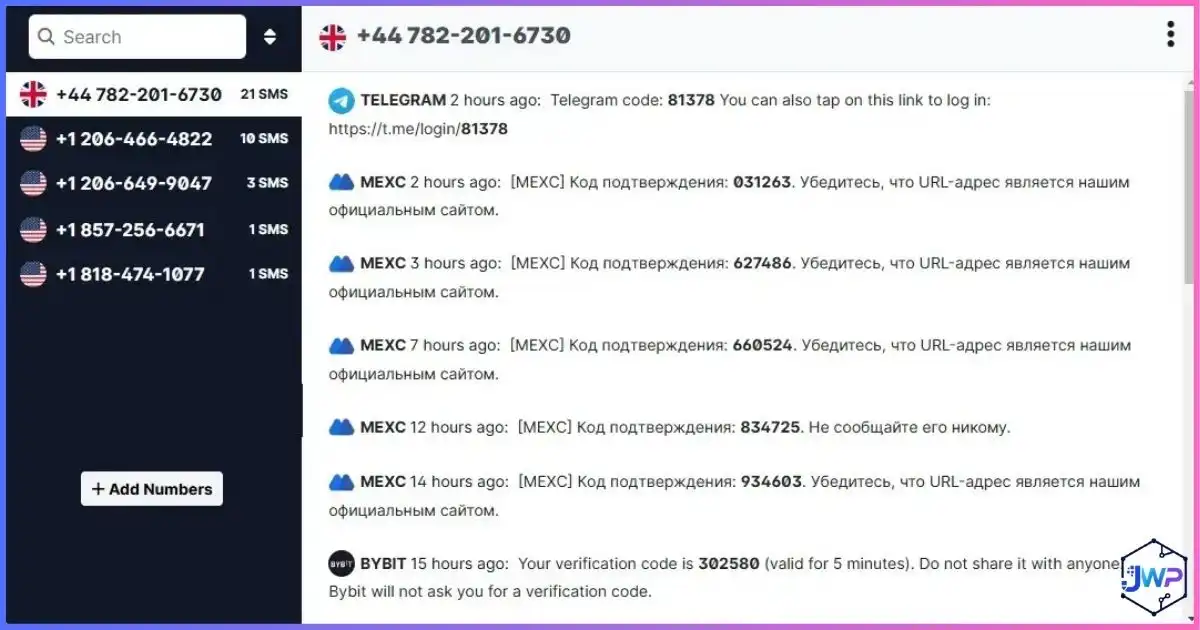
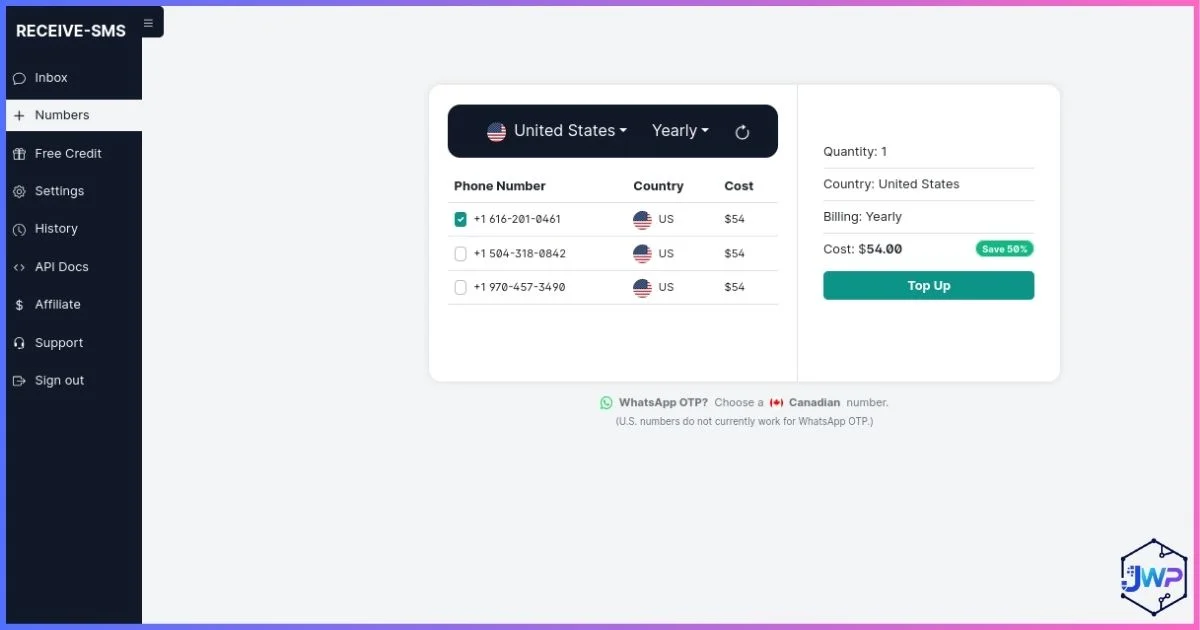
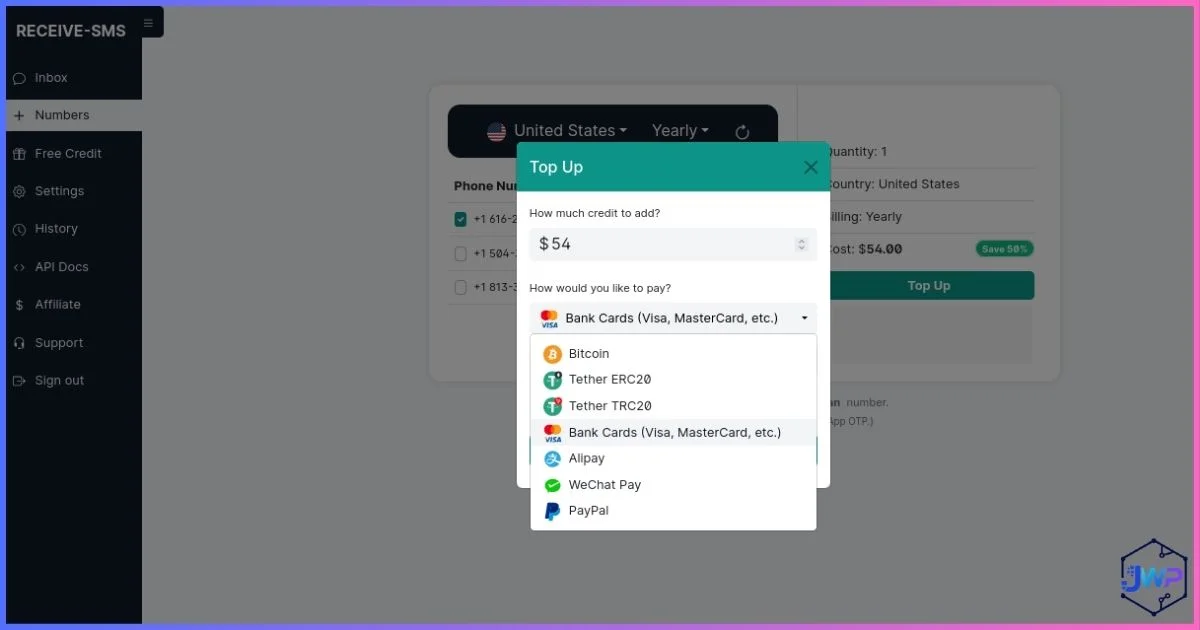
Receive-SMS Setup Screens: What Each Step Shows
If you use a private provider like Receive-SMS, the setup usually happens inside a dashboard rather than on a public inbox page. The screenshots below show the flow in order: start on the homepage, check the inbox area, choose numbers, then review payment/top-up options.
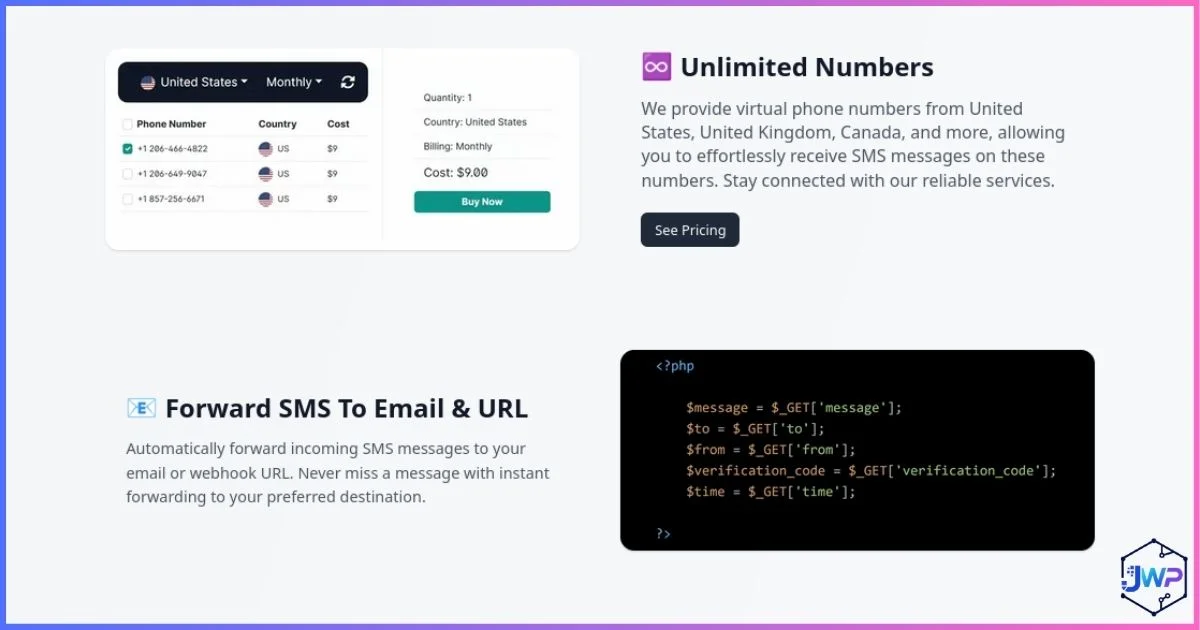
Important setup caution
A one-time number is convenient for a single verification, but it may not be suitable for accounts that will send future login, recovery, or two-factor codes. For accounts you care about keeping, consider a rental or a more permanent number you can retain, and always check the target platform’s terms before using any virtual number.
Table of Contents
- 1. Why People Receive SMS Online Without a SIM
- 2. Every Method, Explained
- 3. Step-by-Step: Receiving Your First SMS Online
- 4. Market Size & Growth Stats
- 5. Method Comparison & Scoring Chart
- 6. Security, Privacy & The SMS-Activate Lesson
- 7. Is This Legal? Platform Policy Risks
- 8. Who Should Use Which Method
- 9. Pros and Cons
- 10. Final Verdict
- 11. Frequently Asked Questions
Every Method, Explained
There is no single “best” way to receive SMS without a SIM — each method trades off cost, privacy, and reliability differently. Here’s every real option on the market.
1. Free Public “Receive SMS Online” Websites
Sites that list public phone numbers where anyone can view incoming texts, no account needed. Completely free and instant.
The catch: these numbers are shared with thousands of other people. Your verification code is posted on a public wall — anyone can read it and use it. Fine for a throwaway newsletter signup; never acceptable for banking, email, or anything you’ll want to keep long-term.
2. Paid Temporary / Virtual Number Services
Services that assign you a private number — either for a single verification (pay-per-code, often $0.10–$1.00) or a longer-term rental (days to months). Because the number isn’t public, only you see the incoming code.
This is the most balanced option for most people: private enough for real accounts, cheap enough for occasional use, and available in 100+ countries with most providers. For a deeper breakdown of exactly how one leading platform in this category works, see our full receive-sms.com review.
Important: do not treat a temporary number as permanent unless you are paying to retain it. If the account may need future password resets, security checks, or two-factor codes, use a rental or another number you can keep under your control.
3. Google Voice
Google’s free VoIP number can receive SMS and forwards to your email or the Voice app. It’s genuinely private (only you see the inbox) and free forever.
The catch: you need an existing US phone number to set it up, it’s US-only for new numbers, and a growing number of platforms detect and block known Google Voice ranges for high-security signups.
4. eSIM or Physical Dual-SIM Secondary Number
Adding a second, real phone number to your existing device — either via an eSIM data/voice plan or a cheap prepaid physical SIM in a dual-SIM phone. This is the closest thing to “just having a second real phone.”
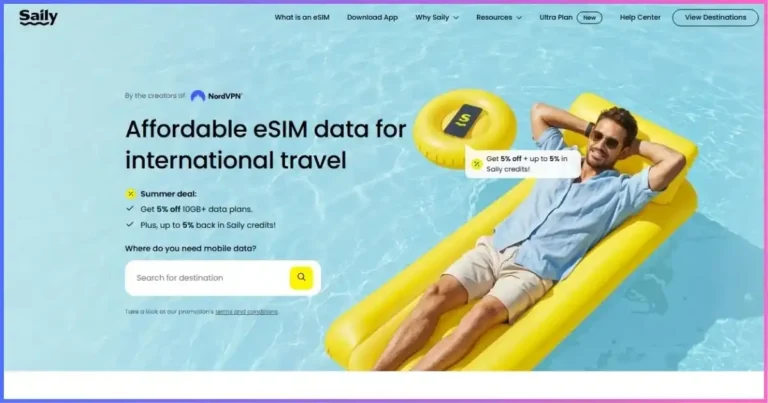
Best acceptance rate of any method, since it’s a genuine carrier-issued number. If you already travel with an eSIM, providers like the one covered in our Saily eSIM review sometimes bundle a local number alongside data.
5. VoIP / Second-Line Apps (TextNow, Burner, Hushed, Talkatone)
Apps that give you a dedicated second number on your existing smartphone, usually with a free tier and a paid subscription for extra features. A middle ground between Google Voice and a true carrier eSIM — private, but still a VoIP number that some strict platforms flag.
Step-by-Step: Receiving Your First SMS Online
Using a paid, private virtual number service — the method we recommend for anything beyond a throwaway signup — usually looks like this:
Pick a Country & Service
Choose the country your target platform expects (e.g., a US number for a US-only app) and the specific service you’re verifying — WhatsApp, a bank, a social network, etc.
Get Your Private Number
The platform assigns you a number instantly — either a one-time-use code or a rental you keep for days/weeks.
Enter It On The Target Site
Paste the number into the signup or verification form exactly as shown, including the country code.
Watch Your Private Inbox
The code arrives in your dashboard inbox within seconds to a couple of minutes — copy it back into the verification form.
A Faster Path
If you’d rather skip the comparison shopping, services like Receive-SMS bundle steps 1–2 into a single dashboard — use code JOSHWP at checkout for a discount on your first top-up.
Market Size & Growth Stats
This isn’t a niche corner of the internet — phone-based verification is now a multi-billion-dollar infrastructure layer behind most sign-up flows online.
Global Phone Number Verification Market ($ Billions)
Source: industry market research estimates, 2025–2026 reporting. Figures are projections and vary by research firm methodology.
Typical Cost Per Verification, By Service Tier
Illustrative pricing ranges compiled from published rate cards across the category in 2026; exact pricing varies by country and target platform.
A cautionary data point: SMS-Activate, a well-known player in this space for a decade, permanently shut down on December 29, 2025, reportedly leaving user balances locked behind a $30 minimum withdrawal many couldn’t meet. Whichever provider you choose, don’t keep large prepaid balances sitting idle.
Method Comparison & Scoring Chart
An honest side-by-side of the four realistic routes.
| Method | Cost | Privacy | Reliability | Best For |
|---|---|---|---|---|
| Free public sites | $0 | ❌ None — public inbox | ⚠️ Low, often blocked | Throwaway, zero-risk signups |
| Paid virtual numbers | $0.10–$5.00/code | ✅ Private | ✅ Good–High | Most real-world verifications |
| Google Voice | Free | ✅ Private | ⚠️ Medium (US-only, some blocks) | US-based personal use |
| eSIM / dual-SIM number | $5–$20/mo | ✅ Private, carrier-grade | ✅ Highest | Long-term, sensitive accounts |
Method Scoring Across Five Dimensions
Editorial scoring (0–10) based on researched typical performance, not an official benchmark from any vendor.
Security, Privacy & The SMS-Activate Lesson
The single most important thing to understand about this space: free public numbers and paid private numbers are not the same product.
On a free public site, your verification code is posted to a shared page that anyone can refresh and read. If your code arrives before you grab it — or after — a stranger can use it to register or take over the account first.
The Golden Rule
Never use a free public number for banking, email, cryptocurrency, or any account tied to your identity or money. Reserve free public numbers for genuinely disposable, zero-consequence signups only.
Paid private number services solve the visibility problem — only you see your inbox — but they introduce a different risk: provider trust. When SMS-Activate shut down in December 2025 after ten years of operation, it took user balances with it. Whichever provider you choose:
- Top up small amounts rather than large prepaid balances
- Check for a published refund policy on undelivered codes
- Prefer providers with visible customer support and a track record
- Use longer rentals only when you truly need ongoing access to that number
- Save backup codes and add a permanent recovery method when the platform allows it
Is This Legal? Platform Policy Risks
Using a temporary or virtual number to receive SMS is legal in essentially every jurisdiction — it’s the same underlying telecom infrastructure businesses use for customer service lines and two-factor authentication systems.
The nuance is at the platform level, not the law level. Many apps’ terms of service prohibit VoIP or virtual numbers for account creation specifically to fight fraud and duplicate accounts. In practice that means:
✅ Generally fine
One-time signups, testing, privacy-motivated registrations on platforms that don’t explicitly ban virtual numbers.
⚠️ Higher risk of a ban
Ride-share apps, some banks, and major social platforms actively detect and block known virtual-number ranges, and can suspend accounts that use them.
This article does not constitute legal advice; always check the specific platform’s terms of service before relying on a virtual number for an account you care about keeping.
Who Should Use Which Method
🧑💻 Casual, one-time signups
A free public number is fine for a newsletter or a forum you’ll never log into again.
🛍️ Marketplace & dating app privacy
A paid private number keeps your real digits off Craigslist, Facebook Marketplace, or dating profiles.
🏢 Founders & remote businesses
Setting up US-facing payment tools often needs a stable number — worth pairing with guidance on how to pay yourself as an LLC once the business itself is verified.
✈️ Frequent travelers
An eSIM with a bundled or add-on number gives you carrier-grade reliability wherever you land, without a physical SIM swap.
Pros and Cons
Pros
- Keeps your real phone number off registration forms and data brokers
- Instant setup — no physical SIM, no carrier store visit
- Works from anywhere, useful while traveling
- Pay-per-use pricing means casual users spend almost nothing
- Reduces spam calls and marketing texts to your primary number
Cons
- Free options offer zero privacy — codes are visible to strangers
- Some platforms actively detect and block virtual number ranges
- Provider shutdowns can lock prepaid balances (see: SMS-Activate)
- Not suitable for banking, crypto, or identity-linked accounts
- Numbers can be recycled and reused by other people later
Final Verdict
There’s no universal winner here — the right method depends entirely on how much the account matters to you. For a genuinely disposable, zero-risk signup, a free public site costs nothing and takes seconds. For anything you’ll actually use again — a marketplace listing, a business tool, a dating profile, a second social account — a private, paid virtual number is worth the small per-code cost, because it removes the single biggest risk of the free option: someone else reading your code.
If you travel often or need the highest possible acceptance rate on strict platforms, an eSIM or physical dual-SIM secondary number is the most reliable (if slightly pricier) option. Whichever route you take, treat provider trust as seriously as privacy — the market has already seen one major shutdown lock user funds, and it likely won’t be the last.
Bottom Line
Use free public numbers only for accounts you don’t care about. Use a private paid service for everything else you’ll actually log back into. Reserve eSIM/dual-SIM for travel or long-term, high-stakes verification.
Related Reads
- Receive-SMS.com Review — an in-depth look at one leading private virtual number provider.
- Best eSIM for Budget Travelers — for a data plan and secondary number in one.
- Saily eSIM Review — a closer look at a popular eSIM provider.
- Best LLC Formation Services for Non-US Residents — relevant if you need a US number for a new business entity.
- How to Pay Yourself as an LLC — the natural next step once your business accounts are verified.
Frequently Asked Questions
Can I really receive SMS online without any SIM card at all?
Yes. Virtual number services, Google Voice, and VoIP apps all let you receive SMS to a browser or app inbox with no physical SIM in your device at all. An eSIM technically isn’t a physical SIM either, but it does require a compatible device.
Are free SMS receiving websites safe?
They’re safe for low-risk, disposable signups only. The numbers are public and shared, so any verification code sent to them can be viewed by anyone else using that same number. Never use them for banking, email, or identity-linked accounts.
How much does a private virtual number cost?
Pay-per-verification pricing typically ranges from about $0.10 to $1.00 per code depending on the country and target platform, with premium non-VoIP numbers costing more (up to $3–$5.50). Longer-term rentals are usually priced per day, week, or month.
Will platforms detect and block a virtual number?
Sometimes. Major platforms increasingly maintain lists of known VoIP and virtual number ranges and may block signups or flag accounts. Success rates are generally higher with non-VoIP or carrier-grade eSIM numbers than with heavily shared VoIP ranges.
What happened to SMS-Activate?
SMS-Activate, one of the longest-running platforms in this space, permanently shut down on December 29, 2025, after roughly a decade in operation, reportedly leaving some user balances locked behind a minimum withdrawal threshold. It’s a useful reminder to keep only small prepaid balances with any single provider.
Is it legal to use a virtual number for account verification?
Yes, using a virtual number itself is legal in essentially every jurisdiction. The risk is at the platform level — some services’ terms of use prohibit virtual/VoIP numbers for account creation, which can lead to a suspended account rather than any legal issue.
Disclosure: This article contains affiliate links. If you sign up through our link we may earn a commission at no extra cost to you, and code JOSHWP may unlock a discount at checkout. Figures on market size, pricing, and provider history reflect publicly available information at the time of writing and may change.