How to Form a UK Limited Company with 1stfromations
Companies House · Registered Office · Shares · Banking · Compliance
Form A UK Limited Company With 1st Formations, Then Bank And Comply Properly
A practical walkthrough of registering a UK Ltd with 1st Formations, choosing the right package, setting up directors, shares, PSC details, registered office privacy, banking, and post-formation compliance.
Quick Answer
1st Formations is a guided UK company formation service for registering a private limited company with Companies House. It is useful if you want help choosing a package, adding a registered office or service address, preparing digital company documents, and avoiding common filing mistakes during setup.
The cheaper route is direct Companies House filing, but 1st Formations can be better value when you need privacy services, non-resident-friendly package options, bundled documents, or a smoother step-by-step workflow. After formation, you still need to handle Corporation Tax registration, confirmation statements, annual accounts, PSC records, banking, and any VAT or PAYE registrations that apply.

Table of Contents
- Short answer
- What is a UK limited company?
- Key facts and statistics
- Pros, cons, and alternatives
- What you need before you start
- Packages and what to buy
- Step-by-step formation with screenshots
- Registered office and privacy
- Directors, shareholders, and PSC
- Share capital explained
- Non-resident founders
- Bank setup: Payoneer or Wise
- After formation checklist
- True cost breakdown
- Common mistakes
- FAQ
- Sources
Short answer
How to Form a UK Limited Company with 1stfromations in Plain English
If you want a practical answer to how to form a UK limited company with 1stfromations, the process is: check a unique company name, choose a package, pay, complete company particulars (SIC codes, addresses, officers, shares, and people with significant control), review everything carefully, submit the application for Companies House filing, pass identity checks, then open a business account and handle tax and compliance. The same workflow also answers how to register a UK limited company with 1stfromations because registration at Companies House is the legal act that creates the company.
A UK private limited company (Ltd) has its own legal identity, separate from the people who own and run it. That separation is one reason Ltd companies remain the dominant business structure on the UK register. Formation agents such as 1st Formations sit between you and Companies House: they collect your details, package documents, file electronically, and often sell address, mail, VAT, and compliance extras. You can also file directly with Companies House for a lower official fee if you are confident with the forms and rules.
This guide is deliberately non-biased. It covers what 1st Formations does well, where costs and upsells appear, what the law actually requires, what non-residents should expect, and why banking is often harder than incorporation itself. If you are comparing structures, you may also want related guides on how to form a UK limited company as a non-resident, how to form a UK LLP as a non-resident, and broader formation options such as best LLC formation services for non-US residents if a US entity is also on your shortlist.
Recommended path for most founders
- Confirm a limited company is the right structure (not sole trader, LLP, or a foreign entity).
- Prepare name options, officer details, share split, and an address strategy.
- Use a formation package that matches residency and privacy needs.
- Complete the application carefully — most delays come from incomplete or inconsistent data.
- After incorporation, open banking (often Wise or Payoneer for international founders), register for Corporation Tax, and set a compliance calendar.
Business structure basics
What Is a UK Limited Company and Why Form One?
A limited company is a popular UK business structure with its own legal identity, separate from the owners. It must be registered at Companies House, the UK’s registrar of companies. “Limited” usually means the owners’ financial liability is limited to the amount unpaid on their shares (for a company limited by shares). That does not remove all risk: directors still have legal duties, can face personal consequences for wrongful trading or unpaid certain taxes in specific cases, and personal guarantees can reintroduce personal liability on loans or leases.
People form UK limited companies for several practical reasons:
- Separate legal personality — the company can own assets, enter contracts, sue, and be sued in its own name.
- Limited liability — shareholders are generally not personally liable for company debts beyond unpaid share capital, subject to exceptions.
- Credibility and contracting — many clients, platforms, and partners prefer dealing with an incorporated entity.
- Ownership flexibility — shares can be split among co-founders, investors, or holding structures.
- Tax planning options — Corporation Tax on company profits, salary/dividend mix for directors, and potential VAT registration where relevant. Tax outcomes depend on residency, activity, and advice from a qualified professional.
- Continuity — the company can continue if ownership or management changes.
A limited company is not always the right first step. Sole traders face less formal filing but unlimited personal liability. Partnerships and LLPs have different ownership and tax profiles. Some founders prefer a US LLC for certain payment stacks or market positioning; others want privacy-focused structures and research options such as how to start an anonymous LLC (noting that “anonymous” has legal limits and public disclosure rules vary by country). Choose the structure for the business you will actually run, not for a marketing slogan.
Private company limited by shares vs other types
Most startups and freelancers form a private company limited by shares. 1st Formations also supports packages for limited liability partnerships (LLPs), companies limited by guarantee, eSeller-oriented packages, and public limited companies (PLCs). PLCs have higher capital and governance requirements and are not the default for a first company. If you are unsure between Ltd and LLP, compare this guide with forming a UK LLP as a non-resident.
Data snapshot
Key Facts and Statistics About UK Company Formation
These figures combine public Companies House scale, typical formation timelines, and practical cost ranges. Treat package prices as snapshots — formation agents change promotions frequently. Official fees and identity-verification rules also evolve under Companies House transparency reforms.
UK company register
5M+
Companies on the UK register in recent years; private limited companies dominate the stock.
Typical e-filing speed
3–24h
Many electronic incorporations complete the same working day once checks pass.
Minimum directors
1
A private Ltd needs at least one director (age 16+) and at least one shareholder.
PSC threshold
25%+
People with significant control generally include those with more than 25% shares or voting rights, among other tests.
Chart 1: Illustrative First-Year Cost Stack for a Simple UK Ltd
Editorial model of common cost buckets for a straightforward private limited company. Actual amounts vary by package, address services, accountant fees, and banking. Not a quote.
Chart 2: Where Founders Spend Time During Formation
Incorporation itself is often quick. Name decisions, address strategy, share splits, ID checks, and banking usually take more founder attention than the Companies House click.
Chart 3: Typical Timeline from Name Search to Trading-Ready Setup
Hours shown are approximate working-time estimates for a clean application. Complex ownership, sensitive names, ID issues, or bank onboarding can extend the timeline significantly.
Balanced view
Pros, Cons, and Alternatives to Using 1st Formations
Learning how to form a UK limited company with 1stfromations only helps if formation agents are the right tool for your situation. Here is a fair comparison.
| Route | Strengths | Trade-offs | Best for |
|---|---|---|---|
| 1st Formations / formation agent | Guided flow, package extras, registered office options, document kits, support, package selector tools | Higher total cost than bare official fee; upsells; you still own compliance risk | First-time founders, non-residents needing address services, people who value speed and hand-holding |
| Companies House direct | Lowest official filing fee; full control; official source of truth | You handle name rules, forms, articles, PSC accuracy, and mistakes alone | Experienced founders with a simple structure and their own UK address plan |
| Accountant-led formation | Tax structure advice bundled with filing | Often more expensive; quality varies | Founders who already need an accountant and want one accountable party |
| Ready-made / shelf company | Older incorporation date; faster “ready” feel | Name may not fit brand; history diligence needed; can confuse banks | Situations where age of company is specifically required (rare for most startups) |
What 1st Formations does well
- Clear multi-step online formation for private Ltd companies
- Packages aimed at UK residents and people outside the UK
- Optional registered office, director service address, and mail forwarding
- Standard articles provided so you do not draft constitutional documents from scratch
- SIC code picker, appointment workflow, share allocation screens
- Optional pre-submission review and same-day extras
- Partner introductions for banking and business tools after formation
What you should not ignore
- Package price is not the full first-year cost
- Address services usually renew annually
- AML identity checks can delay filing even after payment
- Partner bank intros do not guarantee account approval
- Upsells (VAT, PAYE, extras) may be useful or unnecessary
- You remain responsible for accurate PSC, director duties, and HMRC filings
- Privacy is limited: Companies House is a public register
Before you click buy
What You Need to Form a Company (and What You Do Not)
Before you start the flow for how to register a UK limited company with 1stfromations, gather the information that will be requested. Incomplete or inconsistent details are a top cause of rework.
You will need
- A unique company name ending with Limited or Ltd, not too similar to an existing name, not offensive, and free of restricted “sensitive words” unless you have permission.
- A UK registered office address — the official company address. Many packages let you use the agent’s address (for example a Covent Garden / London business address style service).
- Director details for each director: full name, service address, residential address, date of birth, nationality, and occupation. Residential address is a legal requirement; it is generally not shown on the public register if it is not also used as the registered office or service address.
- Shareholder details with the same identity and address fields as needed for appointments.
- People with significant control (PSC) information — usually overlapping with major shareholders, but not always identical.
- Share structure — how many shares, nominal value, and who owns what percentage.
- SIC code direction — you will choose activity codes (agents usually provide a searchable list).
- Identity documents for AML checks under UK money laundering regulations.
You usually do not need to prepare yourself
- SIC codes from memory — a list is provided during the process.
- Memorandum of association drafting — generated during registration.
- Custom articles of association — standard articles are typically provided unless you need bespoke constitutional documents from a lawyer.
Legal and compliance reality check
Forming a company is not the same as being ready to trade, bank, or claim tax benefits. Economic Crime and Corporate Transparency reforms have increased Companies House powers and identity verification expectations for directors and PSCs. Rules continue to phase in. Always cross-check current GOV.UK / Companies House guidance for identity verification, appropriate registered office requirements, and filing duties before you rely on any blog summary — including this one.
Packages
Choosing a 1st Formations Package Without Overbuying
1st Formations typically structures formation around several package tiers for private companies limited by shares, including options aimed at customers who live outside the UK. There are also pathways for LLPs, companies limited by guarantee, eSellers, and PLCs. A package selector tool may ask a short set of questions and recommend a tier.
Exact names, inclusions, and prices change with promotions. Use the live checkout as the source of truth. The table below is a decision framework, not a live price list.
| Need | Lean package tendency | Higher package tendency | Watch-outs |
|---|---|---|---|
| UK resident with own suitable addresses | Basic / digital formation + own registered office | Only if you want printed kits, reviews, or bundled filings | Home address on public register if used as registered office |
| Privacy for home address | Package or add-on with registered office + director service address | Prestige-style bundles that include both addresses and mail handling | Annual renewal fees after year one |
| Non-UK resident founder | Non-resident oriented package with UK registered office | Bundles with service address, mail forwarding, document handling | Banking remains a separate challenge; see banking section |
| Need VAT help soon | Formation only, then accountant-led VAT | Package that includes VAT registration assistance | VAT is not always beneficial below thresholds or for all models |
| Speed critical | Standard electronic filing | Guaranteed same-day extra if offered | Same-day still depends on complete data and checks |
A “Prestige”-style package example often marketed by formation agents may include digital and printed company documents, a registered office address, a director service address, business mail forwarding, VAT registration assistance, and confirmation statement filing help. That bundle is convenient, not mandatory. Buy features you will use.
Step-by-step walkthrough
How to Register a UK Limited Company with 1stfromations: Full Screen Guide
The formation process is commonly broken into four high-level stages: pick your company name, select your package, make payment, and complete your company details. Below is a detailed, screen-oriented walkthrough aligned to the actual application steps, with every major screen explained so you can follow along while you form the company.
Tip before Step 1
Have two or three backup names ready. Also decide in advance who will be director, shareholder, and PSC, and whether one person will hold all roles. A single founder can be director, sole shareholder, and PSC. Multiple founders need a clean share split written down before the appointments screens.
1Enter and check your limited company name
UK company names must be unique enough, end with Limited or Ltd, avoid offensive wording, and respect sensitive words and expressions that need permission from particular bodies. A simple example: words like “Queen” can be sensitive and may require additional information or consent. The name search tool should tell you if a preferred name is available and whether it includes potentially troublesome words.
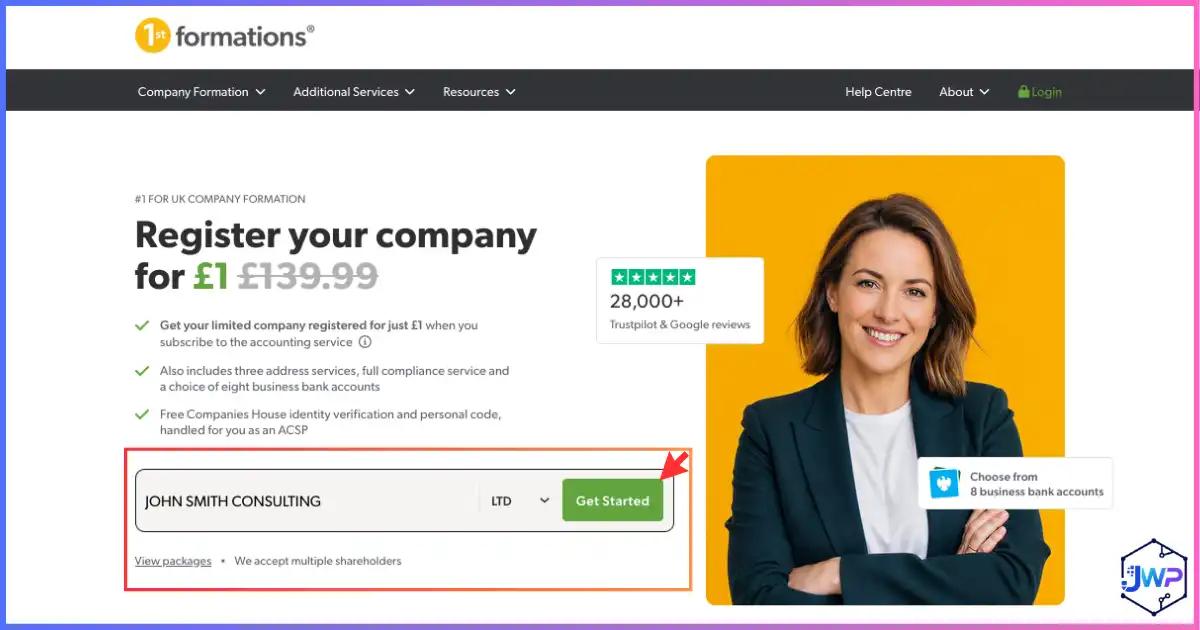
2Confirm the company name is available
If the name is free of conflicts and sensitive-word blocks, you will see a confirmation that the company name is available. Do not treat “available in the tool” as a guarantee that every future brand, trademark, or domain issue is solved — company name availability is not the same as trademark clearance or domain ownership.
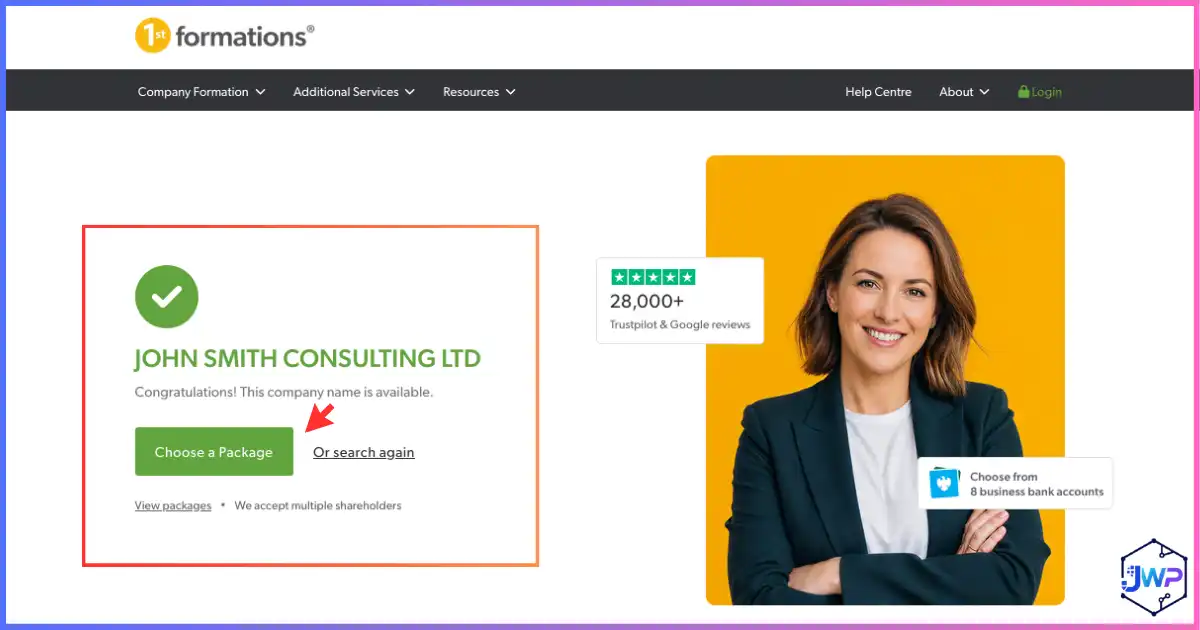
3Choose a package for your limited company
Select the package that matches residency, address needs, document delivery preferences, and any compliance extras. Non-UK residents should pay special attention to whether a UK registered office and service address are included. Residents who already have a suitable business address may not need the highest tier.
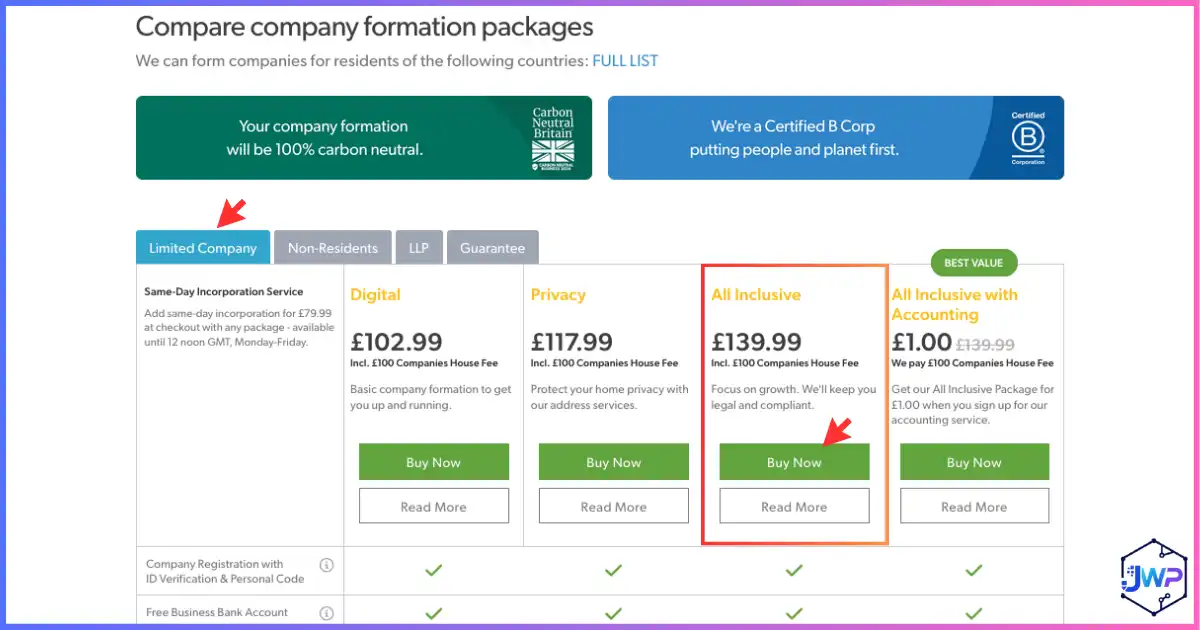
4Review checkout and optional extras
At checkout you may see add-ons such as guaranteed same-day service, PAYE registration help, or a pre-submission review. Pre-submission review means the agent’s team checks your completed details before sending the application to Companies House, which can reduce simple mistakes. Same-day service helps only when your data and ID checks are already clean.
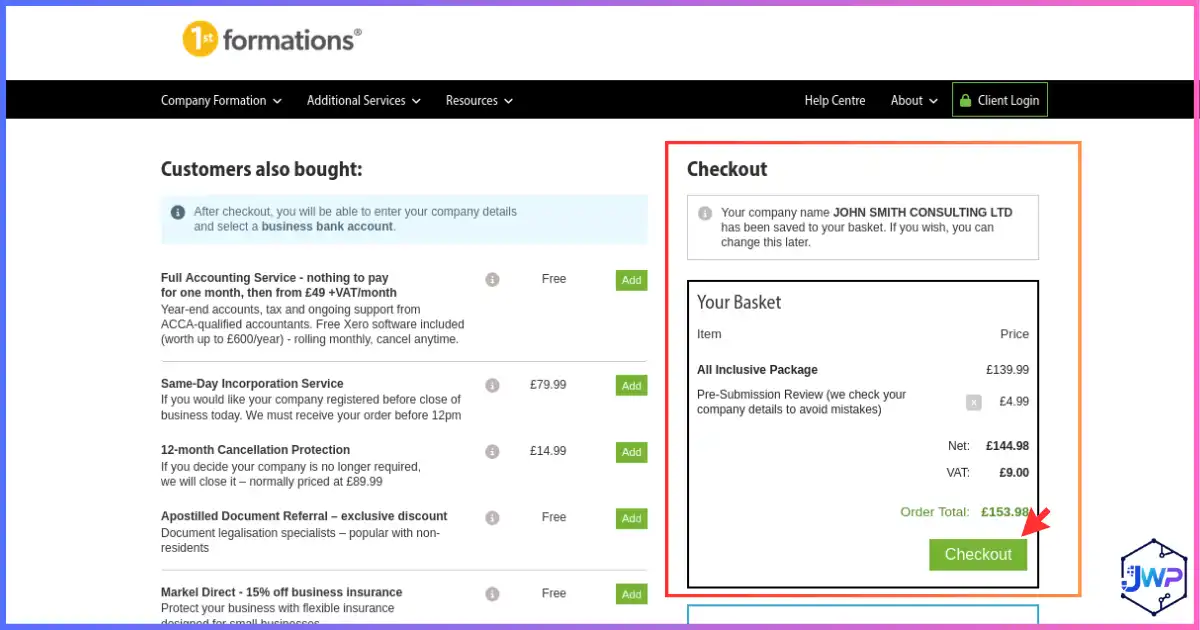
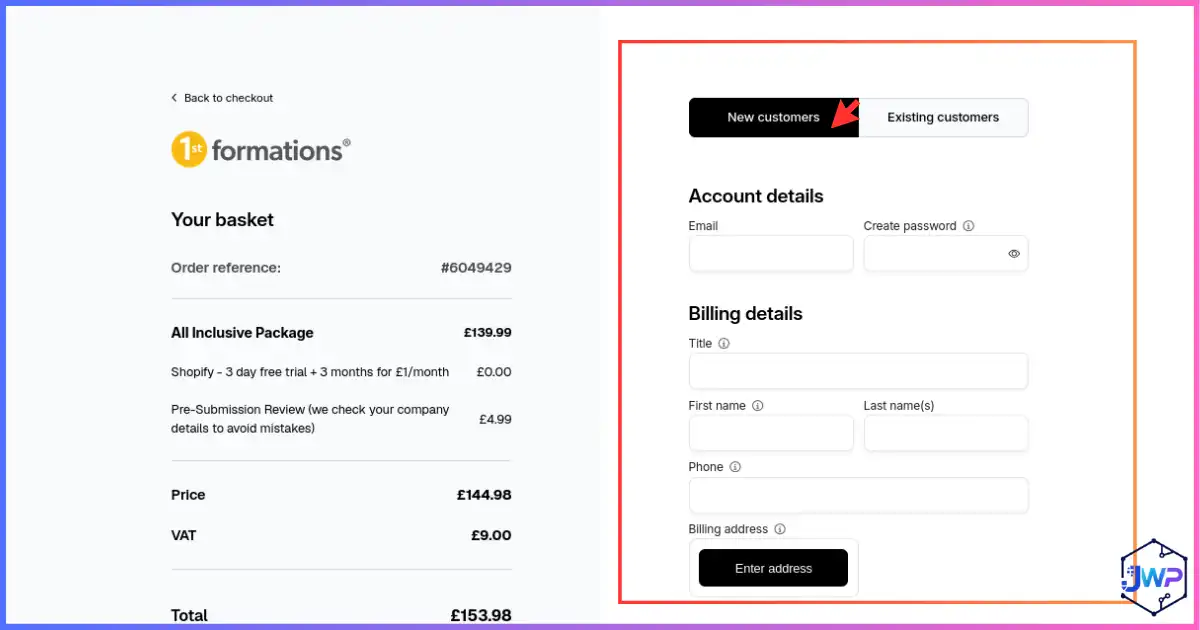
5Create an account and complete payment
Account holder information at payment is about the person paying — not necessarily a director or shareholder, although in solo setups it is usually the same person. Enter accurate billing details and pay securely. After payment, you move into the company particulars stage where legal formation data is collected.
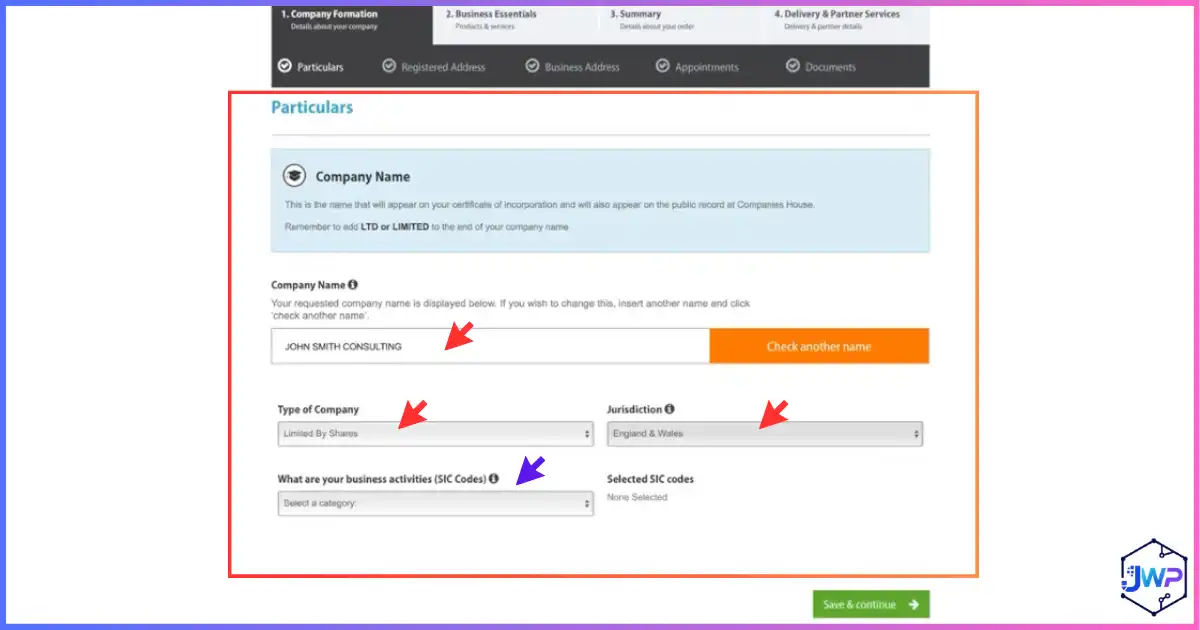
6Complete company formation particulars and SIC codes
Confirm the legal name includes Ltd or Limited. Then choose SIC (Standard Industrial Classification) codes that describe what the company will do. You need at least one code and can often select up to four. Pick codes that honestly match your activities; banks, payment platforms, and HMRC interactions later may reference what the company claims to do.
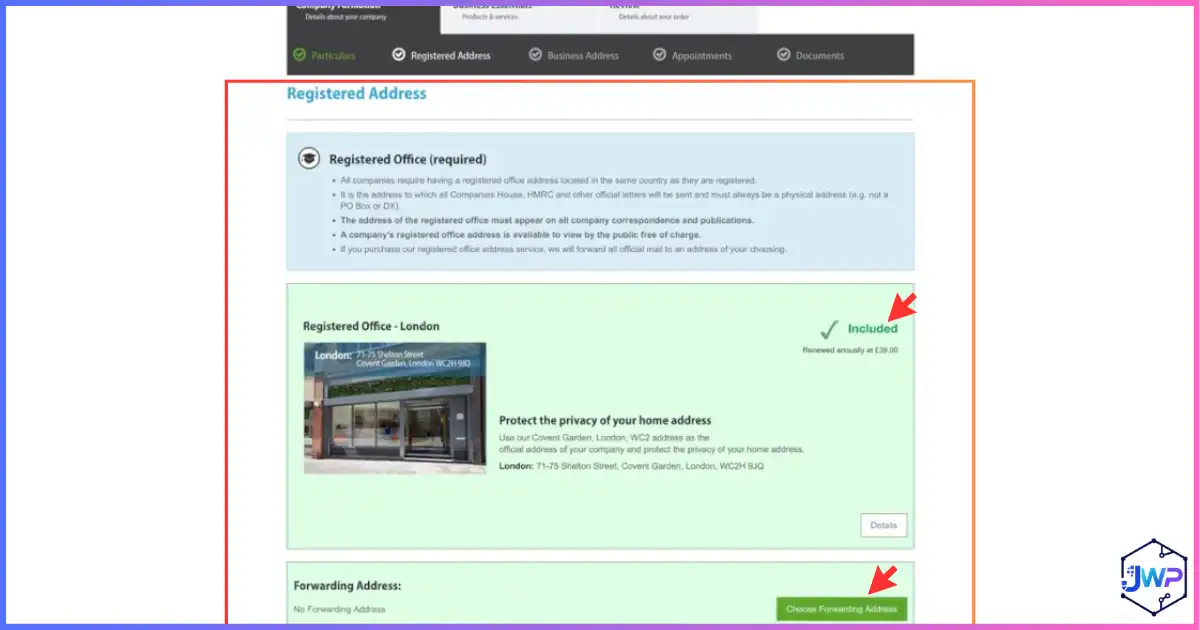
7Set the registered office and forwarding address
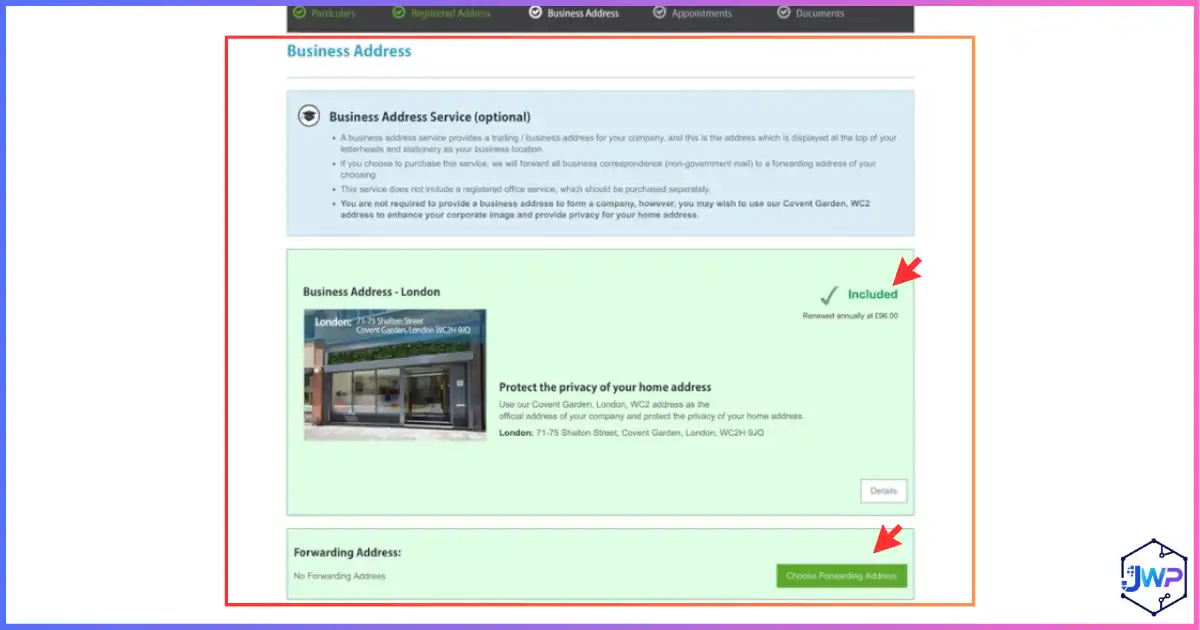
The registered office is the official address for a UK limited company and must be in the UK. You can use a residential address, but it will appear on the public register, which can attract unwanted mail or visitors. Higher packages often include an agent address (for example a central London business address) as the registered office. Separately, choose a forwarding address for items that cannot simply be scanned and emailed — for example certain physical items from HMRC.
8Configure business address options
Some packages include a business address service for day-to-day business mail. Unlike pure scanning services, some business mail may be forwarded by post, so you still need a working forwarding destination. A professional business address can help presentation, but it is an operational service with rules and renewals — not a magic “virtual company” shield.
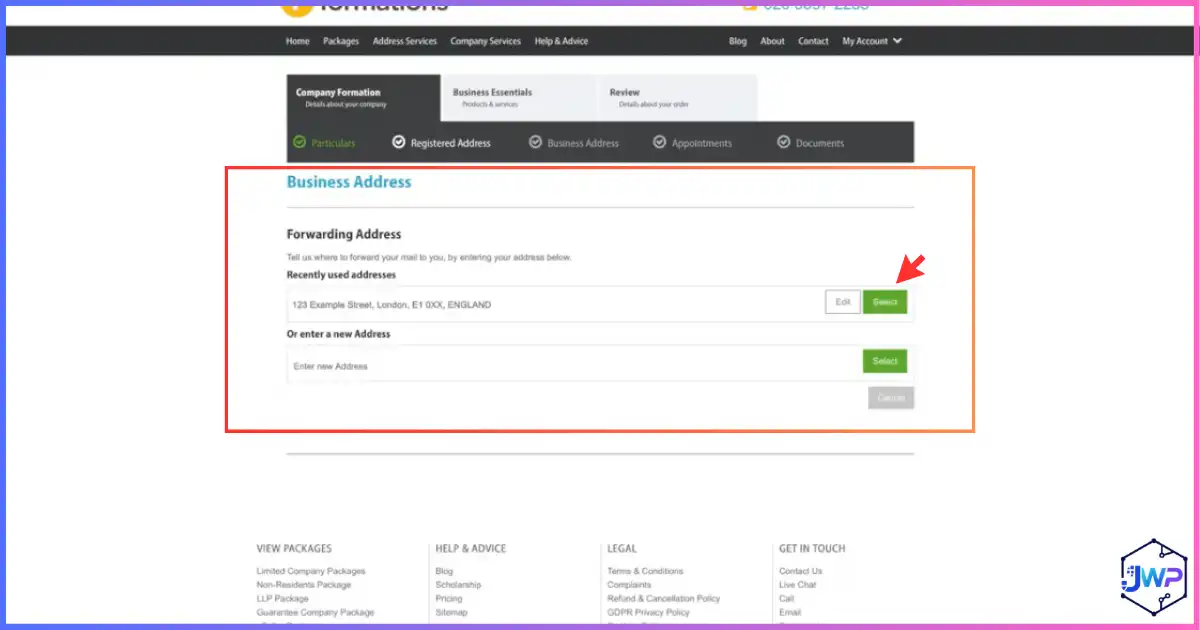
9Add or confirm business forwarding details
Double-check forwarding addresses for typos. A wrong apartment number or missing postal code can delay important documents. Non-residents should use an address where someone can actually receive mail, or a service that reliably forwards internationally.
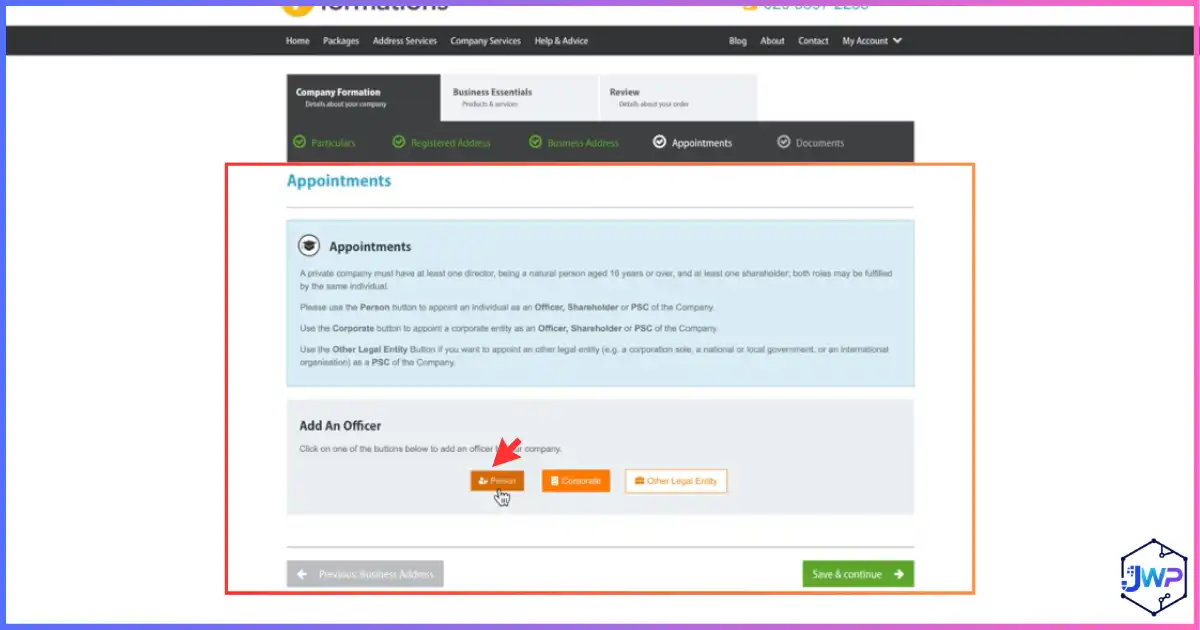
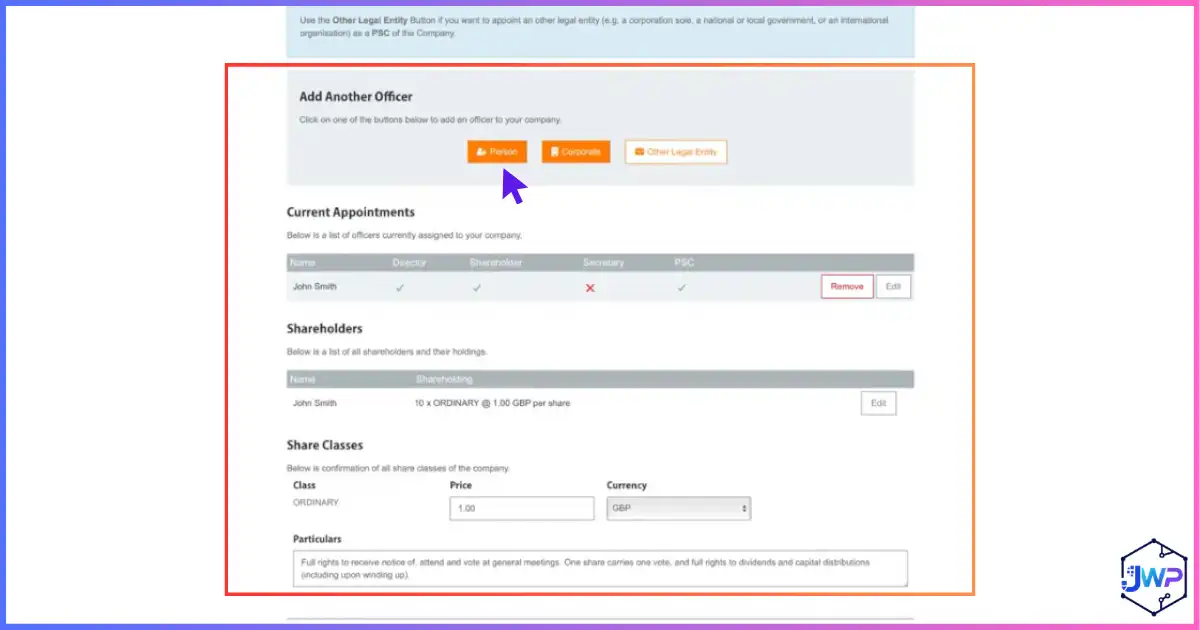
10Start company appointments
Every private limited company needs at least one director (the person who runs the company) and at least one shareholder (the person who owns the company). You must also report people with significant control — those who hold ultimate control, often but not always major shareholders. A company secretary is optional for private companies. One person can hold all roles, or roles can be split.
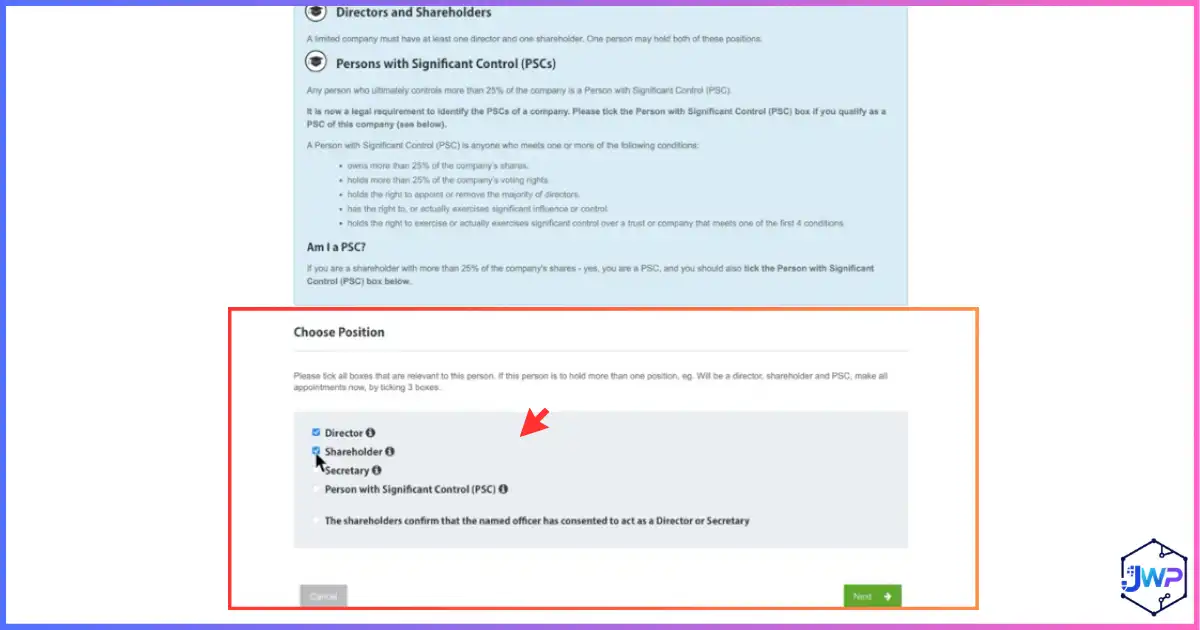
11Select appointment positions for each person
Highlight whether the person is a director, shareholder, PSC, and/or secretary. Confirm that officers have consented to act. Do not appoint someone as a director without their informed consent — director duties are real legal obligations.
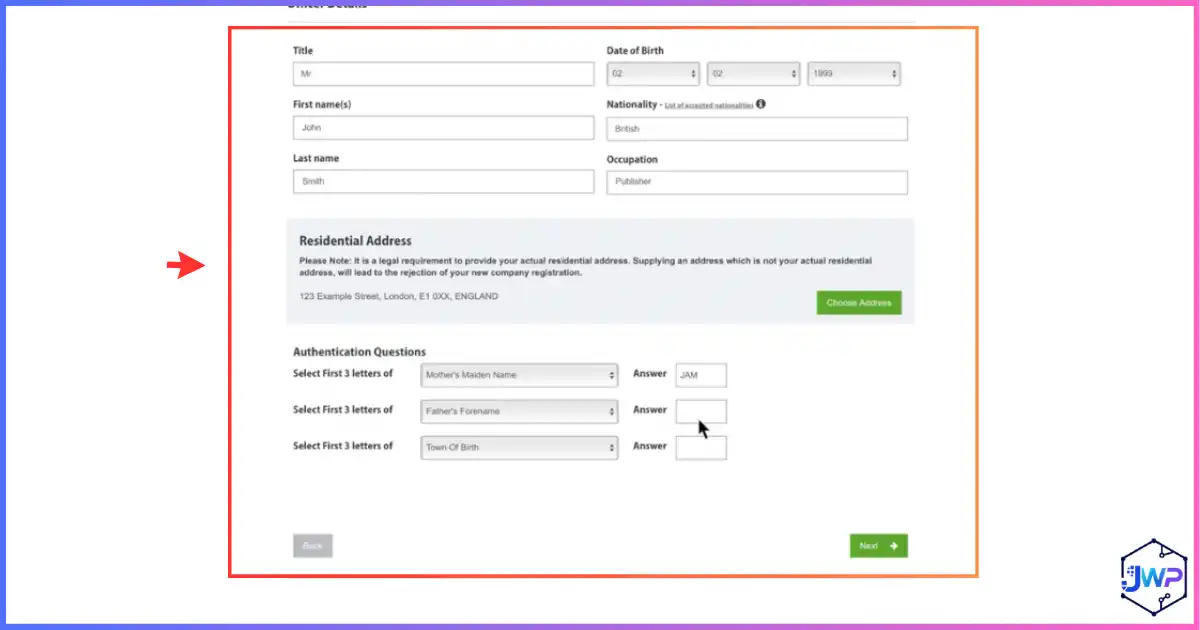
12Enter officer personal details
Provide name, date of birth, nationality, occupation, and addresses. Residential address is required by law. As long as that residential address is not also used as the registered office or service address, it is generally protected from the public register view. You will also provide security information that acts as an online signature style authentication for the appointment.
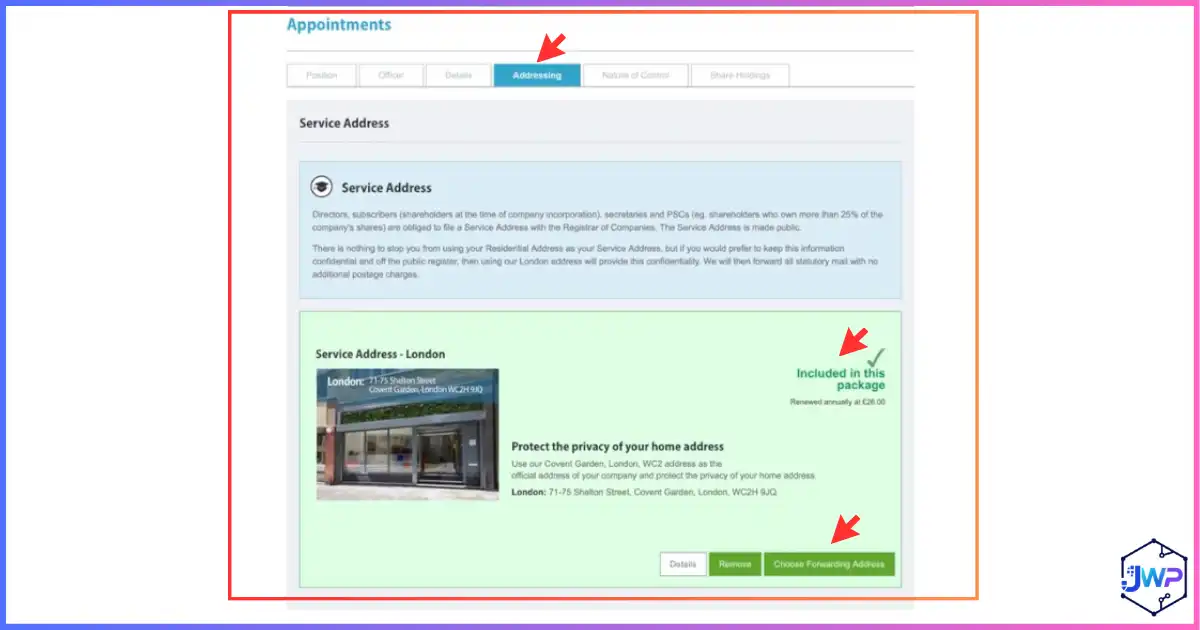
13Set the director service address
The director service address is the official correspondence address for the director and appears on the public record. It can be worldwide, including a residential address, but residential service addresses become public. Packages that include an agent service address for one director are popular for privacy. Also set forwarding for mail that cannot be scanned and must be posted.
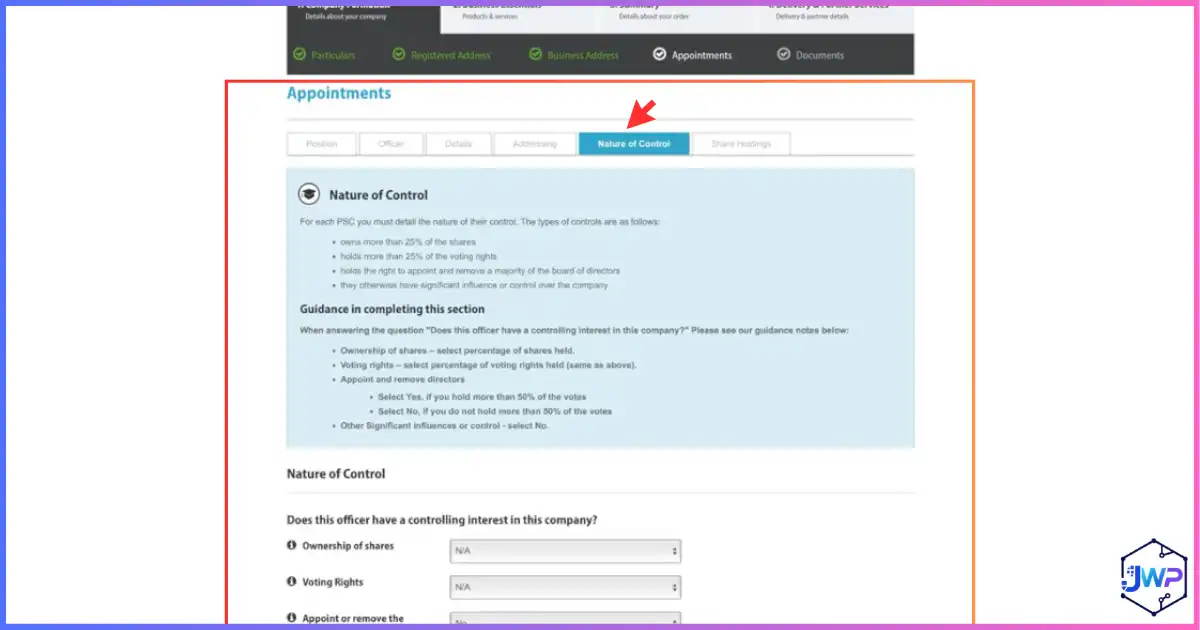
14Declare nature of control (PSC)
People with significant control must be reported with the nature of their control. Typical tests include ownership of shares, voting rights, and the right to appoint or remove a majority of the board. For a solo founder with 100% ownership, share ownership and voting rights are commonly in the “75% or more” band, and the power to appoint or remove the majority of directors is usually yes. Leave more complex control statements as no unless a professional has advised that a trust, firm, or unusual structure applies.
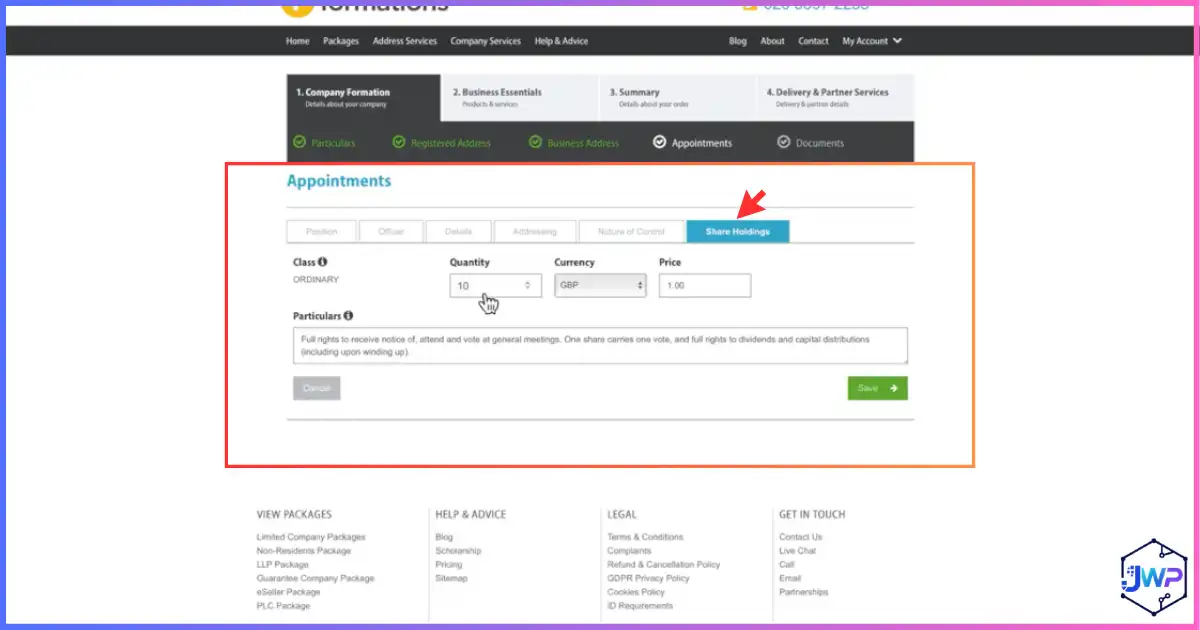
15Allocate shareholdings
Share allocation defines ownership. If there is one shareholder, one share or one hundred shares still equals 100% ownership. Issuing a round number such as 10 or 100 shares at £1 nominal value is common because it keeps total nominal capital low while leaving room to transfer shares later. Nominal value relates to the amount shareholders are generally liable for if unpaid — it is not a valuation of the business. Leave advanced share particulars unchanged unless a qualified professional has designed a custom share class structure.
16Add another person if required
If you need co-founders, investors as shareholders, or additional directors, add them here and repeat the details, addresses, control, and share steps. If the company is truly single-person, skip additional appointments and proceed once the summary shows the correct roles.
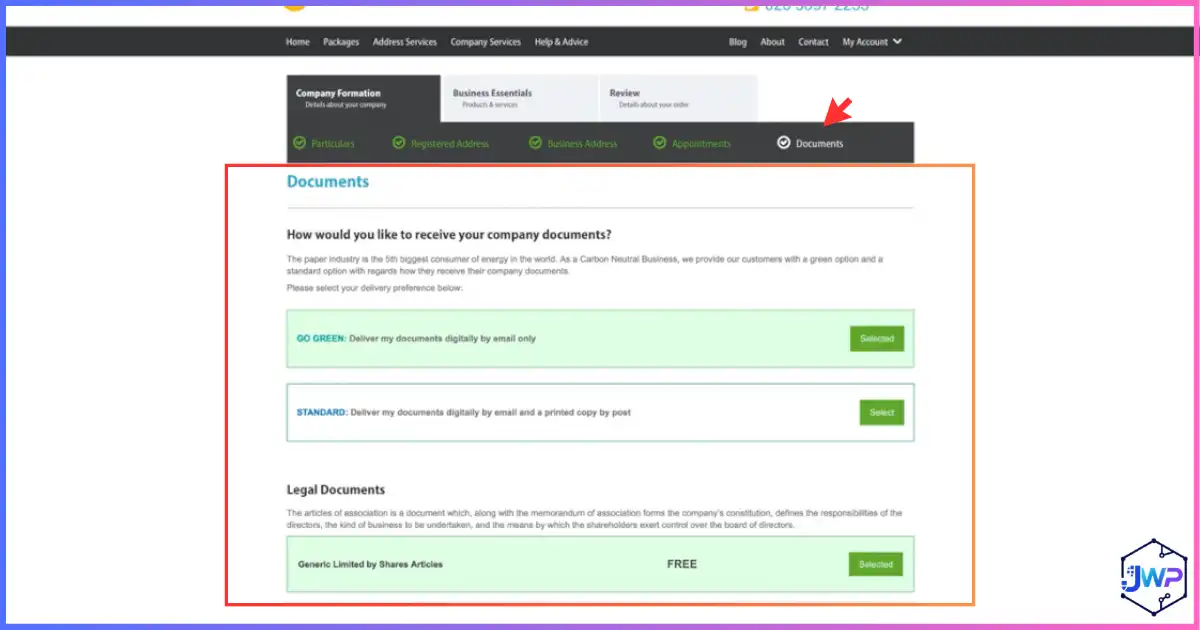
17Choose document delivery and confirm legal documents
Some packages include printed company documents; many founders choose digital delivery for speed and lower environmental impact. Formation typically uses standard articles of association unless you have custom articles from a solicitor. Standard articles are fine for many simple companies; complex voting rights, drag/tag provisions, or multi-class shares need legal drafting.
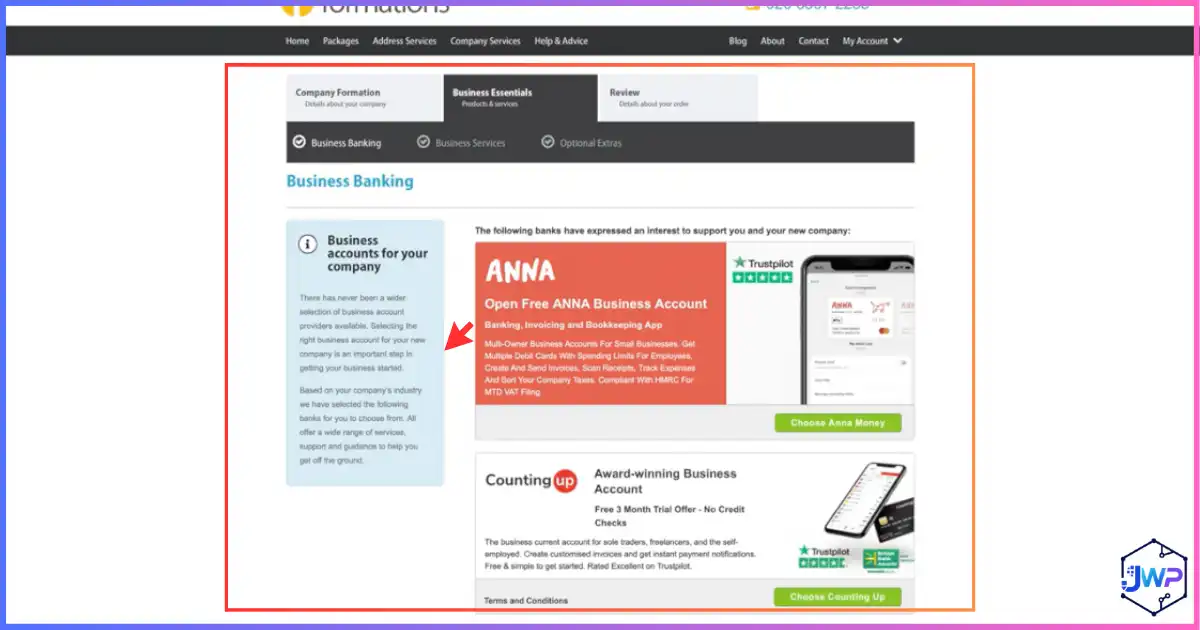
18Review business essentials and bank partner offers
After formation data is complete, you may see partner offers for business banks, accounting software, card acquiring, and community memberships. These can be useful starting points, but partner introductions are not approvals. Non-resident directors in particular should treat bank offers as optional leads and prepare a parallel plan with providers that more often onboard international founders, such as Wise or Payoneer.
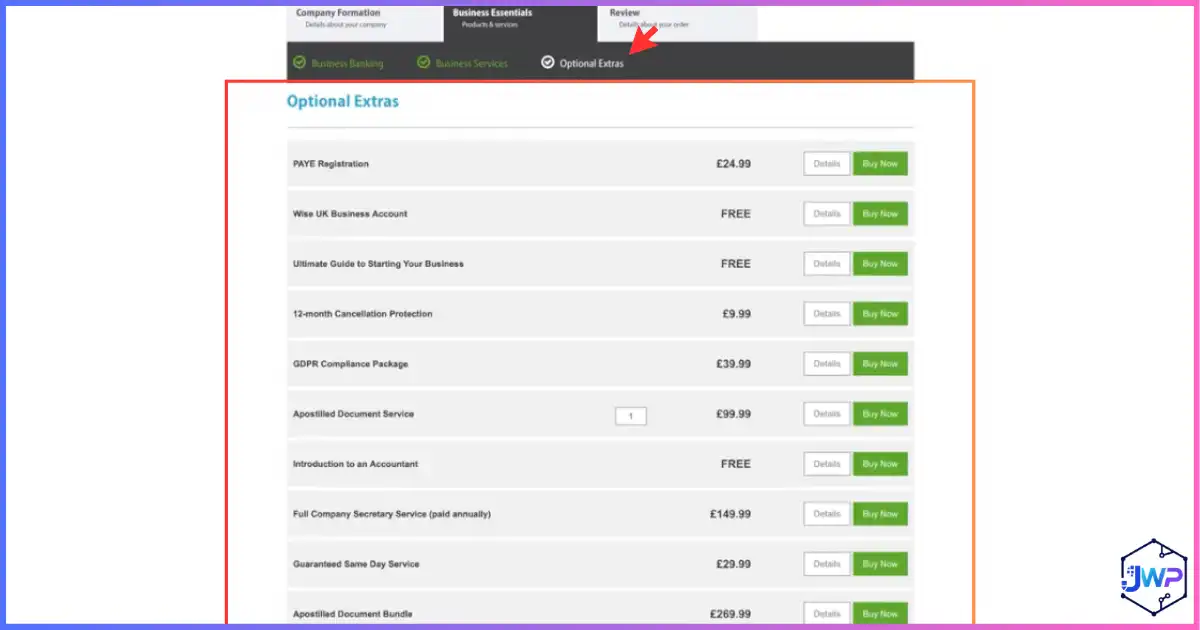
19Decide on additional services you might not need
You will often get another chance to add services first shown at checkout. This is where overspending happens. Skip extras that duplicate your accountant, that you do not understand, or that solve problems you do not have yet.
20Review every detail before final submission
The review page is your last easy chance to catch spelling errors in names, wrong share counts, incorrect control percentages, and address mistakes. Use Edit links for anything off. After submission, corrections can mean more filings, delays, or awkward bank KYC mismatches.
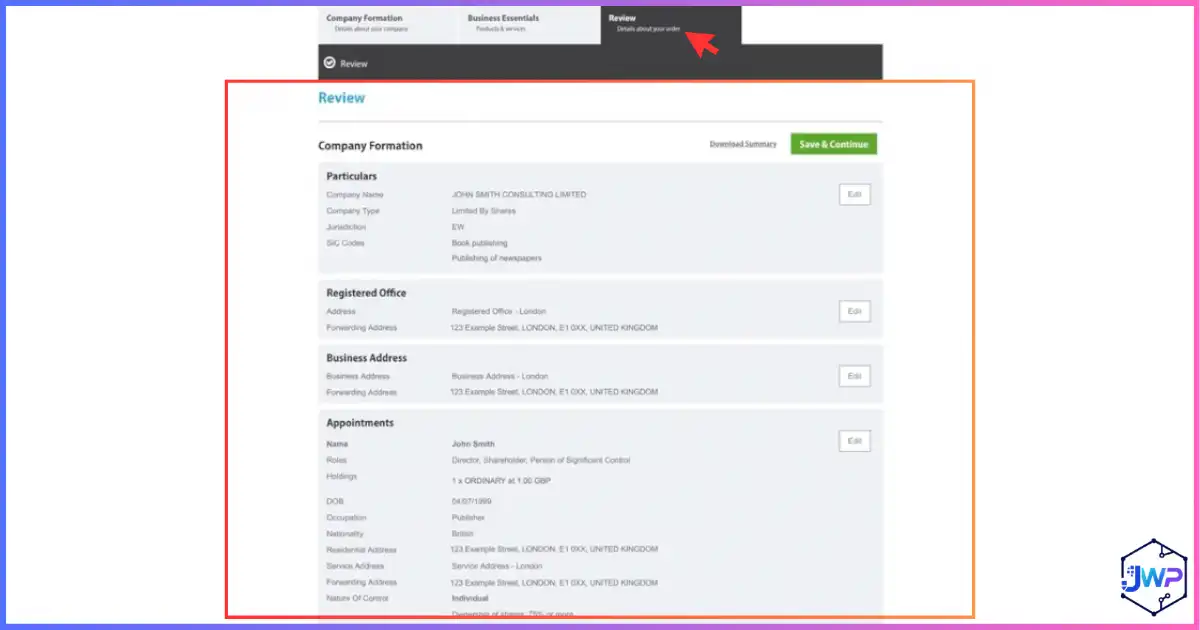
21Submit, pass checks, and wait for email confirmation
After final checkout of partner contact details (if any), the application is complete. Orders are typically checked from an identity perspective due to UK money laundering regulations. Many companies are registered in roughly 3 to 6 working hours once checks are done, depending on Companies House workload, and it can take up to around 24 hours. When formed, you should receive email confirmation with company documents, the authentication code, and details of additional services.
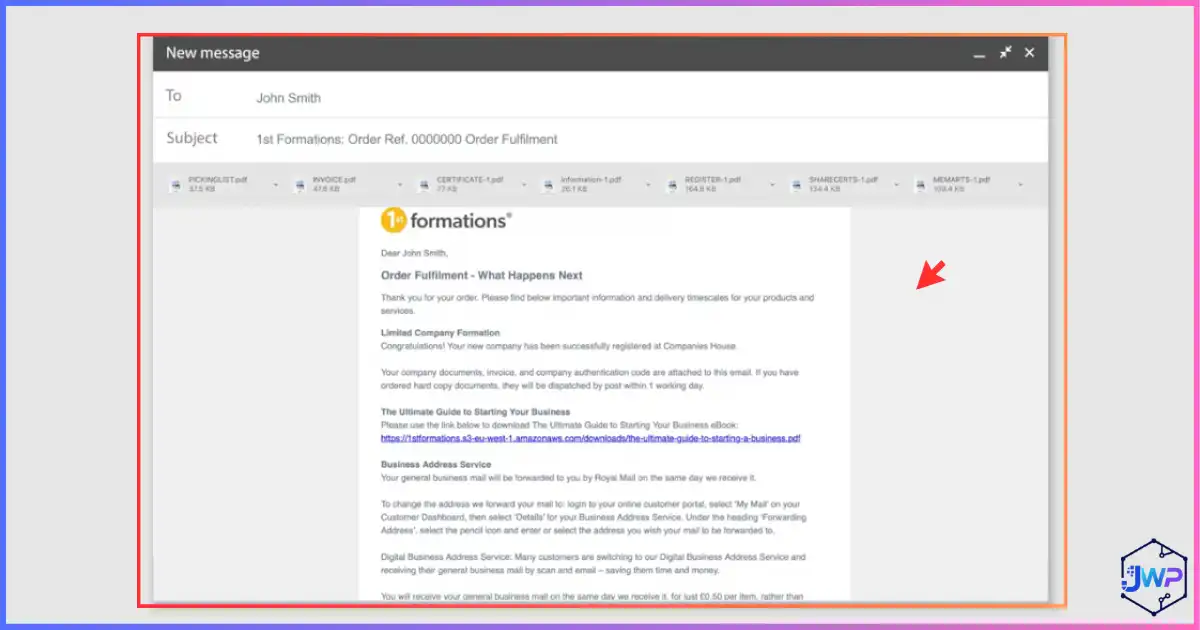
Addresses and privacy
Registered Office, Service Address, and Mail Forwarding Explained
Address strategy is one of the most important non-obvious parts of UK company formation. Mixing up address types causes privacy leaks and failed mail delivery.
| Address type | What it is | Public? | Practical notes |
|---|---|---|---|
| Registered office | Official company address for the register and formal documents | Yes | Must be in the UK; must be an appropriate address where documents can be delivered |
| Director service address | Official correspondence address for a director | Yes | Can be worldwide; residential service addresses expose home details publicly |
| Residential address | Home address of an officer | Generally protected if not also used as RO/service | Still required for legal filings and identity context |
| Business / forwarding address | Where operational or unscannable mail is sent to you | Not the same as RO by default | Must be monitored; critical for HMRC and bank letters in some cases |
If privacy matters, budget for registered office and service address services and renew them on time. Lapsing an address service without filing an update can create compliance and mail failures.
People and control
Directors, Shareholders, Secretaries, and PSCs
These roles are related but not identical:
- Director — manages the company; owes legal duties; must be at least 16.
- Shareholder / member — owns shares; controls the company through ownership and resolutions according to articles and the Companies Act.
- Company secretary — optional for private companies; can help with administration and filings.
- Person with significant control (PSC) — someone who meets control tests (commonly more than 25% shares or voting rights, or other significant influence/control tests). Must be reported accurately.
One individual can be all of the above. That simplicity is a feature for freelancers and solo consultants. It is also why banks and platforms still run full KYC on that one person — the company does not hide the human controller.
International founders
How Non-Residents Should Approach UK Ltd Formation
Non-UK residents can generally form and own a UK private limited company. Formation is often the easy part. The harder parts are:
- Securing a proper UK registered office and mail handling
- Passing AML identity verification
- Opening a usable business account
- Understanding Corporation Tax, accounting, and personal tax interactions in your country of residence
- Payment platform onboarding (PayPal, marketplaces, processors)
For a dedicated non-resident path, read how to form a UK limited company as a non-resident. If an LLP fits better, use how to form a UK LLP as a non-resident. If you are comparing UK Ltd formation with US-centric entity services, the roundup of best LLC formation services for non-US residents helps frame trade-offs. Privacy-focused readers sometimes also review how to start an anonymous LLC, but should not expect invisibility on UK public registers.
Non-resident banking expectation setting
Many traditional UK high-street business accounts are difficult or impractical without UK presence, local history, or in-person checks. That is why international founders often evaluate Wise Business and Payoneer after incorporation. Neither is a full traditional bank with FSCS deposit protection in the same way as a UK bank current account; both are payment/EMI-style providers with their own eligibility rules. Approval is never guaranteed.
Bank setup
Bank Setup After Formation: Payoneer or Wise?
Once Companies House has incorporated the company, separate business money from personal money as early as possible. For many online and non-resident-owned UK limited companies, the realistic shortlist starts with Payoneer or Wise rather than assuming a high-street bank will say yes quickly.
Wise Business — best when
- You need multi-currency balances and transparent FX
- You invoice international clients directly
- You want local account details in multiple currencies where available
- You care about clean transfers to suppliers and clear fee math
- You want accounting-friendly exports and team permissions
Full walkthrough: how to open a Wise account.
Payoneer — best when
- A large share of revenue comes from marketplaces or platforms
- You need receiving rails tied to freelancing or e-commerce payouts
- You want mass payout tools for contractors in some workflows
- You already operate in ecosystems where Payoneer is a standard payout option
- You may later combine it with another account for day-to-day spend
Full walkthrough: how to open a Payoneer account.
| Factor | Wise Business | Payoneer |
|---|---|---|
| Core strength | Multi-currency holding, low transparent conversion, business transfers | Platform/marketplace receiving and global payout workflows |
| Typical founder fit | Agencies, SaaS, consultants, importers/exporters with direct clients | Marketplace sellers, freelancers paid via partner networks |
| FX transparency | Generally very clear mid-market style pricing | Often higher effective cost on some conversions/withdrawals |
| UK Ltd + non-resident reality | Commonly used; still KYC-heavy and not guaranteed | Commonly used; still KYC-heavy and not guaranteed |
| Deposit protection | EMI/safeguarding model — not the same as FSCS bank deposits | EMI/payment institution model — not the same as FSCS bank deposits |
| Can you use both? | Yes. Some companies receive on Payoneer and operate treasury/transfers on Wise, or the reverse, depending on corridors and volume. | |
Chart 5: Choosing a Post-Formation Account Path
Editorial decision weights for a typical online UK Ltd. Your industry, residency, and revenue sources can flip the recommendation.
Documents banks and EMIs commonly request
- Certificate of Incorporation
- Articles of association
- Proof of company registered office
- Director/UBO passports and proof of address
- PSC / ownership structure explanation
- Business description, website, invoices, or contracts
- Source of funds / expected activity profile
Keep the story consistent with your Companies House filing. If your SIC codes say publishing and your bank application says crypto OTC, expect friction.
If PayPal is part of your stack, also see how to create a UK PayPal account as a non-UK resident so entity documents, addresses, and identity details stay aligned across processors.
Post-formation
After Formation Checklist: From Certificate to Compliant Operations
Incorporation creates the legal entity. Operations and compliance are a second project.
- Secure documents — Certificate of Incorporation, articles, share certificates, authentication code, officer details.
- Register for Corporation Tax with HMRC within the required timeframe after starting to do business.
- Open a business account — Wise, Payoneer, a partner bank intro, or another eligible provider.
- Set bookkeeping — even a simple ledger beats mixed personal spending.
- Decide on VAT and PAYE based on thresholds, clients, and hiring plans — not based on checkout upsells alone.
- Diary the confirmation statement and accounts deadlines.
- Maintain PSC and officer accuracy when ownership or control changes.
- Watch identity verification requirements as Companies House reforms continue.
- Align payment platforms — PayPal, Stripe-like processors, marketplaces — with the same legal name and ownership story.
- Get professional advice if you have cross-border tax residency, employees in multiple countries, or regulated activity.
Chart 6: Post-Formation Priority Mix for a New UK Ltd
An editorial view of where attention usually belongs in the first 90 days after incorporation.
Money
True Cost of Forming and Running a UK Limited Company
A cheap formation headline can hide a normal first-year bill. Think in layers:
- Official Companies House fee component — embedded in agent pricing or paid direct if you self-file.
- Agent package margin and extras — convenience, documents, support, reviews, same-day options.
- Address services — often annual after an included first period.
- Accounting and bookkeeping — DIY software vs accountant.
- Confirmation statement and accounts process — time or service fees; late filing penalties are real.
- Tax — Corporation Tax on taxable profits; VAT if registered; PAYE if employing.
- Banking and FX — account fees, conversion spreads, card fees.
- Software and operations — invoicing, domain, insurance, tools.
How to budget without self-deception
Price the formation package, add likely address renewals, add a realistic accountant or software line, and add a banking FX estimate based on your corridors. If the business cannot support that operating cost, the entity structure is not the bottleneck — the business model is.
Avoid these
Common Mistakes When You Form a UK Limited Company
- Using a home address as public registered office without understanding the privacy impact.
- Wrong share split between co-founders with no shareholders’ agreement.
- Inaccurate PSC statements to “keep it simple.”
- Buying every upsell at checkout.
- Assuming bank partner logos equal approval.
- Mixing personal and company spending after incorporation.
- Ignoring confirmation statements and accounts deadlines.
- Choosing SIC codes that do not match real activity, then confusing banks.
- Thinking a UK Ltd creates immigration rights or automatic tax residency benefits abroad.
- Copying someone else’s structure from social media without advice for your facts.
FAQ
Frequently Asked Questions
Can non-UK residents form a UK limited company with 1stfromations?
Yes, non-residents can usually form a UK private limited company. You still need a UK registered office, accurate officer and PSC data, AML checks, and a realistic banking and tax plan. See the dedicated non-resident UK limited company guide.
How long does registration take?
After a complete application and identity checks, many electronic incorporations finish in about 3–6 working hours, sometimes up to around 24 hours depending on Companies House workload. Same-day extras may be offered but still depend on clean data.
Is 1st Formations better than filing with Companies House directly?
“Better” depends on your goal. Direct filing is usually cheaper on official fees. 1st Formations is better when you want packaging, address options, document kits, guided appointments, and support. Experience level and residency matter more than brand preference.
Do I need a company secretary?
No. Private limited companies are not required to appoint a secretary. Some teams still appoint one for administrative discipline.
How many shares should I issue?
There is no single correct number. Solo founders often issue 1, 10, or 100 ordinary shares. Multi-founder teams should pick a count that expresses the agreed percentages cleanly and leaves room for future transfers.
Should I choose Payoneer or Wise after formation?
Choose Wise when transparent multi-currency business transfers and client invoicing matter most. Choose Payoneer when platform and marketplace payout rails matter most. Many companies evaluate both. Use the full guides: Wise and Payoneer.
Can I form an LLP instead?
Yes, if an LLP structure fits your ownership and tax situation better. It is a different legal form with different filing and tax consequences. Start with how to form a UK LLP as a non-resident.
Will a UK limited company help me get PayPal?
It can help present a standard business profile, but approval still depends on PayPal’s checks, activity type, identity, and risk rules. See how to create a UK PayPal account as a non-UK resident.
Sources and further reading
Sources
Official and reference sources
Related guides
- How to form a UK limited company as a non-resident
- How to form a UK LLP as a non-resident
- How to start an anonymous LLC
- Best LLC formation services for non-US residents
- How to create a UK PayPal account as a non-UK resident
- How to open a Wise account
- How to open a Payoneer account
- How to Set Up a Dormant UK Company