How to Get Free Backlinks from High-Authority Websites
By JoshWP Team | Updated: | ~38 min read | Free Backlinks High-Authority Websites SEO
What Is the Best Way to Get Free Backlinks from High-Authority Websites?
The best free backlinks come from legitimate places where your business, product, expertise, or content actually belongs. That usually means software directories, startup launch sites, founder profiles, developer repositories, community pages, local business profiles, partner pages, podcast/show notes, expert quotes, resource pages, and link reclamation. The safest strategy is not to chase “dofollow links” blindly; it is to create accurate profiles, publish useful assets, earn mentions, and qualify any paid or sponsored links correctly.
Backlinks still matter, but not all backlinks are equal. Google’s own documentation explains that links help search engines discover pages and understand context, while Google’s spam policies warn against manipulative link schemes. Research from Backlinko found that top-ranking Google results tend to have substantially more backlinks and referring domains than lower-ranking results. Ahrefs has also shown how difficult it is for pages to earn organic traffic without strong topic targeting and links.
Do not treat this as a shortcut to manipulate rankings. Free backlink building should mean legitimate visibility, profile completion, helpful citations, and relationship-based promotion. Avoid private blog networks, automated comment spam, fake forum profiles, paid links without disclosure, hacked links, link exchanges at scale, or irrelevant directory blasts. Those tactics can create ranking loss, manual actions, and a messy backlink profile that later needs cleanup.
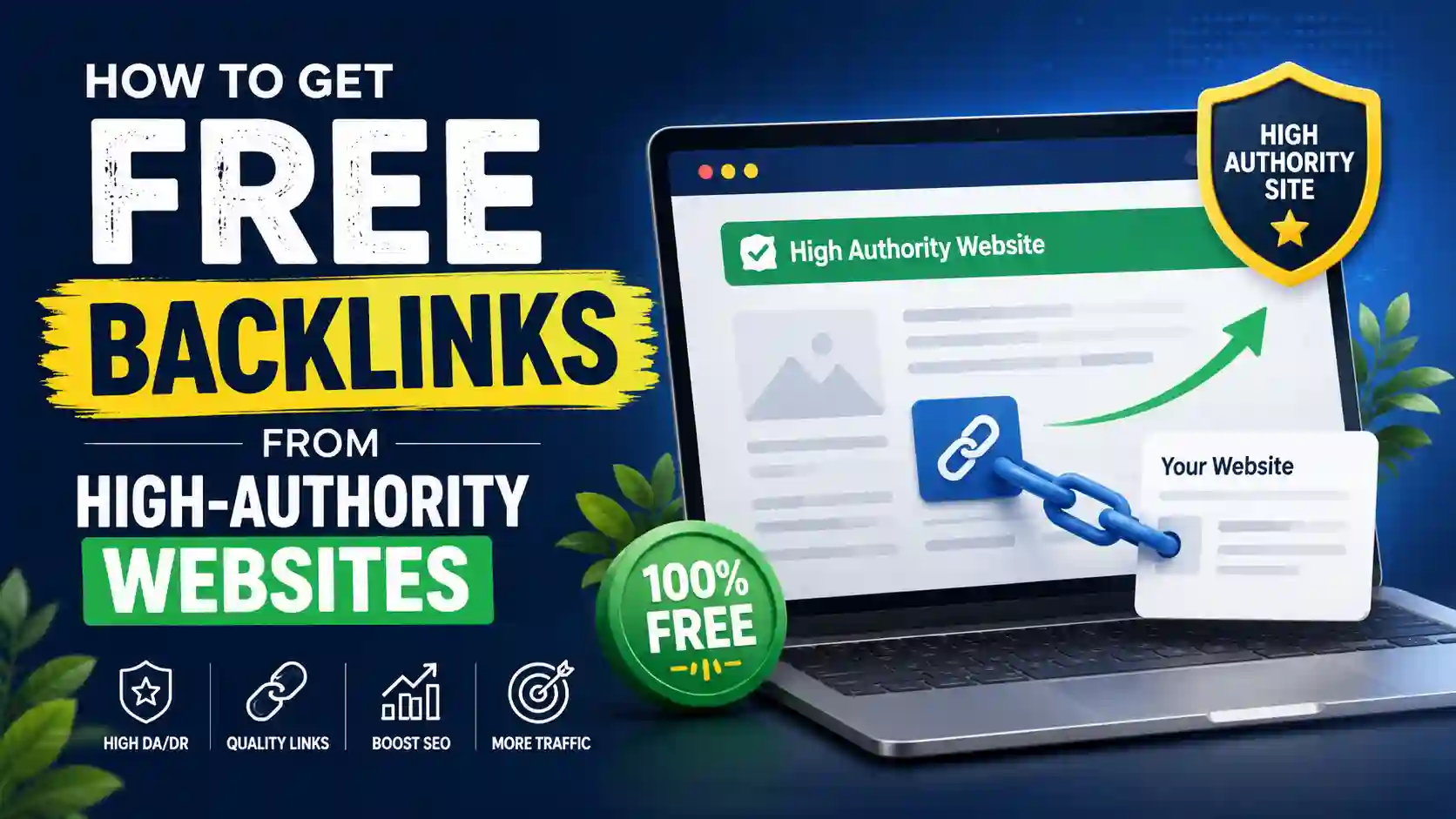
Table of Contents
- What counts as a free backlink?
- Backlink statistics and charts
- What makes a backlink high quality?
- The ethical backlink strategy
- Assets to prepare before submitting
- 50+ websites for free backlinks
- Best high-authority opportunities by use case
- CodeTrendy and SitePatent
- 10 free backlink methods that still work
- Outreach templates
- Tracking and measurement
- What to avoid
- Submission checklist
- FAQs
- Sources
What Counts as a Free Backlink?
A free backlink is any link to your website that you can earn, create, request, or receive without directly paying for the link placement. That definition includes free directory listings, free product profiles, contributor bios, business citations, community profiles, open-source project pages, podcast/show-note mentions, unlinked brand mention reclamation, and editorial links from useful content.
But “free” does not mean effortless. A directory listing might take ten minutes. A high-quality guest quote might require original data, an expert answer, and follow-up. A resource page link might take targeted outreach. A Product Hunt launch might take weeks of preparation. You are paying with time, positioning, assets, and credibility instead of cash.
Follow vs nofollow vs sponsored vs UGC
Many beginners obsess over whether a link is “dofollow.” In modern SEO, that is too narrow. Google treats link attributes as signals, and strong nofollow links can still be valuable for discovery, referral traffic, brand trust, and future citations. You should understand link attributes, but you should not ignore a relevant, high-traffic, nofollow listing just because it is not a classic followed backlink.
| Link type | What it means | Free backlink value | Beginner mistake |
|---|---|---|---|
| Follow / normal link | A standard link without a restrictive attribute. | Can pass stronger SEO signals when relevant and trusted. | Assuming every followed link is safe or valuable. |
| nofollow | Suggests search engines should not pass ranking credit in the traditional way. | Still useful for traffic, discovery, brand, and natural link diversity. | Ignoring high-quality nofollow links from real communities. |
| ugc | Marks user-generated content such as comments or forum posts. | Can be legitimate when the contribution is useful. | Dropping thin links in forums and calling it SEO. |
| sponsored | Marks paid, affiliate, or sponsored links. | Good for compliance and transparency, not a “free” backlink tactic. | Buying links and hiding the commercial nature. |
Simple rule: If a link exists because your business, content, or expertise is genuinely useful in that context, it is usually worth pursuing. If the only reason the page exists is to manipulate rankings, skip it.
Why Free Backlinks Still Matter: The Data
Backlinks are not the only ranking factor, and they cannot rescue weak content, poor search intent matching, or a bad website. Still, links remain one of the most visible signals separating pages that get discovered from pages that stay invisible. Backlinko’s search-result study found that pages ranking #1 have far more backlinks and referring domains than other first-page results. Ahrefs’ traffic study also shows how brutal the web is: most pages receive no organic traffic at all.
The zero-traffic problem
Based on Ahrefs’ public 2023 traffic study. Use this as a directional reality check, not a guarantee for your niche.
Free backlink methods by effort and upside
Editorial scoring: higher is better. Directories are fast; digital PR and resource outreach take longer but can produce stronger links.
Outreach funnel reality for 100 targeted emails
Illustrative model using commonly cited outreach benchmarks: roughly 8.5 replies per 100 emails and a much smaller link placement rate. Better prospecting and personalization can beat the average.
What Makes a Backlink “High Authority”?
“High authority” is often used casually, but it should not mean “a random page on a high-DR domain.” A profile link from a dead user page on a massive site can be less useful than a contextual mention from a smaller industry blog that sends qualified visitors. The best free backlinks usually combine relevance, trust, traffic, editorial standards, and a natural reason for the link to exist.
1. Relevance
A link from a page about your industry, product category, location, or expertise is usually stronger than a random unrelated profile link.
2. Trust
Government, education, respected media, established marketplaces, and curated directories generally carry more trust than anonymous auto-approve pages.
3. Traffic
A link on a page people actually visit can bring referral traffic, leads, and brand signals even when the link is nofollow.
4. Editorial friction
If anyone can post anything instantly, the link is usually easier to obtain and easier for search engines to discount.
5. Placement
A contextual link inside a useful paragraph beats a footer, author bio, or empty profile page with no content.
6. Diversity
Natural backlink profiles include directories, profiles, mentions, partners, press, citations, and content links, not one repeated pattern.
Metric caution: DA, DR, authority score, Trust Flow, and similar third-party metrics are useful for triage, but none of them are Google metrics. Use them to prioritize opportunities, not to justify irrelevant or risky links.
The Ethical Free Backlink Strategy
The safest way to get free backlinks from high-authority websites is to treat links as a byproduct of distribution. You are not “dropping links.” You are making your product discoverable, documenting your expertise, and giving other sites a real reason to reference you.
Fix the destination page first
No directory, journalist, or curator wants to link to a weak landing page. Your homepage should explain what you do in one sentence, include screenshots or proof, load quickly, and have a real contact page. If your website still looks unfinished, build the destination before chasing links.
Create a “linkable asset”
Examples: a free tool, original dataset, calculator, template library, benchmark report, glossary, comparison page, map, checklist, or industry directory. Profiles can get you started, but assets earn stronger editorial links.
Submit to relevant high-authority platforms
Start with directories and profiles where your site naturally belongs. A SaaS belongs on SaaS directories; a local service belongs on local citations; a developer tool belongs on GitHub, StackShare, SourceForge, and dev communities.
Earn mentions through relationships
After the easy profiles, move into expert quotes, podcasts, guest contributions, founder stories, resource page outreach, and partner links.
Measure and prune
Track referral visits, indexed pages, rankings, leads, and link quality. Do not keep submitting to low-quality directories just because they accept everyone.
Your site has to deserve the link
Backlink building becomes easier when the page is fast, clear, visual, and useful. If your current site is still rough, improve the destination before scaling outreach. WordPress users can start with free lightweight themes so new backlinks point to pages that load quickly and feel trustworthy.
Assets to Prepare Before You Submit Anywhere
The biggest hidden cost of free backlinks is repetition. Every directory asks for slightly different inputs. Prepare a “submission kit” once, then reuse it across CodeTrendy, SitePatent, Product Hunt, SaaSHub, AlternativeTo, GitHub, business profiles, and niche directories.
Core assets
- Logo: square PNG or SVG, ideally 512×512
- Short tagline: under 60 characters
- One-sentence pitch: who it helps and what it does
- 50-word, 150-word, and 300-word descriptions
- 3-5 product screenshots showing the product in use
- Founder name, role, bio, headshot, and LinkedIn/X profiles
- Pricing summary or “free plan available” note
- Category and competitor alternatives list
Trust assets
- Contact email on your domain
- Privacy policy and terms pages
- About page with real ownership details
- Customer logos or testimonials, if true
- Case study or proof page
- Press kit or media page
- UTM-tagged campaign spreadsheet
- Business entity details, where appropriate
Technical reliability matters too. A directory reviewer, journalist, or resource-page editor may only check your site once; if it is down, slow, or full of broken pages, you lose the opportunity. Set up website uptime monitoring before you start outreach, especially if you are submitting a SaaS, tool, or service site.
Founder note: If you are building a serious business and want cleaner trust signals for outreach, payment processors, contracts, and directory submissions, forming a real entity can help. For U.S. businesses, consider Northwest Registered Agent. Entity formation is not required for every backlink tactic, but it can make business verification easier.
50+ Websites to Get Free Backlinks from High-Authority Websites
The list below is intentionally practical. Some links are followed, some are nofollow, some are profile links, and some are editorial opportunities. Policies change often, so verify each site’s current submission rules. Prioritize relevance over volume.
| Website | Best for | Free path | Link expectation | Submission tip |
|---|---|---|---|---|
| CodeTrendy | Startups, tools, SaaS, developer products | Free reviewed listing; paid instant options may exist | Public profile with site link | Use a sharp tagline and category fit; free approvals may require a badge. |
| SitePatent | Websites, tools, launches, community discovery | Free or premium listing model | Public listing with website link | Submit a polished site and avoid claims that imply guaranteed rankings. |
| MediaProNet | Websites, media projects, tools, and digital brands | Free listing or profile submission | Directory visibility and website link | Use a clear brand description, category fit, and a polished destination page. |
| Product Hunt | Product launches, SaaS, AI, creator tools | Launch page | Often nofollow but high visibility | Prepare makers, assets, comments, and launch story before publishing. |
| Hacker News / Show HN | Developer tools, technical products, open-source projects | Show HN post | Usually nofollow/community link | Only submit genuinely interesting technical work; avoid marketing copy. |
| Indie Hackers | Bootstrapped startups, founder stories | Founder profile and product discussions | Community/profile links | Share numbers, lessons, and build-in-public updates instead of link drops. |
| GitHub | Open-source projects, developer tools, docs | Repository, organization profile, README | Strong discovery and credibility | Create useful documentation and examples; do not create empty repos for links. |
| GitLab | Developer projects and mirrored repositories | Project profile and docs | Profile/project links | Mirror only real projects and keep the README current. |
| SourceForge | Software downloads and open-source projects | Project page | High-authority software listing | Add screenshots, releases, documentation, and update history. |
| AlternativeTo | Software alternatives and comparison traffic | App suggestion/listing | High-intent directory link | Map your product to real alternatives users already search for. |
| SaaSHub | SaaS discovery and alternative pages | Free product submission | Directory/profile link | Fill out features, pricing, competitors, and categories carefully. |
| StackShare | Developer tools and company tech stacks | Tool/company profile | Profile and stack links | List accurate integrations and usage; useful for developer-facing products. |
| F6S | Startups, accelerators, grants, founder profiles | Startup profile | Startup ecosystem profile | Complete founder/team information and funding stage. |
| Crunchbase | Company profile, funding, executive visibility | Basic company profile | High-authority company citation | Use consistent company name, founding date, categories, and executives. |
| Wellfound | Startups and recruiting | Company profile | Company profile link | Useful if hiring or presenting as a startup. |
| BetaList | Pre-launch startups | Submit beta product | Launch listing | Best before public launch, especially for waitlists. |
| Uneed | New tools and SaaS products | Free or free-entry listing | Directory discovery link | Use category keywords and a clear product screenshot. |
| Startup Stash | Startup tools and resources | Submit a resource/tool | Curated listing if accepted | Works best for useful tools, templates, and resources. |
| G2 | B2B SaaS buyers | Free vendor profile | High-authority review profile | Reviews matter more than the link; build customer proof. |
| Capterra | Business software categories | Vendor listing | High-intent software profile | Complete feature/pricing fields and collect legitimate reviews. |
| GetApp | Business software discovery | Software profile | Marketplace profile link | Use consistent categories across Gartner-owned properties. |
| Trustpilot | Reviews and reputation | Business profile | Review platform profile | Do not fake reviews; invite real customers only. |
| Google Business Profile | Local businesses | Free local profile | Major local citation | Only use it if you can verify a legitimate local presence. |
| Bing Places | Local business search | Free business listing | Local citation | Keep NAP data consistent with Google Business Profile. |
| Apple Business Connect | Local maps and Apple ecosystem | Free place card | Local citation/brand profile | Useful for customer-facing locations and service businesses. |
| Yelp | Local services and restaurants | Free business page | Local citation/review link | Best for businesses with local search intent. |
| LinkedIn Company Page | Any real business | Company profile | Trusted brand profile | Post updates and link key team members. |
| YouTube | Video content and tutorials | Channel links and descriptions | Brand/discovery links | Publish useful videos; avoid empty channels created for a profile link. |
| Facebook Page | Local brands, communities, services | Business page | Social profile link | Complete the about section and keep contact details consistent. |
| X / Twitter | Founder brands, SaaS, media | Profile link | Social profile link | Useful when paired with active posts and founder visibility. |
| Pinterest Business | Visual products, recipes, design, commerce | Business profile and pins | Referral traffic and profile link | Create useful pins that point to real pages, not generic homepages. |
| Medium | Thought leadership and republished essays | Author profile and articles | Usually nofollow/canonical options | Republish carefully with canonical links where appropriate. |
| Dev.to | Developer content | Author profile and posts | Community links | Teach something real; promotional posts perform poorly. |
| Hashnode | Developer blogging | Blog/profile | Content/profile links | Use it for technical tutorials that can rank independently. |
| Substack | Newsletters and expert publishing | Publication profile | Content/profile links | Publish a newsletter only if you will keep it alive. |
| Beehiiv | Newsletter publishing | Publication archive | Content links | Useful for building indexed newsletter assets. |
| About.me | Personal brand profile | Free profile | Profile link | Good for founder identity, not a primary SEO tactic. |
| Behance | Design portfolios | Portfolio projects | Portfolio/profile link | Use for visual case studies with actual work samples. |
| Dribbble | Designers and product visuals | Profile and shots | Portfolio visibility | Best if your visual work is strong enough to stand alone. |
| WordPress.org Plugin Directory | WordPress plugins | Plugin page | Very relevant software link | Only for real, maintained plugins that follow repository rules. |
| npm | JavaScript packages | Package page | Developer ecosystem link | Add docs, repository, homepage, and examples. |
| PyPI | Python packages | Package page | Developer ecosystem link | Publish a useful package, not a shell package for SEO. |
| Docker Hub | Containerized software | Repository page | Developer profile link | Useful for devops tools and open-source projects. |
| Chrome Web Store | Browser extensions | Extension listing | Product ecosystem link | Only if you have a real extension that complies with policies. |
| Shopify App Store | Ecommerce apps | App listing if approved | High-intent marketplace link | Requires real app and approval; not a casual backlink tactic. |
| Microsoft AppSource | B2B software and Microsoft integrations | App listing if approved | Enterprise marketplace profile | Best for Microsoft ecosystem products. |
| There’s An AI For That | AI tools | AI tool submission | AI directory visibility | Use task-specific categories and screenshots. |
| Futurepedia | AI tools | AI product listing | AI directory profile | Best for AI tools with clear use cases. |
| OpenAlternative | Open-source alternatives | Submit project | Niche relevant listing | Only for genuine open-source alternatives. |
| Open Source Alternative To | Open-source tools | Project listing | Niche relevant listing | Position against known software categories. |
| Podcasts / show notes | Founders, experts, consultants | Guest appearance | Editorial show-note link | Pitch a useful story or expert angle, not “please link to me.” |
| University/resource pages | Educational assets, templates, data | Resource outreach | Potential high-trust editorial link | Only pitch truly useful non-commercial resources. |
| Partner pages | Integrations and agencies | Partner profile | Highly relevant B2B link | Create real partnerships or integrations first. |
Best High-Authority Backlink Opportunities by Use Case
You do not need all 50+ opportunities. You need the right 10-20 for your business. A local plumber, a Chrome extension, an AI writing tool, a Shopify app, and a B2B consultancy should not follow the same backlink checklist.
| Business type | Start here | Second wave | Avoid wasting time on |
|---|---|---|---|
| SaaS product | CodeTrendy, SitePatent, Product Hunt, SaaSHub, AlternativeTo, G2, Capterra | Founder podcasts, comparison pages, partner pages, data reports | Generic local directories unless you serve a local area |
| Developer tool | GitHub, GitLab, SourceForge, StackShare, Dev.to, Hashnode, Hacker News | npm/PyPI/Docker Hub, technical guest posts, integration partner pages | Thin startup lists with no developer audience |
| AI tool | There’s An AI For That, Futurepedia, Product Hunt, CodeTrendy, Uneed | Prompt/template libraries, comparison posts, use-case pages | Mass AI directories that accept anything without review |
| Local service | Google Business Profile, Bing Places, Apple Business Connect, Yelp, chamber directories | Local sponsorship pages, local news, supplier links | Global SaaS directories |
| Agency/consultant | LinkedIn Company Page, Clutch-style profiles, partner directories, case studies | Guest quotes, podcasts, resource pages, template assets | Product-only directories unless you offer a tool |
| Creator/media site | YouTube, Substack/Beehiiv, Medium, podcast platforms, social profiles | Original research, interviews, expert roundups, digital PR | Directories that require a software product |
CodeTrendy and SitePatent: How to Use Them Properly
CodeTrendy, SitePatent, and MediaProNet fit naturally into a free-backlink plan because they are discovery/listing platforms rather than random auto-approve link dumps.
CodeTrendy
CodeTrendy positions itself as a startup discovery and visibility platform for developers, founders, and makers. Its public information describes free listings with manual review, a permanent public profile with a link, and paid plans for instant approval or featured placement.
- Best for: SaaS, tools, AI products, dev products, founder launches.
- Free strategy: Submit a complete listing, use the right category, and comply with badge/review requirements if applicable.
- Paid caution: If you buy featured placement, treat it as advertising and use proper sponsored disclosure where you control the link.
SitePatent
SitePatent describes itself in its terms as a curated web directory where users can submit websites for free or premium listings, receive featured placement, vote, review, and discover websites. Its terms also state that premium listings do not guarantee rankings or traffic.
- Best for: Websites, tools, small businesses, maker projects, launch visibility.
- Free strategy: Submit a polished website with clear category, tagline, and proof of usefulness.
- Paid caution: Do not buy premium purely for “link juice.” Buy only if the audience and visibility make sense.
MediaProNet
MediaProNet can be used as another visibility and listing opportunity for websites, media projects, tools, and digital brands that want an additional public profile or citation source.
- Best for: Websites, media brands, tools, digital services, and content projects.
- Free strategy: Submit a complete profile with a clear description, accurate category, and a polished destination page.
- Quality caution: Treat it as one relevant citation in a broader backlink plan, not as a guaranteed ranking shortcut.
10 Free Backlink Methods That Still Work
1. Startup and SaaS directory submissions
This is the quickest foundation for new products. Submit to CodeTrendy, SitePatent, Product Hunt, SaaSHub, AlternativeTo, BetaList, F6S, and relevant niche directories. The goal is not only SEO; it is also category discovery, referral traffic, and proof that your product exists outside your own domain.
2. High-authority profile completion
Create accurate company or founder profiles on LinkedIn, Crunchbase, Wellfound, GitHub, YouTube, and social platforms where your audience actually spends time. Add your website in the official link field, but avoid keyword stuffing profile names.
3. Developer ecosystem links
If you have code, create real repositories and packages. GitHub, npm, PyPI, Docker Hub, WordPress.org, SourceForge, and Chrome Web Store can produce highly relevant links and real users. The condition is simple: the project must be useful.
4. Local citation building
Local businesses should build consistent citations on Google Business Profile, Bing Places, Apple Business Connect, Yelp, industry associations, local chambers, and supplier directories. Use the same name, address, phone, and URL everywhere.
5. Resource page outreach
Find pages that list useful resources in your niche. Create or improve a resource that belongs there, then send a concise pitch explaining why it helps their readers. This works best for calculators, templates, checklists, glossaries, datasets, and genuinely free tools.
6. Unlinked brand mention reclamation
Search for mentions of your brand, founder name, product name, statistics, or images. If a site mentions you without linking, politely ask whether they can add the source link for readers.
7. Broken link building
Find broken links on relevant resource pages, create or identify a useful replacement on your site, and tell the site owner. This is not “your broken link, give me a link.” It is “I found something broken and have a relevant replacement.”
8. Expert quotes and digital PR
Journalists, bloggers, and newsletter writers need expert comments. Respond quickly with specific, quotable answers. The best answers include a real example, a statistic, or a counterintuitive lesson.
9. Partner and integration pages
If your business integrates with another tool, uses a platform, sponsors a community, or collaborates with an agency, ask about a partner page. These are often highly relevant and commercially useful.
10. Original research and free tools
This is the long-term moat. People link to data, calculators, maps, benchmarks, templates, and tools because those assets make their own content better. Even a small survey of your audience can become a linkable asset if it answers a real question.
Make the link destination worth citing
Directories can give you a foundation, but stronger links come when your site has useful pages people want to reference. Builder.io can help you ship polished pages faster if your current site is blocking your outreach.
Free Backlink Outreach Templates
Good outreach is short, specific, and useful. Do not send mass emails pretending you read a page you did not read. The templates below are intentionally simple. Personalize them or do not send them.
Resource page pitch
Unlinked mention request
Broken link replacement
Expert quote pitch
How to Track Free Backlinks Without Getting Lost
A backlink campaign without tracking becomes a pile of half-submitted profiles. Use a simple spreadsheet first. Add paid SEO tools later only when the campaign is large enough.
| Field | Why it matters | Example |
|---|---|---|
| Website | Where you submitted or pitched | CodeTrendy |
| Category | Directory, profile, PR, resource page, local citation | Startup directory |
| Status | Not started, submitted, approved, rejected, follow-up | Submitted |
| Submission URL | Where to edit or check the profile | /submit |
| Live URL | The final page containing your link | /product/your-tool |
| Link attribute | Follow, nofollow, UGC, sponsored, unknown | Unknown |
| Referral visits | Whether the link sends real traffic | 22 visits/month |
| Lead quality | Did traffic convert? | 2 signups |
| Renewal or badge requirement | Some free listings require badges or maintenance | Badge required |
| Next action | Follow-up date or optimization task | Add screenshots |
Measurement rule: A link that sends qualified visitors can be more valuable than a followed link nobody ever sees. Track SEO impact, but also track referral traffic, signups, demos, newsletter subscribers, and assisted conversions. If you monetize content with display ads, keep ad implementation clean and non-intrusive; this Adsterra ads in React/Next.js guide is useful for avoiding layout and performance mistakes that can weaken user trust.
What to Avoid When Building Free Backlinks
Free backlink building can be safe and useful, but the line into spam is easy to cross. Google’s spam policies are broad and can apply to any practice designed primarily to manipulate rankings rather than help users.
Skip these tactics
- Automated profile creation across hundreds of sites
- Blog comment spam
- Forum signature spam
- Irrelevant directory submissions
- Private blog networks
- Paid links without sponsored/nofollow disclosure
- Fake scholarship pages for .edu links
- Mass reciprocal link exchanges
- Expired domains with spam history
- AI-generated guest posts submitted at scale
Do this instead
- Submit only where your site belongs
- Use real brand names and descriptions
- Create useful resource pages
- Ask for links only when they help readers
- Disclose paid placements correctly
- Keep profiles updated
- Build founder expertise and citations
- Earn links with data, tools, and proof
- Prioritize referral traffic and trust
- Review your backlink profile quarterly
Expired domain caution: Tools that surface expired domains with backlinks can be useful for research, but buying expired domains purely to redirect link equity can be risky if the domain has spam history, topical mismatch, malware, or manipulative intent. Inspect archive history, backlink quality, indexing status, and relevance before using any expired domain strategy. If your WordPress site was compromised through spam pages or injected links, fix that first with a WordPress SEO spam injection cleanup before building new backlinks.
Free Backlink Submission Checklist
Use this checklist before each submission. It keeps your campaign organized and prevents the common “50 messy profiles” problem.
- The target site is relevant to my product, industry, location, or expertise.
- The page is indexed or likely to be indexed by search engines.
- The listing is allowed by the site’s rules.
- I have a complete logo, screenshots, tagline, and description.
- My website explains what I do above the fold.
- My site has a real contact page, privacy policy, and terms where appropriate.
- The anchor text is branded or natural, not keyword-stuffed.
- If the placement is paid or sponsored, the link is qualified properly.
- I recorded the submission in my tracking sheet.
- I set a follow-up or profile-update reminder.
Build the foundation before outreach
A real brand, a trustworthy website, and a legitimate business presence make every backlink campaign easier. Use the right tools and entity setup before scaling outreach.
Frequently Asked Questions About Free Backlinks
Can I really get backlinks from high-authority websites for free?
Yes, but the best free backlinks usually require relevance, quality, and patience. Free directory profiles, product listings, community profiles, local citations, open-source pages, and editorial mentions can all be legitimate. What you should avoid is automated mass submission to irrelevant sites.
Are nofollow backlinks useless?
No. Nofollow links may not pass ranking signals in the same way as standard links, but they can still drive referral traffic, help discovery, diversify your link profile, and lead to followed editorial links later.
How many backlinks do I need to rank?
There is no universal number. It depends on search intent, competition, content quality, topical authority, internal links, and the quality of referring domains. One strong relevant link can matter more than dozens of weak directory links.
Should I submit to every free directory?
No. Submit to directories that match your niche, audience, or business type. Irrelevant directory blasts waste time and can make your backlink profile look low-quality.
Are CodeTrendy and SitePatent worth submitting to?
They can be worth testing for startups, tools, SaaS products, and websites that fit their discovery model. Treat them as part of a broader visibility plan, not as a guaranteed ranking shortcut.
What is the safest anchor text for free backlinks?
Use branded or natural anchor text: your brand name, URL, product name, or a normal sentence. Avoid repeating exact-match commercial keywords across many submissions.
Can free backlinks hurt my site?
Yes, if they come from spam, hacked sites, manipulative link networks, irrelevant auto-approve directories, or paid placements disguised as editorial links. Use relevance and editorial standards as your filter.
What should I do first if my site is brand new?
Build a trustworthy website, create the core profiles, submit to a small set of relevant directories, publish one linkable asset, then start targeted outreach. Do not chase hundreds of links before your site is ready.
Sources and Research Notes
This guide draws on official Google documentation, SEO studies, and current directory/platform information. Directory policies and link attributes can change, so verify each opportunity before submitting.
Open sources used
- Google Search Central: SEO link best practices — link crawlability, anchor text, and external linking guidance.
- Google Search Central: Spam policies — policies around manipulative search practices and link spam.
- Google Search Central Blog: qualifying links — sponsored, affiliate, and commercial link qualification.
- Ahrefs search traffic study — percentage of pages receiving no organic Google traffic.
- Ahrefs links with traffic study — relationship between links, traffic, and rankings.