
1st Formations vs Your Company Formations – Which Should You Choose in ?
By JoshWP Team | Updated: | ~38 min read | UK Formation Agents Head-to-Head Non-Resident Ready Unbiased Comparison
1st Formations vs Your Company Formations: Which Should You Choose?
1st Formations vs Your Company Formations is not a “one brand is always better” decision. Both are legitimate UK company formation agents that file private limited companies (and often LLPs) with Companies House, sell UK registered office and director service address products, and target UK residents plus overseas founders who need a guided digital incorporation.
Choose 1st Formations if you want a polished, widely recognised formation brand with a detailed multi-step Ltd flow, broad add-on catalogue (address services, business essentials, compliance extras), and strong documentation for founders who value a premium-feeling guided experience — including dormant company setup with SIC code 99999.
Choose Your Company Formations if you want a clear non-resident package path, competitive mid-market value, a free model memorandum option, and a leaner checkout discipline for straightforward UK Ltd/LLP setups — especially when you live abroad and primarily need registered office + service address logistics.
Non-bias bottom line: For a standard private limited company, both get you to the same legal destination — a Companies House company number, certificate of incorporation, and statutory documents. The real differences are packaging, checkout noise, address renewals, support reputation patterns, and how clearly each product steers non-residents. Compare year-one total and year-two run-rate, not just the “from £X” headline.
1st Formations — best when…
- You want a highly guided Ltd walkthrough with lots of optional services in one place
- You may form a dormant company first, then trade later
- You value brand familiarity and a polished package ladder
- You want business address + forwarding options beyond bare registered office
Your Company Formations — best when…
- You are a non-resident and want an explicit international package door
- You want free model articles and minimal legal document spend
- You prefer a competitive mid-market cart for a simple Ltd
- You will stay disciplined and skip optional extras at checkout
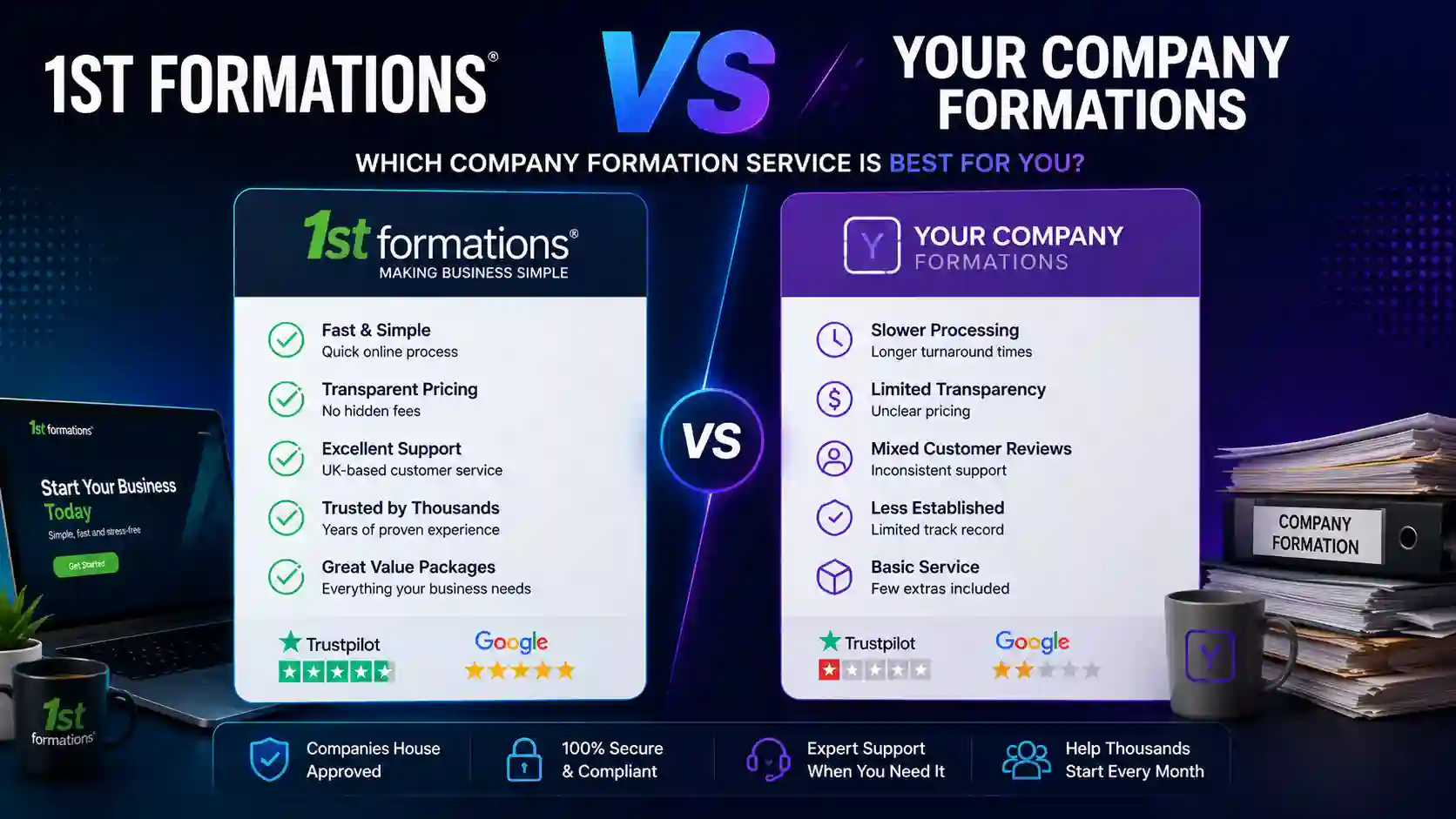
Table of Contents
- Quick answer — who each is for
- What both agents actually do
- Buyer personas and use cases
- Full side-by-side comparison table
- Pricing, renewals and total cost
- Features and package depth
- Registered office and privacy
- Non-resident experience
- Support, reputation and risk
- 1st Formations Ltd walkthrough (21 steps)
- Your Company Formations walkthrough
- UX and flow comparison
- Pros and cons — leave nothing out
- Decision matrix: which should you choose?
- Common mistakes on both platforms
- After incorporation checklist
- When neither is the right answer
- Final verdict
- FAQs
- Sources
What 1st Formations and Your Company Formations Actually Do
Both companies sit in the same product category: UK company formation agents. They are not Companies House itself. They are professional intermediaries that prepare incorporation data, submit electronic filings, deliver your certificate and constitutional documents, and often sell the practical extras non-residents and privacy-conscious founders need — especially a UK registered office address and a director service address.
That means the core legal outcome of 1st Formations vs Your Company Formations is identical when the filing is accepted:
- A private company limited by shares (or other selected vehicle) on the Companies House register
- A company number, incorporation date, and statutory documents
- Directors, shareholders/PSCs, share capital, SIC codes, and registered office on the public record
- Ongoing director duties, confirmation statements, accounts, and Corporation Tax registration timelines that neither agent can “magic away”
What agents sell (honestly): reduced form-filling risk, packaged address logistics, document portals for banking KYC, optional extras, and time. What they do not sell: guaranteed bank accounts, guaranteed PayPal/Stripe approval, tax residence planning, or anonymity. For deeper standalone reviews, see our 1st Formations review and Your Company Formations review.
1st Formations in one paragraph
A well-known UK formation and company services platform with a polished multi-step Ltd checkout, package tiers, registered office / business address / service address products, mail forwarding, document options, and a wide optional-services catalogue. Strong fit for founders who want hand-holding and one-stop extras. Full tutorial: how to form a UK limited company with 1st Formations.
Your Company Formations in one paragraph
A competitive UK formation agent with explicit non-resident packaging, guided multi-step filing, registered office and director service address options, free model memorandum path for standard companies, and optional extras that should be treated selectively. Strong fit for overseas founders who want a clean international door and mid-market pricing discipline.
Who Each Service Is For — and Who Should Skip Both
Before comparing buttons and prices, match the product to the job. Most buyers fall into one of these personas.
| Persona | Usually better fit | Why | Watch-outs |
|---|---|---|---|
| UK resident sole trader converting to Ltd | Either (tie on legal outcome) | Both handle standard private Ltd filings well; pick on package price + address needs | Conversion tax/asset transfer needs an accountant, not just an agent — see sole-trader conversion planning with your adviser |
| Non-resident needing UK registered office | Slight edge: YCF packaging / 1st extras depth | YCF markets non-resident packages clearly; 1st offers rich address/business-address options | Read renewal terms; neither replaces tax advice on UK permanent establishment or CFC rules |
| Dormant company holder | 1st Formations (workflow clarity) | Clear particulars flow; use SIC 99999 when dormant is intentional | Dormant still means filings and mail — read how to set up a dormant UK company |
| Two-member professional partnership | Either (LLP packages) | Both typically support LLP formation; structure choice matters more than agent | LLP needs ≥2 members — see UK LLP as a non-resident |
| Privacy-focused founder | Either with service address | Service address keeps home off public display path | Director/PSC names remain public — not anonymity. Context: anonymous LLC realities |
| US-rail / AdSense / multi-state LLC buyer | Neither (different product) | UK Ltd ≠ US LLC; payment rails and tax differ | Compare US options via best LLC formation services for non-US residents |
| Complex multi-class equity / regulated activity | Neither alone | Both optimise for standard model articles and vanilla share capital | Use a solicitor + specialist accountant; agent is only the filing layer |
Skip both (and file DIY or hire a solicitor) when: you already have a compliant UK registered office, you are comfortable with Companies House forms and identity verification, you need bespoke articles, or you are forming something regulated (FCA-perimeter, licensed health, etc.). Agents excel at standard companies — not bespoke corporate law.
1st Formations vs Your Company Formations — Full Comparison Table
Use this table as a planning framework. Live package names, fees, and inclusions change — always confirm the cart before paying.
| Factor | 1st Formations | Your Company Formations | Edge |
|---|---|---|---|
| Core product | UK Ltd / LLP formation + company services | UK Ltd / LLP formation + company services | Tie |
| Legal destination | Companies House digital incorporation | Companies House digital incorporation | Tie |
| Brand / market presence | Very strong consumer recognition in UK formation space | Solid mid-market presence; strong non-resident positioning | 1st |
| Non-resident packaging | Supported via address services and international-friendly flows | Explicit non-resident / international package path | YCF (clarity) |
| Checkout polish | Highly detailed multi-step Ltd wizard (name → package → officers → extras → review) | Clear multi-step flow with non-resident entry and free memo option | Tie (different strengths) |
| Address depth | Registered office, business address, forwarding, director service address options | Registered office, director service address, forwarding address fields | 1st (breadth) |
| Document defaults | Package-dependent document options; review carefully | Free model memorandum option for standard companies | YCF (simple cos) |
| Upsell surface area | Broad business essentials / additional services screens | Optional extras screen — skippable if disciplined | YCF if you want leaner carts; 1st if you want one catalogue |
| Dormant company path | Clear SIC entry; 99999 commonly used for dormant | Supported via particulars/SIC choices | 1st (documented flow) |
| Typical best buyer | Founders wanting polish + address stack + guided depth | Non-residents / value-focused simple Ltd buyers | Depends on persona |
| What neither does | Guarantee banking, hide beneficial ownership, replace HMRC/tax advice, or remove public director/PSC names | Tie | |
Editorial suitability scores (simple Ltd / non-resident use case)
Editorial planning scores only — not a lab benchmark. Categories: ease, non-resident packaging clarity, address depth, pricing transparency, upsell restraint, brand trust, aftercare, complex-structure readiness.
Pricing, Renewals and Total Cost of Ownership
Every honest 1st Formations vs Your Company Formations pricing comparison separates four layers:
- Companies House statutory fee — government charge for digital incorporation / confirmation statements (confirm live GOV.UK fee schedule; bands have changed over time).
- Agent package fee — the formation service markup for guided filing and portal delivery.
- Address services — registered office, director service address, business address, mail scanning/forwarding (often the real differentiator).
- Year-two renewals — where “cheap formation” offers often normalise to mid-market cost.
Industry-wide renewal trap: Both agents (and peers) can look inexpensive in month one. If you need a London registered office + service address + mail handling, year-two renewals may exceed the original formation fee. Screenshot renewal terms before you pay. This is not unique to either brand.
| Cost line | 1st Formations (typical pattern) | Your Company Formations (typical pattern) | Notes |
|---|---|---|---|
| Companies House digital fee | Included or itemised in checkout | Included or itemised in checkout | Same statutory baseline either way — confirm live |
| Agent formation package | Tiered packages from basic to inclusive | Tiered packages; non-resident bundles priced higher when addresses included | Compare inclusions, not stickers |
| Registered office (Y1) | Often package/add-on with business address options | Often bundled in non-resident packages | Essential for pure non-residents |
| Director service address (Y1) | Common mid-tier / add-on | Common package option | Privacy hygiene, not anonymity |
| Mail forwarding / scanning | Available as productised service | Available depending on package | Budget if you cannot collect UK post |
| Optional extras | Wide catalogue (business essentials, partners, docs) | Optional extras — free memo recommended for simple cos | Skip what you will not use in 90 days |
| Year-two address renewals | Expect recurring fees if you keep addresses | Expect recurring fees if you keep addresses | Biggest long-term cost driver |
| Accountant (Y1 reality) | £300–£2,000+ independent of agent | £300–£2,000+ independent of agent | Usually dwarfs formation fee for trading companies |
Illustrative year-one cost stack (non-resident Ltd with addresses)
Planning illustration only. Figures are category weights, not live quotes. Always open both carts and compare identical inclusions (CH fee + RO + service address + mail).
Where the money usually goes after you incorporate
For most trading companies, accountancy and compliance dwarf the formation agent fee. Choosing between 1st and YCF rarely changes your total year-one spend by more than a few hundred pounds — unless you stack upsells or dual-pay for unused addresses.
Compare live packages side by side
Open both sites, build the same basket (Ltd + registered office + service address, no extras), and screenshot totals + renewal lines. That 10-minute exercise beats any static price table.
Features and Package Depth Compared
Feature lists look similar at marketing level. The practical differences show up in how packages are organised and how many optional screens you must navigate.
Shared core (both)
- Private limited company electronic filing
- Name availability check in-flow
- Officer / director appointment screens
- PSC / nature of control capture
- Share capital entry
- Registered office selection when purchased
- Director service address options
- Document delivery for banking KYC packs
- Optional partner / banking intros (not guarantees)
Where they diverge
- 1st: deeper business address / forwarding productisation; long “business essentials” and “additional services” stages
- YCF: explicit non-resident package doorway; free model memorandum highlighted; optional extras framed as skippable
- 1st: strong tutorial ecosystem for Ltd + dormant paths
- YCF: strong “international package first” mental model for overseas founders
Package selection rule: Buy the lowest tier that includes the addresses you will actually use for 12 months. Do not buy “fully inclusive” just because it looks premium. You can usually add services later; you cannot un-buy an unused year of mail scanning.
Feature emphasis map (editorial)
Scores reflect product emphasis for a typical small Ltd buyer, not absolute capability. Both can form a standard company successfully.
Registered Office, Service Address and Privacy — What Changes (and What Doesn’t)
Address products are the main reason non-residents use either agent instead of filing DIY on GOV.UK. UK companies need an appropriate registered office in the correct UK jurisdiction. That address is public and must be able to receive official notices.
| Address type | Public? | What it solves | 1st Formations | Your Company Formations |
|---|---|---|---|---|
| Registered office | Yes — on public record | Legal home for company notices | Package / add-on with forwarding options | Package / add-on; strong non-resident bundles |
| Director service address | Service address can show publicly instead of home | Keeps residential address off public display path | Dedicated steps in Ltd flow | Dedicated steps if included in package |
| Business / trading address | Depends on use | Commercial correspondence presence | Productised business address + forwarding screens | Trading office / RO selection with forwarding |
| Forwarding address | Usually private operational routing | Gets mail to you overseas | Captured in address steps | Captured in address steps |
| Residential address (directors/PSCs) | Protected filing rules apply; not full secrecy | Legal identity & contactability | Required in officer details | Required in officer details + auth questions |
Privacy truth: Neither 1st Formations nor Your Company Formations can make a UK company “anonymous.” Director names, PSC control statements, filings, and the registered office remain part of the UK transparency framework under Companies House rules and Economic Crime and Corporate Transparency reforms (including identity verification). Service addresses are lawful privacy hygiene — not a secrecy product. For cross-border privacy context, read how to start an anonymous LLC and contrast US state practices with UK disclosure.
Non-Resident Experience: 1st Formations vs Your Company Formations
UK company law generally allows non-UK-resident directors and shareholders of private limited companies. The operational friction is not “am I allowed?” — it is registered office logistics, identity verification, banking KYC, and tax residence / permanent establishment questions that sit outside the formation agent’s core job.
Where YCF often feels smoother for non-residents
- Explicit non-resident / international package entry reduces wrong-bundle mistakes
- Forwarding address fields are first-class in the trading/RO steps
- Free model memo path keeps legal document spend low for vanilla companies
- Optional extras are easier to mentally “skip” if you stay disciplined
Where 1st Formations often feels stronger for non-residents
- Deep address product set (RO, business address, service address, forwarding)
- Very granular officer / PSC / share screens reduce first-timer data errors
- Strong fit if you also want dormant setup or multi-address commercial presence
- Extensive add-on catalogue if you know exactly what you need post-formation
For structure choice and compliance context, read how to form a UK limited company as a non-resident and, if a partnership vehicle fits better, how to form a UK LLP as a non-resident.
Payment accounts after formation: Company documents help, but platforms decide independently. If your next step is PayPal, see how to create a UK PayPal account as a non-UK resident. Keep company name, addresses, and ownership details consistent across every application.
Non-resident friction points (typical timeline weight)
Formation agent choice mainly affects the first two bars. Banking KYC and tax setup dominate calendar time for most overseas founders.
Support, Reputation Patterns and Real-World Risk
Public review sites for formation agents show a familiar industry pattern for both brands and their peers:
- High satisfaction on clean, standard digital incorporations that complete quickly
- Friction complaints when ID verification stalls, mail is delayed, or a non-standard share/structure request hits a templated flow
- Support variability under peak ticket load — common to high-volume digital agents
- Expectation mismatches when buyers treat bank intros as guaranteed accounts
How to research fairly: Filter Trustpilot/Google reviews to the last 6–12 months. Weight tickets that match your use case (simple Ltd, non-resident address, dormant, LLP). Ignore one-star rants about tax advice the agent never sold. Neither 1st Formations nor Your Company Formations is a substitute solicitor or full-stack accountant.
Low risk jobs
Standard England & Wales Ltd, ordinary £1 shares, one or two directors, model articles, purchased RO + service address.
Medium risk jobs
Multi-director groups, overseas ID docs with translation issues, heavy mail volume, urgent same-day expectations without clean data.
High risk jobs
Custom articles, multi-class shares, regulated activity, nominee misconceptions, “hide ownership” goals — use legal counsel, not checkout extras.
1st Formations Limited Company Walkthrough (21 Steps)
This is the practical Ltd path on 1st Formations — from name check to email confirmation. Use it to evaluate UX before you buy, or as a live checklist. For the long-form tutorial, see how to form a UK limited company with 1st Formations.
Follow along on the live site
Open 1st Formations in another tab, choose only the addresses you need, and skip extras you will not use in 90 days.
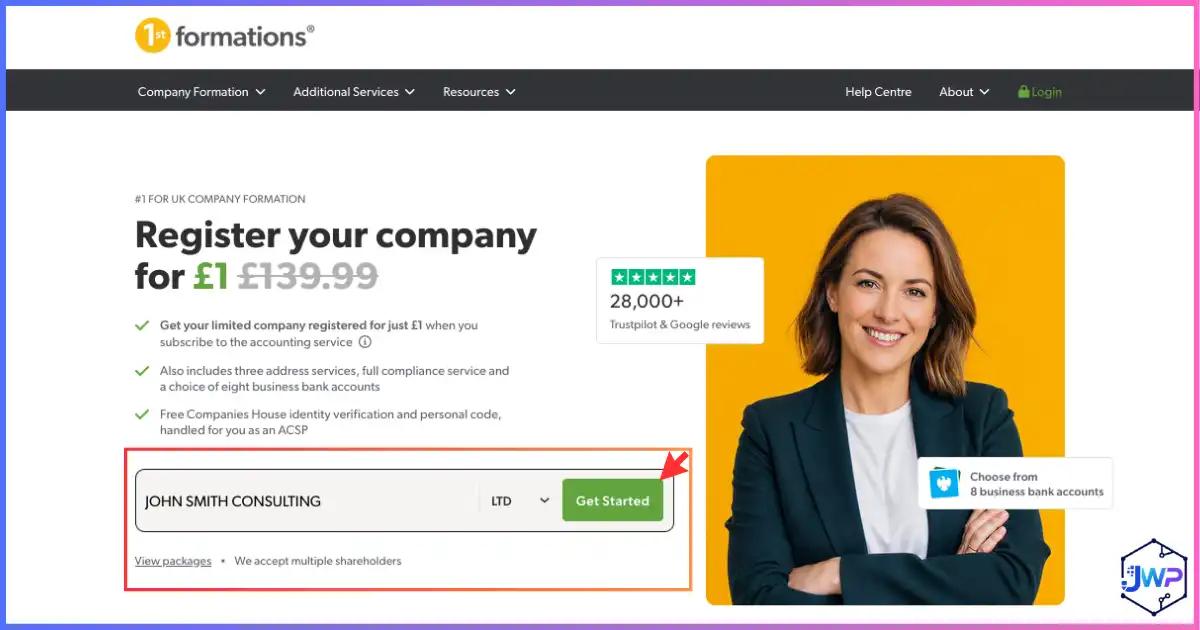
Start 1st Formations CheckoutEnter your proposed limited company name
Start with the exact trading name you want (plus Ltd/Limited). Check trademarks and domain conflicts separately — Companies House availability is not brand clearance.
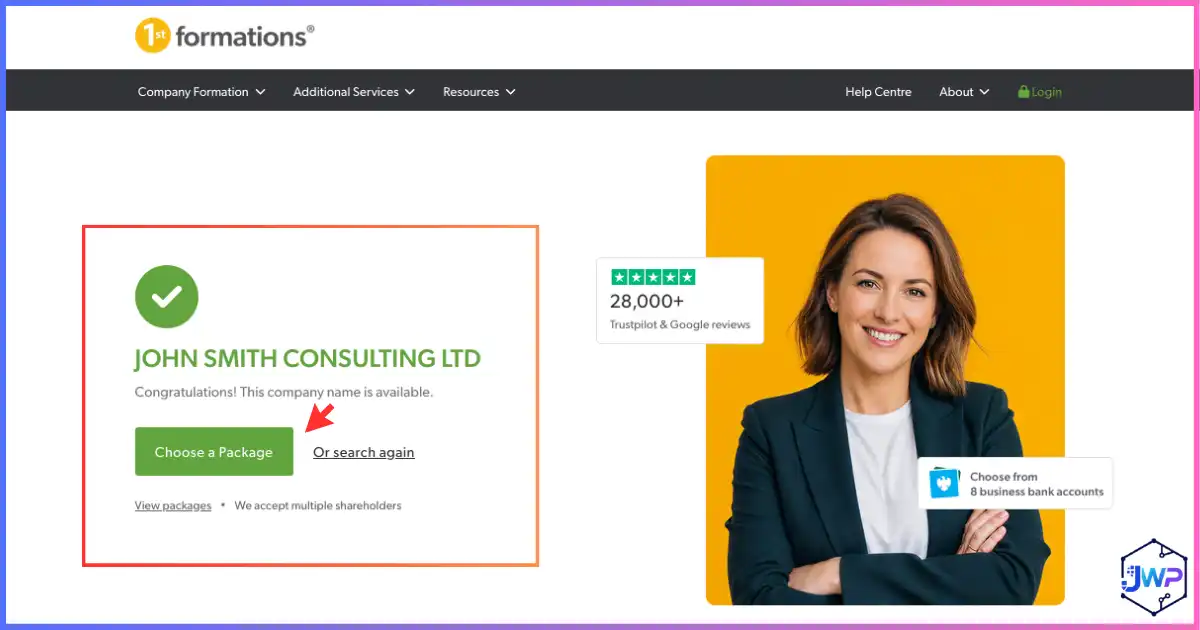
Name availability confirmation
If the name is free on the register path used by the agent, you will see a success/continuation state. “Available” still does not mean free of trademark risk.
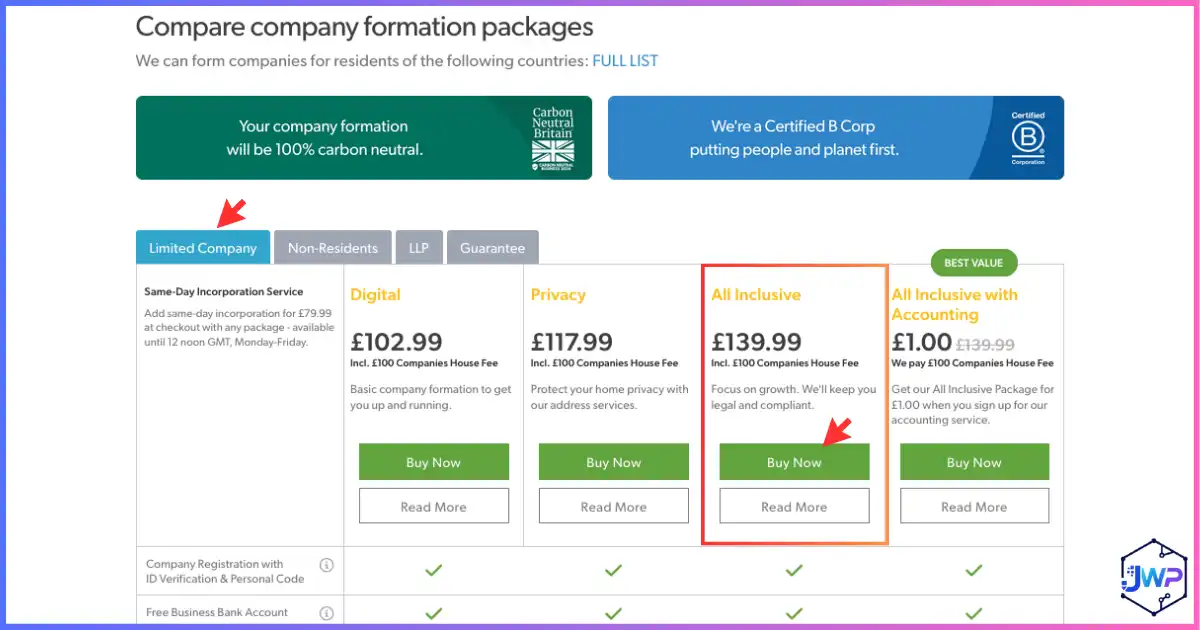
Choose a package
Compare address inclusions, mail handling, support, document delivery, and renewal terms — not only the lowest headline price.
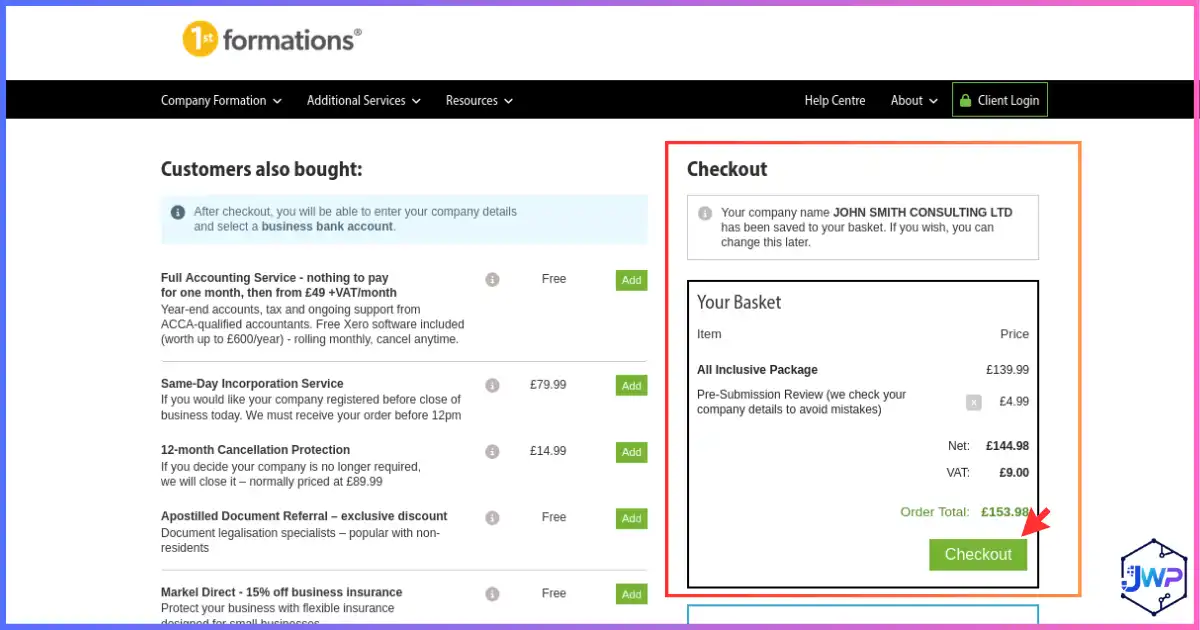
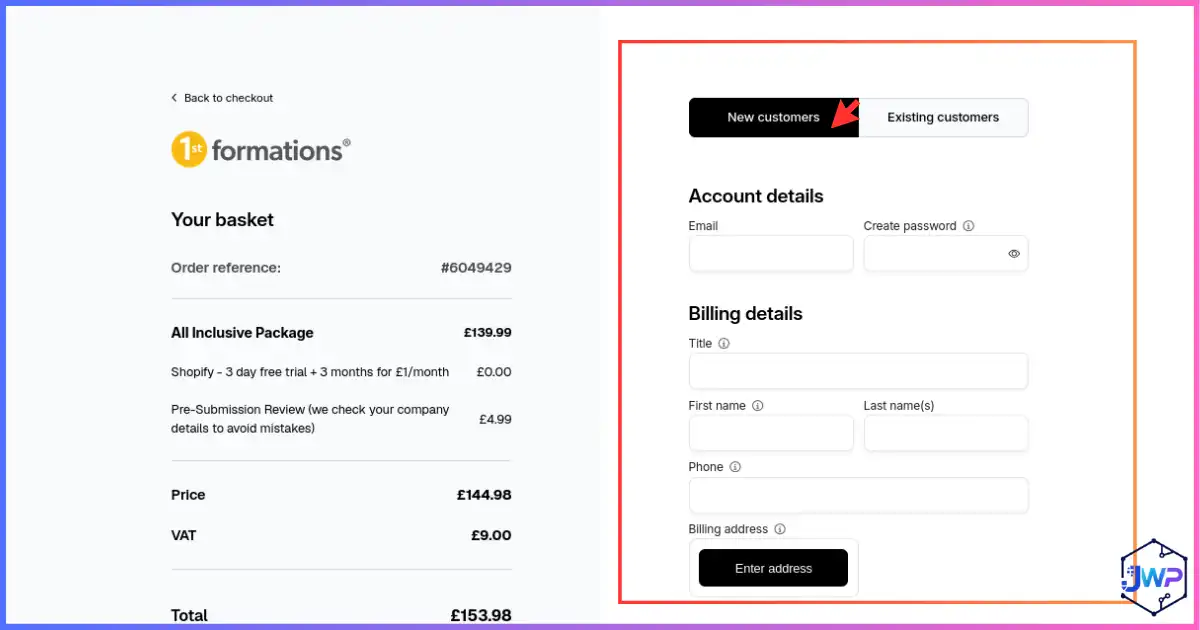
Company formation particulars (including SIC)
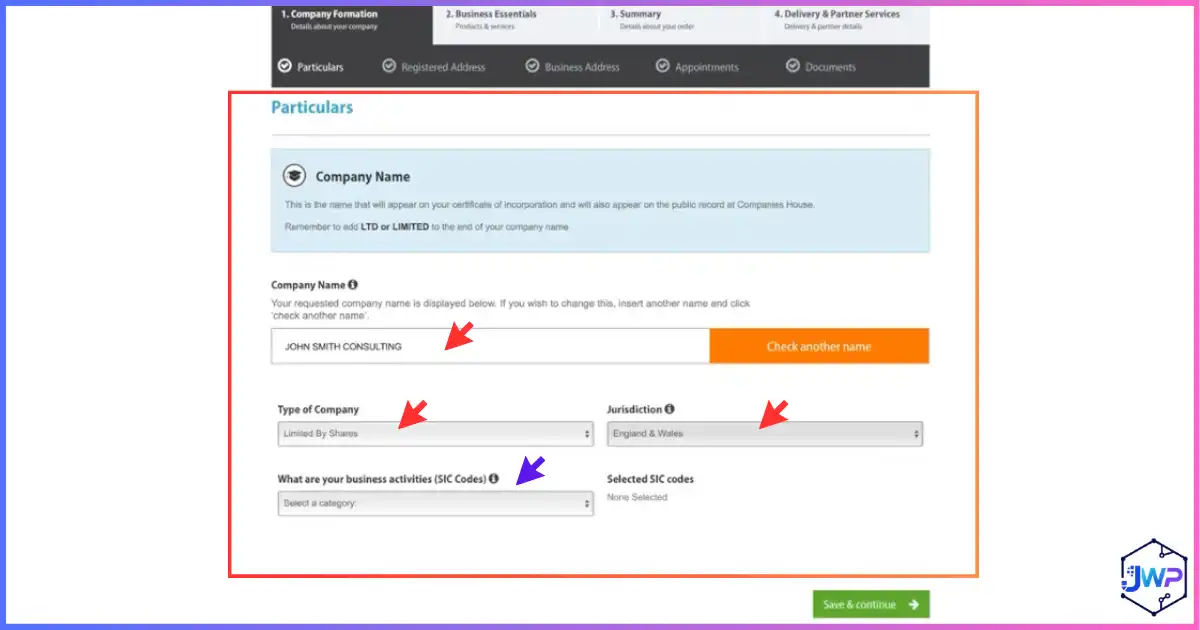
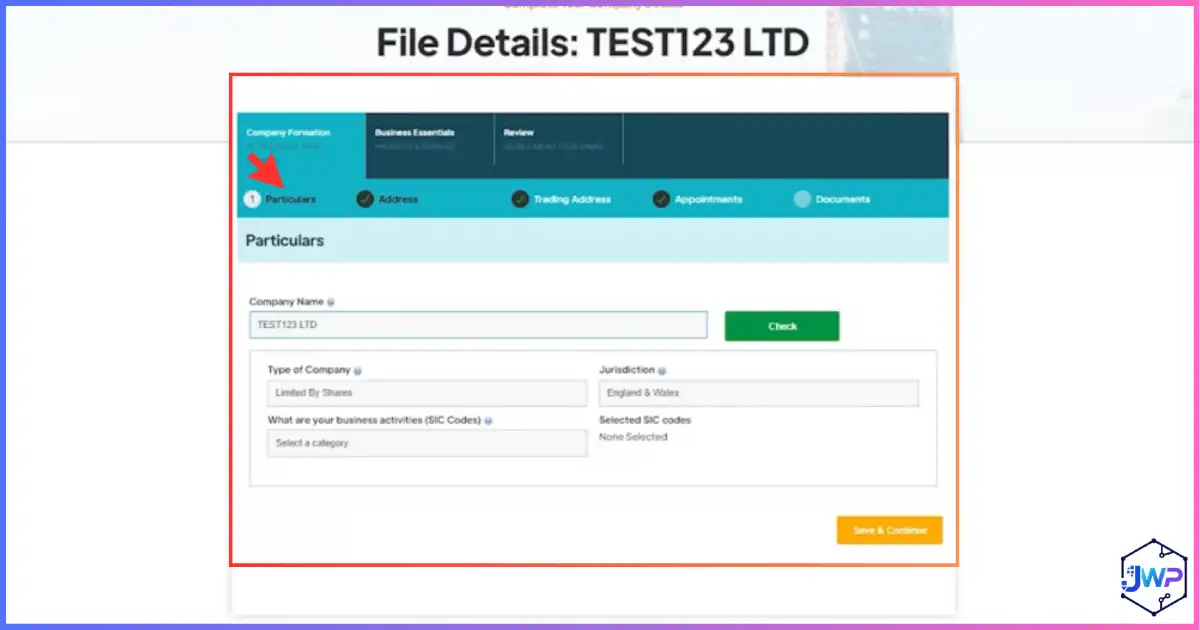
Enter jurisdiction, company type details, and SIC codes. If the company will be dormant, use SIC code 99999 where appropriate and keep your records consistent with dormant status until trading starts.
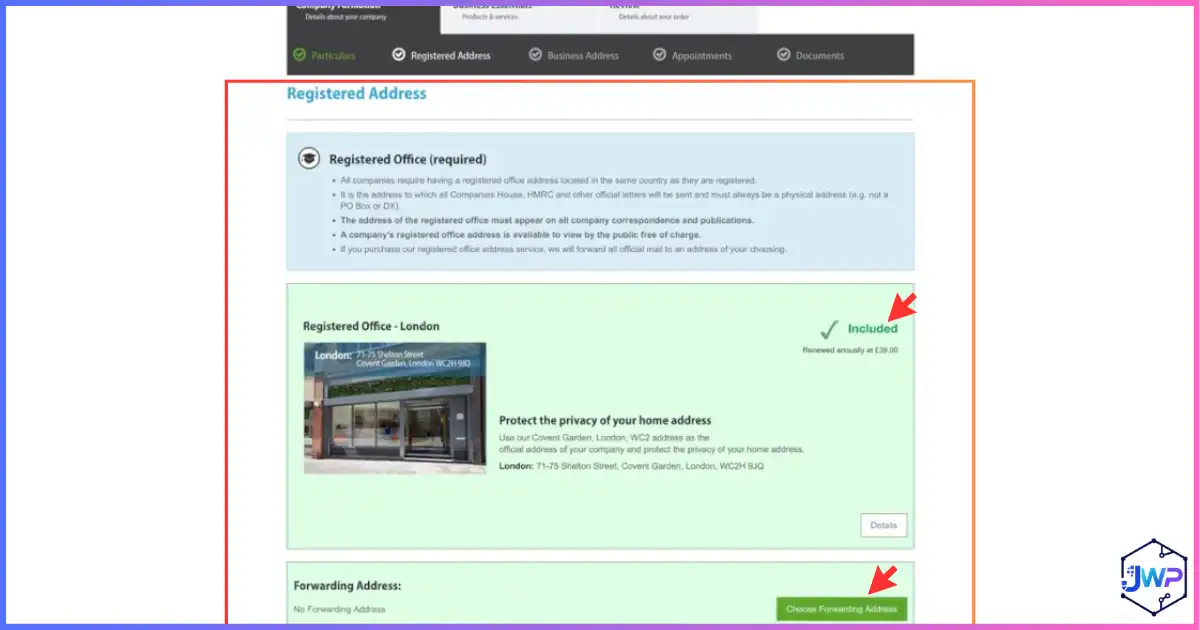
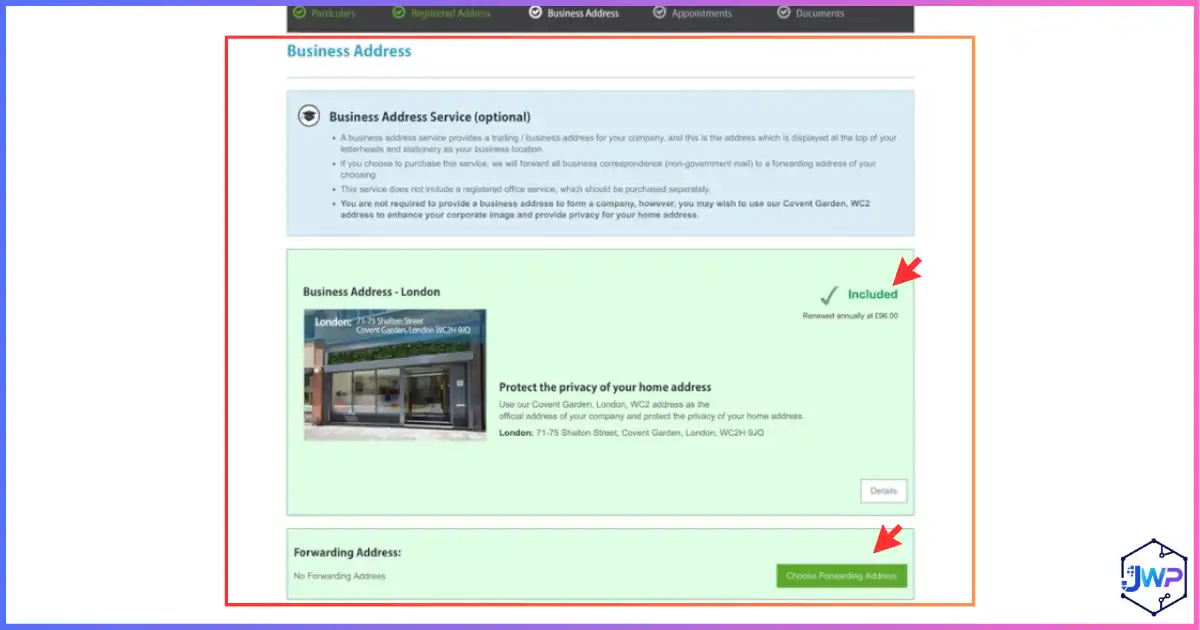
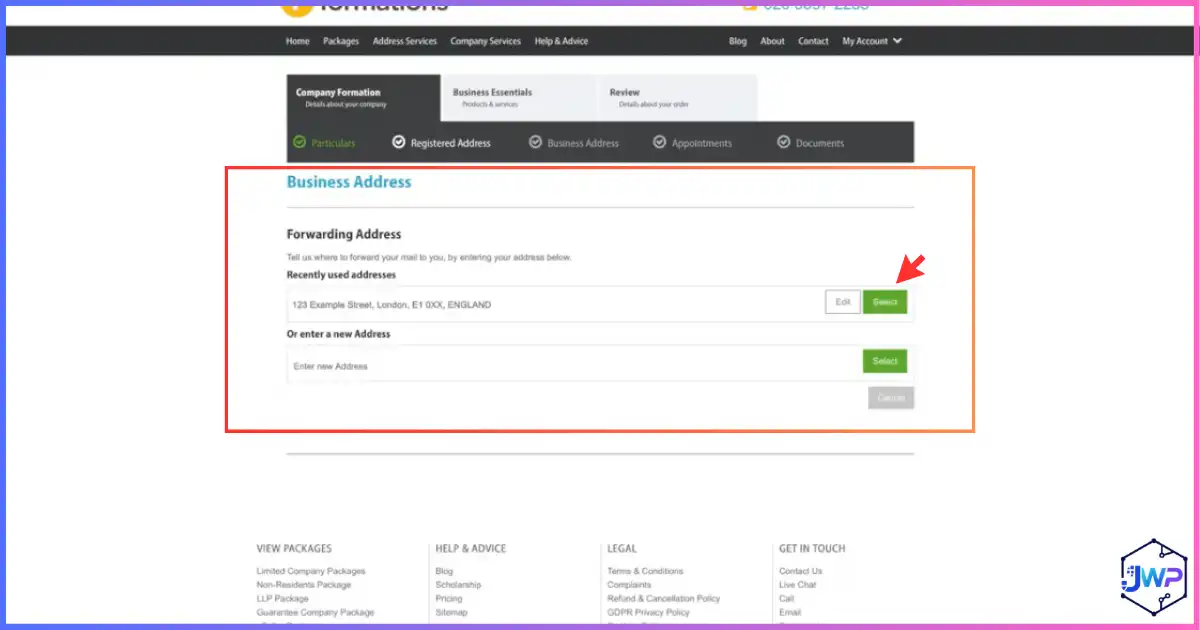
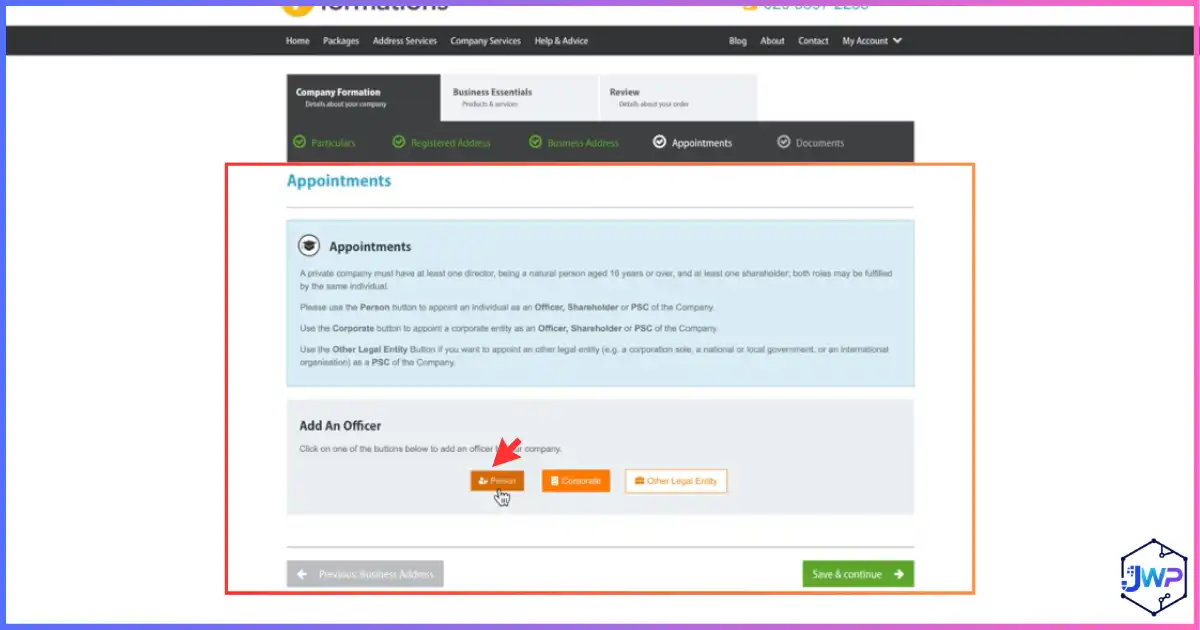
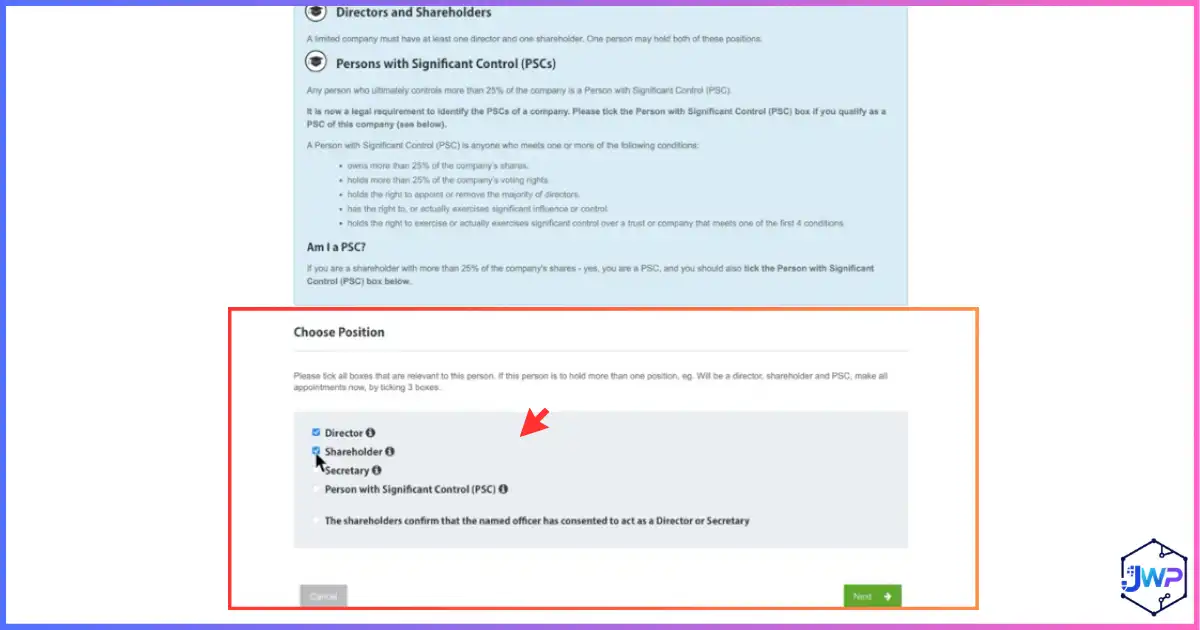
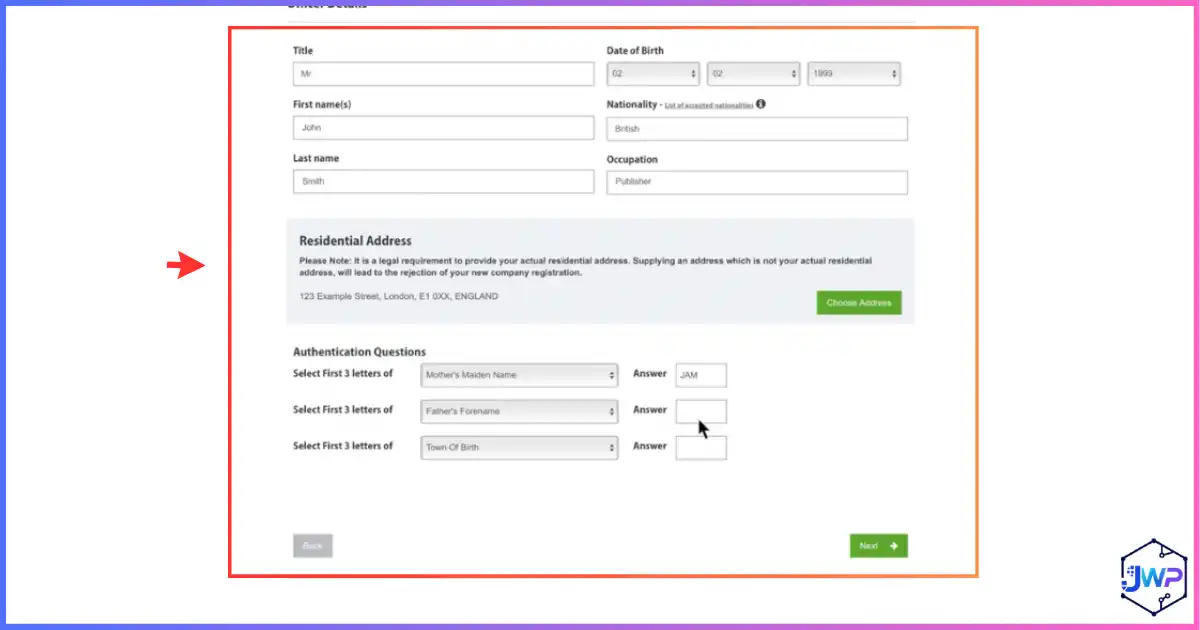
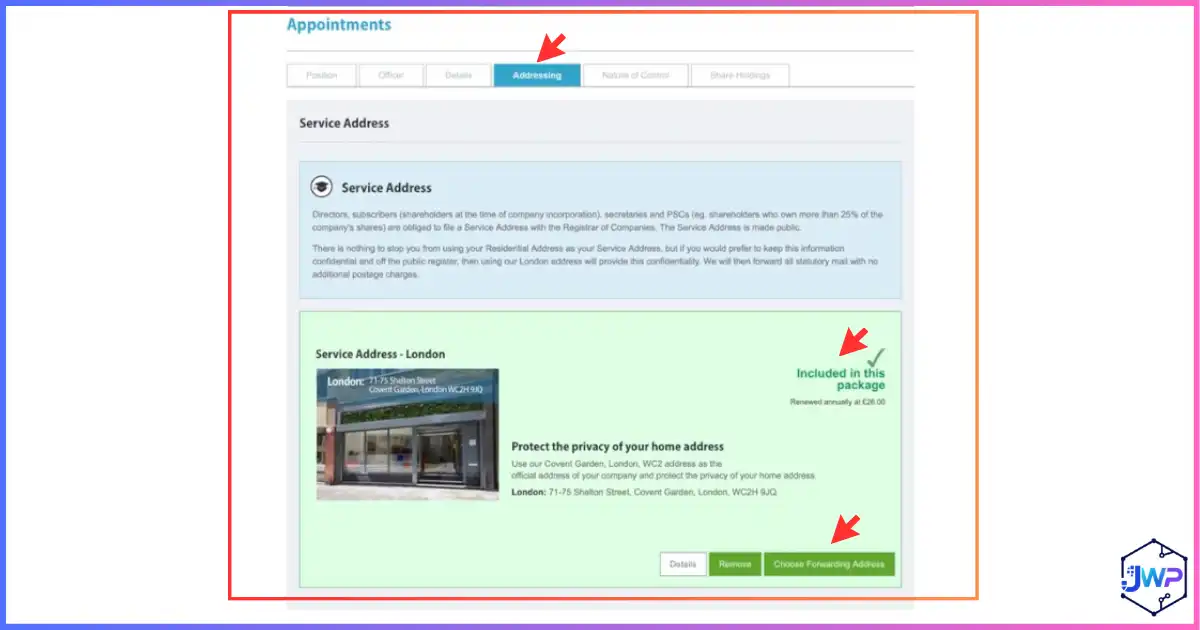
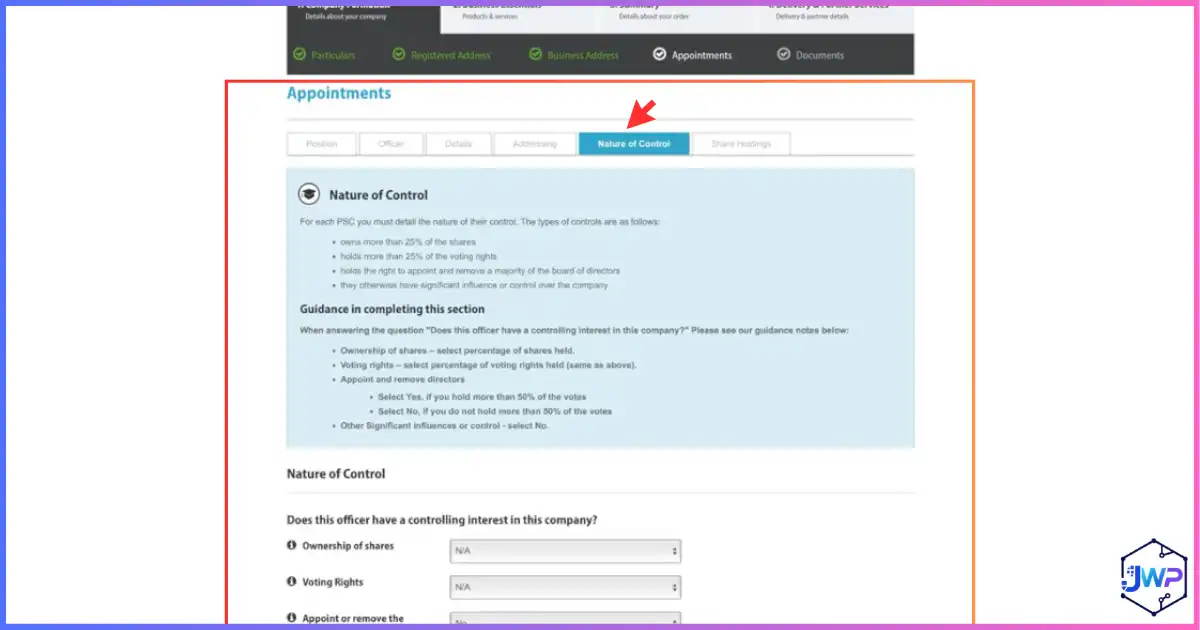
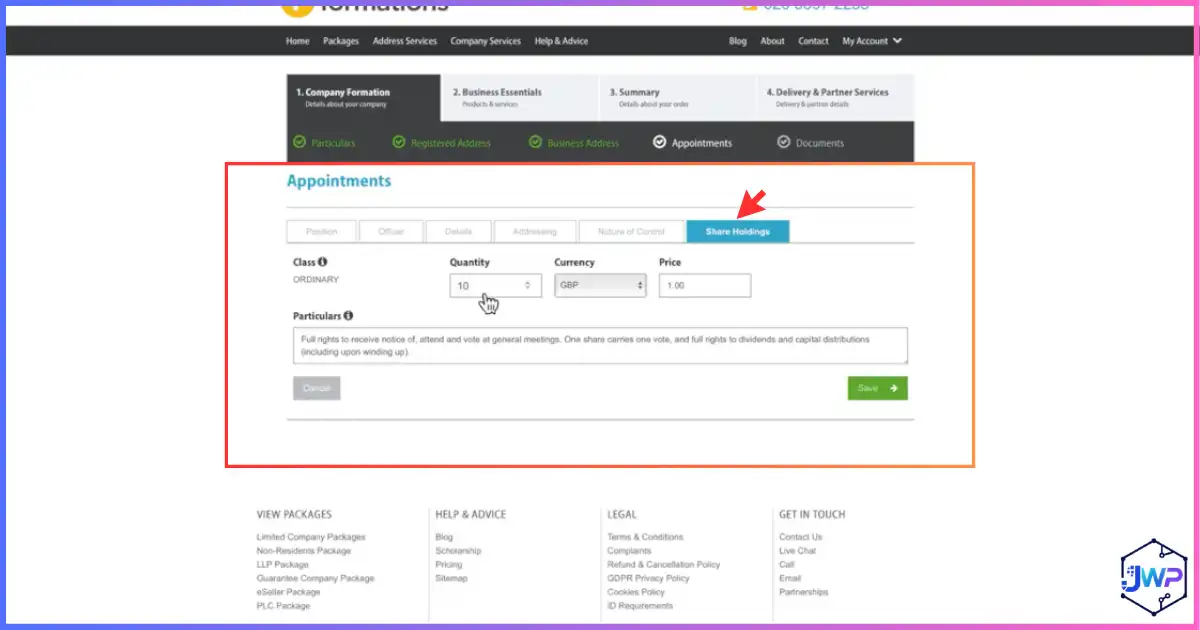
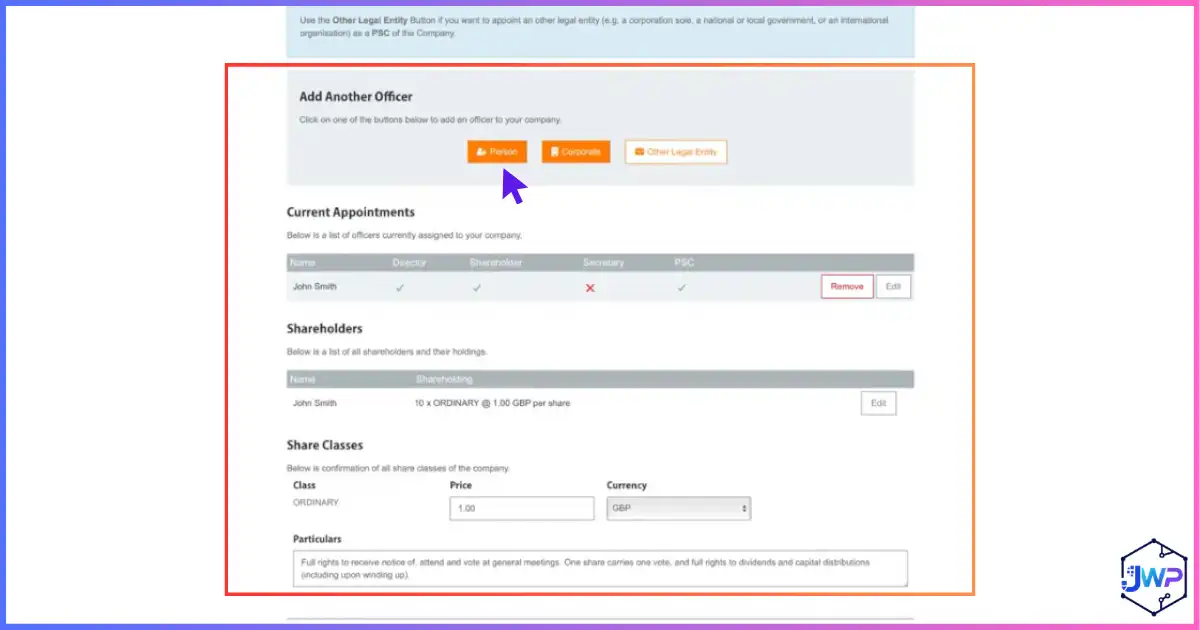
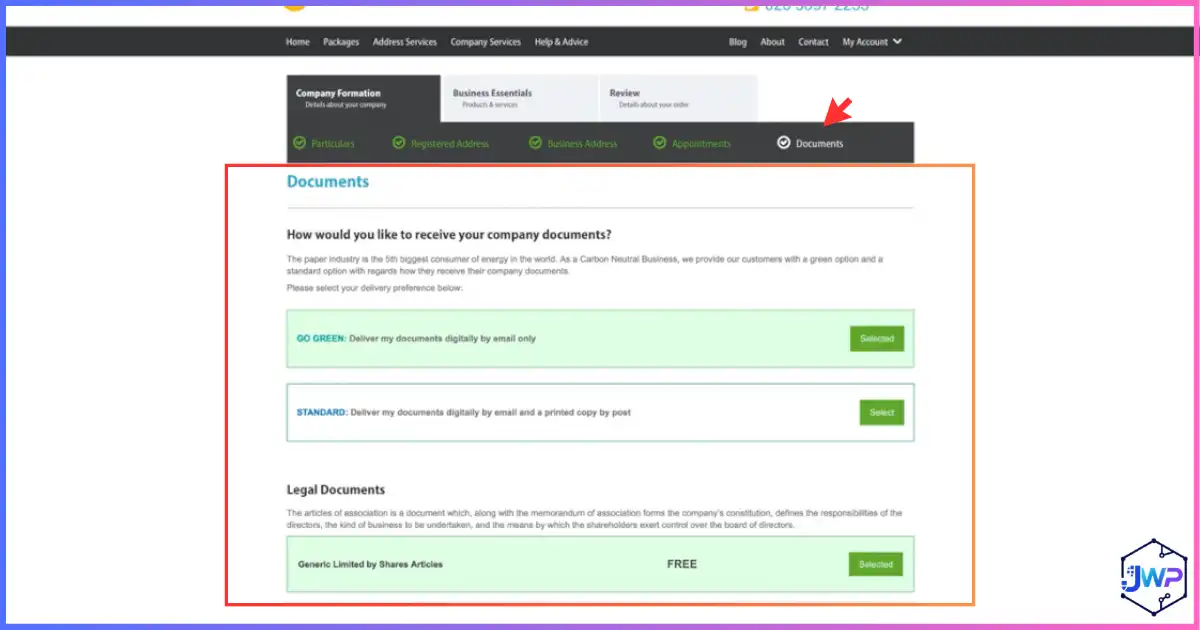
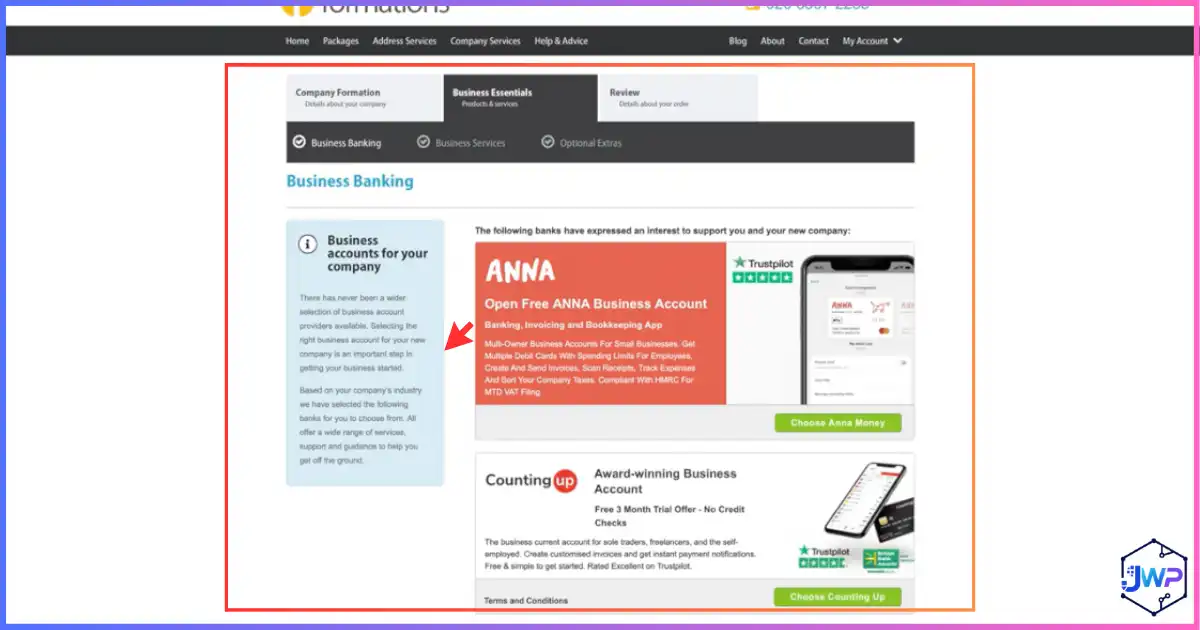
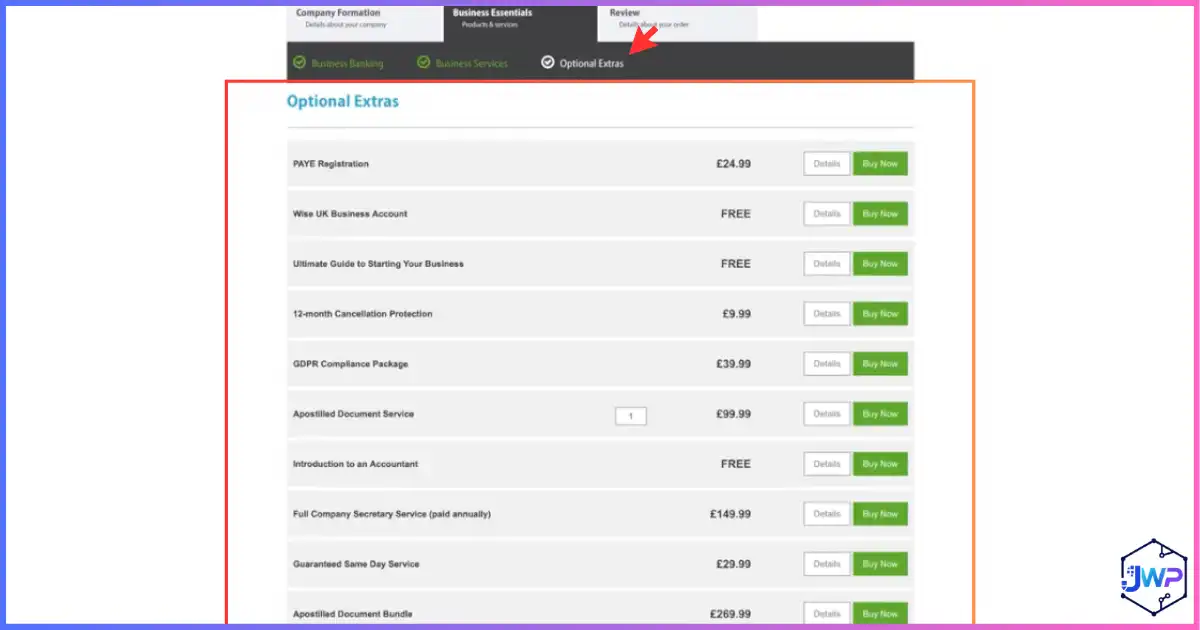
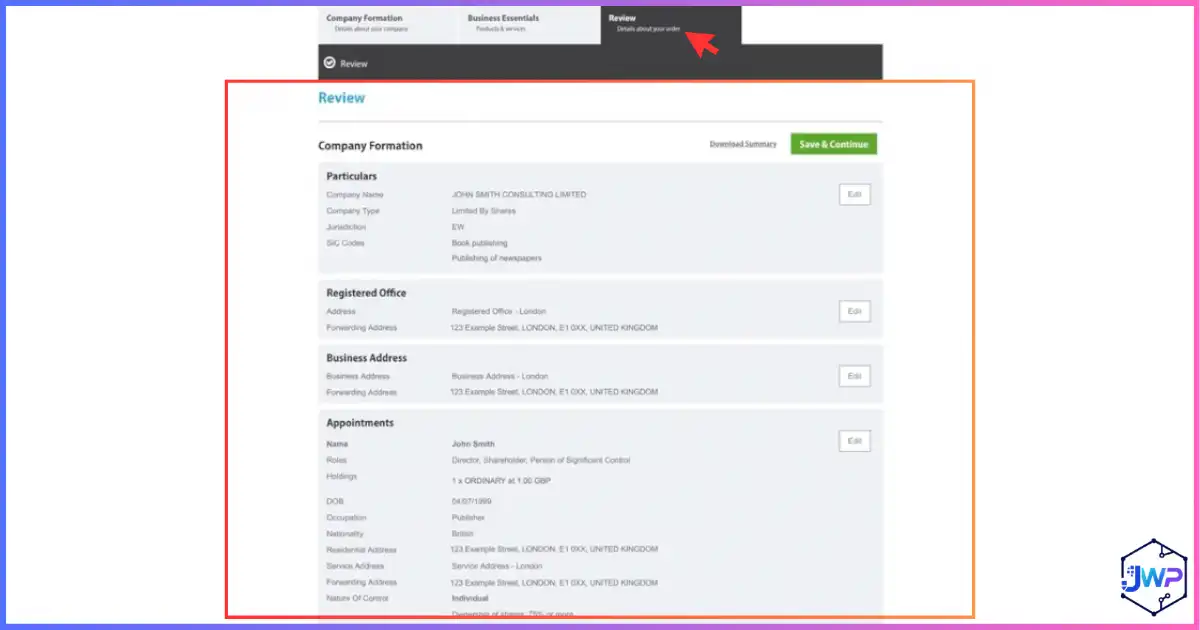
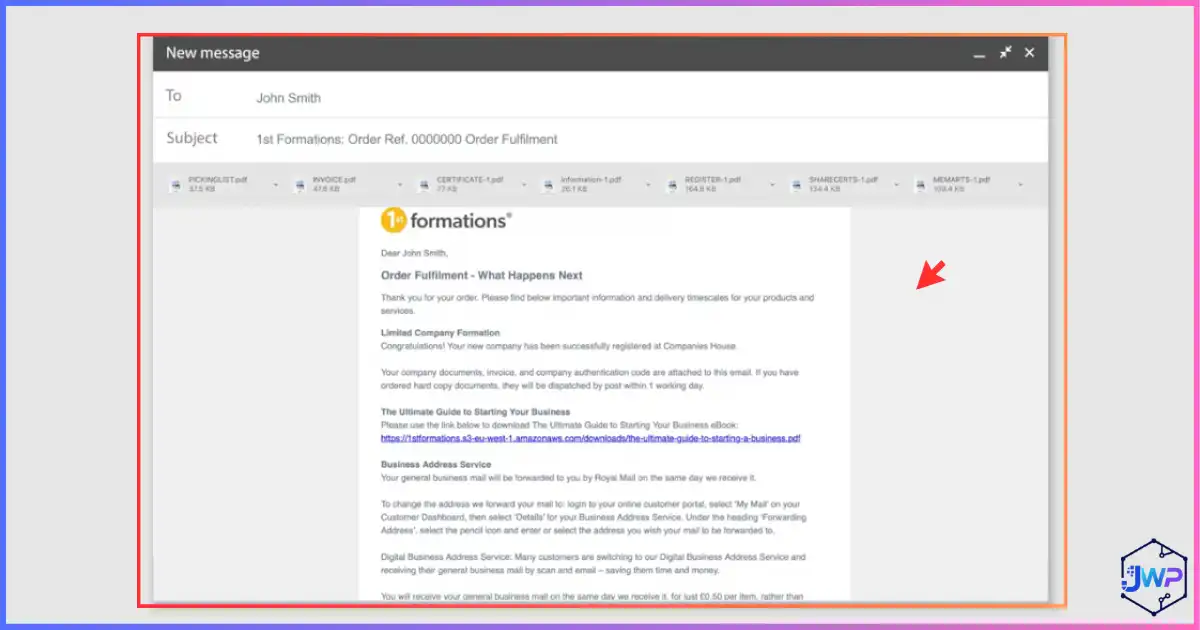
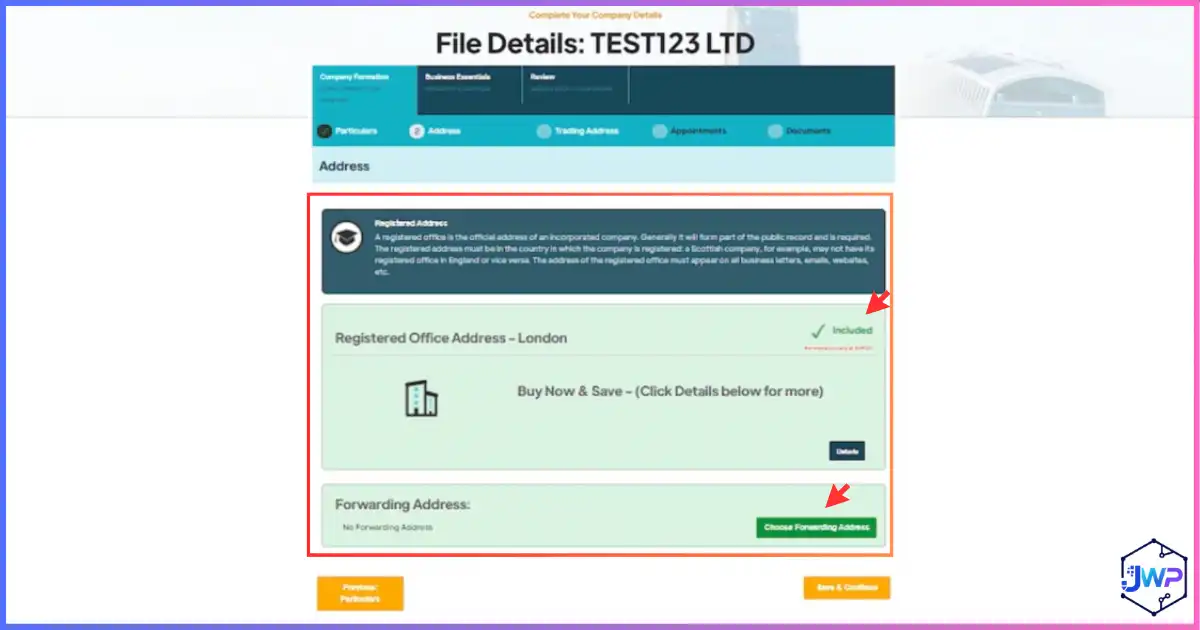
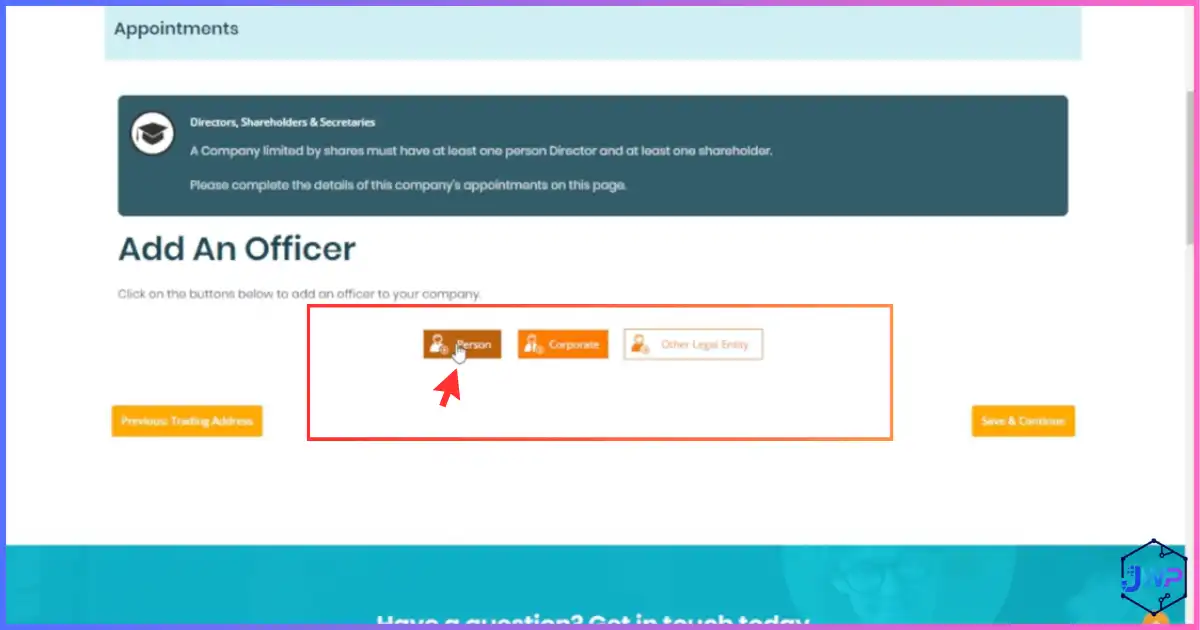
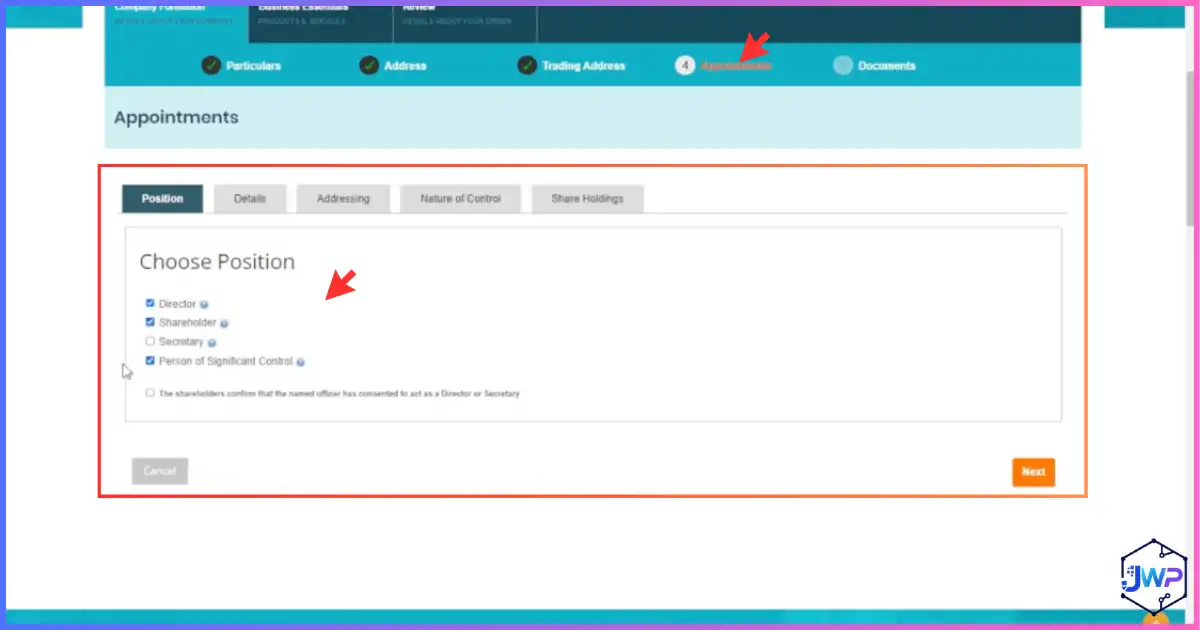
1st Formations flow takeaway: Extremely thorough. The cost of that thoroughness is more screens where upsells can accumulate. The benefit is fewer blank-field mistakes on officers, PSC, shares, and multi-address setups — especially valuable for non-residents and dormant company filers.
Your Company Formations Walkthrough (Non-Resident Ltd Path)
Below is the non-resident-oriented limited company path on Your Company Formations. It is often the cleaner mental model if you live outside the UK and need address services from day one.
Open the non-resident packages
Start in the international / non-resident section so you are not funnelled into a UK-resident-only bundle by accident.
Start Your Company Formations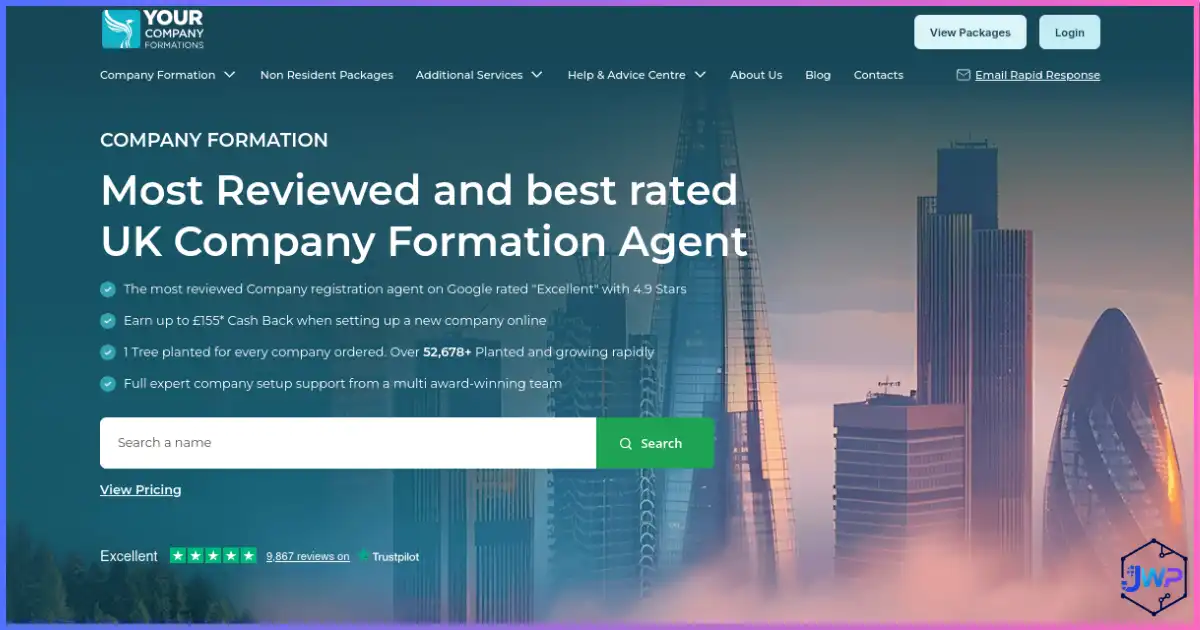
Choose Non-Resident Packages
If you live abroad, this is the correct door. It reduces the risk of buying a package that assumes you already have a personal UK address.
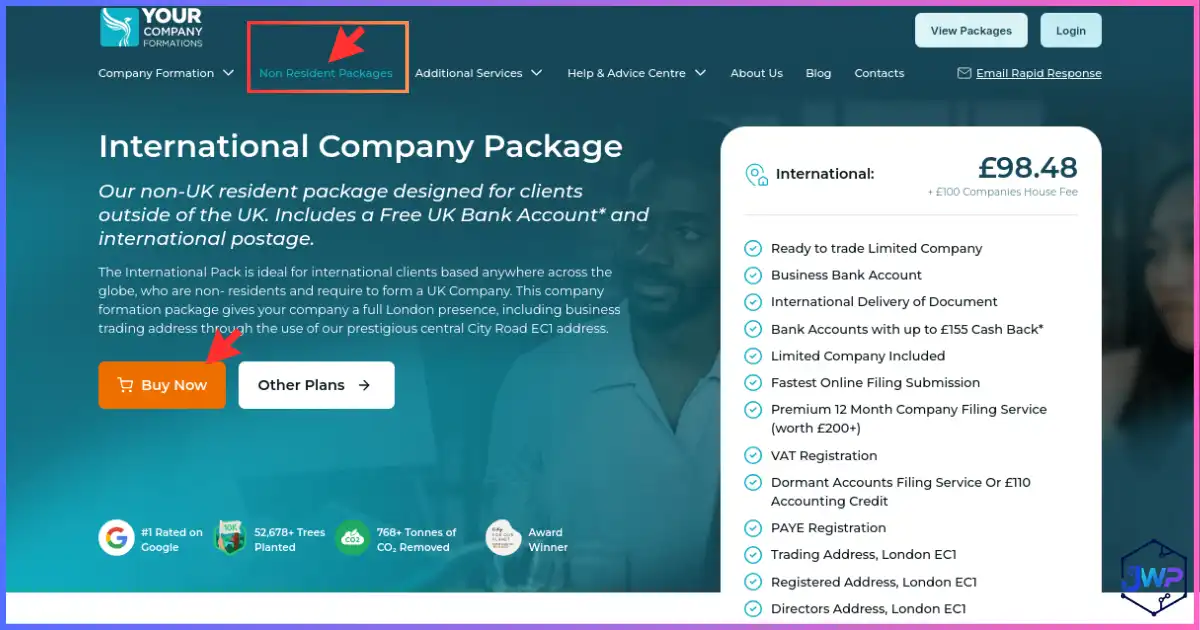
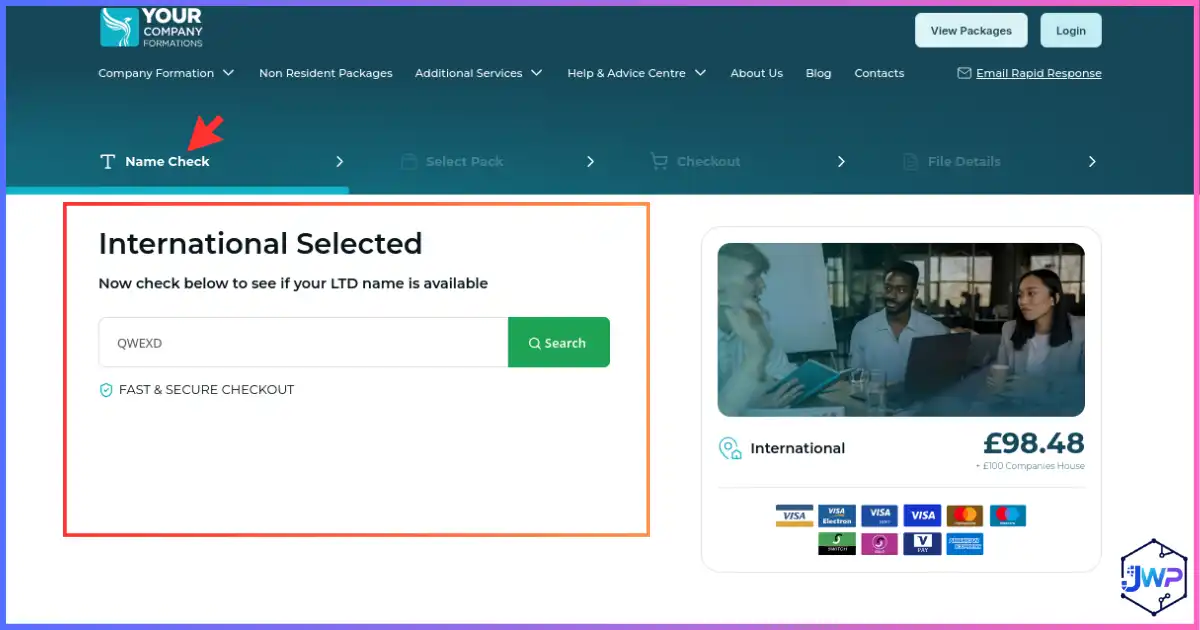
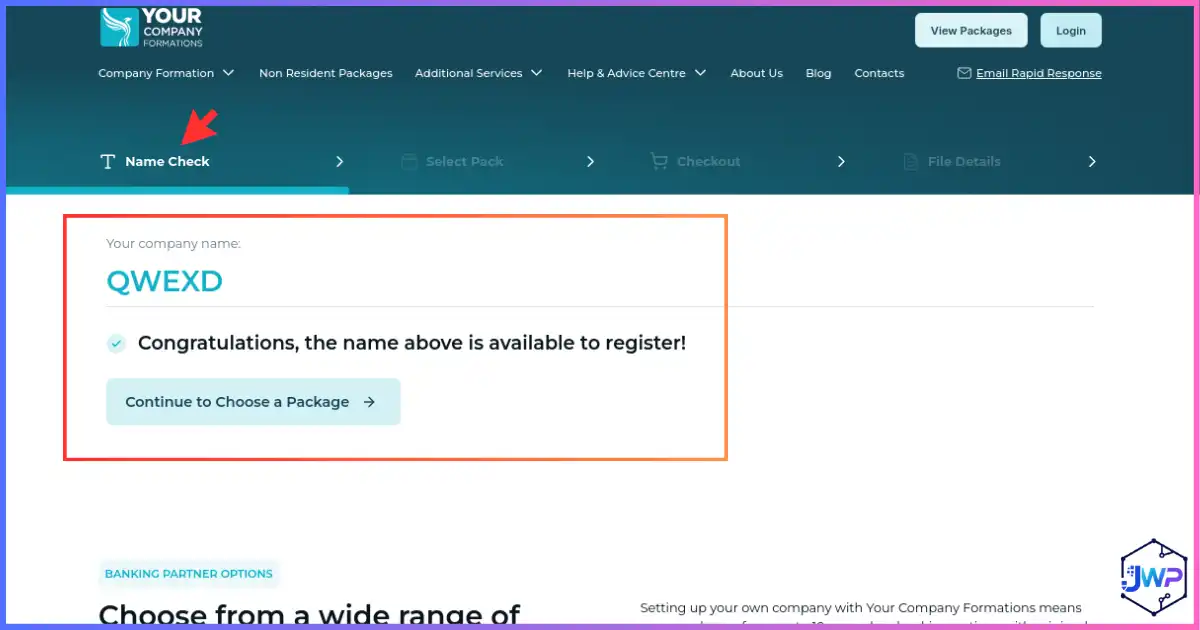
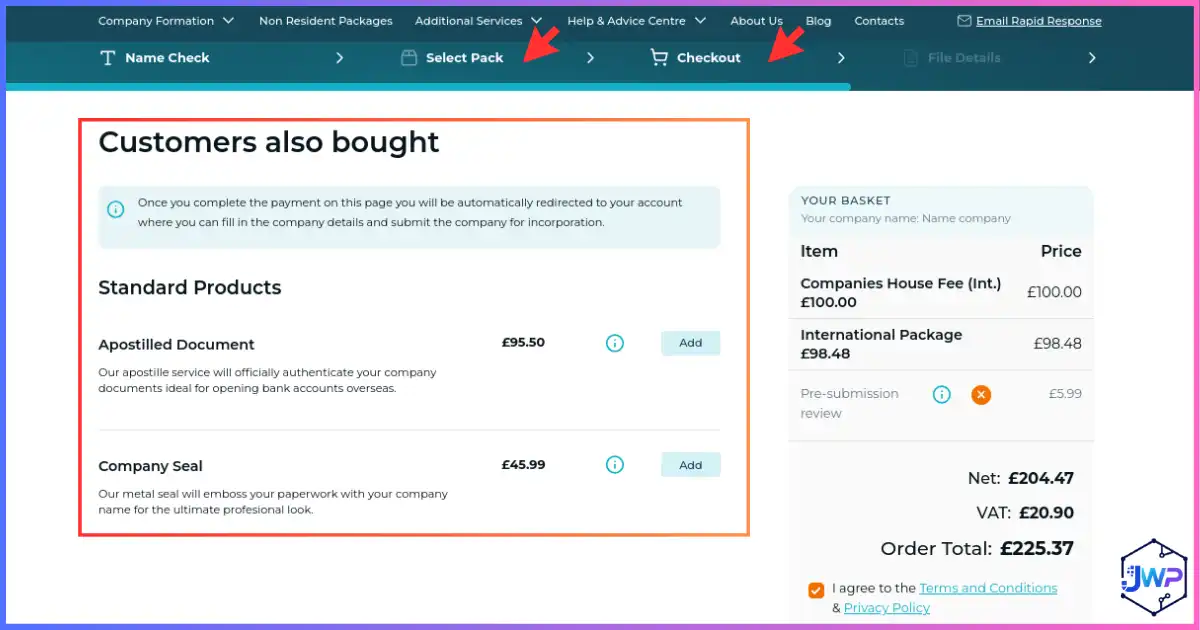
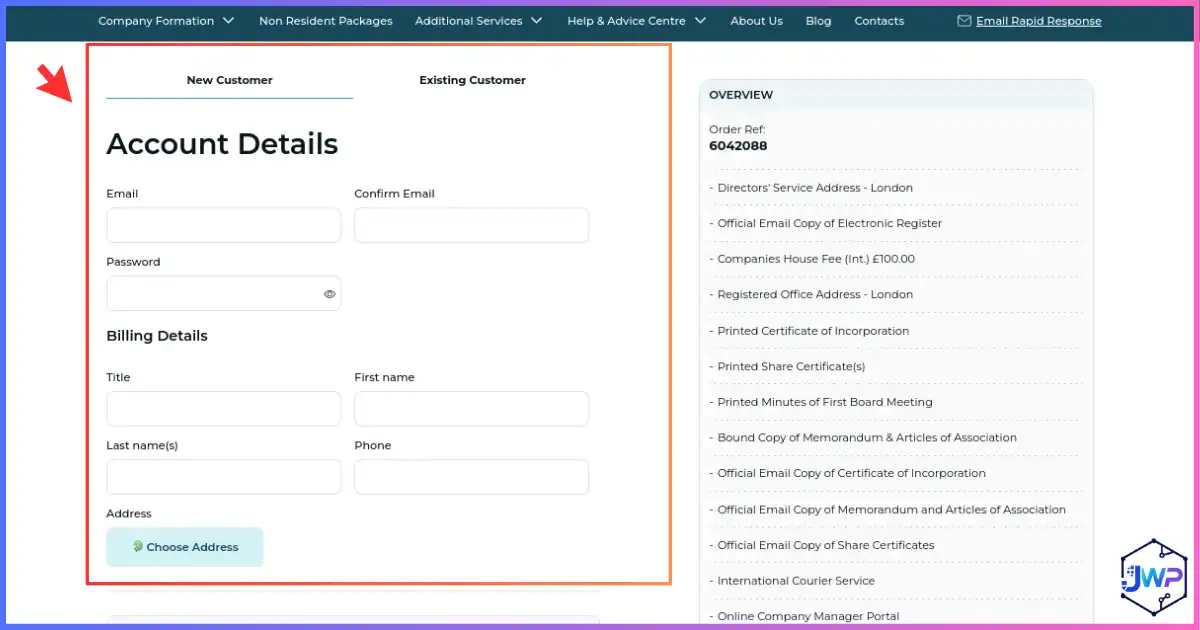
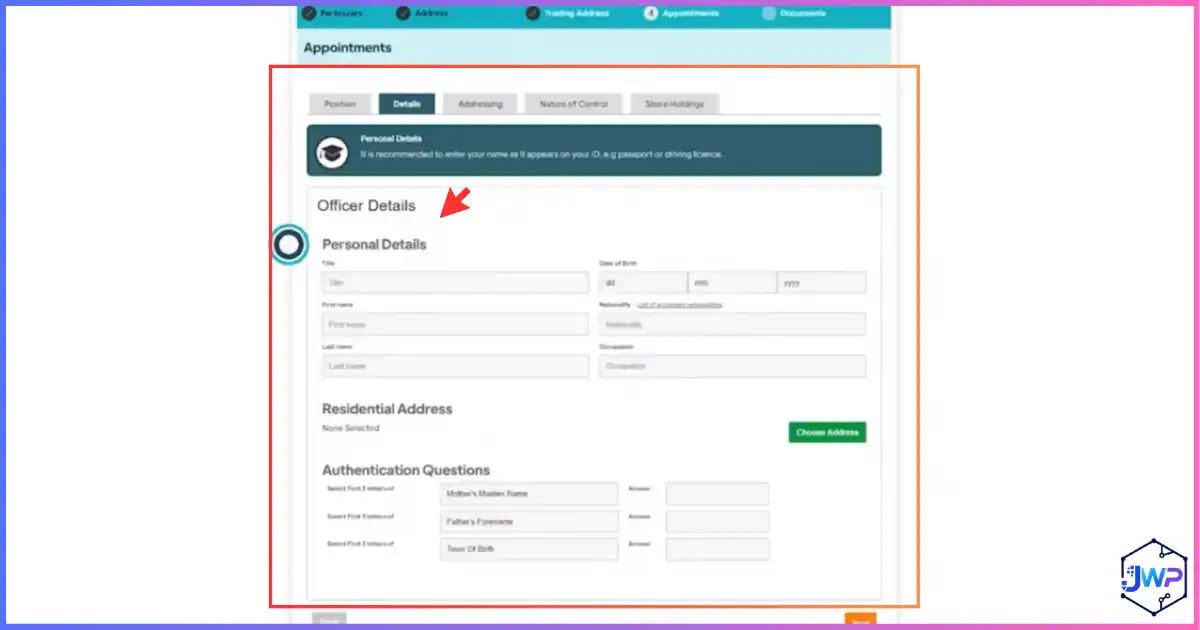
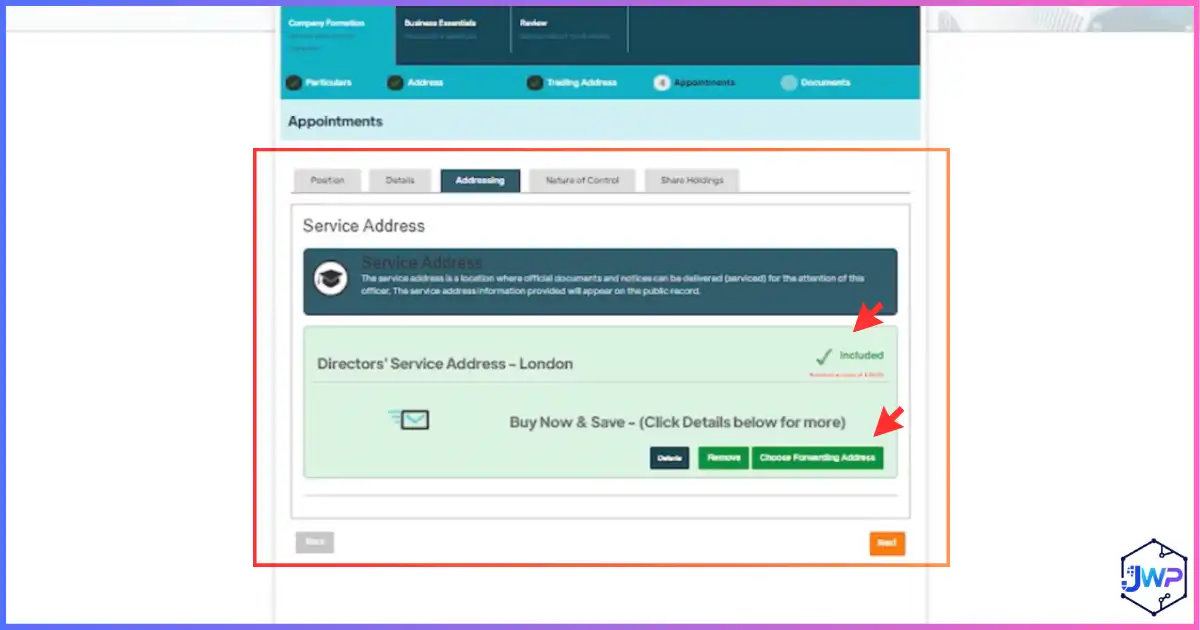
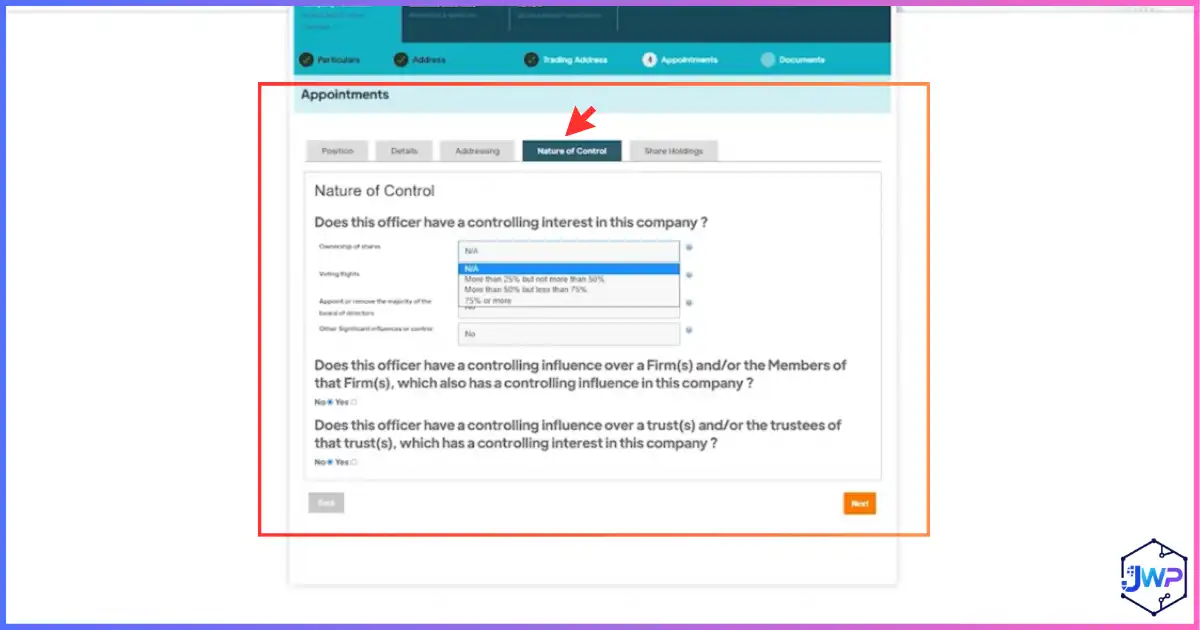
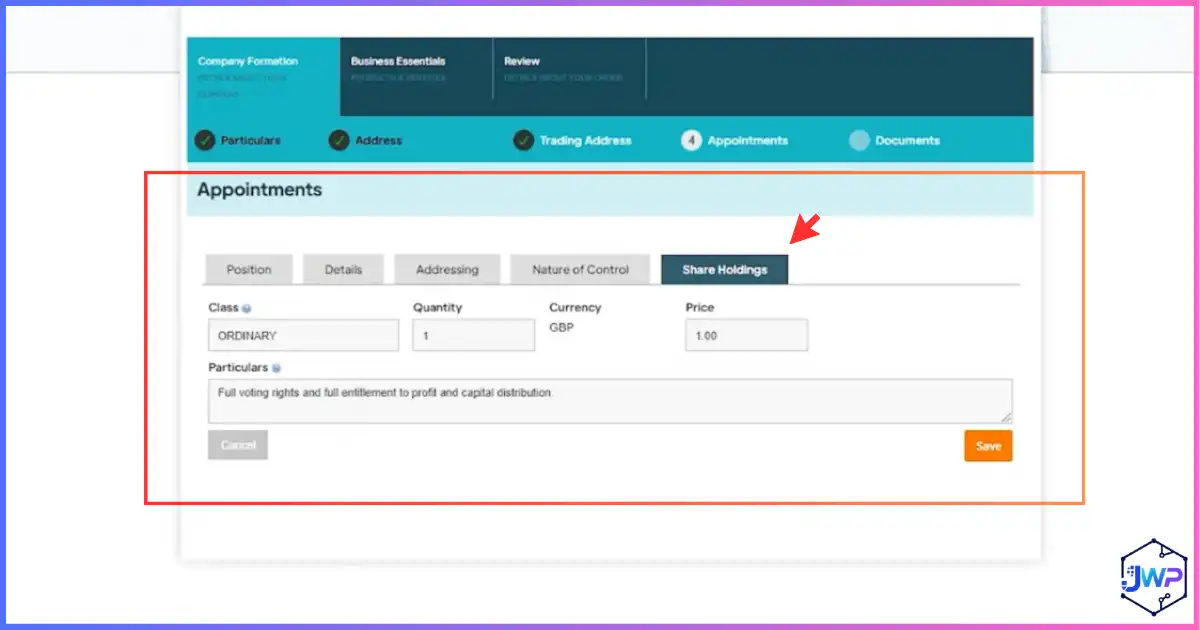
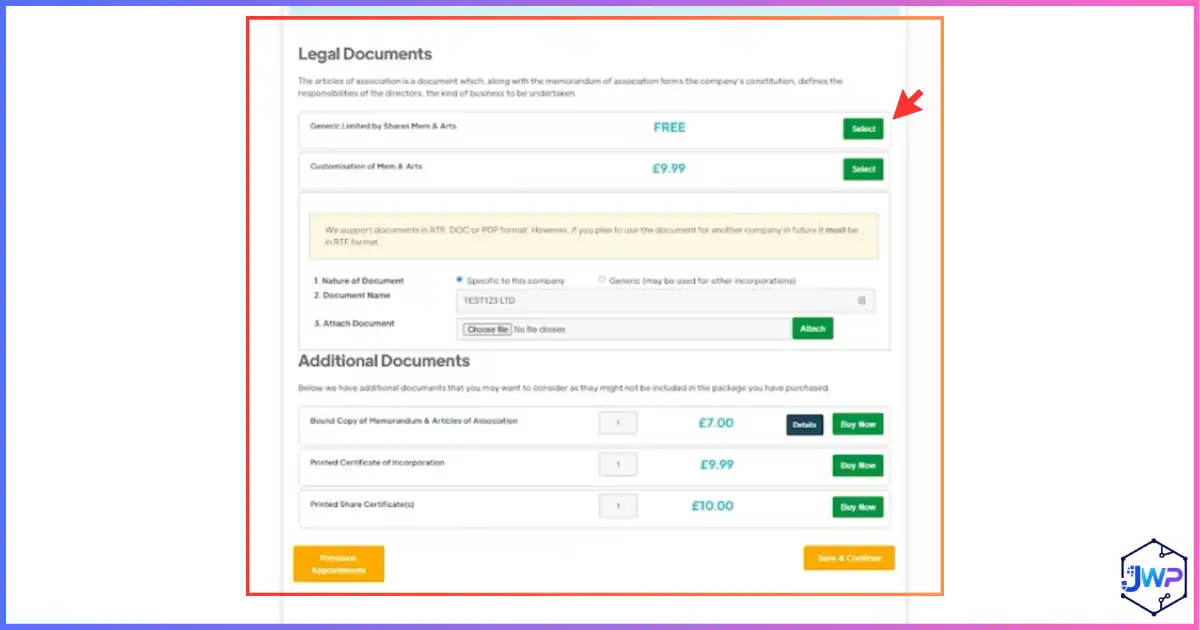
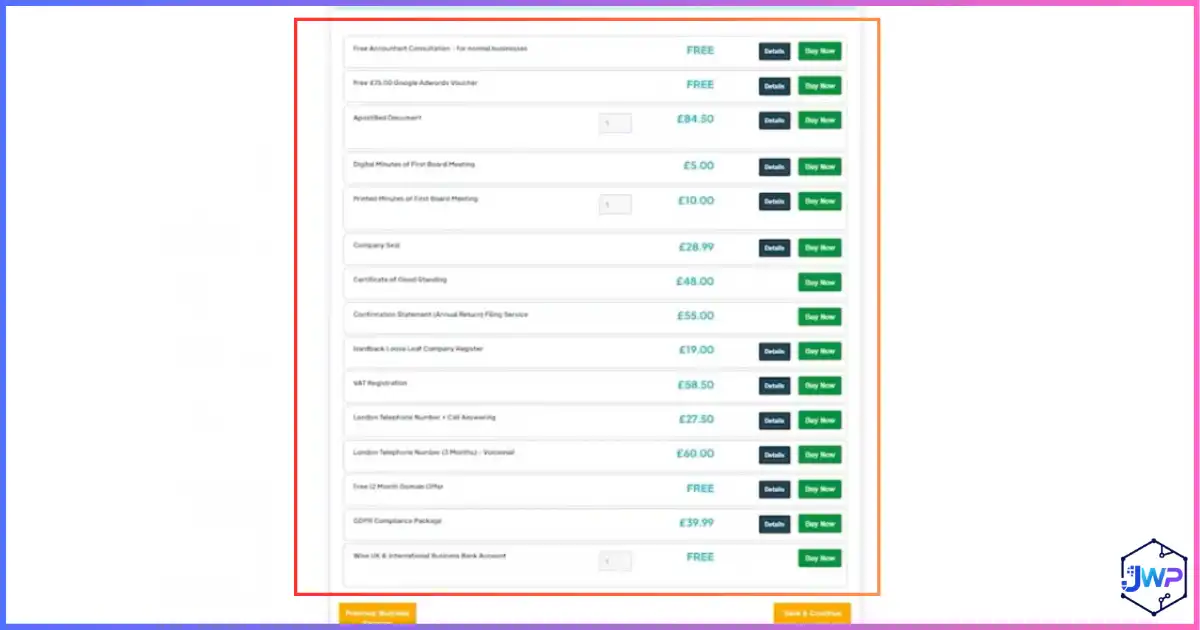
YCF flow takeaway: Slightly leaner narrative for non-residents, with a memorable free memorandum decision point and an extras screen that is easy to skip if you stay disciplined. Still requires the same PSC honesty, ID verification readiness, and renewal literacy as any peer agent.
UX and Flow Comparison
| UX dimension | 1st Formations | Your Company Formations |
|---|---|---|
| First-timer guidance | Excellent — many discrete steps with clear labels | Excellent — especially with non-resident entry |
| Time to complete (simple Ltd) | Longer if you read every extras screen | Often faster if you skip optional extras |
| Risk of accidental overspend | Higher catalogue surface area | Present but easier to mentally gate at extras step |
| Address configuration depth | Very high (RO, business, forwarding, service) | High (RO, service, forwarding) |
| Document decision clarity | Package/document screens — read carefully | Free model memo path is very clear for vanilla cos |
| Best “feel” | Premium guided workshop | Efficient international onboarding |
Illustrative completion time vs decision load
Illustrative only. Your time depends on how many officers you add and how long you spend evaluating upsells.
Pros and Cons — Leave Nothing Out
1st Formations
Pros
- Polished, beginner-friendly multi-step Ltd wizard
- Strong brand recognition in the UK formation market
- Deep address product set (RO, business address, service address, forwarding)
- Clear path for dormant companies (SIC 99999 in particulars)
- Broad optional services if you know what you need
- Granular officer/PSC/share screens reduce data-entry errors
- Good fit for founders who want one catalogue for formation + early admin extras
- Well documented in independent tutorials and reviews
Cons
- Not always the cheapest path vs DIY or lean mid-market carts
- Wide upsell surface can inflate spend for undecided beginners
- Address/mail products renew — year-two cost must be budgeted
- Does not guarantee bank, PayPal, Stripe, or marketplace approval
- Not a substitute for cross-border tax advice
- Public Companies House disclosure still applies fully
- Longer checkout can feel heavy if you only need bare filing + RO
- Complex equity still needs a solicitor regardless of package tier
Your Company Formations
Pros
- Explicit non-resident / international package path
- Guided multi-step flow reduces first-timer filing errors
- Registered office and director service address options
- Free model memorandum option for standard companies
- Competitive mid-market positioning for simple Ltd/LLP
- Optional extras are easier to skip when you stay disciplined
- Forwarding address fields fit overseas founders well
- Fast digital Companies House potential on clean filings
Cons
- Checkout upsells can still inflate spend on autopilot
- Address and mail services renew — same industry trap
- Bank/partner introductions are not account approvals
- Not a full substitute for legal advice on bespoke articles
- Support experience can vary on non-standard tickets
- Less “premium catalogue depth” than some larger brand agents for niche extras
- Still leaves tax, accounting, and substance questions to you
- No anonymity — director/PSC names remain public
Decision Matrix: Which Should You Choose?
Answer these prompts honestly. The first “strong yes” cluster usually indicates the better fit.
| If this is true… | Lean toward | Why |
|---|---|---|
| I want maximum guided depth and address product variety | 1st Formations | Broader address/business essentials surface |
| I live outside the UK and want the most obvious non-resident door | Your Company Formations | International packaging is a first-class entry point |
| I will form dormant first (SIC 99999) then trade later | 1st Formations | Particulars flow and dormant guidance are well trodden |
| I want free model articles and a lean legal document decision | Your Company Formations | Free memorandum option is explicit in-flow |
| I am sensitive to upsell noise and will skip extras aggressively | Either — slight edge YCF | Fewer “catalogue” stages if you stay disciplined |
| I care most about brand familiarity / polished reputation | 1st Formations | Stronger mainstream brand presence |
| I only need bare filing and already have a UK RO | Neither — consider DIY | Agents mainly sell guidance + address logistics |
| I need US LLC / AdSense rails more than a UK Ltd | Neither | Different product category — see US LLC guides |
| I need bespoke multi-class shares or regulated permissions | Neither alone | Solicitor + specialist first; agent second |
- I compared identical baskets (same addresses, no fluff extras) on both live sites
- I read year-two renewal prices for RO and service address
- I know whether I need Ltd, LLP, or dormant status
- I prepared passport-exact names and ID for verification
- I accept that director/PSC names will be public
- I have a plan for Corporation Tax registration, accounts, and confirmation statements
- I will not treat bank intros as guaranteed accounts
Common Mistakes on Both Platforms
Formation mistakes
- Choosing a name that conflicts with trademarks or app store brands
- Wrong SIC codes (or trading while still coded dormant)
- Inaccurate PSC control bands
- Officer names that do not match passports
- Using a non-deliverable registered office
Buying mistakes
- Comparing headline “from £X” without renewals
- Stacking every upsell “just in case”
- Paying for custom articles without a legal reason
- Assuming the agent handles HMRC forever
- Expecting privacy to equal anonymity
Compliance-first note: Do not use formation agents, address services, or payment setups to mislead banks, hide beneficial ownership, evade tax, or fabricate local presence. A UK company creates ongoing legal duties with Companies House, HMRC, banks, and any country where you actually operate.
After Incorporation Checklist (Same for Both Agents)
Whichever side wins your 1st Formations vs Your Company Formations decision, the post-formation work is nearly identical:
- Download certificate of incorporation, memorandum/articles, and share statements
- Complete identity verification requirements under the current Companies House regime
- Register for Corporation Tax within required time limits when you start business activity
- Open a company bank account (or multi-currency alternative) in the company name
- Set bookkeeping software and keep personal/company money separate
- Diary confirmation statement and accounts deadlines
- Update contracts, invoices, website footer, and platform accounts with company details
- If dormant, maintain dormant discipline — then change SIC when trading begins
- Renew or switch address services deliberately before auto-renew surprises
Non-residents planning payment rails should also review UK PayPal as a non-UK resident. Founders comparing UK vs US structures can cross-check best LLC formation services for non-US residents.
When Neither 1st Formations nor Your Company Formations Is the Right Answer
| Option | Best for | Trade-off |
|---|---|---|
| Companies House direct | UK residents with a compliant address and form confidence | No bundled RO/service address; minimal hand-holding |
| Other UK agents (e.g. Rapid Formations peers) | Shoppers who want a third price/UX data point | Same category trade-offs — renewals still matter |
| Solicitor-led incorporation | Custom articles, multi-party deals, regulated work | Higher cost; slower than digital agents |
| US LLC formation services | US banking/payment focus, different tax model | Not a UK Ltd substitute — different law and disclosure |
| All-in accounting platforms | Founders who want bookkeeping + formation bundled | Monthly fees can exceed agent formation quickly |
1st Formations vs Your Company Formations — Final Verdict
Best overall for: founders who want a polished UK formation experience with rich address options, detailed officer/PSC capture, and a strong fit for dormant or multi-address setups.
Choose 1st FormationsBest overall for: non-residents and value-focused simple Ltd buyers who want a clear international package path, free model documents, and a leaner extras discipline.
Choose Your Company FormationsHonest synthesis: In 1st Formations vs Your Company Formations, there is no universal winner. Both are competent digital formation agents for standard UK private limited companies. 1st Formations edges brand polish and address/product depth. Your Company Formations edges non-resident packaging clarity and lean document defaults. Your correct choice is the one whose live basket matches your address needs at the lower total 24-month cost — after you skip vanity extras.
Category scorecard (editorial)
Scores are editorial judgements for a simple private Ltd / non-resident scenario in the current identity-verification era. Re-score for your own priorities (price vs polish vs address depth).
Ready to form with eyes open?
Build the same package on both sites, screenshot renewals, then buy once. After incorporation, focus on banking KYC, bookkeeping, and HMRC — that is where most companies succeed or stall.
1st Formations vs Your Company Formations — FAQs
Which is better overall: 1st Formations or Your Company Formations?
Neither is universally better. 1st Formations is often stronger on polish, address product depth, and guided detail. Your Company Formations is often stronger on explicit non-resident packaging and lean free-model document defaults. Compare identical live baskets including renewals.
Is 1st Formations vs Your Company Formations a real difference legally?
For a standard private limited company, both file to Companies House. The legal company is created by the successful filing, not by the marketing brand. Differences are service packaging, UX, extras, and support — not a different company law regime.
Which is cheaper?
It depends on the package tier and whether you need registered office, service address, and mail services. Always compare year-one total and year-two renewals, not the “from £X” headline. Accountant fees usually dwarf either agent fee for trading companies.
Which is better for non-residents?
Both work. Your Company Formations often feels clearer because of dedicated non-resident packages. 1st Formations often feels stronger if you need a deeper address stack. Read how to form a UK limited company as a non-resident.
Can either hide my identity?
No. Service addresses help keep residential addresses off public display, but director and PSC names remain part of the UK transparency framework. See anonymous LLC realities for broader context.
Do they guarantee a UK business bank account?
No. You may receive introductions or partner offers. Banks and fintechs run independent KYC. Non-resident directors often face extra friction.
Can I form a dormant company with either?
Yes in principle. On 1st Formations, the particulars step is a natural place to set SIC code 99999 for a dormant company. Remember dormant companies still have filing and mail duties — see how to set up a dormant UK company.
Should I choose free model articles?
For most simple companies, yes. Pay for custom documents only when you need special share rights or governance terms — ideally after solicitor input. YCF surfaces a free memorandum option clearly in its flow.
Is DIY Companies House better?
DIY can be cheaper if you already have a compliant UK registered office and are confident with forms and identity verification. Most pure non-residents are not in that position, which is why agents exist.
Can I form an LLP with either?
Both typically support LLP formation as well as Ltd. An LLP needs at least two members. See how to form a UK LLP as a non-resident.
What about US LLC vs UK Ltd?
Different legal systems, tax, banking, and disclosure. If your priority is US payment rails, compare best LLC formation services for non-US residents instead of forcing a UK agent comparison.
Where can I read full individual reviews?
See our standalone 1st Formations review and Your Company Formations review, plus the step-by-step 1st Formations Ltd tutorial.
Sources and Further Reading
Related guides
- How to Form a UK Limited Company with 1st Formations
- 1st Formations Review
- Your Company Formations Review
- How to Set Up a Dormant UK Company
- How to Form a UK LLP as a Non-Resident
- How to Form a UK Limited Company as a Non-Resident
- How to Start an Anonymous LLC
- Best LLC Formation Services for Non-US Residents
- How to Create a UK PayPal Account as a Non-UK Resident
Legal & Affiliate Disclaimer
This article comparing 1st Formations vs Your Company Formations is for educational and informational purposes only. It is not legal, tax, accounting, immigration, or financial advice. UK company law, Companies House fees, identity verification rules, package contents, pricing, and renewal terms change. Always verify live terms on each provider’s website and official GOV.UK / Companies House guidance before purchasing or incorporating.
Scores, charts, and “edge” labels are editorial planning tools based on typical simple private limited company and non-resident use cases. They are not guarantees of future service quality, approval outcomes, or cost. Bank accounts, PayPal, Stripe, marketplaces, and payment platforms make independent decisions.
Some links in this article are affiliate links (including links to 1st Formations and Your Company Formations). If you click and purchase, we may earn a commission at no extra cost to you. That commercial relationship does not change the non-biased requirement to disclose pros, cons, renewals, and limitations for both services. We are not employed by either formation agent for this comparison.
Forming a UK company creates ongoing legal duties. Do not use company formation, address services, or platform accounts to mislead authorities, banks, or counterparties, or to evade tax or beneficial ownership rules.