How to Form a US LLC with Doola
State Filing · Registered Agent · EIN · Banking · Compliance
Form A US LLC With Doola, Get An EIN, And Stay Compliant
A step-by-step guide for founders, creators, e-commerce sellers, consultants, and non-US entrepreneurs who want a guided US LLC formation workflow with registered agent, EIN, tax, banking, and compliance support.
Quick Answer
Doola helps founders form a US LLC, choose a state, set up registered agent service, apply for an EIN, organize operating documents, and manage ongoing compliance from one guided workflow. It is especially useful for non-US founders and remote entrepreneurs who want a clearer path through US formation and tax setup.
Doola costs more than DIY state filing, so the value depends on how much help you need after formation. It makes the most sense when you want bundled formation, EIN support, compliance reminders, and operating guidance; if you already understand state filing and have a US SSN, a lower-cost formation-only provider or direct filing may be enough.
Table of Contents

Short answer
The Fastest Way to Form a US LLC with Doola
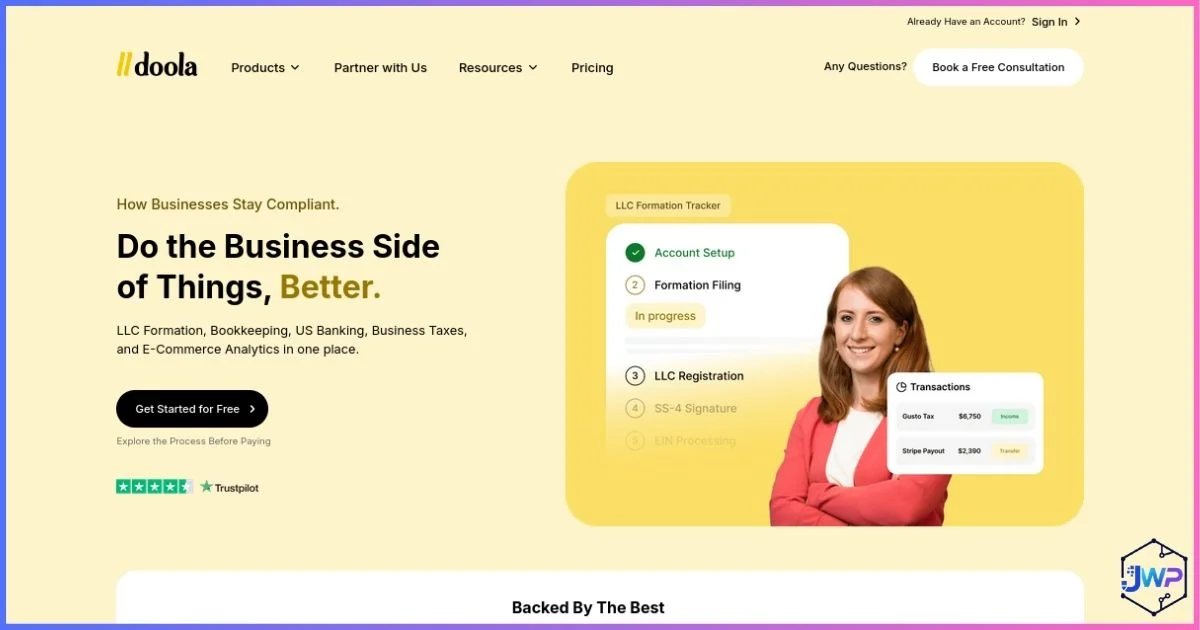
To form a US LLC with Doola, choose the Doola plan that matches your compliance needs, pick the state where the LLC should be formed, provide your owner and business details, let Doola prepare and submit the state filing, wait for approval, get your EIN, set up banking and payments, and then keep up with annual reports, registered agent mail, taxes, and bookkeeping. Doola is not just a filing form. It is a packaged LLC formation workflow designed to help founders move from “I need a US company” to “I have a formed entity I can operate.”
The biggest reason to use Doola is convenience. You can form an LLC directly with a state, appoint a registered agent, apply for an EIN at IRS.gov, and handle compliance yourself. That may be cheaper if you know exactly what you are doing. Doola makes more sense when you want guidance, bundled services, a cleaner founder dashboard, help for non-U.S. owners, and ongoing compliance support rather than a one-time filing. For a broader service-level review, read the full Doola review before choosing a plan.
Recommended path for most online founders
Use Doola if your LLC is part of a real business launch: SaaS, agency, e-commerce brand, consulting business, digital product, marketplace, newsletter, creator company, or international founder setup. If you only need a basic local LLC and already understand your state’s rules, a direct state filing may be enough.
Why Doola
Why Use Doola to Form a US LLC?
A limited liability company is popular because it can separate the business from the owner, offer flexible tax treatment, and keep management simpler than a corporation. The SBA describes an LLC as a structure that can protect owners from personal liability in many business situations, while still allowing profits and losses to pass through to personal income unless the business elects another tax classification.
The challenge is that forming an LLC is not a single universal U.S. process. Each state has its own filing fee, processing time, annual report rules, naming rules, registered agent requirements, and tax quirks. A founder in Kenya, India, Canada, the United Kingdom, or Brazil who wants a U.S. LLC for Stripe, banking, client contracts, or Amazon selling has a different operational problem than a local founder registering a cafe in their home state.
Doola sits in that gap. It helps with the formation filing, registered agent setup, EIN support, compliance reminders, tax packages on higher plans, and a dashboard that keeps core documents in one place. For non-U.S. founders, that packaging can be the difference between understanding the path and abandoning the process halfway through. If you are comparing Doola against other formation providers, start with the broader roundup of LLC formation services for non-U.S. residents, then come back to this Doola-specific walkthrough.
Data snapshot
Key Facts About Forming an LLC with Doola
The statistics below combine Doola’s public marketing claims, official U.S. government rules, and practical formation constraints. Treat plan prices as a snapshot: Doola can change pricing, discounts, and package details at any time.
Doola reach
175+
countries represented among founders Doola says it has helped.
Founder volume
15,000+
founders Doola says have used its business formation platform.
IRS EIN rule
1/day
EIN issuance is limited to one EIN per responsible party per day.
BOI update
2025
FinCEN removed BOI reporting requirements for U.S.-created entities.
Chart 1: Doola Plan Price Snapshot
Regular annual prices are compared with observed promotional prices on Doola’s public homepage at the time this article was drafted. Always check current checkout pricing.
Chart 2: LLC Formation Workload by Stage
This editorial model shows where most founders spend effort. Doola reduces filing friction, but post-formation compliance and operations still require attention.
Plans and costs
Doola Plans: Which One Should You Choose?
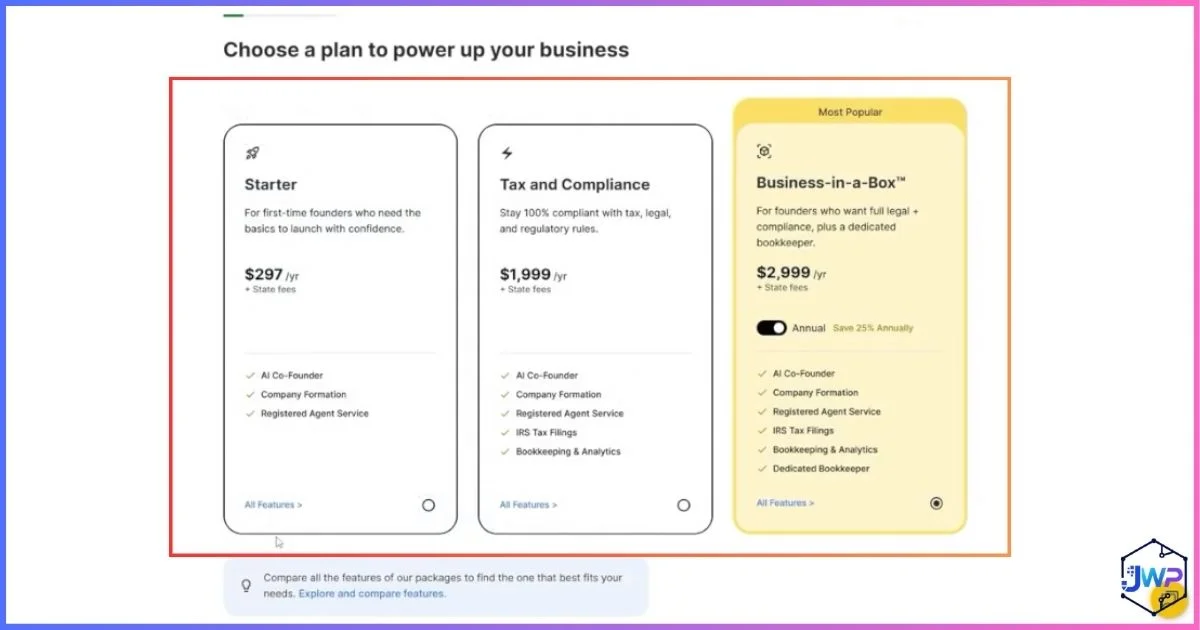
Doola has historically organized its public LLC formation offer around several plan levels. The naming and exact contents can change, but the pattern is clear: Starter is for basic formation, Total Compliance is for founders who want ongoing compliance and tax support, and Business-in-a-Box is for founders who want the broadest operating bundle.
| Plan | Regular Price Snapshot | Observed Promo Snapshot | Best For | Key Consideration |
|---|---|---|---|---|
| Starter | $297/year + state fees | $208/year + state fees | Founders who mainly need LLC formation, registered agent, EIN help, and core setup. | You still need to manage taxes, bookkeeping, and compliance carefully. |
| Total Compliance | $1,999/year + state fees | $1,399/year + state fees | Founders who want formation plus bookkeeping, tax filings, and compliance support in one bundle. | Higher annual cost, but less operational fragmentation. |
| Business-in-a-Box | $2,999/year + state fees | $2,099/year + state fees | Founders who want the broadest startup bundle and more guided business launch support. | Best when you will actually use the extra services, not just formation. |
Important pricing note
State filing fees are separate from Doola’s plan price. A low Doola plan price does not mean your total formation cost is only that amount. Your final cost depends on the state, optional add-ons, annual compliance, tax support, bookkeeping, payment processing, and banking needs.
Ready to form your LLC?
Doola is most useful when you want formation, registered agent, EIN support, and startup compliance guidance in one workflow.
Launch with DoolaOnboarding screens
Doola Formation Screens Explained
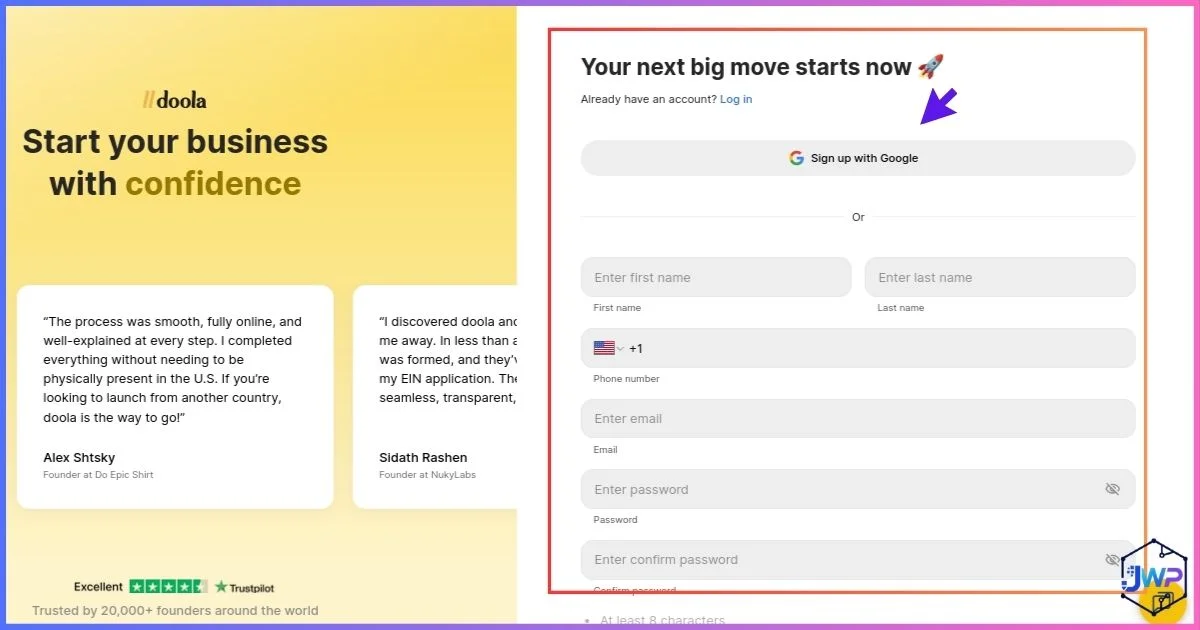
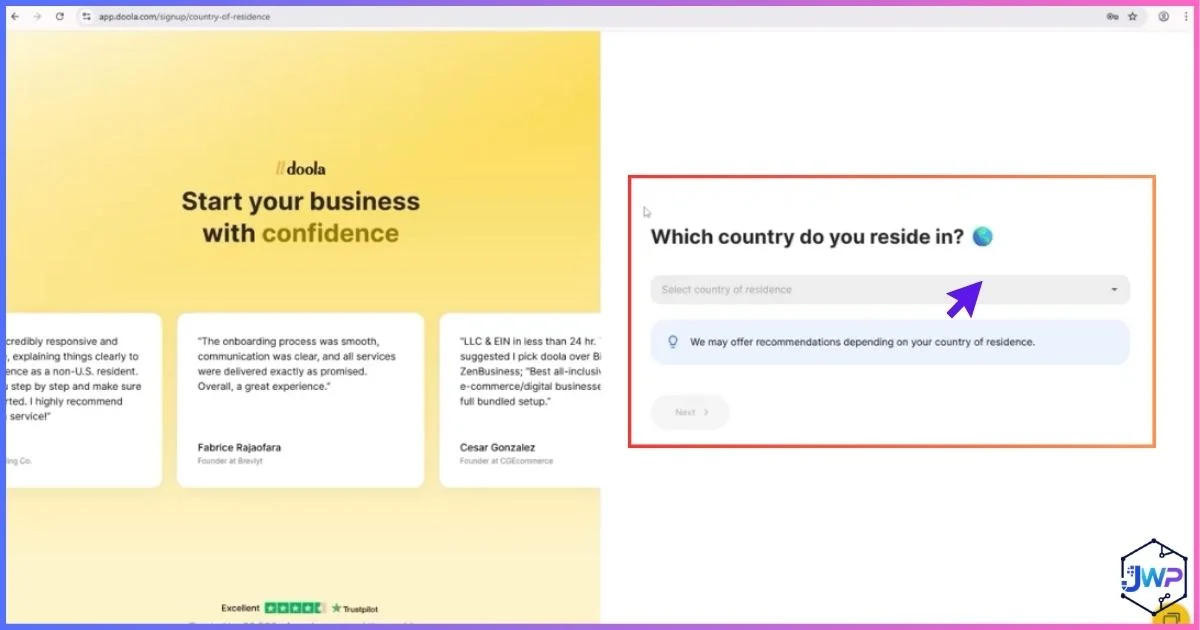
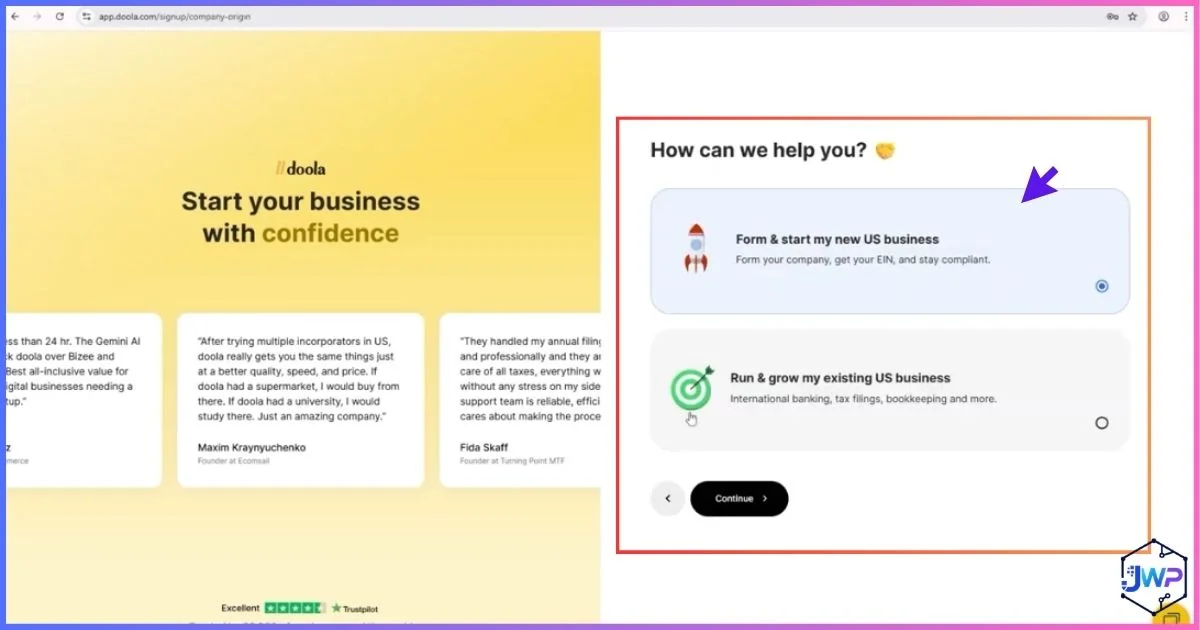
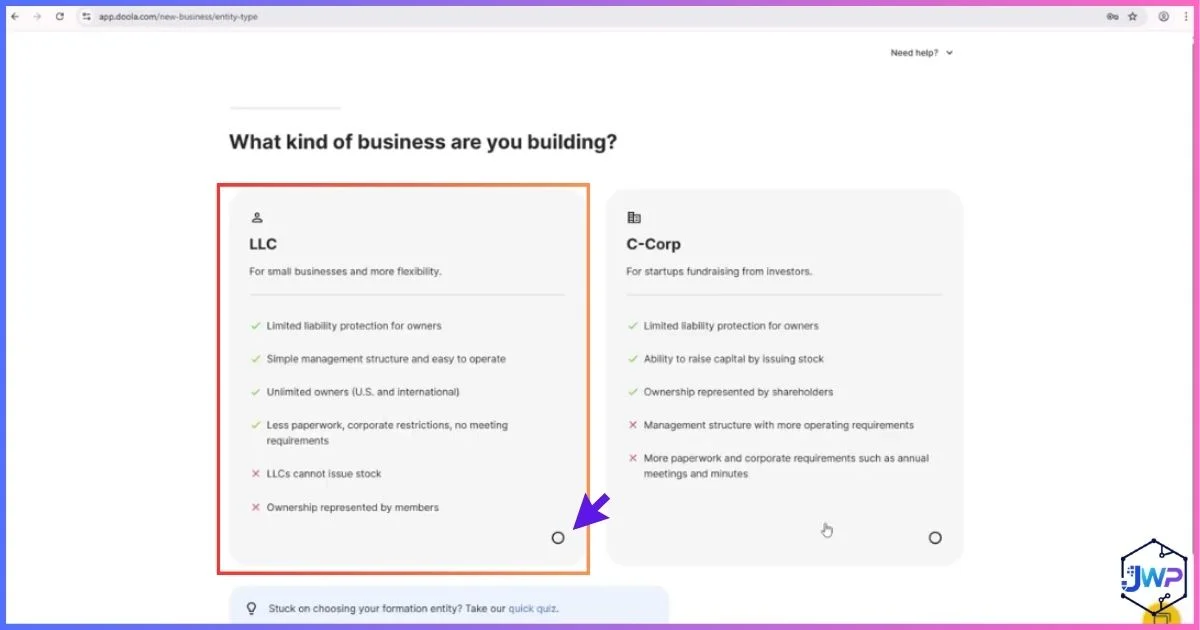
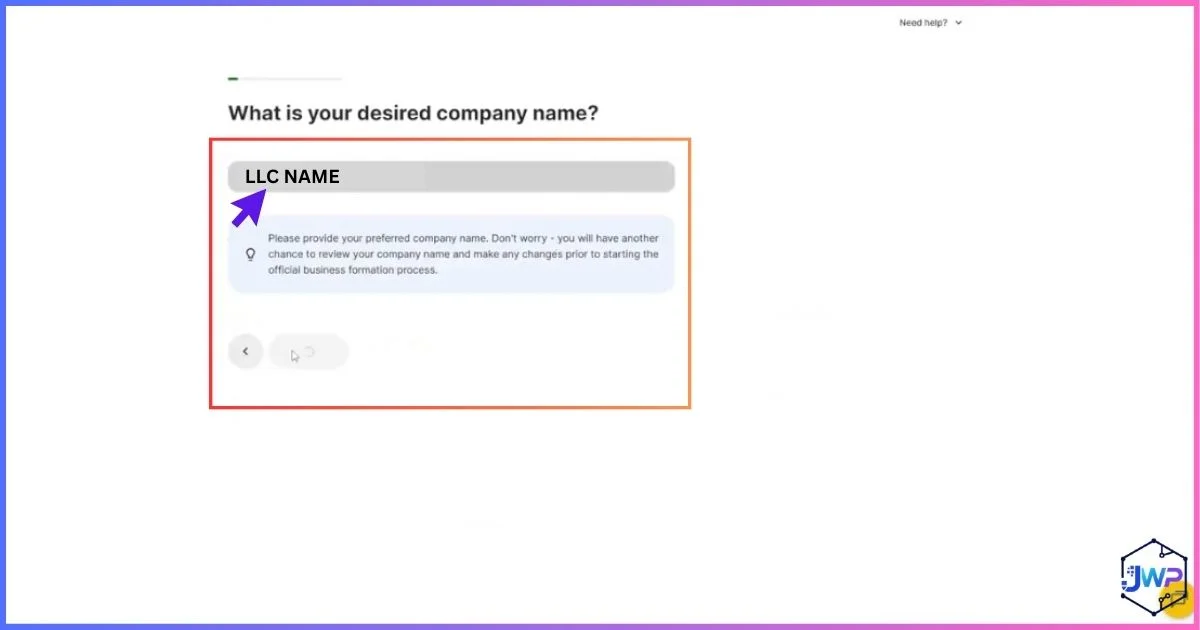
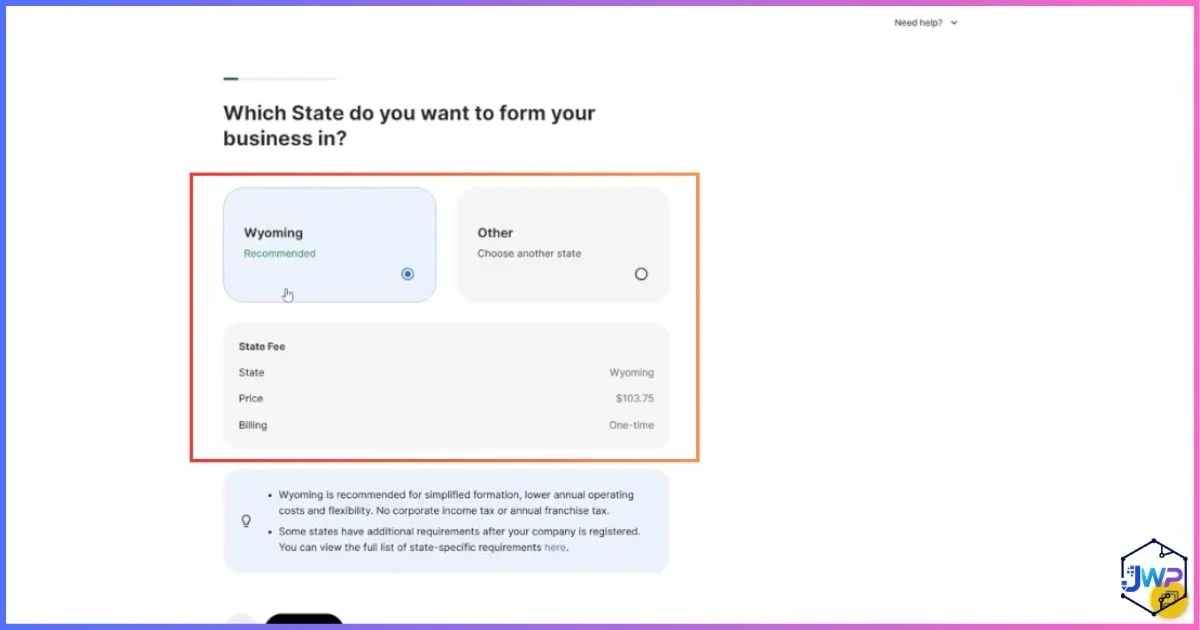
The Doola onboarding flow is designed to qualify your founder profile, confirm what you are trying to create, collect basic business details, and guide you toward a plan. The exact screens and plan names can change, but the order below shows the practical flow: create an account, identify your country of residence, confirm that you are starting a new business, choose the business type, enter a company name, choose a formation state, and then select a plan.
What to prepare before opening Doola
Have your legal name, country of residence, email, preferred company name, business activity, owner details, expected formation state, address strategy, and budget ready. If you are still comparing providers, see the guide to the best LLC formation services for non-U.S. residents before committing.
Important onboarding caution
The LLC formation screens are only the start. Before paying, confirm the current plan price, state filing fee, renewal terms, included EIN support, registered agent service, compliance package, refund policy, and whether tax or bookkeeping services renew annually. The best plan is not always the cheapest plan; it is the one that matches the compliance work you will actually need after the LLC is approved.
Step-by-step
How to Form a US LLC with Doola: Step-by-Step
Step 1: Decide Whether a US LLC Is the Right Structure
Before you pay for any formation service, decide whether an LLC is actually the right structure. An LLC is common for agencies, freelancers, online stores, creators, SaaS founders, and service businesses because it is flexible and usually simpler than a corporation. It can also work well for creator businesses, but if your main income source is YouTube or AdSense, read the dedicated guide on creating an LLC for a YouTube channel and Google AdSense so the entity, bank account, tax records, and platform payouts stay aligned. If you plan to raise venture capital, issue preferred stock, create a complex equity structure, or join an accelerator that expects a Delaware C-Corp, ask a startup lawyer or tax professional first.
Step 2: Choose Your State
Doola lets founders form in different U.S. states. Many online founders compare Wyoming, Delaware, and their home operating state. Wyoming is popular with online founders because of relatively simple maintenance and founder-friendly privacy norms. Delaware is popular for venture-backed companies, though many VC-backed startups choose C-Corps instead of LLCs. Your home operating state can make sense if you physically operate there, hire there, lease there, or have local tax obligations.
Step 3: Pick a Doola Plan
Choose Starter if you mainly want formation assistance and core setup. Choose Total Compliance if you want ongoing help with compliance, bookkeeping, and tax filing. Choose the higher bundle only if you need the broader package and will actually use the included services. Paying for a large package you do not use is not smart, but underbuying can also create problems if you are a non-U.S. founder with tax deadlines, IRS forms, and no local professional network.
Step 4: Prepare Your LLC Information
Doola will need the basics: proposed business name, state, business activity, owner details, address information, contact details, and responsible-party information for EIN support. Before starting, write down what the LLC will actually do in plain English. Avoid vague descriptions like “online business.” Use something clearer: “software consulting for U.S. clients,” “e-commerce sale of home accessories,” or “digital marketing services for small businesses.”
Step 5: Submit the Formation Order
After you enter your details and pay, Doola prepares the filing and submits the formation documents to the state. The state then approves the LLC if the name and filing meet requirements. Processing time depends on the state and current workload. Some states are fast. Others are slower. Expedited filing may be available in some cases.
Step 6: Review Your Formation Documents
Once approved, you should receive formation documents such as Articles of Organization or a Certificate of Formation, depending on the state. Save these files carefully. You may need them for banking, payment processors, tax records, investor diligence, marketplace verification, or contracts.
Step 7: Get Your EIN
An EIN is the business tax identification number issued by the IRS. The IRS online EIN application is free when used directly at IRS.gov, but non-U.S. founders and founders who want guided support often prefer Doola’s bundled EIN help. The IRS says EIN issuance is limited to one EIN per responsible party per day and that the online session expires after 15 minutes of inactivity, so prepare information before applying.
Step 8: Set Up Banking, Payments, and Bookkeeping
Formation alone does not make the business operational. You still need a business bank account, payment processor, bookkeeping workflow, invoice system, and clean separation between personal and business finances. If you mix personal and business money, you weaken the practical value of forming an LLC. If your post-formation plan includes PayPal, read the guide to creating a U.S. PayPal account as a non-U.S. resident before you submit payment-processor applications, because PayPal, banking, EIN, address, owner identity, and business activity details should all tell the same story.
Step 9: Maintain Compliance
After formation, track annual reports, franchise taxes, state renewals, registered agent mail, federal tax obligations, bookkeeping, and any licenses required for your industry. This is where Doola’s higher compliance-focused plans may justify their cost for founders who do not want to manage everything manually.
Chart 3: Typical LLC Formation Timeline
This timeline is a practical estimate. State processing, EIN method, banking review, and founder responsiveness can change the final duration.
State selection
What Is the Best State to Form an LLC with Doola?
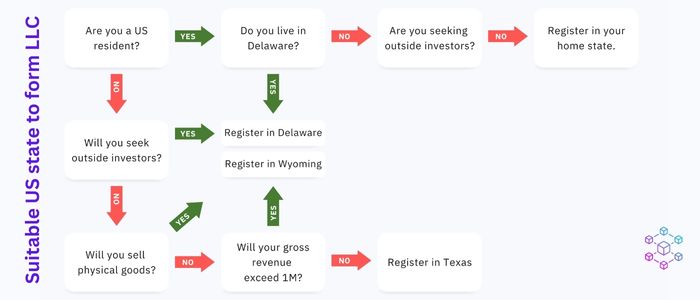
There is no universal best state for every founder. The right state depends on where you live, where the business physically operates, whether you need investor-friendly law, how much you care about annual fees, and whether you are a non-U.S. founder running an online business with no U.S. office.
| Scenario | State Choice That Often Makes Sense | Why | Warning |
|---|---|---|---|
| Online founder outside the U.S. | Often Wyoming or Delaware | Popular remote-founder choices with established formation workflows. | Tax and home-country obligations still matter. |
| Local U.S. service business | Usually the state where you operate | Foreign qualification can remove the benefit of forming elsewhere. | Do not choose a remote state just because it sounds cheaper. |
| Venture-backed startup plan | Often Delaware, but frequently as a C-Corp | Investors are familiar with Delaware corporate law. | An LLC may not be the right entity for VC fundraising. |
| E-commerce or creator business | Depends on owner location and operating footprint | Remote-friendly states can work, but sales tax, marketplace rules, and banking still apply. | State formation does not solve every tax issue. |
The practical rule is simple: if your business has a real physical presence in a state, start by analyzing that state. If you are a non-U.S. founder with a mostly online business and no U.S. physical office, compare the popular remote-founder options carefully. Doola can help operationally, but it cannot replace legal and tax advice for complicated cases.
International founders
Forming a US LLC with Doola as a Non-U.S. Resident
Doola is especially popular with non-U.S. founders because the hardest part of U.S. company formation is often not the state filing itself. The hard part is understanding what comes after: EIN support, U.S. business address expectations, bank account options, payment processor verification, tax forms, registered agent notices, annual reports, and how a U.S. entity interacts with your home-country tax system.
A non-U.S. resident can generally own a U.S. LLC, but ownership is not the same as immigration status, tax residency, or permission to work physically in the United States. A U.S. LLC can help you operate a U.S.-facing online business, sign U.S. client contracts, connect to certain financial tools, and present a more standardized business profile. It does not automatically give you a U.S. visa, eliminate taxes, or make every marketplace approve your account. For payment setup specifically, the follow-up guide on opening a U.S. PayPal account as a non-U.S. resident explains why LLC documents, EIN, business bank details, phone number, and owner identity must stay consistent.
| Question | Why It Matters | What to Prepare |
|---|---|---|
| Who will own the LLC? | Ownership affects tax classification, documentation, and bank review. | Legal names, addresses, ownership percentages, and ID documents. |
| What will the LLC do? | Payment processors and banks want a clear business activity. | A plain-English business description, website, products, and expected customers. |
| Where are you tax resident? | Your home country may tax worldwide income or require entity disclosure. | Talk to a local tax advisor before assuming U.S. formation solves everything. |
| Will you sell to U.S. customers? | Sales tax, marketplace tax collection, and state nexus can matter. | Track where customers are located and which platforms collect tax for you. |
| Do you need a U.S. bank account? | Bank onboarding can be stricter than formation. | Formation documents, EIN, owner ID, business website, and proof of activity. |
The cleanest non-U.S. founder setup is usually boring in the best way: one clear business activity, one clean ownership structure, one dedicated business bank account, one bookkeeping system, and documented tax advice. Complexity can come later. At formation, clarity is your friend.
Doola compared with other options
Doola is strongest when you value guided setup and compliance packaging. If your main priority is lowest upfront cost, privacy, or a different support model, compare it with alternatives in the best LLC formation services for non-U.S. residents guide and the full Doola review.
Documents
Operating Agreement, Records, and LLC Documentation
An operating agreement is the internal rulebook for your LLC. Even if your state does not require you to file it publicly, you should still have one. It describes who owns the company, how profits and losses are handled, how decisions are made, what happens if a member leaves, and who has authority to sign documents. For a single-member LLC, it helps show that the business is a separate legal and financial entity. For a multi-member LLC, it prevents future arguments.
If you use Doola, review every document instead of treating the package as a black box. Your goal is not merely to “have an LLC.” Your goal is to have an LLC whose records make sense when a bank, tax preparer, marketplace, client, buyer, investor, or government agency asks for documentation.
| Document | What It Proves | When You May Need It |
|---|---|---|
| Articles of Organization or Certificate of Formation | The state approved the creation of the LLC. | Banking, payment processors, contracts, tax setup, and due diligence. |
| Operating agreement | Ownership, management, profit allocation, and company rules. | Banking, member disputes, investor review, and internal governance. |
| EIN confirmation letter | The IRS issued the federal tax ID for the business. | Banking, payroll, tax filings, payment processors, and vendor onboarding. |
| Registered agent information | Who receives legal and official state notices. | State compliance, lawsuits, renewals, and official correspondence. |
| Annual reports and tax filings | The LLC is maintaining good standing and tax compliance. | Renewals, audits, financing, sales, and institutional review. |
| Accounting records | Revenue, expenses, owner contributions, distributions, and profit. | Tax preparation, management decisions, investor review, and audits. |
Simple recordkeeping rule
Create one secure folder for formation documents, one folder for tax records, one folder for contracts, and one folder for accounting exports. If you cannot find your documents quickly, your LLC setup is not finished yet.
EIN and operations
EIN, Banking, Taxes, and Operating Your New LLC
The EIN is often the moment a new LLC starts to feel real. You may need it for bank accounts, payment processors, payroll, tax forms, and marketplace verification. But an EIN is not a license to ignore taxes. A U.S. LLC can be taxed as a disregarded entity, partnership, S-Corp, or C-Corp depending on ownership and elections. Non-U.S. owners may also have U.S. filing obligations and home-country reporting obligations.
For single-member LLCs, the IRS generally treats the business as disregarded for federal tax purposes unless it elects corporate treatment. Multi-member LLCs are generally treated as partnerships unless they elect otherwise. Those defaults matter because your tax forms and deadlines may differ. If you are not confident, hire a tax professional who understands cross-border LLCs.
Chart 4: Post-Formation Priority Mix
Formation is just the beginning. This model shows how a founder’s attention should shift after the LLC is approved.
Founder discipline matters
Open a business bank account, keep separate records, document owner contributions, save receipts, and avoid mixing personal expenses with LLC money. The cleaner your books are, the easier banking, taxes, investor diligence, and dispute resolution become.
Compliance
LLC Compliance After Doola Forms the Company
Many founders think formation is the finish line. It is not. Formation is the starting line. After the LLC exists, you need to keep it in good standing. That means maintaining a registered agent, reading official mail, filing annual or periodic reports where required, paying state fees or franchise taxes, filing federal tax forms, keeping books, and documenting major company decisions.
| Task | Why It Matters | Handled by Doola? | Founder Responsibility |
|---|---|---|---|
| Registered agent | Receives official legal and state mail. | Included in Doola formation plans reviewed. | Keep contact details current and read notifications. |
| Annual report or state renewal | Keeps the LLC active and in good standing. | May be supported on compliance plans. | Know your state deadline and fee. |
| Federal tax filing | Required even when business activity is small or foreign-owned. | Included or assisted on higher plans depending on package. | Confirm tax classification and filing forms. |
| Bookkeeping | Needed for taxes, profit tracking, banking, and financing. | Offered on compliance-oriented plans. | Provide records and avoid mixed finances. |
| Beneficial ownership reporting | Rules changed in 2025 for U.S.-created entities. | Check current package and legal status. | Verify whether any current FinCEN rule applies to your company. |
BOI reporting update
FinCEN announced in March 2025 that it removed the beneficial ownership information reporting requirement for U.S. companies and U.S. persons under the Corporate Transparency Act interim final rule. Foreign entities registered to do business in the U.S. still require closer review. Because this area has changed quickly, always verify the current FinCEN rule before relying on a summary.
Mistakes
Common Mistakes When Forming an LLC with Doola
- Choosing a state only because an influencer recommended it. State choice should match your business footprint, tax exposure, and long-term plan.
- Assuming formation equals tax compliance. Your LLC can be approved and still have tax obligations you do not understand yet.
- Ignoring state fees. Doola’s plan price and the state filing fee are separate cost categories.
- Mixing personal and business money. This creates messy books and weakens the practical benefit of a separate business entity.
- Not saving documents. Keep formation approval, EIN confirmation, operating agreement, registered agent details, bank documents, tax filings, and invoices.
- Using a U.S. LLC for a business model that needs special licensing. Finance, healthcare, insurance, education, alcohol, legal services, and regulated marketplaces may require additional approvals.
- Skipping professional advice when cross-border tax is involved. Non-U.S. founders should not assume a U.S. LLC eliminates tax obligations at home.
The clean launch checklist
- Pick the right state for your actual business situation.
- Choose the Doola plan based on compliance needs, not just the cheapest checkout price.
- Save all LLC and EIN documents in one secure folder.
- Open a business bank account before accepting serious revenue.
- Set bookkeeping rules before the first transaction.
- Calendar annual state and tax deadlines.
- Ask a professional when ownership, tax residency, or regulated activity is complicated.
Comparison
Doola vs DIY LLC Formation
The cheapest path is usually direct state filing plus direct IRS EIN application. But the cheapest path is not always the lowest-risk path. If you are a non-U.S. founder, a first-time entrepreneur, or someone launching a business that needs banking, payments, tax support, and compliance reminders, Doola can be worth the premium because it reduces coordination work.
| Factor | Doola | DIY |
|---|---|---|
| Formation filing | Guided process with service support. | You file directly with the state. |
| Registered agent | Bundled in Doola plans reviewed. | You choose and pay a registered agent separately. |
| EIN | Bundled support. | Free through IRS.gov if you complete it yourself. |
| Non-U.S. founder friendliness | Designed with international founders in mind. | Possible, but more confusing without support. |
| Compliance and tax support | Available on higher plans. | You must build your own stack of accountant, calendar, and bookkeeping tools. |
| Lowest cash cost | Usually not the absolute cheapest. | Usually cheaper if you avoid mistakes. |
FAQ
Frequently Asked Questions
Is Doola legit for forming a US LLC?
Doola is a well-known business formation platform focused on U.S. company formation, registered agent service, EIN support, compliance, bookkeeping, and tax services. As with any provider, verify current pricing, plan inclusions, and service limitations before buying.
Can I form a US LLC with Doola as a non-U.S. resident?
Yes. Doola markets directly to global founders and says it has helped founders from more than 175 countries. Non-U.S. residents should still get tax advice for U.S. filings, treaty issues, home-country taxes, and banking requirements.
Does Doola include state filing fees?
No. Doola’s public plan pricing is listed separately from state fees. The final amount depends on the state where you form the LLC and any add-ons or support packages you choose.
Should I choose Wyoming or Delaware for my LLC?
It depends. Wyoming is popular with many online and remote founders. Delaware is popular for venture-backed corporate structures, although many VC-backed companies use C-Corps rather than LLCs. If you operate physically in a state, your home operating state may be the right starting point.
Can I form an LLC myself instead of using Doola?
Yes. You can file directly with a state, appoint a registered agent, apply for a free EIN through the IRS, and manage compliance yourself. Doola is for founders who prefer a guided, bundled formation and compliance workflow.
Sources
Sources and Further Reading
The sources are grouped inside clickable accordions for cleaner reading.