AI Humanizer Usage Statistics: Every Published Number
AI humanizers, tools that rewrite AI-generated text to read more naturally and score lower on AI detectors, have gone from a niche workaround to a multi-tool market in under three years. This page compiles every sourced statistic available in 2026: who says they use humanizers, how large the market is estimated to be, and, most importantly, independent research on whether these tools actually work against the detectors students and publishers are being checked against.
Quick Answer
Reliable, nationally representative data on AI humanizer usage does not yet exist. What exists instead is a mix of industry estimates (student adoption cited around 38% in one 2026 industry report), agency-level survey data (content agencies humanizing AI copy before client delivery at roughly 71%), and, more usefully, independent academic testing of whether these tools work at all. On that last point, the data is much firmer: a University of Maryland benchmark found the detector Pangram caught 97% of humanized text, against 46% for GPTZero, 23% for Fast-DetectGPT, and just 7% for Binoculars. In other words, whether a humanizer “works” depends almost entirely on which detector it’s tested against, and most published success claims come from the humanizer vendors themselves.
The practical takeaway echoed across nearly every independent source in this article: humanizing AI text does not reliably defeat the strongest detectors, and even when it does, it does nothing to address whether using it violates a stated academic or workplace policy. For the misconduct numbers behind why students turn to these tools in the first place, see our companion piece on AI academic misconduct statistics.
Use AI-Assisted Editing the Way It’s Meant to Be Used
WriteHuman is built for legitimate revision: smoothing AI-influenced phrasing so a draft you already own reads clearly and naturally. It works best paired with disclosure where your course or workplace requires it, and it isn’t a substitute for keeping your drafts and process evidence.
Table of Contents
- Methodology and a Warning About This Data
- Key Findings at a Glance
- Charts: What Independent Testing Shows
- Who Says They Use Humanizers
- Market Size and the Tool Landscape
- Independent Bypass-Rate Data
- How Detectors Are Fighting Back
- Why ESL Writers Are Overrepresented Among Users
- UK Secondary Schools: The Official Numbers
- The Legal Fallout
- A Separate Risk: What Humanized Text Still Contains
- Interpreting the Numbers Honestly
- Related Reading
- FAQ
- Sources
Methodology and a Warning About This Data
The AI humanizer space is unusual for a statistics roundup because the majority of published “success rate” and “usage” figures come directly from companies that sell humanizer tools, or from affiliate blogs that earn commission from the same tools they’re rating. This article labels every figure by source type: independent peer-reviewed or university-audited research, a detector vendor’s self-reported benchmark, a humanizer vendor’s self-reported benchmark, or an industry/affiliate blog estimate. Only the first category should be treated as reliable evidence on its own; the others are included because they are widely cited, but they carry an obvious commercial interest in the result.
Where independent, third-party academic verification exists, primarily research tied to Pangram Labs’ classifier that has been audited by teams at the University of Chicago Booth School of Business and the University of Maryland, this article flags it explicitly as independently verified. Detector-side error rates, including the risk of falsely flagging human-written text, are covered in full in our companion piece on AI detection false positives.
Key Findings at a Glance
Charts: What Independent Testing Shows
The clearest, most defensible numbers in this entire field come from third-party benchmark testing of detectors against humanized text, not from humanizer vendors’ own marketing. The charts below prioritize that data.
Detector Catch Rate on Humanized Text (University of Maryland Benchmark)
Source: Russell et al., University of Maryland benchmark, as cited by independent detector-testing outlets. Higher = the detector catches more humanized text.
Per-Tool Catch Rate Against Pangram (Pangram Labs’ Own Published Table)
Source: Pangram Labs, “How well does Pangram perform on humanizers?” (published Aug 27, 2025). This is a detector vendor grading its own product — treat as vendor-reported, not independently audited, though the underlying classifier has been separately verified.
UK GCSE / A-Level Proven Student Malpractice Cases (Official Ofqual Data)
Source: Ofqual/gov.uk official statistics, summer exam series 2022-2025. This tracks all student malpractice, not only AI- or humanizer-related cases; AI misuse is recorded within the plagiarism offence category. Full breakdown in our GCSE and A-level AI malpractice statistics piece.
Who Says They Use Humanizers
Unlike broad AI-in-education surveys, humanizer-specific adoption has not yet been measured by any major nationally representative research body (HEPI, RAND, Gallup, or College Board). The numbers available come from industry blogs and vendor-adjacent research. They are included here because they are the only published figures that exist, not because they meet the same evidentiary bar as the peer-reviewed detector data later in this article.
| Source | Date | Population | Claimed figure | Source type |
|---|---|---|---|---|
| SupWriter industry analysis | 2026 | Students using AI writing tools | ~38% have used a humanizer at some point; ~12% submit essentially unmodified AI output | Industry blog |
| SupWriter industry analysis | 2026 | Content agencies | 71% humanize all AI-generated content before client delivery | Industry blog |
| SupWriter industry analysis | 2025 → 2026 | Higher education institutions | AI-detection tool adoption plateaued at 82%, up marginally from 79% the prior year | Industry blog |
| WriteBros.ai humanizer benchmark commentary | 2026 | Humanizer tools, general | Effectiveness improved “about 17%” year-over-year as detectors and humanizers co-evolved | Affiliate blog |
| Medium / AI Humanizer Industry report | Oct 2025 | Broader AI content-creation market | 19-24% CAGR projected through 2032 for the AI content-creation category that includes humanizers | Analyst estimate |
Treat every figure in this table as directional, not authoritative. No source here discloses a sample size, survey instrument, or independent audit trail comparable to the HEPI, RAND, or College Board surveys referenced in our broader AI academic misconduct statistics roundup.
Market Size and the Tool Landscape
Market-size figures for the humanizer category specifically are even less standardized than adoption figures. One widely recirculated claim puts the AI humanizer market at a $3.2 billion valuation with over 200 million monthly users worldwide as of 2026; this figure originates from a single blog post and has not been independently corroborated by a market research firm, so we present it here as a claim rather than a verified figure. The broader AI-powered content-creation market it sits inside is more conservatively estimated by established research firms at a 19-24% compound annual growth rate through 2032.
| Tool | Positioning | Notable independent finding |
|---|---|---|
| QuillBot Humanizer | Bundled with QuillBot’s paraphrasing and grammar suite | Independent review estimated a 40-60% detection-score reduction, short of reliably clearing Turnitin on heavily AI-written text; caught 100% of the time in Pangram Labs’ own benchmark table |
| Undetectable AI | Markets itself directly around evading detection, with API and batch tools | Weakest recorded performance against Pangram among tested tools (90.3% still caught); flagged 100% AI-generated in one independent multi-detector test |
| StealthGPT | Bundles essay generation with humanization, positioned for students | 95.6% still caught by Pangram in the vendor’s own benchmark — better at evasion than QuillBot/Grammarly, worse than Undetectable AI |
| HIX Bypass | Part of the HIX.AI content suite | Independent five-tool comparison ranked it below Phrasly and Undetectable AI on detection performance |
| WriteHuman | Focused specifically on natural-reading revision with academic and professional modes | The only tool of four tested to pass both Pangram (100% human) and Quetext (96% human probability) in a single published July 2026 comparison — noted explicitly as an n=1 result by the reviewer, not a controlled study |
| GPTHuman | Newer entrant, positioned on natural output quality | Inconsistent against Pangram across repeated independent runs — passed in some tests, flagged in others |
Revision, Not Evasion
The independent data throughout this article is consistent on one point: no humanizer reliably beats every detector, every time. If your goal is a clearer-reading draft of writing you already own and are allowed to revise, WriteHuman is built for exactly that — pair it with disclosure where required.
Independent Bypass-Rate Data
This is the most load-bearing section of this article, because it’s the closest thing to controlled evidence in the entire humanizer category. Pangram Labs’ underlying classifier, EditLens, was published in a peer-reviewed paper at ICLR 2026, and has been separately audited by researchers at the University of Chicago Booth School of Business and the University of Maryland.
| Finding | Source | Verification level |
|---|---|---|
| Pangram detects 93.66% of humanized text overall, versus 34.53% for GPTZero on the same set | Pangram Labs, cited against a 1,992-passage independent UChicago (BFI) audit | Independently audited |
| On a separate benchmark: Pangram 97%, GPTZero 46%, Fast-DetectGPT 23%, Binoculars 7% accuracy on humanized text | University of Maryland (Russell et al.) | Independent academic |
| Pangram’s false-positive rate: 0.01% (1 in 10,000), holding even on adversarial and humanized samples | University of Chicago Booth & University of Maryland verification | Independently audited |
| Grammarly and QuillBot rewriting output: 100% detected by Pangram; StealthGPT: 95.6% detected; Undetectable AI: 90.3% detected (weakest of the set) | Pangram Labs’ own published humanizer benchmark table | Vendor-published |
| A four-tool head-to-head found WriteHuman the only tool to pass both Pangram (100% human) and Quetext (96% human) in a single test; the other three tools were flagged 100% AI by Pangram | Independent tester (Anangsha Alammyan), July 2026 | Single-run test (n=1) |
| GPTHuman’s Pangram results were inconsistent across repeated runs — passed once, flagged in another | Independent multi-detector testing, 2026 | Small-sample, non-repeatable |
| Pangram’s DAMAGE research paper specifically audited 19 humanizer and paraphraser tools to learn their statistical fingerprints, then trained an adversarial model against its own predictions | Pangram Labs research publication | Vendor-published research |
The pattern that survives across every independently verified source: the more fluent and coherent a humanizer’s output is, the more reliably the strongest detectors catch it, because fluent text stays inside the statistical range the classifier was trained to recognize. It’s the incoherent, heavily-mangled output, exactly the kind that reads badly to a human grader, that most often slips past. That’s a genuinely uncomfortable finding for anyone hoping a humanizer offers a clean, reliable way to defeat detection while still submitting readable work.
How Detectors Are Fighting Back
Turnitin, the detector most widely deployed in higher education, has built humanizer-specific detection directly into its product roadmap. Its AIR-1 model, released in July 2024, was trained specifically on text that had been run through popular paraphrasing and “humanizer” tools, after the company found students were using those tools to reduce their AI-writing scores. By mid-2025, Turnitin added a further detection layer targeting what it calls “AI bypassers,” tools explicitly designed to rewrite AI output in ways intended to evade detection. Every submission is now processed through all of Turnitin’s detection models and combined into a single score.
Despite these updates, Turnitin and independent reviewers alike acknowledge that heavily rewritten content, where a student substantially restructures and re-writes AI-generated passages rather than running them through an automated tool, can still evade detection. That distinction, light automated humanizing versus substantial human rewriting, is closer to the actual line institutions are trying to draw. For the cost side of maintaining this detection arms race, see how much universities spend on AI detection tools, and for schools that have concluded the arms race isn’t worth running, see universities that banned AI detectors.
Why ESL Writers Are Overrepresented Among Users
A meaningful share of humanizer usage isn’t about disguising AI writing at all, it’s a defensive response to detector bias against non-native English writers. Stanford’s peer-reviewed 2023 study in Patterns (Liang et al., DOI: 10.1016/j.patter.2023.100779) tested seven widely used GPT detectors on 91 genuine, human-written TOEFL essays and found an average false-positive rate of 61.3%, compared to roughly 5.1% for native-English writing samples in the same test. Notably, the same researchers found that when TOEFL essays were rewritten with richer, more “native-sounding” vocabulary, the false-positive rate dropped from 61.3% to 11.8%, meaning the very technique a humanizer applies is also, in effect, a bias-correction step for legitimate second-language writers.
This creates a genuinely difficult category of user: someone who wrote their own essay, got falsely flagged because of predictable, low-perplexity phrasing common in second-language writing, and now reaches for a humanizer not to hide AI use but to avoid a false accusation. We cover the full scope of this bias, and which detectors have and haven’t closed the gap since 2023, in AI detector bias against ESL writers.
UK Secondary Schools: The Official Numbers
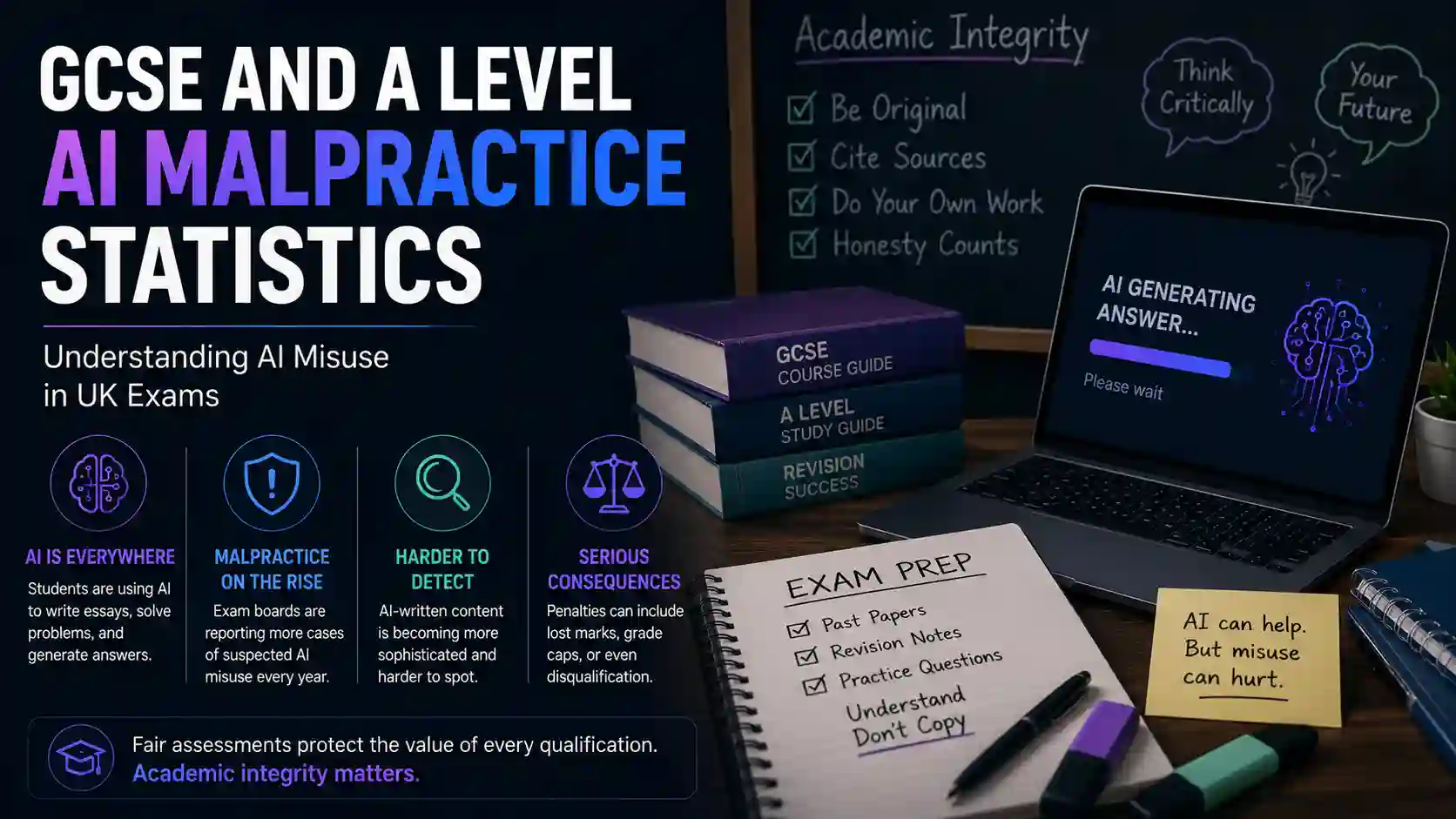
Ofqual, England’s exams regulator, publishes annual malpractice statistics for GCSE, AS, and A-level qualifications, and its most recent delivery report explicitly names AI misuse as a growing risk category, primarily in coursework and non-examined assessment components. Confirmed AI-related cases are currently folded into the broader “plagiarism” offence category rather than broken out separately in the headline statistics, which limits how precisely humanizer-specific misuse can be isolated from this data.
| Exam series | Proven student malpractice cases | Individual students penalized | Notes |
|---|---|---|---|
| Summer 2022 | 4,105 | — | Baseline, pre-widespread-ChatGPT-adoption year |
| Summer 2023 | 4,900 | — | First full exam series after ChatGPT’s public release |
| Summer 2024 | 5,190 | 4,975 (0.4% of all students) | Ofqual delivery report flags AI as an emerging risk category for the first time |
| Summer 2025 | 5,025 | 4,735 (0.3% of all students) | Slight decrease overall; AOs report using AI detection software and moderation to identify potential misuse, with confirmed cases recorded under plagiarism offences |
The JCQ (Joint Council for Qualifications) also publishes worked case examples of AI-related malpractice findings, including instances where AI detection software returned a high probability score that, combined with stylistic red flags like “highly sophisticated language” inconsistent with the candidate’s level, led to disqualification. A full breakdown of AI-specific figures, case types, and subject-level patterns is in our dedicated GCSE and A-level AI malpractice statistics article.
The Legal Fallout
As both AI writing and humanizing tools have spread, so has a new category of litigation: students suing their institutions over AI-detection accusations they say were wrong. At least five federal cases had been filed in the United States by mid-2026, with mixed outcomes so far.
| Case | Filed | Core allegation | Status |
|---|---|---|---|
| Rignol v. Yale University (Yale School of Management) | 2025 | Discrimination and unreliable detection tied to GPTZero use in an exam investigation | Preliminary injunction denied May 2025; case ongoing |
| Doe v. University of Michigan | Feb 2026 | Disability discrimination — anxiety/OCD-linked writing style flagged as AI three times by one instructor | Preliminary injunction denied May 2026; motion to dismiss pending |
| Newby v. Adelphi University | Fall 2024 dispute, suit filed 2025-26 | Turnitin flagged an essay “100% AI”; family disputes the finding, citing neurological/writing-style factors | Hearing scheduled; reported six-figure legal costs |
| Yang v. (Minnesota institution) | 2025 | National-origin bias; PhD candidate expelled after a GPTZero flag plus faculty judgment | Expulsion affirmed by Minnesota Court of Appeals, Feb 2026; parallel federal suit ongoing |
| Harris v. Hingham (Massachusetts, K-12) | 2024 | Parents challenged AP History AI-use discipline | Court denied relief, Nov 2024, finding the school “reasonably concluded” a violation occurred |
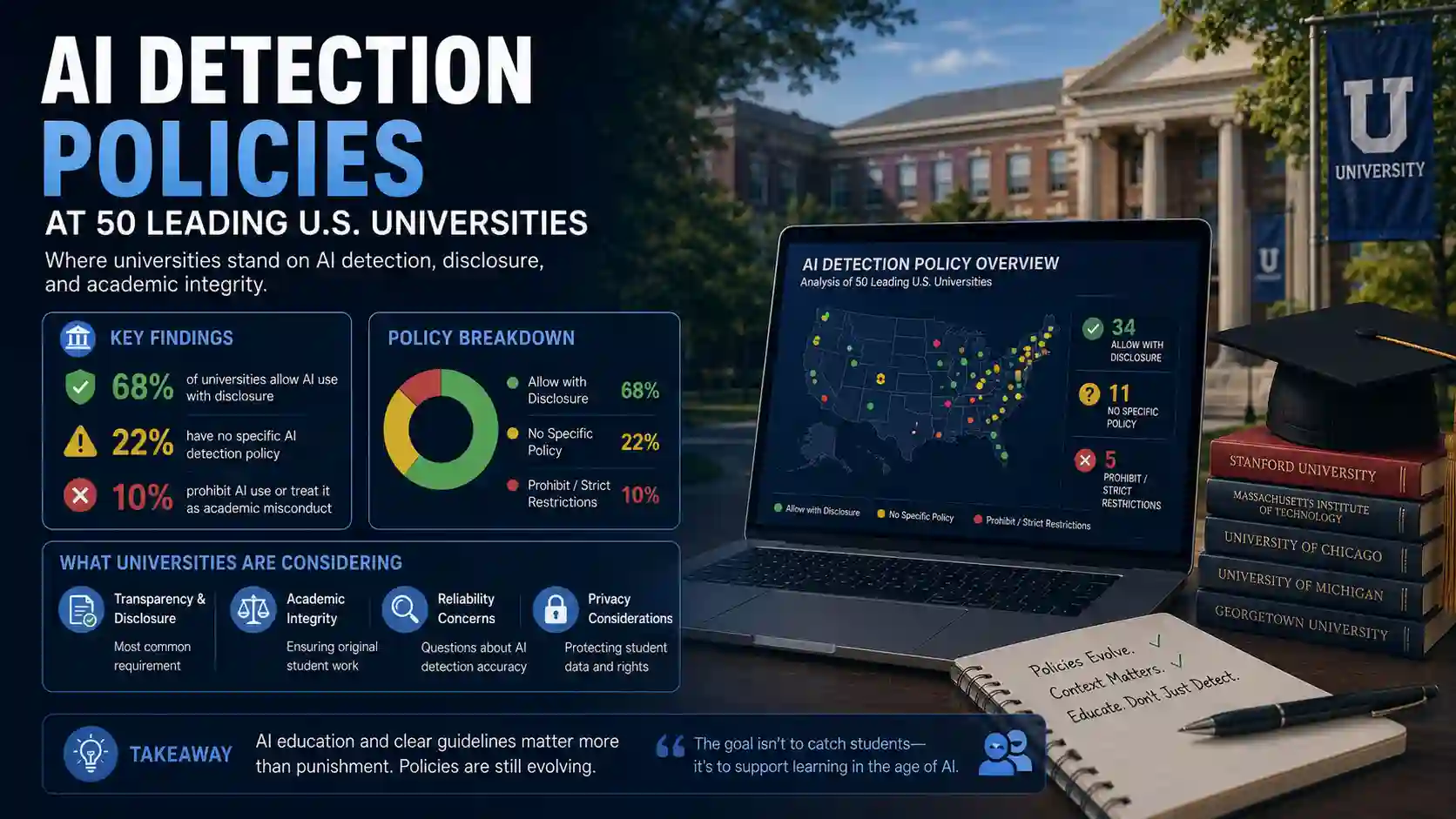
These cases share a common evidentiary thread: plaintiffs are directly citing the same peer-reviewed bias research referenced throughout this article, including the Stanford ESL-bias study, to argue that a detector score alone cannot support a disciplinary finding. A full, continuously updated case tracker with docket numbers and outcomes lives at AI detection lawsuits. For how leading institutions are now writing policy to avoid becoming the next defendant, see our 2026 policy study of 50 leading U.S. universities.
A Separate Risk: What Humanized Text Still Contains
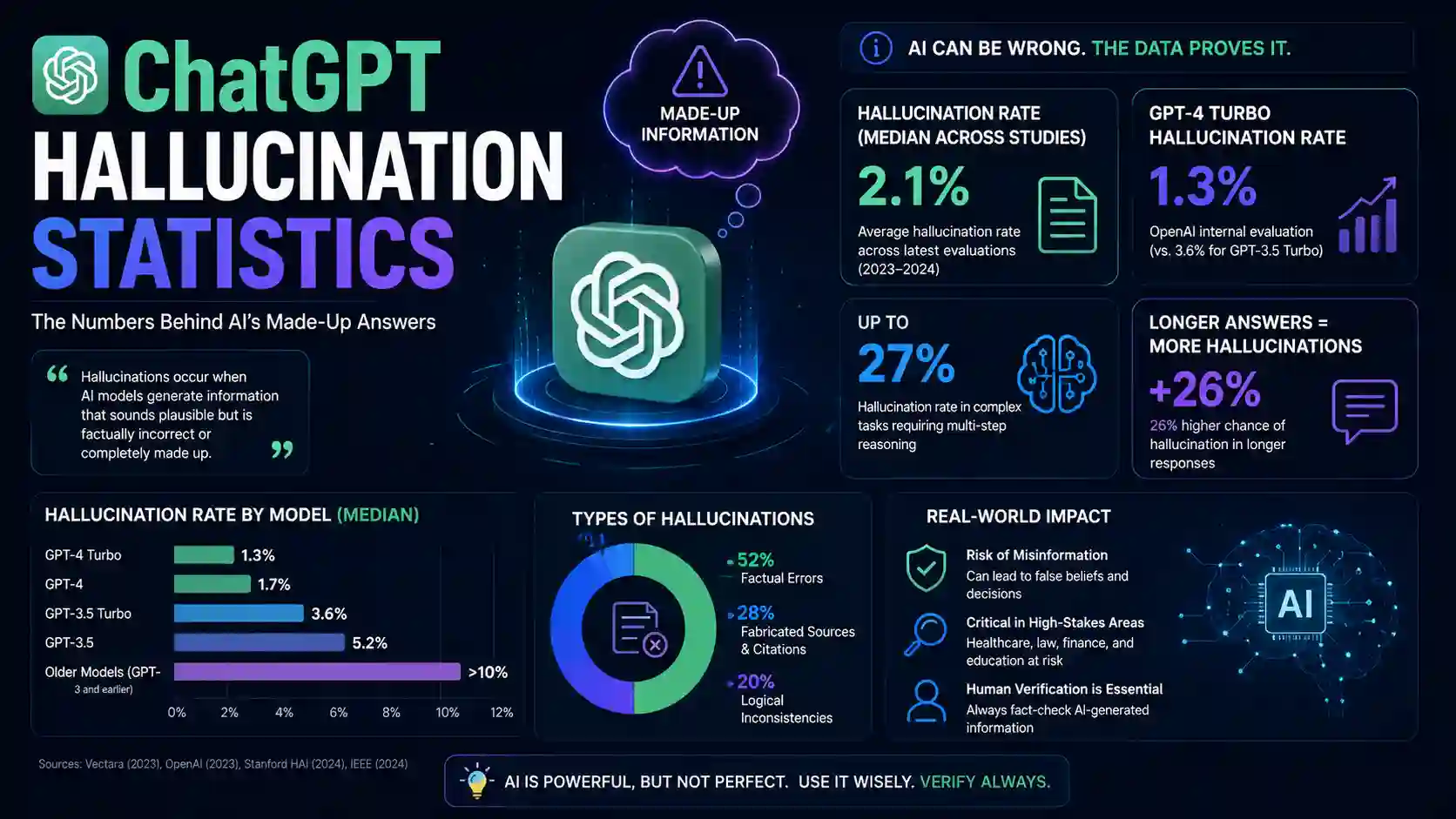
Passing a detector says nothing about whether the underlying content is accurate. Humanizing tools rewrite phrasing and sentence structure; they don’t fact-check the source material. This matters because the generative models producing the first draft carry well-documented fabrication rates of their own. A peer-reviewed study in Scientific Reports found GPT-3.5 fabricated 55% of bibliographic citations it generated and GPT-4 fabricated 18%, with substantive errors in a further 24-43% of the citations that weren’t outright invented. Independent 2025-2026 benchmarks on newer models put general factual-claim hallucination rates at roughly 17-34%, climbing higher for niche or recent topics.
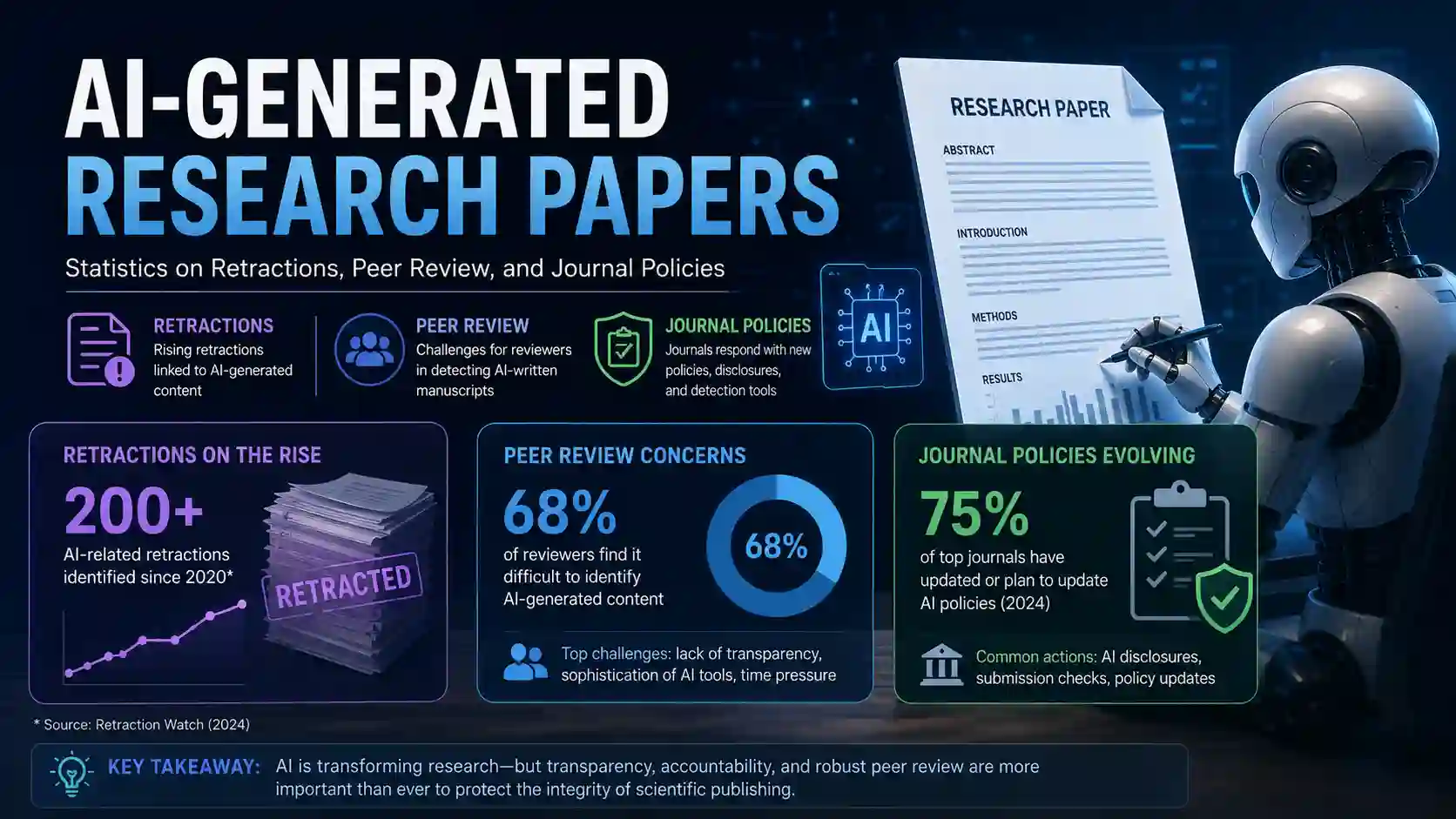
A humanized essay or report can therefore look completely natural, clear the detector, and still contain invented sources or incorrect claims underneath the smoothed-over prose. We cover this separately, with the full citation and factual-error data, in ChatGPT hallucination statistics. The same underlying reliability problem is now surfacing in published academic research too, not just student coursework, which we track in AI-generated research papers: 2026 statistics.
There’s also a resource cost to running three separate AI systems in sequence: a generator to draft the text, a humanizer to rewrite it, and a detector to check it, often multiple times per document. If you’re curious how that compute demand adds up at the infrastructure level, our explainer on AI data centers and the environment covers the underlying footprint.
Interpreting the Numbers Honestly
Three things the humanizer marketing rarely mentions
- Every “success rate” needs a named detector attached to it. A humanizer that clears QuillBot’s own detector or GPTZero means very little if the institution checking the work uses Pangram or Turnitin’s AIR-1 model. Success rates that don’t name the detector tested against should be treated as marketing, not data.
- Vendor benchmarks are graded on their own tests. Pangram Labs publishing a table showing Pangram catches most humanizers is a detector vendor grading its own product, even where the underlying classifier has independent academic backing. Humanizer vendors publishing their own “beats every detector” claims carry the identical conflict of interest in the opposite direction.
- A single passed test is not a reliable method. Several of the most-cited “this tool bypasses Pangram” claims circulating in 2026 trace back to one unreplicated test of a single passage. A humanizer that clears a detector once and fails the next attempt is not a strategy anyone should stake a grade, a degree, or a job on.
Put together, the honest summary is: humanizer adoption is real and almost certainly growing, but no credible, independent, nationally representative figure for how many people use these tools currently exists. What does exist, credibly, is evidence that the strongest detectors (namely, tools independently audited by university researchers) catch the large majority of humanized text, while weaker or older detectors are far more inconsistent. Treat any specific “bypass rate” you see quoted, including the ones in this article’s vendor-published table, as a snapshot of one test against one detector at one point in time, not a guarantee.
Frequently Asked Questions
How many students use AI humanizer tools?
There is no single authoritative figure. One vendor-adjacent industry analysis put student humanizer adoption at around 38% in 2026, while separate survey data shows content agencies humanizing AI text before delivery to clients at a much higher rate, around 71%. No nationally representative, peer-reviewed survey has published a verified student humanizer adoption rate as of mid-2026, so any specific percentage should be treated as an industry estimate rather than a confirmed figure.
Do AI humanizers actually bypass AI detectors?
It depends entirely on the detector. Independent testing from the University of Maryland found Pangram caught 97% of humanized text versus 46% for GPTZero, 23% for Fast-DetectGPT, and 7% for Binoculars. Pangram Labs’ own published benchmark shows some humanizers, like Undetectable AI, evading its detector in roughly 1 in 10 attempts, while others, including QuillBot and Grammarly’s rewriting tools, were caught 100% of the time in that same test.
What happens to students caught using a humanizer?
Consequences range from grade penalties to suspension, and a growing number of disputed cases are ending up in court. At least five federal lawsuits had been filed in the United States by mid-2026 over AI-detection accusations, with outcomes split between student and institution, and several cases still pending.
Is using a humanizer the same thing as cheating?
Not automatically. Whether it constitutes misconduct depends on the underlying policy: if a course or workplace prohibits submitting AI-generated content as original work, running that content through a humanizer to obscure its origin generally does not change the underlying violation. If a policy permits AI-assisted drafting but requires the final submission to reflect the student’s own understanding, light stylistic editing sits in much greyer territory. Institutional policy language, not detector scores, is what ultimately defines the line.
Which AI humanizer performs best in independent tests?
No single tool has been independently, repeatedly verified as reliably beating strong detectors like Pangram. The most-cited favorable result for any named humanizer as of mid-2026 is a single published test (n=1) in which WriteHuman passed both Pangram and Quetext, while three competing tools tested in the same run were flagged. That result has not been independently replicated across multiple passages, detectors, or writing genres, so it should be read as a promising single data point rather than a guarantee.
Research Sources
This article combines peer-reviewed research, independently audited detector benchmarks, official government exam-malpractice statistics, court filings and legal reporting, and industry/vendor blog estimates, each labeled by type throughout the article. Source links are provided so readers can verify current figures directly, since detector and humanizer performance data updates frequently.
View all sources
- Liang et al.: GPT Detectors Are Biased Against Non-Native English Writers (Patterns/Cell, 2023)
- PubMed: GPT Detectors Are Biased Against Non-Native English Writers
- Technical Report on the Pangram AI-Generated Text Classifier
- Does Any AI Humanizer Actually Bypass Pangram in 2026?
- Does StealthGPT Bypass Pangram? The Honest 2026 Data
- Does Undetectable AI Bypass Pangram? (2026 Test)
- Does GPTHuman Bypass Pangram? Honest 2026 Test
- Does WriteHuman Bypass Pangram? What the Evidence Shows (2026)
- Best AI Humanizer for AI Detector Bypass in 2026 — Independent Test
- Pangram AI Detector — Accuracy Claims and University Verification
- QuillBot AI Humanizer Review: Pricing, Limits, Verdict
- SupWriter: AI Writing Statistics 2026
- The AI Humanizer Industry: An In-Depth Report
- A Guide to the QuillBot Humanizer and How It Really Works
- Turnitin AIR-1 and AI-Bypasser Detection Timeline
- Turnitin AI Detector Review 2026: Accuracy and Scores
- Ofqual/gov.uk: Malpractice in GCSE, AS and A Level — Summer 2025 Exam Series
- Ofqual/gov.uk: Malpractice in GCSE, AS and A Level — Summer 2024 Exam Series
- Ofqual Delivery Report 2025
- JCQ: AI Use in Assessments — Protecting the Integrity of Qualifications
- Crowell & Moring: Ivy League Lawsuit Over Alleged AI Use
- Volokh Conspiracy: Rignol v. Yale University Ruling
- Plagiarism Today: Student Sues University of Michigan Over AI Allegations
- GovTech: Student Sues University of Michigan Over AI Misconduct Accusation
- Student Sues Adelphi University Over AI Plagiarism Accusation
- GradPilot: AI Cheating Lawsuits Tracker
- Scientific Reports: Fabrication and Errors in Bibliographic Citations Generated by ChatGPT
- How Accurate Is ChatGPT? The Real Numbers (2026)