How to Get a Temporary Phone Number for SMS Verification
By JoshWP Team | Updated: | ~17 min read | Virtual Numbers · OTP Verification · Privacy
Quick Answer
To get a temporary phone number for SMS verification, pick a provider, choose your target country and the specific platform (WhatsApp, Google, a bank, etc.), and you’re assigned a number in seconds — either for a single one-time activation (typically $0.10–$1.00) or a rental you keep for days, weeks, or months (typically $1.80–$20+). The global phone-number-verification market was worth roughly $1.8 billion in 2025 and is projected to reach $7.9 billion by 2034, and the type of number you choose — shared VoIP, dedicated non-VoIP, or a real carrier eSIM line — matters far more than which specific provider you use, since it determines both your privacy and your odds of the code actually arriving.
What Is a Temporary Phone Number, Exactly?
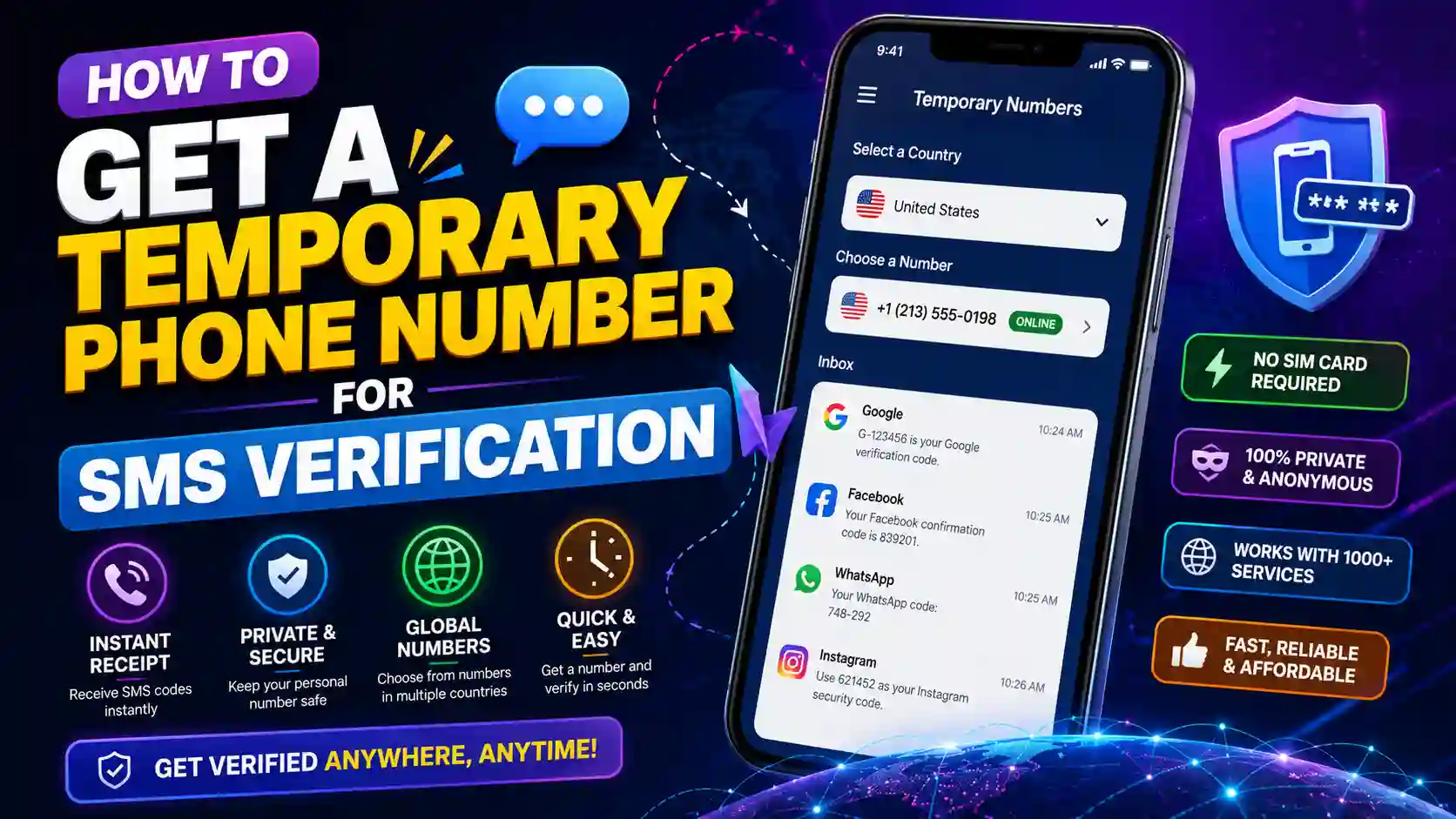
A temporary phone number is a real, dialable number — usually routed through VoIP or a rented mobile line — that isn’t tied to a physical SIM card in your pocket. It can receive SMS (and sometimes calls) just like a normal number, but it’s issued for short-term or single-purpose use instead of being your permanent line.
Behind the scenes, providers typically operate (or lease access to) blocks of numbers from telecom partners, then resell access to individual numbers or activations through a dashboard or API. When a platform sends an SMS to that number, the provider’s system captures it and displays it in your private inbox almost instantly.
Not All Temporary Numbers Are The Same Product
“Temporary number” is an umbrella term. A shared, one-time-use VoIP number and a dedicated, monthly-rented non-VoIP number are both “temporary” in the loose sense, but they behave very differently — that’s the whole subject of this guide.
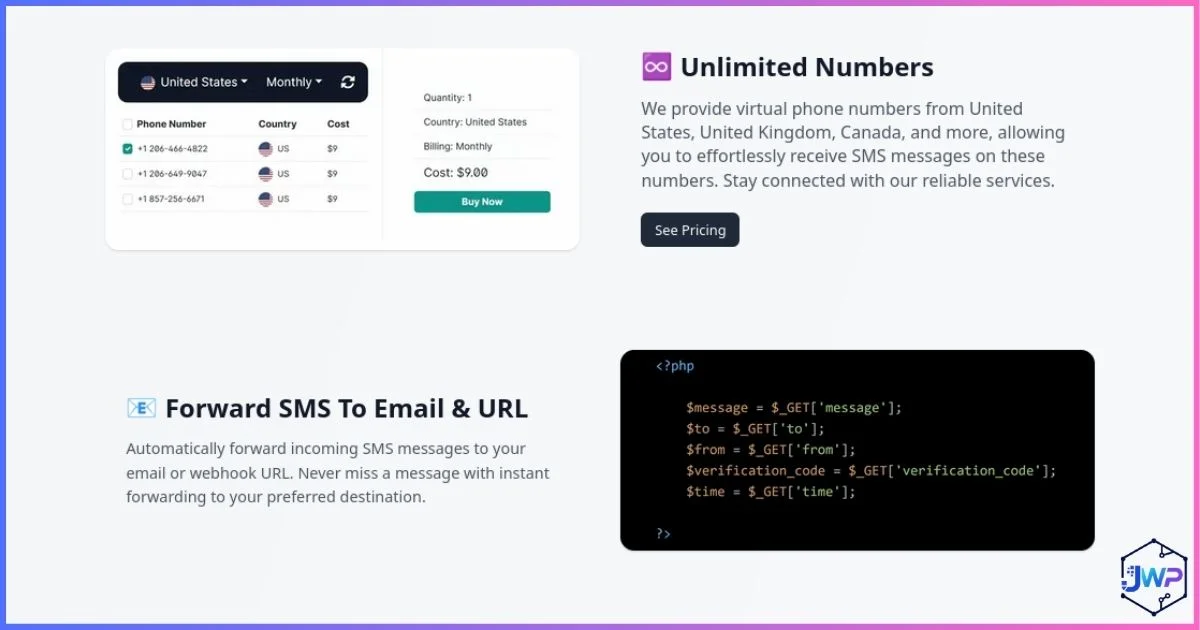
Receive-SMS Setup Screens: What Each Step Shows
A private temporary-number provider should make the setup easy to follow: open the service, use the inbox for codes, choose the number you need, then fund the account carefully. The screenshots below show the Receive-SMS flow in the right order.
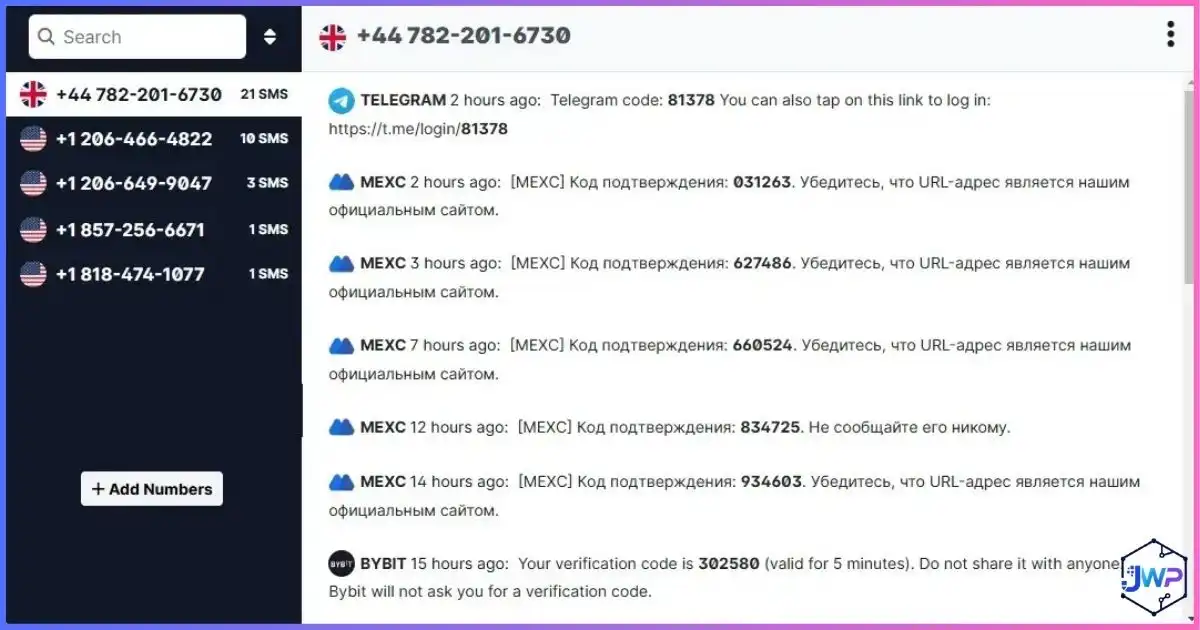
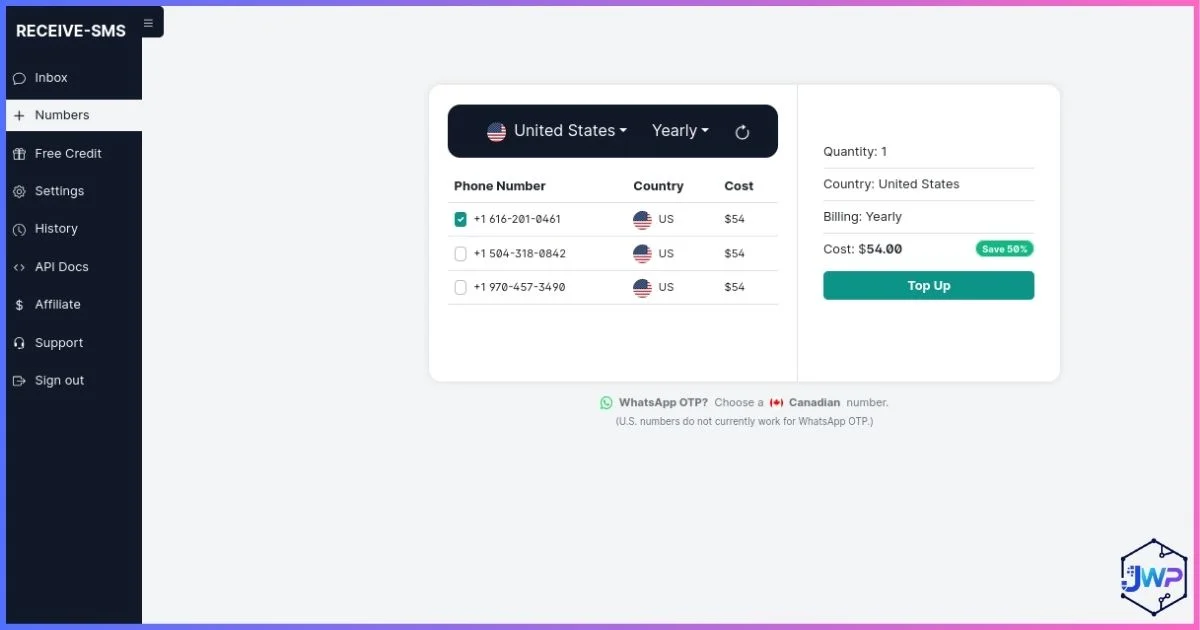
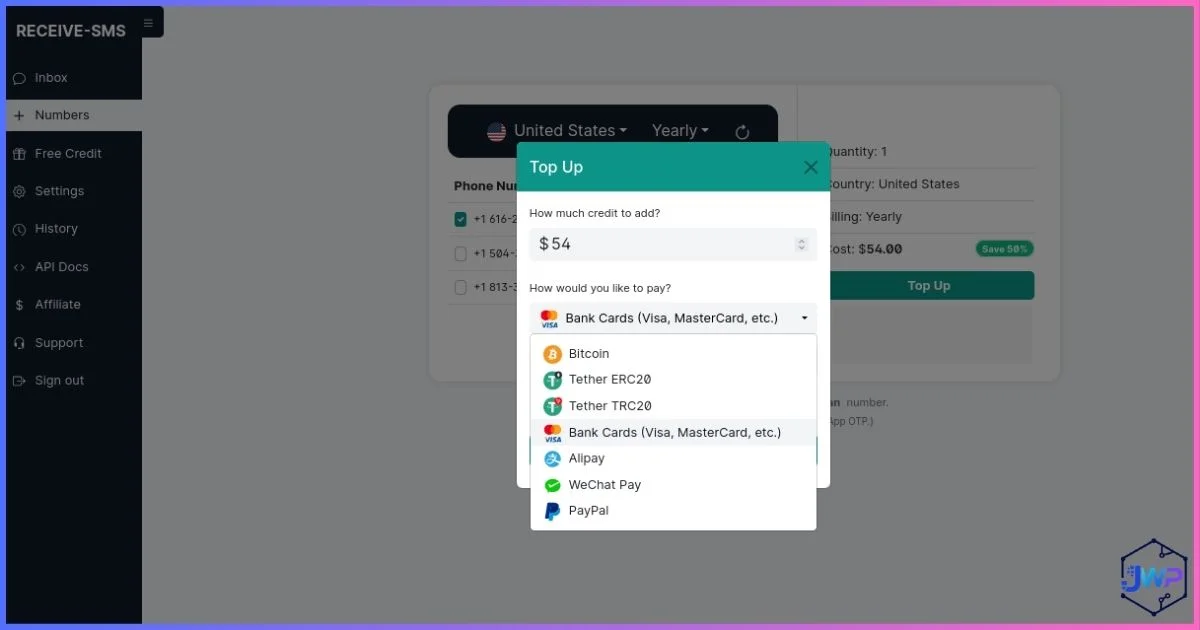
Before you choose a number
One-time activations are best for single-use verification. Rentals are better when the account may send follow-up messages, password resets, or future 2FA codes. For banking, payment processors, crypto, email, or identity-linked accounts, check the platform’s rules first and consider a dedicated carrier-grade option instead of a short-lived virtual number.
Table of Contents
- 1. What Is a Temporary Phone Number, Exactly?
- 2. The 4 Types of Temporary Numbers
- 3. Why Platforms Demand Phone Verification
- 4. Step-by-Step: Getting Your Number
- 5. Stats: Cost, Success Rate & Market Growth
- 6. How to Choose the Right Provider
- 7. Security & Legal Considerations
- 8. Best Use Cases By Number Type
- 9. Pros and Cons
- 10. Final Verdict
- 11. Frequently Asked Questions
The 4 Types of Temporary Numbers
Providers usually let you choose between these four formats. Picking the right one for your situation matters more than which specific brand you use.
1. Free Shared / Public Numbers
Listed openly on free websites, with incoming SMS visible to anyone who visits the page. No signup, no cost.
Trade-off: zero privacy. Fine for a disposable forum signup; never for anything you’ll log into again.
2. One-Time Activation (Pay-Per-Code)
You pay a small fee (often $0.10–$1.00) for a single verification code on one specific service. The number is private to you for that one activation, then it’s released back into the pool.
The most cost-efficient option for one-off signups where you won’t need the number again — most platforms in this category, including the one covered in our receive-sms.com review, default to this model.
Watch out: if the platform later asks for another SMS code, you may not have access to the same number. Use this option only when future recovery access does not matter.
3. Short/Long-Term Rentals
You keep a dedicated number for a set period — a few days up to several months — receiving any SMS sent to it during that window, not just one activation.
Ideal when a platform sends follow-up texts (delivery updates, re-verification, 2FA on an ongoing basis) rather than a single one-time code.
Watch out: the number remains useful only while the rental is active. If you attach it to an account you need long term, budget for renewal or move the account to a permanent recovery method as soon as possible.
4. Dedicated Non-VoIP / eSIM Numbers
A genuine carrier-issued number, either through a premium non-VoIP provider or an eSIM plan on your own device. Costs more but carries the lowest risk of being detected and blocked.
If you already use an eSIM for travel data, check whether your provider bundles a number — our Saily eSIM review and best eSIM for budget travelers guide both cover this.
Why Platforms Demand Phone Verification
It isn’t arbitrary friction. SMS-based (OTP) verification is one of the cheapest, most effective ways platforms have to fight three specific problems:
🤖 Bot & duplicate accounts
A working phone number is harder to mass-generate than an email address, raising the cost of spam and fake-account creation.
🔐 Account recovery
A verified number gives platforms a fallback channel for password resets and suspicious-login alerts.
🛡️ Fraud prevention
Financial platforms in particular use SMS OTPs as a second factor to reduce account-takeover fraud, which costs the industry billions annually.
This is also precisely why the underlying mobile-verification infrastructure market is growing so fast — it isn’t just consumer apps; it’s banks, fintechs, marketplaces, and gaming platforms all layering in phone-based checks at scale.
Step-by-Step: Getting Your Number
Decide: Activation or Rental?
One-time code for a single signup → activation. Ongoing texts or repeat logins → rental.
Pick Your Country & Target Service
Match the country the target platform expects, and select the specific app/site you’re verifying — pricing varies by both.
Fund Your Account
Top up a small balance (card, PayPal, or crypto depending on the provider) — avoid parking large sums with any single service.
Enter the Number & Watch Your Inbox
Paste the assigned number into the signup form, then copy the code as it lands in your private dashboard inbox.
Skip the Comparison Shopping
Receive-SMS handles all four steps in one dashboard — use code JOSHWP at checkout for a discount on your first top-up.
Stats: Cost, Success Rate & Market Growth
Real numbers behind the category, compiled from published provider rate cards and industry market research current as of mid-2026.
Global Phone Number Verification Market ($ Billions)
Source: industry market research estimates, 2025–2026 reporting; figures are projections and vary by research firm.
Typical Cost By Number Type ($)
Illustrative rates compiled from published 2026 rate cards across the category.
Estimated Delivery Success Rate By Type
Editorial estimates based on aggregated provider claims and independent reviews — actual results vary by country and target platform.
Number Type Scoring Across Five Criteria
Editorial scoring (0–10), not an official benchmark from any vendor.
Know the risk: SMS-Activate, a major player in this market for roughly a decade, permanently shut down on December 29, 2025, reportedly locking user balances behind a $30 minimum withdrawal. Keep only small prepaid balances with any single provider, regardless of type.
How to Choose the Right Provider
Not all providers in this space are equal. Run through this checklist before committing a balance to any of them:
- Published, transparent pricing per country and per service (no hidden minimums)
- Automatic refunds when a code never arrives
- Clear distinction between VoIP and non-VoIP number options
- Coverage for the specific country and platform you need
- Multiple payment methods (card, PayPal, crypto) so you’re not locked in
- Visible customer support channel and an operating track record
- No requirement to maintain a large prepaid balance
- Clear rental/retention rules if you need to keep the same number
- Easy export or copy access to SMS history for your own records
| Number Type | Typical Cost | Privacy | Best For |
|---|---|---|---|
| Free shared/public | $0 | ❌ None | Zero-risk, disposable signups |
| One-time activation | $0.10–$1.00 | ✅ Private (single use) | Most one-off verifications |
| Short/long-term rental | $1.80–$20+/mo | ✅ Private (ongoing) | Repeat logins, follow-up texts |
| Dedicated non-VoIP / eSIM | $3.50–$20+ | ✅ Highest, carrier-grade | Strict platforms, long-term use |
Security & Legal Considerations
Using a temporary number is legal in essentially every jurisdiction — the underlying infrastructure is the same VoIP/telecom technology businesses use for customer service lines. The real considerations sit elsewhere:
Privacy Rule #1
Never use a free shared/public number for banking, email, crypto, or anything tied to your identity or money — the inbox is visible to anyone.
Platform policy risk is the other side of this. Some services’ terms of use specifically prohibit VoIP or virtual numbers for account creation, and can flag or suspend accounts that use them — particularly banks, ride-share apps, and major social platforms with aggressive fraud detection. This is a platform rule, not a legal one, but it’s worth knowing before you commit an account you care about to a shared VoIP number.
This article does not constitute legal advice; always check a specific platform’s terms of service first.
Best Use Cases By Number Type
🧪 Developers & QA teams
One-time activations across many countries to test SMS-based signup and 2FA flows at scale, without burning real phone lines.
🛍️ Marketplace & classifieds sellers
A short-term rental keeps buyer inquiries and follow-up texts flowing without exposing a personal number.
🏢 Non-US founders
A long-term rental or dedicated number often bridges the gap for US-facing payment tools — pairs well with research on LLC formation for non-US residents and paying yourself as an LLC once the business itself is set up.
✈️ Travelers
A dedicated eSIM number offers the highest reliability wherever you land — see our best eSIM for budget travelers guide.
Pros and Cons
Pros
- Match the number type to the exact job — no overpaying for capability you don’t need
- Instant setup, no physical SIM or carrier visit required
- Pay-per-use pricing keeps casual, one-off verifications cheap
- Keeps your real number off registration forms and data brokers
- Available across 100+ countries with most established providers
Cons
- Cheapest options (free/shared) offer zero privacy
- VoIP-range numbers are increasingly detected and blocked by strict platforms
- Provider shutdowns can lock prepaid balances without warning
- Not suitable for banking, crypto, or identity-linked accounts
- Numbers can be recycled and reused by someone else later
Final Verdict
The mistake most people make isn’t picking a bad provider — it’s picking the wrong type of number for the job. A one-time activation is the cheapest, fastest option and is genuinely all you need for a single signup you won’t revisit. A rental makes far more sense the moment a platform sends follow-up texts or you’ll be logging back in regularly. And if you’re verifying something strict — a bank, a payment processor, a long-term business account — a dedicated non-VoIP or eSIM number is worth the extra cost, because it’s far less likely to be flagged or blocked.
Whatever type you choose, treat provider trust as seriously as privacy. The market has already seen one long-standing platform vanish overnight with user funds attached — keep balances small, check for a refund policy, and favor providers with a visible track record.
Bottom Line
Match the number type to the account: one-time activation for disposable signups, a rental for ongoing use, and a dedicated non-VoIP/eSIM number for anything strict or long-term.
Related Reads
- Receive-SMS.com Review — a full breakdown of one leading provider covered in this guide.
- Best eSIM for Budget Travelers — pairing a data plan with a dedicated number.
- Saily eSIM Review — a closer look at a popular eSIM provider.
- Best LLC Formation Services for Non-US Residents — relevant if you need a US number for a new entity.
- How to Pay Yourself as an LLC — the natural next step once your accounts are verified.
Frequently Asked Questions
What’s the difference between a one-time activation and a rental?
A one-time activation gives you a number just long enough to receive a single verification code, then it’s released back to the pool. A rental keeps the number dedicated to you for a set period, so it can receive any number of texts during that window — useful for accounts that send follow-up messages.
How much does a temporary phone number cost?
One-time activations typically run $0.10–$1.00 depending on country and platform. Rentals range from about $1.80 for a single service up to $20+ per month for broader access, and premium non-VoIP or eSIM numbers can cost $3.50–$20 or more.
Are temporary numbers reliable for every platform?
No. Reliability varies by number type and target platform. Shared VoIP numbers are increasingly detected and blocked by strict platforms like banks and some social networks, while dedicated non-VoIP or eSIM numbers see materially higher success rates on those same platforms.
Is it safe to use a temporary number for important accounts?
It depends entirely on the type. Free, shared numbers are not safe for anything sensitive since anyone can view the inbox. A private, paid activation or rental is a reasonable choice for most accounts, but banking, crypto, and identity-linked accounts are best avoided altogether or reserved for a dedicated, carrier-grade number.
What happened to SMS-Activate, and should I worry about it happening again?
SMS-Activate, a major provider for roughly a decade, shut down permanently on December 29, 2025, reportedly leaving some user balances locked behind a minimum withdrawal threshold. It’s a real risk in this category — the safest habit is to keep only small prepaid balances with any single provider rather than large sums.
Is using a temporary number for SMS verification legal?
Yes, it’s legal in essentially every jurisdiction. The main risk is at the platform level: some services’ terms of use prohibit VoIP or virtual numbers for account creation, which can lead to a suspended account rather than any legal consequence.
Disclosure: This article contains affiliate links. If you sign up through our link we may earn a commission at no extra cost to you, and code JOSHWP may unlock a discount at checkout. Figures on market size, pricing, and provider history reflect publicly available information at the time of writing and may change.