
Wise Review : Fees, Safety & the One Risk Most People Never Plan For
By JoshWP Team | Updated: | ~15 min read | International Banking · Money Transfer
Quick Answer
Wise (formerly TransferWise) is a UK-listed fintech that lets you hold, send, and spend money in 40+ currencies at the real mid-market exchange rate, for a transparent fee starting around 0.33% — dramatically cheaper than most banks. It served nearly 19 million customers and processed over $243 billion in cross-border volume in its most recent financial year, and holds an “Excellent” 4.3/5 Trustpilot rating from 287,000+ reviews. It is genuinely one of the best tools available for freelancers, expats, and international businesses moving money across borders. The trade-off: Wise is an Electronic Money Institution, not a bank — it can close accounts for compliance or risk reasons with limited notice, your funds aren’t covered by deposit insurance schemes like FSCS or FDIC, and its European arm is currently under an active anti-money-laundering investigation in Belgium (unresolved, no charges filed as of this writing). None of that makes Wise unsafe to use — but it does mean you should never treat it as your only financial relationship. More on exactly why, later in this review.

If you’ve ever sent money abroad through a traditional bank, you already know the quiet insult buried in the process: the bank shows you an exchange rate that’s conveniently a few percent worse than the real one, tacks on a wire fee, and calls the difference “service.” Wise was built specifically to end that. Founded in 2011 by two Estonians who got tired of losing money to bank exchange-rate markups while paying each other in different currencies, Wise (originally TransferWise) has grown into a publicly listed, multi-billion-dollar fintech that now serves nearly 19 million people and businesses in over 160 countries.
This Wise review is built to be genuinely comprehensive — the fees down to the decimal, the multi-currency account and debit card in detail, real growth and usage stats, a full comparison against Revolut, Payoneer, and traditional banks, and — because no honest review skips this — a dedicated section on the real risk of relying on any single financial institution, including Wise, too heavily. That last part isn’t a knock on Wise specifically. It’s the lesson every international entrepreneur eventually learns the hard way, and it’s better to learn it here first.
Table of Contents
- 1. What Is Wise?
- 2. How Wise Actually Works
- 3. Watch Wise In Action
- 4. Core Features — Full Breakdown
- 5. Wise By The Numbers
- 6. Pricing — Every Fee Explained
- 7. ⚠️ Read This Before You Rely on Wise
- 8. Wise vs Revolut vs Payoneer vs Traditional Banks
- 9. Who Is Wise Best For?
- 10. Pros and Cons
- 11. Final Verdict
- 12. Frequently Asked Questions
What Is Wise?
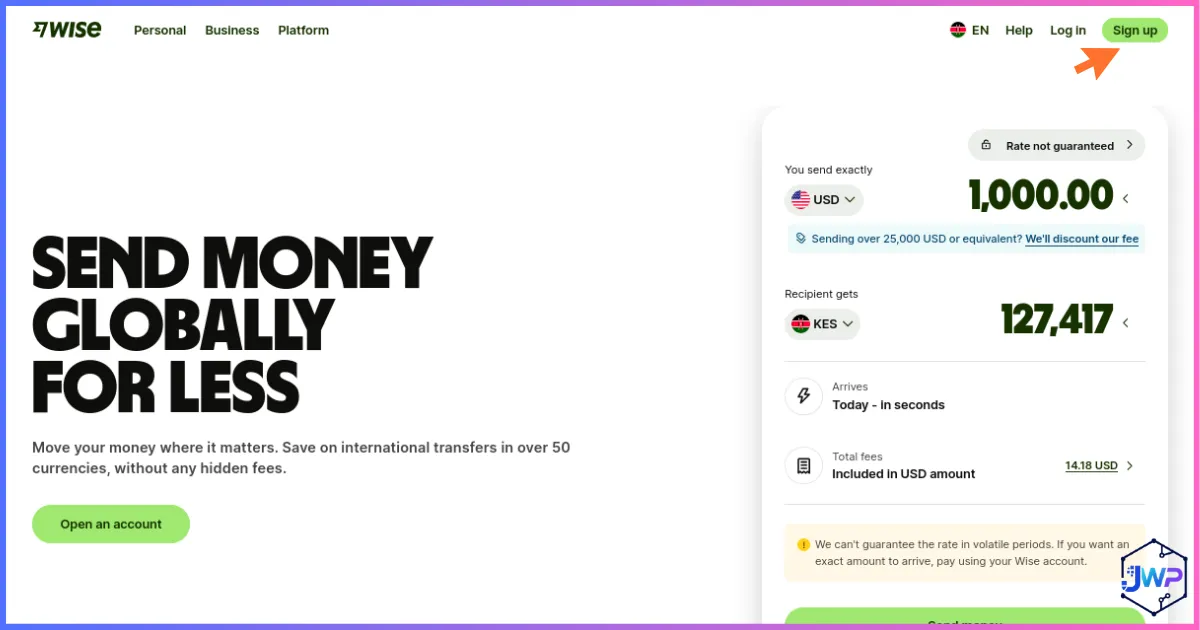
Wise was founded in London in 2011 as TransferWise by Estonian entrepreneurs Kristo Käärmann and Taavet Hinrikus, who built the original version of the product to solve their own problem: one of them was paid in pounds but lived in Estonia, the other was paid in euros but lived in the UK, and both were losing money every month to bank exchange-rate markups just to pay each other. Their fix — matching currency needs peer-to-peer instead of physically moving money across borders — became the foundation for a business that rebranded to Wise in 2021 to reflect how far it had grown beyond simple transfers.
Today, Wise is a publicly traded company, listed on the London Stock Exchange under the ticker WISE since July 2021, and more recently added a primary listing on the Nasdaq in the US under the ticker WSE. It’s regulated as an Electronic Money Institution (EMI) by the UK’s Financial Conduct Authority and holds more than 65 licenses across the jurisdictions it operates in — an important distinction from a bank that we’ll come back to in the caution section below.
At its core, Wise offers three things: a multi-currency account that lets you hold and receive money in 40+ currencies with local account details in many of them, a debit card that spends directly from those balances anywhere Mastercard or Visa is accepted, and international money transfers at the real mid-market exchange rate for a clearly disclosed fee — no rate markup hidden in the background.
The Core Idea, In One Sentence
Most banks make their money on international transfers by quietly marking up the exchange rate. Wise shows you the real rate and charges a separate, visible fee instead — which is very often far cheaper, and always more honest about what you’re actually paying.
How Wise Actually Works
Open a Free Account
Sign up online or in the app, verify your identity with a photo ID, and you’re in — no monthly fees, no minimum balance, no subscription.
Get Local Account Details
Wise gives you local bank details — an account number and sort code, an IBAN, a routing number — in dozens of currencies, so people can pay you like a local even if you live somewhere else entirely.
Send, Convert, or Spend
Convert between balances at the mid-market rate, send money abroad for a transparent fee, or spend directly with the Wise debit card — the app shows you the exact cost before you confirm anything, every time.
Behind the scenes, Wise avoids the slow, expensive correspondent-banking chain traditional wires rely on. Instead of physically moving your money across a border, Wise uses a network of local bank accounts in each country and effectively matches incoming and outgoing local transfers — which is exactly why it can settle so much faster and cheaper than a conventional international wire. Wise reports that roughly 63% of transactions complete in under 20 seconds, with the large majority landing within an hour.
Watch Wise In Action
Here’s a real, hands-on walkthrough of the Wise multi-currency account and card so you can see exactly what you’re signing up for before you do.
Video not loading? Watch it directly on YouTube →
Core Features — Full Breakdown
Multi-Currency Account
Hold balances in 40+ currencies simultaneously, get local account details (IBAN, sort code, routing number) in dozens of them, and convert between them instantly at the mid-market rate whenever it suits you — not when your bank feels like it.
The Wise Debit Card
A one-time card fee (around 7 GBP/EUR, no subscription) gets you a Mastercard or Visa debit card that spends directly from whichever balance matches the purchase currency — meaning zero conversion fee as long as you hold that currency already.
International Transfers
Send money to bank accounts in 80+ countries at the real mid-market rate for a fee that starts around 0.33% and is always shown before you confirm — no surprise deductions on the receiving end.
Interest & Assets
Idle balances can be opted into an interest-earning fund (rates vary by currency and change over time, capital at risk, growth not guaranteed) or into stock investing directly from the app — a meaningfully better option than letting money sit at 0%.
Wise Business
A dedicated business account with batch payments (pay up to 1,000 invoices in one upload), accounting software integrations (Xero, QuickBooks), team member cards and permissions, and the same transparent international pricing as the personal account.
Wise Platform (B2B Infrastructure)
Banks and fintechs — including names like Bank Mandiri — plug directly into Wise’s payment rails and instant-settlement technology to offer their own customers cheaper international transfers, a growing but still small share of Wise’s total volume.
Wise By The Numbers
All figures below are drawn from Wise’s own published financial results and investor materials, plus independent review platforms, current as of mid-2026.
$1,000 International Transfer: Wise vs a Traditional Bank
Illustrative example based on typical published fees and bank wire-transfer markups. Actual cost depends on currency pair and route.
Cross-Border Volume Processed (FY2025 vs FY2026)
Source: Wise plc financial results and investor disclosures.
Interest Rates by Currency (Assets Feature)
Rates change frequently and vary by region — confirm the current rate in-app. Capital at risk, growth not guaranteed.
Transfer Speed: Cumulative Share Completed By…
Source: Wise’s published transaction-speed disclosures. Figures are cumulative and vary by corridor.
Trustpilot Rating Breakdown
Based on 287,000+ reviews, overall rating “Excellent” (4.3/5), as reported April 2026.
Wise vs Revolut vs Payoneer vs Traditional Bank
Editorial scoring (0–10) based on researched features, not an official benchmark from any provider.
Pricing — Every Fee Explained
Wise’s whole pitch is pricing transparency, so let’s actually be transparent about it — here is every fee category that matters.
| What | Cost | Notes |
|---|---|---|
| Opening an account | Free | No monthly fee, no minimum balance |
| Holding money in your account | Free | Applies to standard balances |
| Sending money internationally | From 0.33% | Fee varies by currency pair and funding method; ACH/bank transfer is cheapest, card is most expensive |
| Converting between your own balances | From 0.33% | Same fee structure as sending |
| Getting the Wise debit card | ~7 GBP/EUR one-time | No subscription or annual fee |
| Spending with the card (matching currency) | Free | Zero conversion fee if you hold the currency you’re spending in |
| ATM withdrawals | Free up to 250 GBP/EUR per month | 2.69% (UK) or ~1.75% (EU) on amounts over the monthly free allowance |
| Receiving most payment types | Free | Some SWIFT/wire payments carry a small fixed receiving fee (a few GBP/EUR/USD) |
| Holding large balances | ~0.40%/year over ~15,000 EUR-equivalent | Encourages using Wise for active money management, not long-term storage — confirm current threshold in-app |
| Interest (Assets feature) | From ~0.26% annual fee | Deducted from returns; capital at risk |
The Real-World Comparison
On a $1,000 transfer, Wise’s fee (roughly 0.33%–2% depending on route) typically comes out to somewhere between $5 and $20. A traditional bank wire commonly charges a flat $25–$50 fee plus a 2–5% exchange-rate markup — which on the same $1,000 transfer can mean $45–$75 total. That gap compounds fast if you’re sending money regularly.
⚠️ Read This Before You Rely on Wise
Wise Can Close Your Account — Including a Business Account — With Limited Notice
This is the part most glowing reviews skip, and it’s the most important thing in this article. Wise is not a bank. It’s a UK-regulated Electronic Money Institution (EMI), which means your funds are safeguarded rather than insured the way a bank deposit is — there’s no FSCS (UK) or FDIC (US) protection behind a Wise balance. As a regulated EMI, Wise is legally required to monitor accounts for financial-crime risk, and it can and does close accounts — personal or business — if its risk systems flag something, even when the account holder has done nothing wrong. Wise’s own help centre confirms that when this happens, you typically get around 90 days to withdraw your funds, but during that window you may lose access to the account entirely, including transfer history and statements you didn’t already download.
This isn’t a hypothetical. It’s happened publicly and often enough that entire YouTube channels focused on international business and offshore structuring cover it as a recurring topic. Watch this — it’s a real account holder’s experience of exactly this happening, and more importantly, the broader lesson it points to:
Video not loading? Watch it directly on YouTube →
Wise can shut down your business account. They can shut down anyone’s. The real lesson here isn’t about Wise specifically — it’s about diversification, planning, and building a financial structure that actually protects you, rather than routing 100% of your business through a single provider because it happens to be the cheapest and most convenient one.
This Concern Is Timely, Not Theoretical
As of mid-2026, Wise’s European arm is under an active investigation by Brussels prosecutors examining whether its anti-money-laundering controls were adequate — reportedly tied to accounts appearing in hundreds of cross-border criminal-evidence requests, involving transactions exceeding half a billion euros. Wise has not been charged, no formal findings have been published, and the company says it is fully cooperating with regulators, as it has with prior reviews from the National Bank of Belgium and a 2025 US multistate regulatory settlement. We’re including this not to alarm you, but because it’s exactly the kind of regulatory pressure that tends to precede stricter account monitoring and a higher rate of account reviews and closures across the industry — Wise included.
How to Actually Protect Yourself
1. Never run 100% of your business through one provider. Keep a real relationship with a traditional bank alongside Wise, even if you use it less day-to-day. If Wise ever restricts your account, you’re not frozen out of your own money.
2. Keep your documentation clean and current. Most account closures trace back to identity verification, proof-of-address, or source-of-funds documentation that fell out of date. Respond to Wise’s document requests immediately, every time.
3. Don’t keep large reserves sitting in any EMI. Wise is excellent for active money movement — sending, converting, spending. It is not a substitute for a properly insured bank account as your long-term savings vehicle.
4. Understand your actual legal structure. If you’re running an international business, the right entity structure, banking relationships, and residency planning matter far more than which fintech app you use. That’s a legal and tax question worth getting proper advice on, not a Wise problem.
To be clear: none of this means Wise is a bad choice — the pricing and product genuinely are excellent, and the vast majority of the nearly 19 million people using it never run into this issue. It means Wise should be one well-chosen piece of your financial setup, not the whole thing.
Related Reads
For founders comparing the tools that matter most to a modern business, these articles are a strong next step:
- Northwest vs Bizee — useful if you’re choosing between two of the most common formation services.
- Northwest Registered Agent Review — a deeper dive into privacy-first LLC formation and registered agent service.
- Bizee Review — a practical look at LLC formation costs and renewal traps.
Wise vs Revolut vs Payoneer vs Traditional Banks
| Feature | Wise | Revolut | Payoneer | Traditional Bank |
|---|---|---|---|---|
| Exchange rate used | Mid-market, no markup | Mid-market on weekdays (fees/limits on weekends) | Marked-up rate typical | Marked-up rate, often 2–5% |
| Transfer fee | From 0.33%, always disclosed | Free tier limits, then % fee | Flat + % fee, varies by corridor | Flat wire fee ($25–$55) + markup |
| Currencies held | 40+ | 25–30+ | Fewer, business-payment focused | Usually 1, multi-currency accounts rare |
| Countries reached | 160+ | 150+ | 190+ (payouts) | Varies, often limited without partner banks |
| Local account details | Dozens of currencies | Fewer currencies | USD, EUR, GBP, a few others | Home currency only, typically |
| Deposit protection | Safeguarded, not FSCS/FDIC insured | Safeguarded, not FSCS/FDIC insured (banking license in some regions) | Safeguarded via partner banks | FSCS/FDIC insured (up to scheme limits) |
| Best for | Frequent international transfers & multi-currency living | Everyday spending & app features | Freelancer/marketplace payouts | Long-term savings, insured deposits |
The honest takeaway: Wise wins decisively on transparent pricing and currency/country breadth for international money movement. Revolut competes closely on everyday spending features and app polish. Payoneer remains stronger for marketplace and platform payouts (Amazon, Upwork, Fiverr) in specific corridors. And a traditional bank — despite the worse exchange rates — still wins on one thing none of the fintechs can match: deposit insurance. That’s exactly why the diversification point above matters.
Who Is Wise Best For?
✈️ Expats & Digital Nomads
Receive salary locally, pay rent locally, and spend without conversion fees across every Eurozone country if you hold EUR — one account that follows you across borders.
💼 Freelancers & Remote Workers
Get paid by international clients using local account details in their currency, avoiding the fees and delays of a client wiring money internationally to reach you.
🌍 Frequent Travelers
Spend in the local currency at the real exchange rate anywhere Mastercard or Visa is accepted, and withdraw cash fee-free up to the monthly ATM allowance.
🏢 Small & Growing International Businesses
Invoice and get paid in a client’s local currency, pay international contractors in batches, and connect directly to Xero or QuickBooks — provided it’s paired with a proper banking relationship alongside it.
Where Wise is a weaker fit: as your only long-term savings vehicle (no deposit insurance), for anyone needing credit products like loans or overdrafts (Wise doesn’t offer them, by regulatory design as an EMI), or as the sole financial relationship for a business handling large, regulated, or high-risk-flagged transaction volumes without a backup banking relationship in place.
Pros and Cons
✓ Pros
- Genuine mid-market exchange rate with no hidden markup — the fee is the only cost
- Transfer fees from 0.33%, dramatically cheaper than most bank wires
- Local account details in dozens of currencies — get paid like a local anywhere
- No monthly fees, no minimum balance, no subscription required
- Roughly 63% of transfers complete in under 20 seconds
- 4.3/5 “Excellent” Trustpilot rating from 287,000+ reviews
- Publicly listed on LSE and Nasdaq — real financial transparency and scrutiny
- Solid business tooling: batch payments, accounting integrations, team cards
✗ Cons
- Not a bank — no FSCS/FDIC deposit insurance on your balance
- Can close accounts for compliance/risk reasons with limited notice (~90 days to withdraw)
- Currently under an active, unresolved AML investigation in Belgium (as of mid-2026)
- No credit products — no loans, credit cards, or overdrafts, by regulatory design
- Fees on holding large balances above roughly 15,000 EUR-equivalent
- Customer support response times have slowed as the user base has scaled
- Not ideal as a sole, primary financial relationship for a business
Final Verdict
Wise is, feature-for-feature and fee-for-fee, one of the best tools available for moving money across borders — the mid-market rate alone puts it ahead of the vast majority of banks, and the multi-currency account genuinely solves a real problem for expats, freelancers, and international businesses. The catch isn’t the product; it’s the category. As an EMI rather than a bank, Wise carries structural risks — account closures, no deposit insurance, and ongoing regulatory scrutiny — that apply to virtually every fintech in this space, not uniquely to Wise. Use it for what it’s genuinely excellent at: fast, cheap, transparent international money movement. Don’t make it the only financial relationship your life or business depends on.
9.3/10
Fees & Exchange Rate
9.0/10
Ease of Use
6.5/10
Account Security / Stability
8.6/10
Currency & Country Coverage
Related Reads
If you’re comparing payment platforms and setting up for international transfers, these articles provide the most relevant context:
- Payoneer vs Wise — the direct comparison when weighing marketplace payouts against low-cost conversion.
- Wise vs PayPal — useful when deciding between a transfer specialist and a universal checkout platform.
- Payoneer vs PayPal — helpful when your choice is between marketplace payouts and broad checkout acceptance.
- How to Open a Payoneer Account — step-by-step setup for the marketplace-focused alternative.
- How to Open a Wise Account — practical walkthrough for getting started with Wise.
- Payoneer Review — deeper look at Payoneer’s pricing, strengths, and limitations.
Frequently Asked Questions
Is Wise safe to use?
Wise is a regulated Electronic Money Institution that safeguards customer funds in segregated accounts and holds over 65 licenses globally. It is not a bank, however, so your balance isn’t covered by deposit insurance schemes like FSCS or FDIC. It’s reasonably safe for active money movement, but shouldn’t be your only financial relationship or long-term savings vehicle.
What are Wise’s fees in 2026?
Opening and holding an account is free. Sending or converting money costs from 0.33%, depending on the currency pair and funding method. The debit card has a one-time fee of around 7 GBP/EUR with no subscription. ATM withdrawals are free up to 250 GBP/EUR per month, then a percentage applies above that. Always check the live quote in the app, since fees vary by route.
Can Wise close my account without warning?
Yes, as a regulated financial institution, Wise can close accounts it believes violate its terms of use or that trigger risk/compliance flags. Wise’s help centre states account holders typically get around 90 days to withdraw remaining funds once notified. This is a structural risk across the fintech/EMI category, not unique to Wise, and is exactly why diversifying your financial relationships matters.
Is Wise a bank?
No. Wise is an Electronic Money Institution (EMI), regulated by the UK’s Financial Conduct Authority. That means it can’t offer loans, credit cards, or overdrafts, and your balance isn’t covered by bank deposit insurance schemes — funds are safeguarded in segregated accounts instead.
How is Wise different from Revolut?
Wise focuses tightly on transparent international transfers and multi-currency holding at the mid-market rate, with a broader currency and country footprint. Revolut offers a wider “super-app” style feature set (budgeting, crypto, subscriptions) with free conversion up to a monthly limit on weekdays, but fewer currencies and country connections than Wise for pure cross-border transfers.
What is the Belgium investigation about?
Since 2025, Brussels prosecutors have been investigating Wise’s European arm over indications of non-compliance with anti-money-laundering rules, after Wise accounts repeatedly appeared in cross-border criminal evidence requests involving over half a billion euros in transactions. Wise has not been charged, no formal findings have been published, and the company says it’s fully cooperating with regulators. It follows earlier, separate AML remediation orders from Belgian and US regulators.
Does Wise charge a fee to hold money?
Standard balances are free to hold. If your balance grows beyond roughly 15,000 EUR-equivalent, a small annual fee (around 0.40%) applies — Wise is designed for active money management, not as a long-term savings account, so it’s worth moving larger reserves into an insured bank account or the optional Interest/Assets feature instead.
What are the best alternatives to Wise?
The most common alternatives are Revolut (broader everyday app features), Payoneer (stronger for freelance marketplace payouts), N26 (Eurozone-focused digital banking), and traditional banks (best for deposit insurance and credit products, worst for exchange rates and fees).
Should I use Wise as my only business account?
Not recommended. Wise Business is genuinely strong for international invoicing and low-cost transfers, but as an EMI it carries account-closure and deposit-insurance risks that apply across the category. Pair it with a properly insured traditional business bank account so a Wise account review or closure can never fully interrupt your operations.
Disclosure: This article contains affiliate links. If you sign up through our link we may earn a commission at no extra cost to you. Figures on fees, funding, regulatory matters, and company statistics reflect publicly available information at the time of writing and may change — always confirm current details on wise.com before making financial decisions. This article is for informational purposes only and is not financial or legal advice.