AI Academic Misconduct Statistics: Every Published Survey
This page collects every major published survey, detector dataset, and Freedom of Information disclosure on AI academic misconduct into one sourced reference. It covers how many students say they use AI on assignments, how many admit to violating a course policy, what faculty and administrators believe is happening, and what Turnitin, university integrity offices, and UK Freedom of Information data actually show about enforcement. Every figure below is dated, sourced, and, where surveys disagree, flagged as disagreeing.
Quick Answer
There is no single “AI cheating rate.” Published numbers range from roughly 19% to 95% of students, depending entirely on what was measured. Broad “have you ever used an AI tool for schoolwork” surveys, like HEPI’s 2026 UK undergraduate survey, now put usage at 95%. Narrower questions about using AI to write a full essay or complete an entire assignment land closer to 19-30% across most surveys. And formally proven misconduct cases, the number that actually shows up on a student’s disciplinary record, remain a small fraction of total enrollment: UK Freedom of Information data puts the confirmed 2023-24 rate at 5.1 cases per 1,000 students, or about 0.5%.
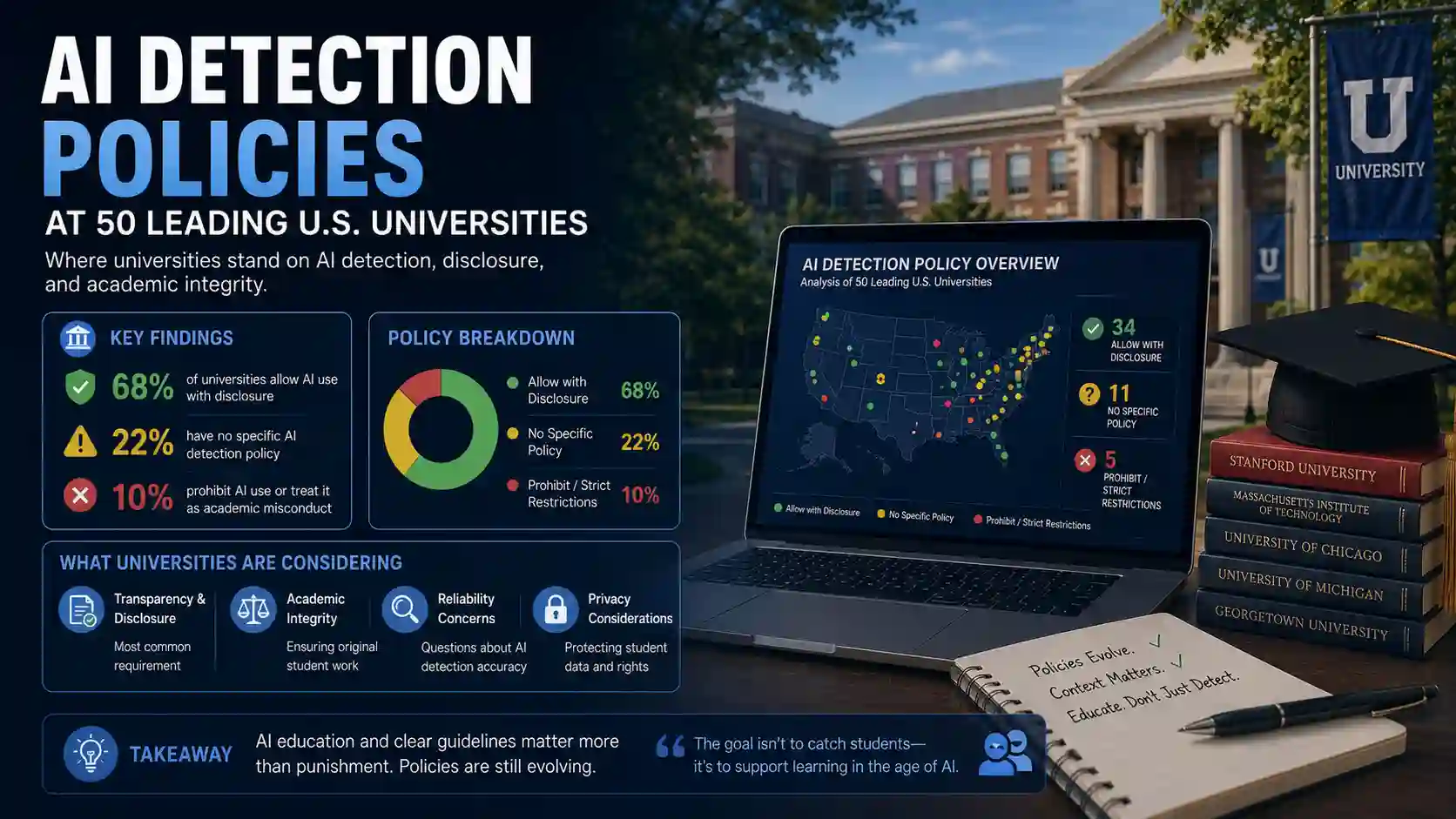
The most reliable published trend is direction, not magnitude. Every dataset in this article, from Turnitin’s own detection statistics to Guardian FOI disclosures to individual university integrity offices, moves the same way: sharply upward since 2023. The size of that increase depends on what a given institution measures and how carefully it tracks the difference between “used AI” and “misused AI to violate a stated policy.” Our companion study on AI detection policies at 50 leading U.S. universities breaks down how institutions are actually responding to these numbers.
Revise AI-Assisted Drafts Without Crossing a Line
If your course policy allows AI-assisted editing, WriteHuman can help smooth AI-influenced phrasing so a revised draft reads clearly and naturally. It is not a substitute for disclosure where disclosure is required, and it will not turn a policy violation into a compliant submission — use it for legitimate revision, not to bypass a professor’s instructions.
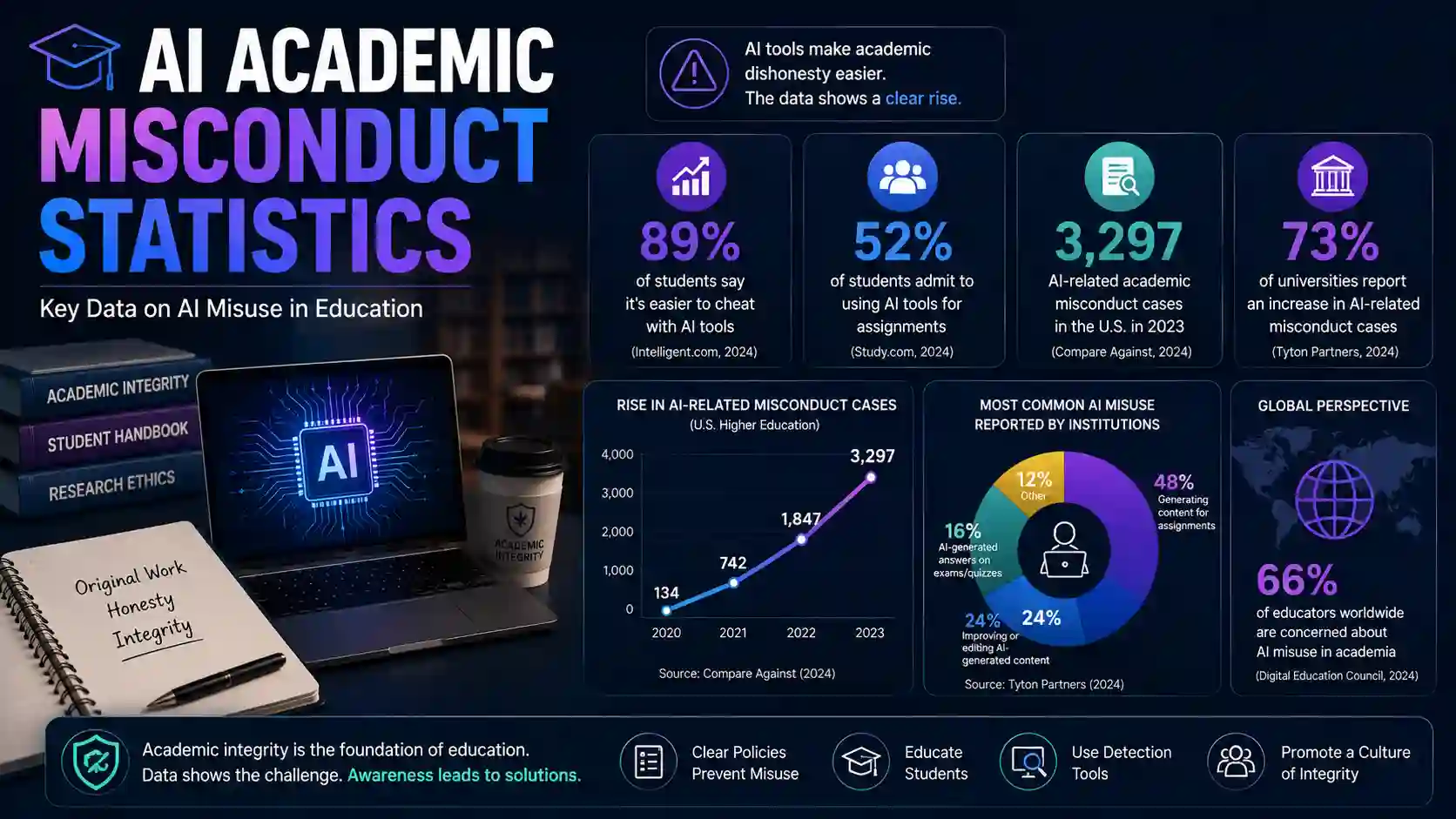
Table of Contents
- Methodology and How to Read These Numbers
- Key Findings at a Glance
- Charts: The Trend Across Every Dataset
- Every Student Self-Report Survey
- Every Faculty and Institutional Survey
- Detection and Enforcement Data
- International Comparison
- AI Misconduct Beyond Coursework
- Interpreting the Numbers Honestly
- What This Means for Students
- What This Means for Institutions
- Related Reading
- FAQ
- Sources
How This List Was Built
This article compiles publicly published survey results, vendor-disclosed detection statistics, and Freedom of Information data released between January 2023 and mid-2026. Each entry lists the organization that ran it, the sample size where disclosed, the exact question or metric used, and a source link. Surveys are grouped by who was asked: students, faculty and administrators, or institutional records and detector logs, because these three sources measure fundamentally different things and should never be averaged together.
A general rule for reading any AI misconduct statistic: a survey that asks “have you used AI for schoolwork” is measuring adoption, not misconduct. A survey that asks “did you submit AI output as your own original work in violation of your syllabus” is measuring something closer to misconduct, but still relies on self-report. Only institutional case data and detector logs measure anything close to enforcement, and even that data is filtered through what a given school chooses to track, investigate, and record as a distinct category. Numbers on the accuracy and error rates of the detectors themselves are covered in depth in our companion piece on AI detection false positives: every published number.
Key Findings at a Glance
The Trend Across Every Dataset
Four independent measurement systems — self-report surveys, a plagiarism-detection vendor’s own logs, UK national enforcement records, and U.S. faculty sentiment — all point the same direction. The charts below plot each dataset on its own terms rather than forcing them onto one axis, since they are not measuring the same thing.
UK Undergraduates Reporting Any AI Tool Use (HEPI/Kortext)
Source: HEPI/Kortext Student Generative AI Survey, 2024-2026 editions, based on 1,000+ full-time UK undergraduates each year.
Turnitin: Share of Submissions That Are 80%+ AI-Written
Source: Turnitin press releases and product data, April 2023 launch baseline through February 2026 update, based on over 200 million scanned English-language papers.
UK Proven AI Misconduct Cases per 1,000 Students
Source: The Guardian, Freedom of Information requests to 155 UK universities (131 responded), academic years 2022-23 through partial 2024-25.
How Different Surveys Measure “Student AI Use” in 2025-2026
Each bar is a different survey with a different question and sample. This is why headline numbers vary so widely — read the table in the next section for exact wording.
Every Student Self-Report Survey
These are surveys that asked students directly about their own AI use. Sample sizes, exact wording, and dates vary considerably, which is why the “headline number” swings from under 20% to over 90% depending on the study.
| Survey / Publisher | Date | Sample | Key statistic | Status |
|---|---|---|---|---|
| Intelligent.com | Jan 2023 | 1,000 US 4-year college students | 30% used ChatGPT to complete a written assignment; 75% of those who used it called it cheating but did it anyway | Baseline |
| Study.com | Jan 2023 | 1,000 students, 100+ educators | 89% used ChatGPT for homework; 53% had it write a full essay; 72% of college students wanted it banned from campus networks | Baseline |
| BestColleges | Nov 2023 | 1,000 undergrad/grad students | 56% used AI on coursework or exams; 54% consider AI use cheating or plagiarism | Early adoption |
| Stanford Challenge Success (Pope & Lee) | Fall 2023 | 40 US high schools | 60-70% engaged in some cheating behavior, statistically flat vs. pre-ChatGPT; 9-16% used AI chatbots to write essays | Baseline |
| HEPI / Kortext Survey 2024 | Feb 2024 | UK undergraduates | 53% used generative AI for assessments; 66% used any AI tool | Rising |
| HEPI / Kortext Survey 2025 | Feb 2025 (n=1,041) | UK full-time undergraduates | 88% used GenAI for assessments; 92% used any AI tool; 18% admitted submitting AI-generated text directly | Rising |
| HEPI / Kortext Survey 2026 (Report 199) | Dec 2025 fieldwork (n=1,054) | UK full-time undergraduates | 95% used any AI tool; 56% used AI to generate text (down from 64% in 2025) | Plateauing |
| BestColleges Online Education Trends 2025 | Feb-Apr 2025 | 1,000 online college students | 60% used AI to complete assignments or exams, up from 58% in 2024 | Rising |
| Copyleaks 2025 AI in Education Trends Report | 2025 | 1,100+ US students, all levels | 90% used AI academically; nearly three-quarters said usage increased over the past year | High |
| Inside Higher Ed / Generation Lab Student Voice | Aug 2025 | US college students | 85% used AI for coursework in past year; 25% used it to complete an entire assignment; 19% generated a full essay | Rising |
| RAND American Youth Panel | May-Dec 2025 | Nationally representative, middle/high/college | AI use for homework rose from 48% to 62% in seven months, driven mainly by younger students | Rapid rise |
| Quizlet Student AI Survey | 2025-2026 | 1,000+ US students | 82% of college students regularly use AI; 58% of high schoolers used AI for coursework | Rising |
| Lumina Foundation-Gallup State of Higher Education 2026 | Oct 2025 fieldwork (n=3,801) | US associate + bachelor’s students | AI use is routine even where restricted; 53% say their school discourages or prohibits AI use | Mixed policy |
| College Board High School AI Research | May-Oct 2025 | US high school students | 69% used ChatGPT for schoolwork (May); 84% used GenAI for schoolwork tasks broadly (Oct) | Rising |
Note the pattern: every survey that asks about any AI use trends toward 85-95% by 2025-2026. Every survey that isolates full assignment completion or direct submission of AI text stays in a much narrower 18-30% band. Treat these as two different questions, not one statistic.
Every Faculty and Institutional Survey
Faculty, department chairs, and campus leaders are asked a different question than students: not “did you use AI,” but “how worried are you, and what are you seeing.” These surveys consistently show far higher concern than optimism.
| Survey / Publisher | Date | Sample | Key statistic |
|---|---|---|---|
| Study.com Educator Survey | Jan 2023 | 100+ K-12 and college educators | Majority believed ChatGPT should be a managed resource rather than banned outright, despite cheating concerns |
| Digital Education Council Global AI Faculty Survey | 2025 | Global higher-ed faculty | 61% of faculty have used AI in teaching; of those, 88% use it only minimally |
| Frontiers UAE Faculty Case Study | Feb 2025 (n=71 of 95 invited, 37 nations) | Faculty at one internationalized university | 75% of faculty had personally encountered generative AI plagiarism at their institution |
| AAC&U / Elon University Leaders Survey | 2025 | College presidents, provosts, deans | 59% say cheating has increased since GenAI became widely available (21% say significantly); 54% doubt faculty can reliably recognize AI-written work |
| Elon University / AAC&U National Faculty Survey | Oct-Nov 2025 (n=1,057) | US college and university faculty | 95% fear student overreliance on AI; 74% believe GenAI will worsen degree value and integrity, including 36% “a lot” |
| College Board Higher Education Faculty Research | Summer 2025 (n=3,000+), published Feb 2026 | US college faculty | 92% concerned about AI-facilitated plagiarism or dishonesty; 84% say AI reduces critical thinking; 72% face at least minor challenges managing student AI use |
| Berkeley Syllabi Study (Chirikov, working paper) | 2021-2025 (31,692 syllabi analyzed) | US course materials, LLM-coded | Integrity-focused AI language fell from 63% of syllabi (spring 2023) to 49% (autumn 2025); attribution/disclosure requirements rose from 1% to 29% |
The gap between student and faculty framing is one of the more consistent findings in this dataset: students overwhelmingly describe using AI for brainstorming, explaining concepts, and studying, while faculty and administrators are far more likely to describe what they are seeing as a threat to degree value and critical thinking. Both can be true at once for different segments of the same student body.
Detection and Enforcement Data
This is the closest thing to hard numbers in the entire field: vendor detection logs, university academic-integrity office records, and government Freedom of Information disclosures. Even here, comparisons across institutions are difficult because not every school tracks AI misconduct as a distinct category, and detection tools carry their own error rates — covered separately in our false-positive statistics roundup.
| Source | Period | Metric | Figure |
|---|---|---|---|
| Turnitin (cumulative) | Apr 2023-Mar 2024 | Papers with 20%+ AI writing / 80%+ AI writing, of 200M+ scanned | 11% (22M+) at 20%+; 3% (6M+) at 80%+ |
| Turnitin (latest window) | Oct 2025-Feb 2026 | English submissions with 80%+ AI writing | 14.8%, up from a 3.3% baseline at April 2023 launch (~4.5x increase) |
| Turnitin (stated accuracy) | Ongoing | Vendor-claimed false-positive rate, docs over 300 words | Under 1% (vendor claim; independent tests vary — see false-positive article) |
| Guardian UK FOI (131 of 155 universities) | 2022-23 | Proven AI misconduct cases per 1,000 students | 1.6 per 1,000 |
| Guardian UK FOI | 2023-24 | Proven AI misconduct cases per 1,000 students | 5.1 per 1,000 (~7,000 cases); 27%+ of institutions did not track AI misconduct separately |
| Guardian UK FOI (partial year) | 2024-25 (through May) | Projected proven AI misconduct rate | ~7.5 per 1,000 (projected) |
| Scottish universities FOI | 2022-23 → 2023-24 | Proven AI misconduct cases | 131 → 1,051 cases (+700%) |
| West Virginia University Office of Academic Integrity | 2022-23 → 2024-25 | Unauthorized AI-use cases | 11 → 94 → 242; total dishonesty cases fell 14% to 344 even as AI-specific cases rose |
| George Washington University (CESA) | Spring 2023 → Spring 2025 | Academic integrity reports | 70 → 103 (+47%), following a 313% jump fall 2021-fall 2023 |
| Toronto Metropolitan University Academic Integrity Office | May-Dec 2025 | Share of student consultations about misconduct | 30% (120 of ~400 consultations) |
| Williams College Committee on Academic Integrity | 2023-24 & 2024-25 → Fall 2025 | AI-attributed Honor Code violations | 4 of 25 cases (each prior year) → 26 of 55 cases (fall 2025 alone) |
| Australian Catholic University | 2024 | AI cheating allegations / share of integrity cases | ~6,000 allegations, ~90% of all integrity cases; ~25% dismissed after investigation; dropped Turnitin’s AI Score March 2025 |
| University of Cape Town | Announced Jul 2025, effective Oct 2025 | Policy change | Discontinued Turnitin’s AI Score, citing reliability concerns |
| University of Reading (controlled study) | 2024 | AI-written exam answers submitted into a real grading process, undetected by markers | 94% went undetected |
| Stanford HAI benchmark study | 2023 | Non-native English essays misflagged as AI-written vs. native-English essays | ~61% vs. a much lower native-speaker rate |
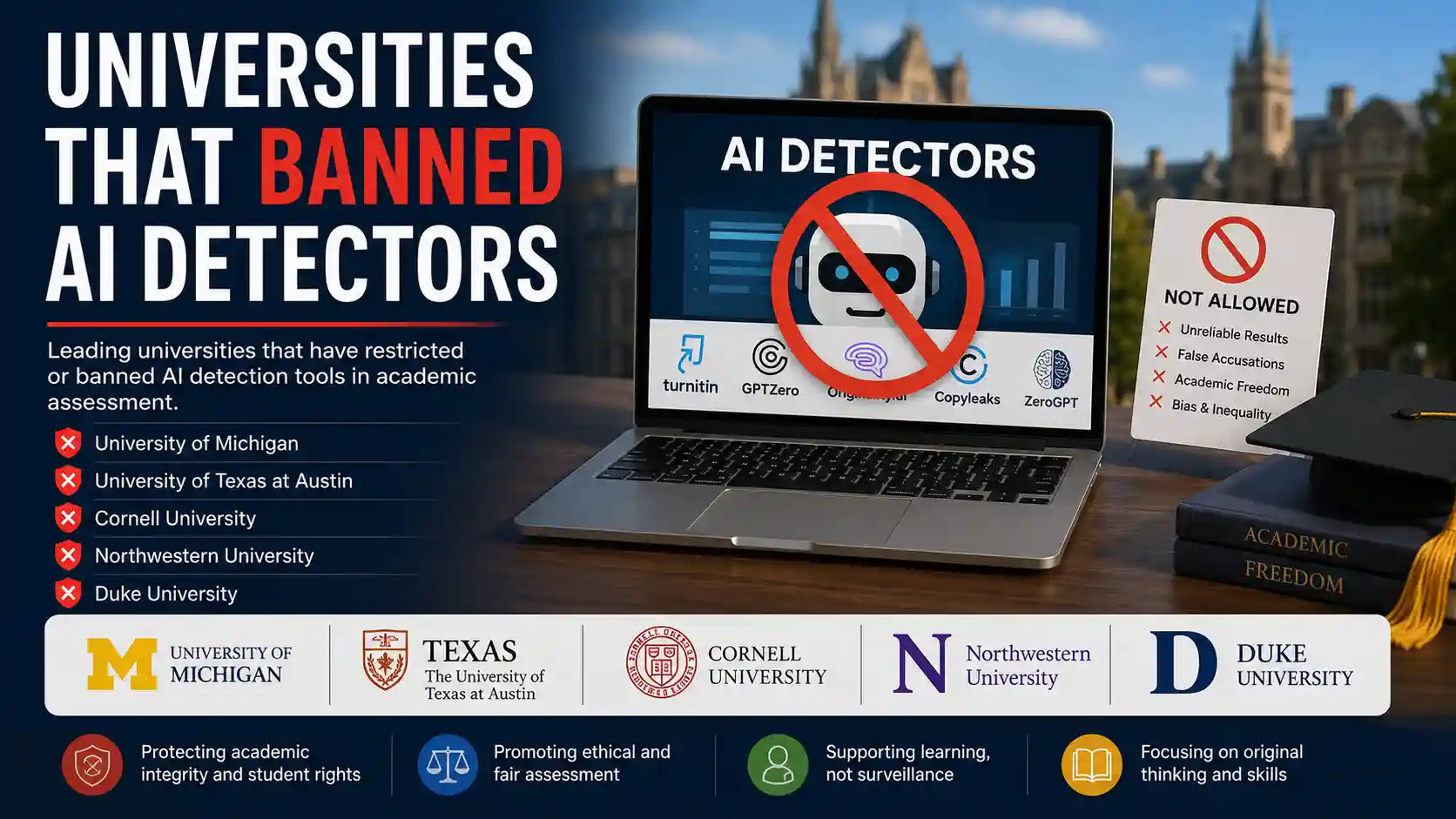
Several institutions moving away from AI-score-based enforcement, including Australian Catholic University and the University of Cape Town, is a large enough pattern that we’ve tracked it separately in universities that banned AI detectors. The policy and cost side of this same shift is covered in how much universities spend on AI detection tools, and a full breakdown of how 50 leading U.S. schools currently write their AI-detection policy language is in our 2026 policy study.
Editing AI-Assisted Work the Right Way
Numbers on false positives and detector error rates are exactly why process matters more than a single score. If your course allows AI-assisted revision, WriteHuman can help make an AI-influenced draft read more naturally — pair it with disclosure where required and keep your drafts as process evidence.
International Comparison
Direct country-to-country comparison is difficult because no two national systems track AI misconduct the same way. The UK is the only country with a nationally aggregated Freedom of Information dataset; most other countries rely on individual institutional disclosures or vendor logs.
| Country / Region | Best available data | Headline figure |
|---|---|---|
| United Kingdom | Guardian FOI (131 universities); HEPI/Kortext annual survey | 95% of undergraduates report AI use (2026); 5.1 proven misconduct cases per 1,000 students (2023-24) |
| United States | BestColleges, Copyleaks, Inside Higher Ed, College Board, individual university integrity offices | 60-90% of students report AI use depending on survey; individual schools report AI-linked case increases from 47% to over 20x |
| Scotland | FOI data, separate from broader UK figures | +700% proven AI misconduct cases in one year (131 → 1,051) |
| Australia | Australian Catholic University disclosure; national reporting | ~6,000 AI allegations at one university in 2024, ~90% of all integrity cases |
| South Africa | University of Cape Town policy announcement | Discontinued Turnitin’s AI Score tool (Oct 2025) over reliability concerns |
| United Arab Emirates | Frontiers peer-reviewed faculty case study | 75% of surveyed faculty had encountered generative AI plagiarism |
| Canada | Toronto Metropolitan University Academic Integrity Office | 30% of student consultations (May-Dec 2025) concerned misconduct, attributed partly to unauthorized GenAI use |
AI Misconduct Beyond Coursework
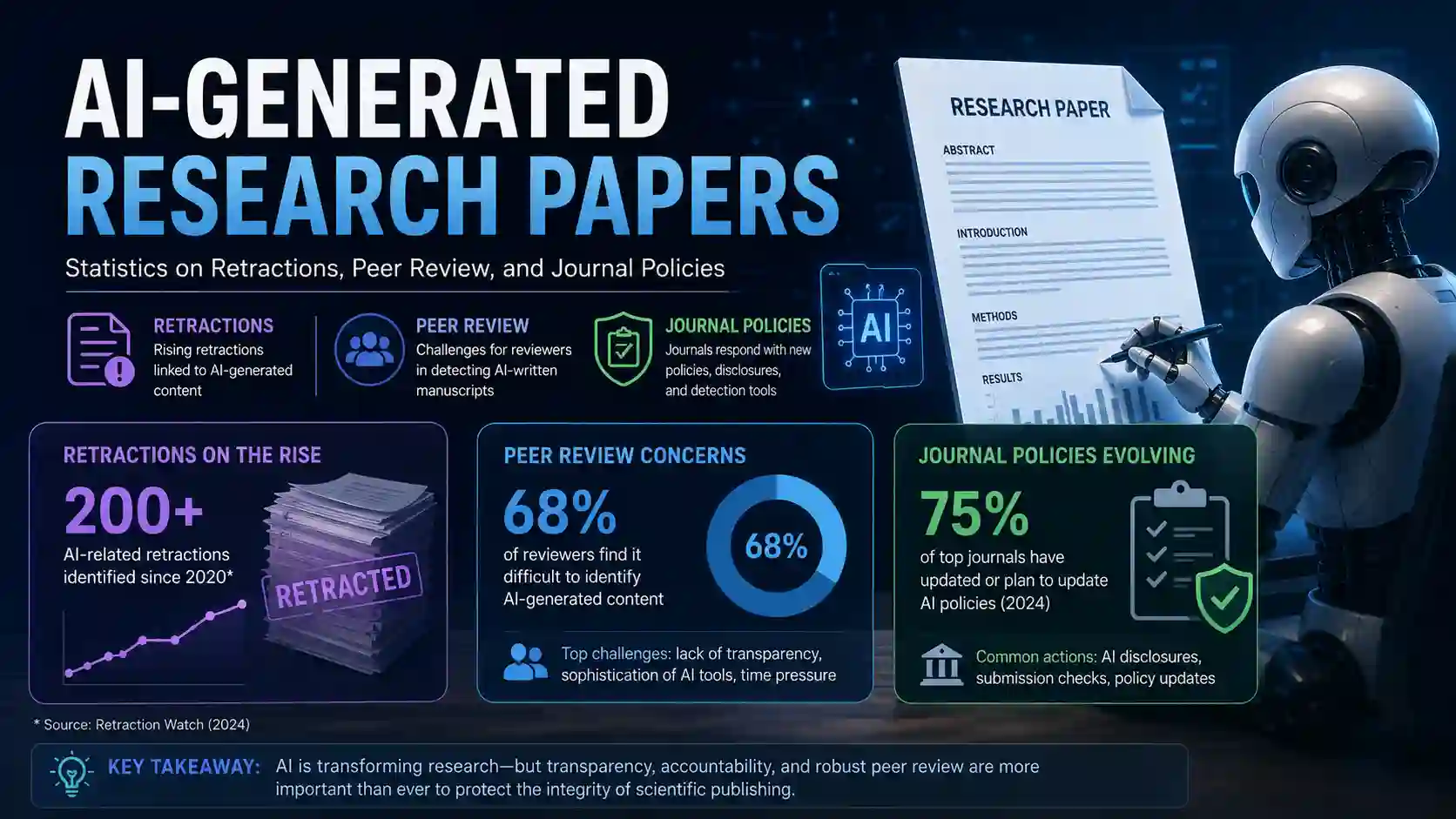
Student assignments are only part of the picture. Undisclosed AI use has also surfaced in published academic research, from AI-generated text patterns found in journal submissions to retractions tied to fabricated citations. We track that data separately, including detection rates in published papers and journal-level policy responses, in AI-generated research papers: 2026 statistics. It’s a useful companion to this article because it shows the same enforcement dilemma — usage climbing faster than reliable detection — playing out at the faculty and publishing level, not just among students.
There’s also a resource dimension to all of this that rarely makes it into cheating headlines: running detection at the scale Turnitin now operates at, and running the underlying generative models students are using in the first place, both draw on the same data-center infrastructure. If you’re curious how that computing footprint adds up, our explainer on AI data centers and the environment covers it — notably, HEPI’s own survey found environmental impact is one of the least common reasons UK students say they’re hesitant to use AI tools, cited by only about 15%.
Interpreting the Numbers Honestly
Three things every one of these statistics leaves out
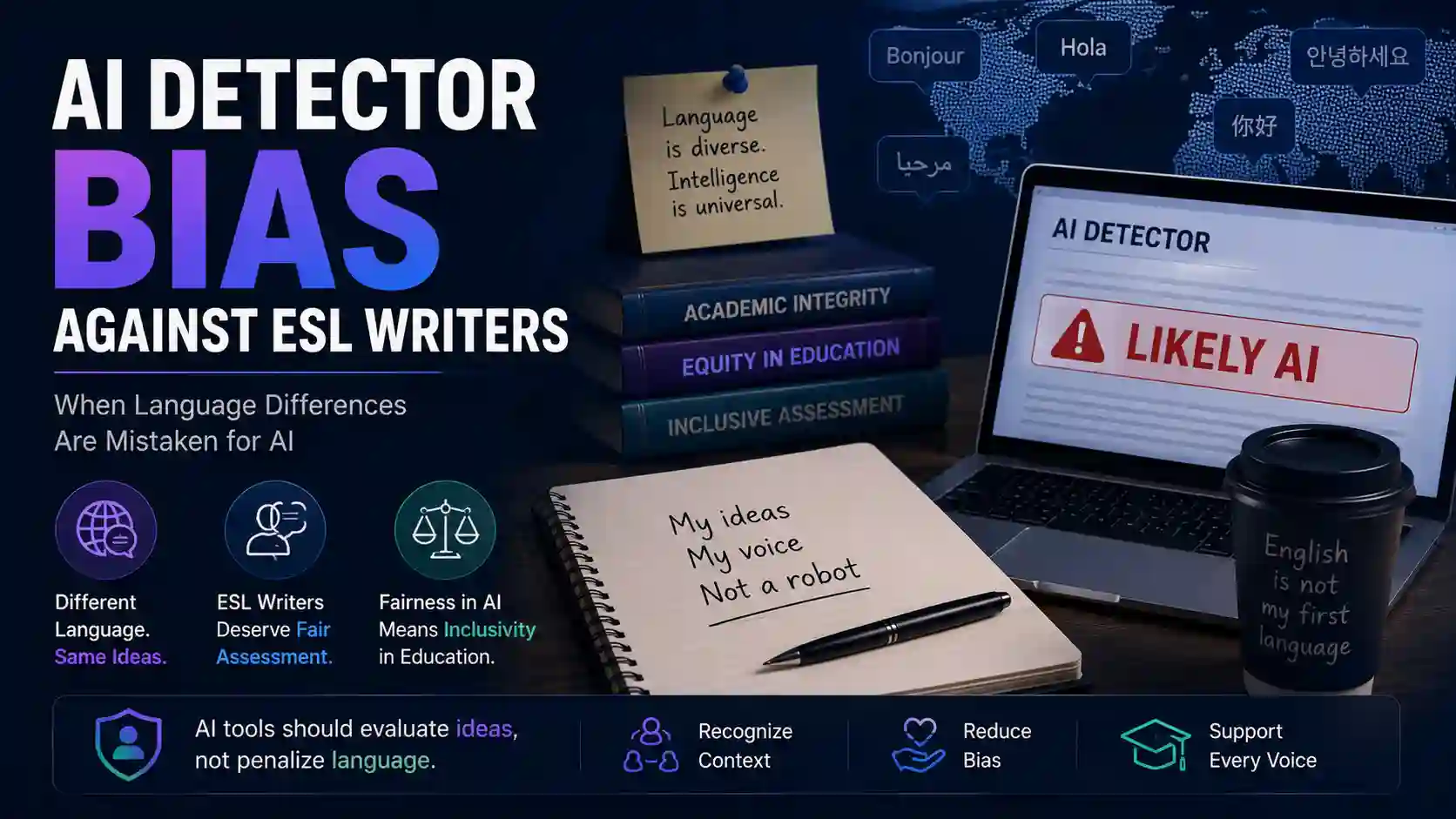
- Detection error rates cut both ways. A rising “percentage flagged” number reflects some mix of real misuse and false positives, and the two are not separable from the topline figure alone. Stanford’s benchmark study found detectors misflagged around 61% of non-native English essays, compared to a much lower rate for native-English writers — meaning a portion of any “caught” statistic, in any dataset that relies on automated detection rather than a full investigation, may not represent actual misconduct.
- Tracking categories are inconsistent. More than a quarter of UK universities that responded to the Guardian’s FOI request did not record AI misconduct as its own category in 2023-24, which means national totals are very likely undercounts, not overcounts.
- Case increases can reflect detection capacity, not just behavior. Several U.S. integrity offices, including West Virginia University’s, report AI-specific case increases at the same time overall dishonesty cases fell — consistent with better categorization and more faculty reporting, not necessarily a proportional rise in actual misconduct.
Put together, the honest summary is: student AI adoption is genuinely near-universal by 2026, faculty concern is genuinely high and rising, and formally proven misconduct, while climbing fast in percentage terms, still touches a small share of total students in any single academic year. All three of those things are true simultaneously, and treating any one of them as “the” AI cheating statistic misrepresents the other two.
What This Means for Students
The safest reading of this data for any individual student is simple: usage statistics don’t tell you what’s allowed in your specific course, and a low institutional case rate doesn’t mean detection tools are reliable enough to trust blindly, in either direction. Follow the syllabus, ask when a policy is unclear, disclose AI assistance when required, and keep drafts, notes, and version history as process evidence. If you’re worried about a false flag, our breakdown of every published false-positive number explains which writing styles and student populations detectors misflag most often, and why.
What This Means for Institutions
For administrators, the case-count trend across nearly every dataset here argues for two things at once: clearer, assessment-specific policy language, and less reliance on a single detector score as the deciding piece of evidence. A growing list of institutions, including Australian Catholic University and the University of Cape Town, have already dropped AI-score-based tools entirely in favor of process-based review — see universities that banned AI detectors for the full list and their stated reasoning. For schools weighing whether to keep paying for detection software at all, our cost breakdown in how much universities spend on AI detection tools lays out real budget figures next to the reliability data above.
Frequently Asked Questions
What percentage of students admit to using AI to cheat?
It depends entirely on how the question is worded. Broad AI-use surveys put usage at 85-95% of students in 2025-2026. Narrower questions about using AI to complete an entire assignment land closer to 19-30%, and formally proven misconduct cases remain a small fraction of total enrollment — around 0.5% of UK students in 2023-24, per Freedom of Information data.
How accurate is Turnitin’s AI detection data?
Turnitin reports that the share of English-language submissions with 80%+ AI-generated writing rose from about 3.3% at launch in 2023 to roughly 14.8% between October 2025 and February 2026. Turnitin states a false-positive rate under 1% for documents over 300 words, but independent research, including a Stanford study on non-native English writers, has found meaningfully higher error rates in specific subgroups.
Are AI misconduct cases actually increasing, or is reporting just improving?
Both are happening at once. Guardian FOI data shows UK universities recorded roughly 7,000 proven AI misconduct cases in 2023-24, up sharply from the year before, and case counts at individual U.S. schools have risen too. But over a quarter of UK institutions still did not track AI misconduct as its own category as of 2023-24, and several U.S. integrity offices attribute part of the rise to better detection and more faculty reporting rather than proportionally more cheating.
Which survey is the most reliable?
No single survey should be treated as definitive. Nationally representative panels with disclosed methodology, such as RAND’s American Youth Panel and Gallup-Lumina’s State of Higher Education study, carry more statistical weight than convenience-sample vendor surveys. But even the strongest surveys measure self-reported behavior, not verified misconduct — for that, the institutional case data and Turnitin’s detection logs are the closest available proxies, and each carries its own known error rate.
Do more AI misconduct cases mean detectors are working better, or that more students are cheating?
The published data doesn’t cleanly separate the two. Rising case counts reflect some combination of increased actual misuse, improved detection technology, and more faculty willingness to report suspected cases. Individual institutions in this article show all three patterns at different times, which is why single-number headlines about “cheating rates” should be read alongside the methodology behind them.
Research Sources
This article uses publicly published survey reports, vendor-disclosed detection data, peer-reviewed research, and journalism based on Freedom of Information disclosures. Source links are included so readers can verify current figures directly, since several of these datasets update on a rolling basis.
View all sources
- HEPI: Student Generative AI Survey 2026 (Report 199)
- HEPI: Student Generative AI Survey 2025
- BestColleges: 2025 Online Education Trends Report
- BestColleges: 56% of College Students Have Used AI
- Forbes / Copyleaks: 2025 AI in Education Trends Report
- Inside Higher Ed: Survey — College Students’ Views on AI
- Slashdot: 85% of College Students Report AI Use
- RAND: Student Use of AI for Homework Rises
- Gallup / Lumina Foundation: 2026 State of Higher Education
- College Board: Majority of High School Students Use GenAI
- College Board: Faculty Concern Research (2026)
- Elon University / AAC&U: National Faculty Survey
- AAC&U: National Survey Newsroom Release
- Inside Higher Ed: AI and Threats to Academic Integrity
- Inside Higher Ed: Faculty Moving Away From Outright Bans (Berkeley Syllabi Study)
- Frontiers in Education: Faculty Perspectives on Academic Integrity and GenAI (UAE)
- Turnitin: Press Release, AI Detection Data (Feb 2026)
- Campus Technology: Turnitin Cumulative Detection Data
- The Guardian: Thousands of UK University Students Caught Cheating Using AI
- The Eyeopener: TMU Academic Misconduct Cases and AI
- The Daily Athenaeum: WVU Academic Dishonesty and AI Data
- The GW Hatchet: Academic Integrity Cases Up 47% Since 2023
- The Williams Record: Honor Code Violations and AI Use
- Feedough: AI Cheating Statistics 2026 (ACU, UCT, Scotland FOI data)
- Intelligent.com: Nearly 1 in 3 College Students Have Used ChatGPT
- Study.com: Productive Teaching Tool or Innovative Cheating?
- The 74: Stanford Challenge Success Cheating Research
- Leap AI: Turnitin Detection Accuracy and Stanford HAI Study Summary