AI Detector Bias Against ESL Writers: Every Study
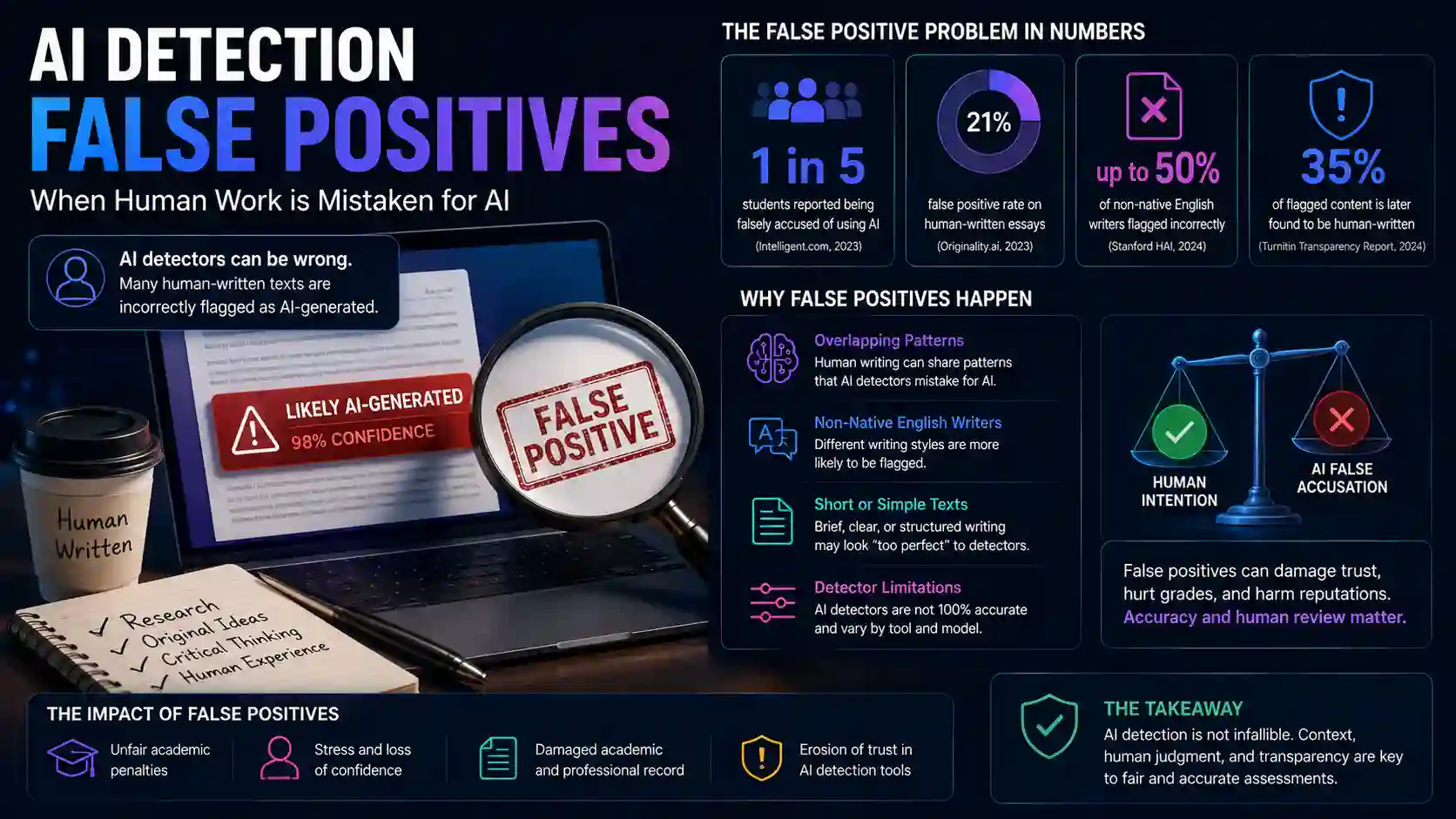
Since 2023, a consistent body of research has found that AI writing detectors are more likely to falsely flag genuine writing from non-native English speakers as AI-generated. This article collects every major peer-reviewed study, vendor rebuttal, and independent benchmark on that question in one place, with direct sourcing for every figure, so students, faculty, journalists, and policy researchers can evaluate the evidence themselves.
Quick Answer
The strongest peer-reviewed evidence supports the claim that AI detectors are biased against non-native English (ESL) writers. The founding study, Liang, Yuksekgonul, Mao, Wu, and Zou (2023), published in the Cell Press journal Patterns, tested seven widely used GPT detectors against 91 real TOEFL essays written by non-native English speakers and 88 essays by native-English-speaking U.S. eighth-graders. The detectors misclassified the non-native essays as AI-generated at an average rate of 61.3%, while almost never misclassifying the native-English essays.
Not every vendor agrees the bias applies to their specific tool today. Turnitin has published its own internal testing claiming a 0.014 false positive rate for English Language Learner writing versus 0.013 for native-speaker writing — a gap its Chief Product Officer describes as not statistically significant. Independent researchers who re-tested an updated GPTZero model in 2024 still found a 7.7% false positive rate on the same TOEFL benchmark. The honest summary: the original bias finding is well-replicated in mechanism and widely cited in litigation and policy, some vendors have measurably improved, and no detector has published independently verified parity between native and non-native English writers.
If Bias Already Cost You a Grade or a Client, Fix What the Detector Reacts To
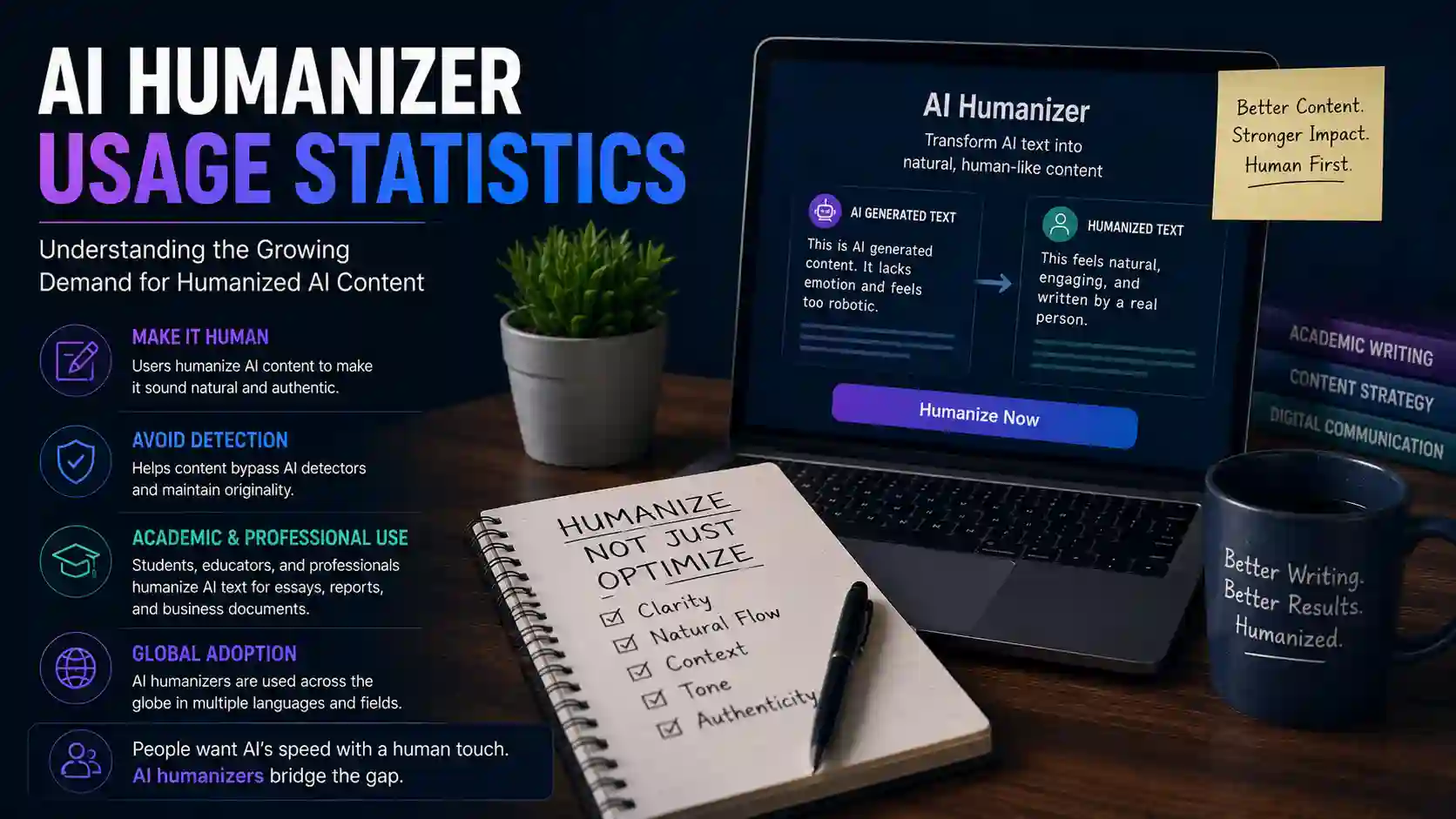
Detectors flag simple, predictable word choice — the exact pattern common in careful non-native English writing. WriteHuman helps revise AI-assisted or awkwardly-flagged drafts into more natural, varied phrasing. Use it only where AI-assisted editing is permitted and disclosed, but it directly addresses the mechanism researchers say drives this bias.
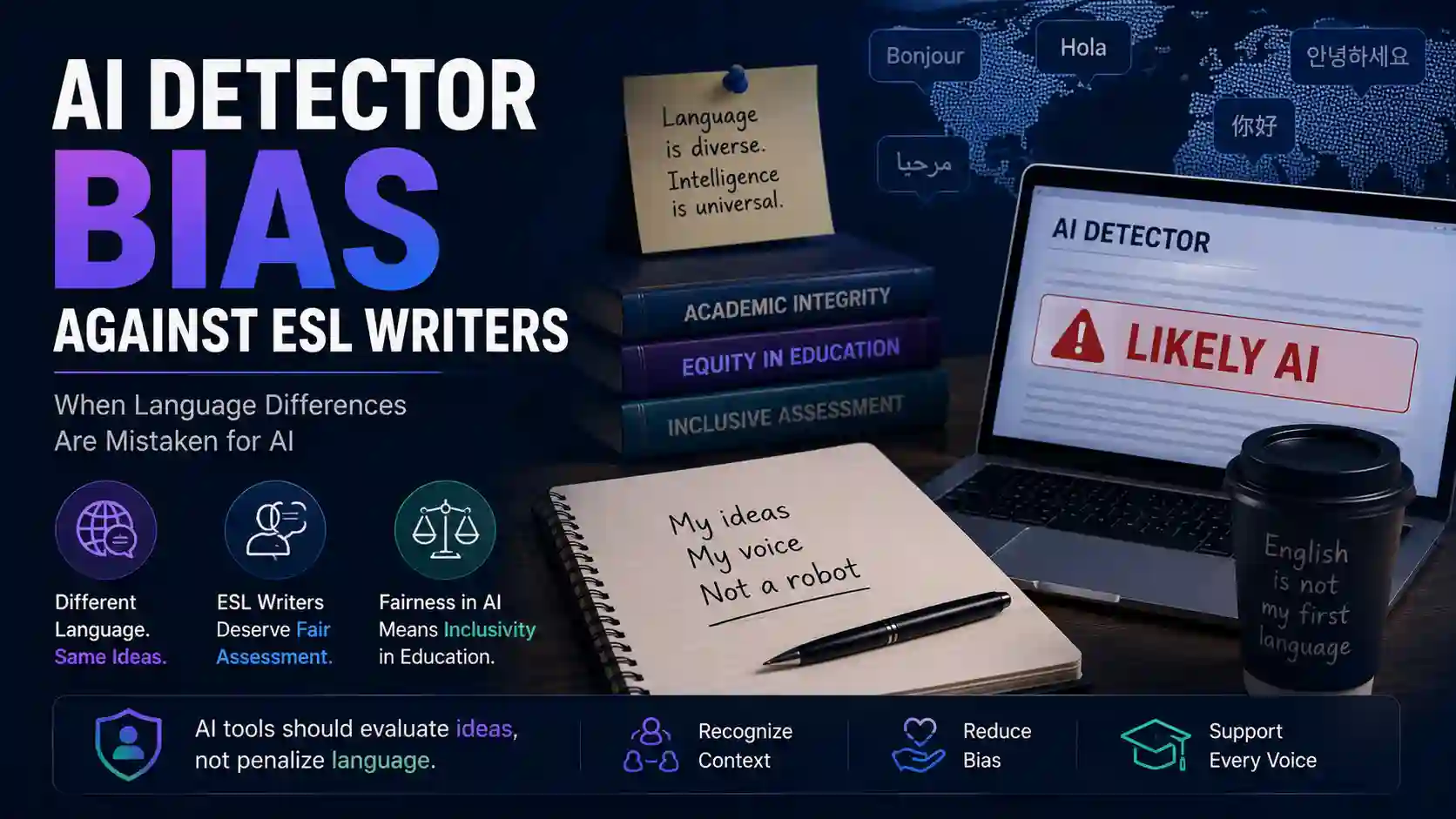
Table of Contents
- Why This Question Matters
- The Origin Study: Stanford, 2023
- Why This Bias Happens
- Charts: The Bias in Numbers
- Every Study, Side by Side
- How Vendors Responded
- Beyond ESL: Other Affected Groups
- Real-World Fallout: Cases and Policy Change
- What Non-Native Writers Can Do
- Reducing Your Exposure
- FAQ
- How to Cite This Article
- Sources
Why This Question Matters
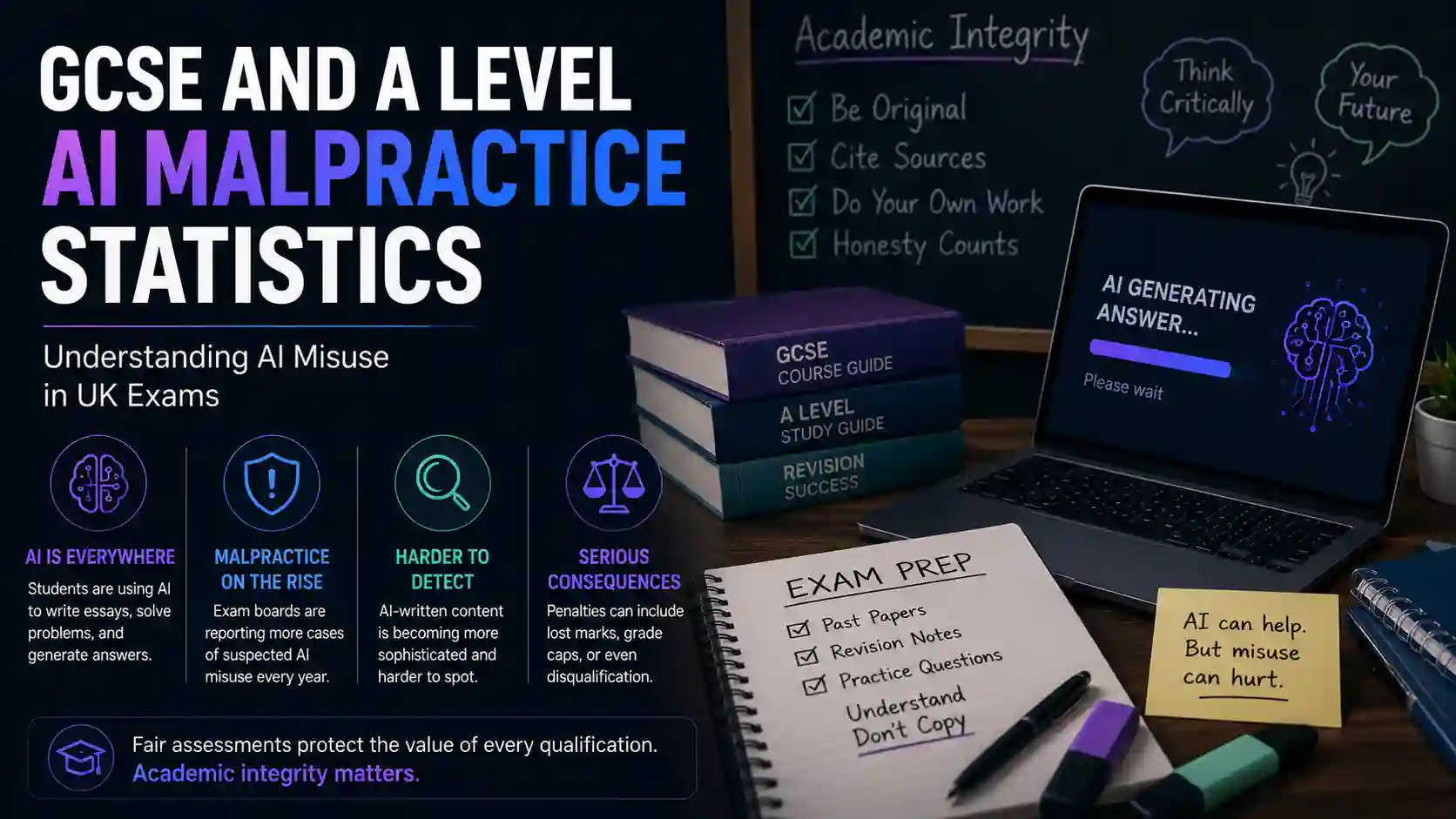
AI writing detectors are now embedded in academic-integrity workflows at thousands of institutions, and their scores frequently function as the first piece of evidence in a misconduct case. If those scores are systematically less reliable for one identifiable population — non-native English speakers, who make up a large share of international students and English Language Learners — that is not a minor technical footnote. It is a fairness and due-process problem with real consequences, documented in our companion review of AI detection lawsuits and AI academic misconduct statistics.
This article is not an argument for or against AI detectors in general — that broader reliability question is covered in our review of every published AI detection false-positive number. This article focuses narrowly on one specific, well-studied question: do these tools perform worse, specifically, on writing from people who did not learn English as a first language?
The Origin Study: Stanford, 2023
The foundational research on this topic is Weixin Liang, Mert Yuksekgonul, Yining Mao, Eric Wu, and James Zou, “GPT detectors are biased against non-native English writers,” published in Patterns (Cell Press) in July 2023 and indexed on PubMed. The Stanford team tested seven widely used GPT detectors on two document sets: 91 essays written by non-native English speakers for the TOEFL exam, and 88 essays written by native-English-speaking U.S. eighth-grade students.
- 61.3% — average false-positive rate across all seven detectors on the TOEFL essay set.
- Near-perfect accuracy — the same seven detectors correctly classified the native-English eighth-grade essays as human-written almost every time.
- ~20% of the TOEFL essays were unanimously misclassified as AI-generated by all seven detectors tested.
Lead author Weixin Liang, who learned Cantonese and Mandarin before English, has said the design of many GPT detectors inherently discriminates against non-native authors, particularly those with more restricted vocabulary and word choice. The researchers also ran a follow-up test: prompting a language model to enhance the word choice of a TOEFL essay to sound more like a native speaker reduced its misclassification rate, while simplifying a native-English eighth-grader’s essay increased its misclassification rate. That symmetry is the strongest evidence in the paper — it shows the detectors are responding to linguistic complexity, not to authorship.
Why This Bias Happens
Perplexity Scoring
Most detectors score “perplexity” — how statistically predictable a sequence of words is. Large language models are trained to output the most probable next word, so low-perplexity text reads as a red flag. Non-native English writers, drawing on a smaller working vocabulary, also tend to produce more predictable, conventional phrasing — for reasons that have nothing to do with AI use.
Training Data Skew
Detectors are trained to distinguish “human” from “AI” using labeled datasets that may underrepresent non-native English writing styles in the human category. The Markup’s reporting quotes Turnitin’s own Chief Product Officer acknowledging the tool learns that more complex writing is more likely to be human, purely from the patterns in its training data.
Domain and Length Sensitivity
A 2023 survey of detection research (arXiv 2310.15654) notes detectors also show bias against shorter text, since most training focuses on longer samples. Short, simple ESL submissions can be doubly penalized: flagged both for vocabulary simplicity and for insufficient length.
Evasion Asymmetry
The same mechanism that over-flags careful non-native writing under-flags AI text after light editing. Simple prompts asking a model to “elevate” its own output with more literary language measurably cut detection rates in the Stanford study — meaning the tools can simultaneously punish honest ESL writers and miss deliberately laundered AI text.
The Bias in Numbers
False Positive Rate: Native vs. Non-Native English Essays (Liang et al., 2023)
Average false-positive rate across seven GPT detectors tested on 91 TOEFL essays (non-native English) and 88 U.S. eighth-grade essays (native English). Source: Patterns, Cell Press, 2023.
Turnitin’s Self-Reported Data: ELL vs. Native Speaker False Positive Rate
Turnitin’s own published testing on roughly 2,000 English Language Learner writing samples, presented by the company as evidence of no statistically significant bias. Shown here for comparison, not independently verified.
GPTZero: Before and After Its 2023 Model Update, TOEFL Benchmark
GPTZero published an updated model after the Stanford study and disputed the “ESL bias” framing. Independent re-testing by Pangram’s research team on the same TOEFL benchmark found the updated model still produced a 7.7% false positive rate (1.1% if “Possible AI Content” labels are excluded), down substantially from the original cross-detector average, but not at parity.
Every Study, Side by Side
The table below lists every study, benchmark, and vendor rebuttal referenced in this article, with its core finding and how it should be weighted.
| Source | Type | Core Finding | Stance |
|---|---|---|---|
| Liang et al., 2023 (Patterns, Cell Press) | Peer-reviewed | 61.3% average false-positive rate across 7 detectors on TOEFL essays; near-zero on native-English essays; bias reduced by improving word choice, induced by simplifying native text | Confirms bias |
| Turnitin internal ELL evaluation | Vendor-published | 0.014 false-positive rate on ~2,000 ELL samples vs. 0.013 on native-speaker samples; company states this shows no statistically significant bias | Disputes bias (own tool) |
| GPTZero 2023 model update + Pangram re-test | Vendor claim + independent re-test | GPTZero published a rebuttal titled “ESL Bias in AI Detection is an Outdated Narrative”; independent testing of the updated model still found a 7.7% false-positive rate on the TOEFL benchmark | Improved, not resolved |
| Pangram technical report | Vendor-published, methodology disclosed | Reports 0% false positives on the TOEFL benchmark, but the benchmark was held out of Pangram’s own training set, which the report discloses transparently | Vendor claim, disclosed method |
| Weber-Wulff et al., 2023 | Peer-reviewed | Broad reliability study of 14 detection tools; none scored above roughly 80% accuracy; concludes current tools are unsuitable as standalone misconduct evidence | Confirms unreliability |
| Elkhatat et al., 2023 | Peer-reviewed | Documents serious limitations of AI-text detection tools consistent with the Stanford findings | Confirms unreliability |
| Yang et al., 2023 | Peer-reviewed / survey-cited | Found detection tools also perform poorly on languages other than English, extending the bias concern beyond ESL English writing to multilingual contexts | Extends the finding |
| Campino, 2024 / Stone, 2024 | Cited in later academic literature | Referenced in subsequent papers (e.g., arXiv 2507.23113) as continuing to document bias against non-native English speakers and first-generation students | Confirms bias |
| The Markup investigation, 2023 | Journalism, sourced from Stanford study + educator interviews | Documents a real Johns Hopkins case where Turnitin flagged 90%+ of an international student’s paper; Turnitin’s CPO acknowledges the tool learns complexity correlates with humanness | Case evidence |
How to read the “Stance” column: peer-reviewed studies with disclosed methodology carry the most weight. Vendor-published figures are worth including for transparency but should be read as marketing-adjacent unless the methodology is independently reproducible, as Pangram’s report attempts to be by disclosing its holdout procedure.
How Vendors Responded
The Stanford study triggered three distinct vendor responses, each worth understanding on its own terms.
Turnitin: Dispute the Premise
Turnitin’s Chief Product Officer, Annie Chechitelli, told reporters the company’s tool was trained on writing from English speakers in the U.S. and abroad, as well as multilingual students, and should not carry the bias Liang’s paper identified — while acknowledging at the time that supporting research had not yet been published. Turnitin later published its own data: a 0.014 false-positive rate for English Language Learner writing versus 0.013 for native-speaker writing, framed as evidence of no statistically significant gap. Independent replication of this specific claim was not found in this review.
GPTZero: Update the Model, Contest the Narrative
GPTZero published a blog post titled “ESL Bias in AI Detection is an Outdated Narrative” alongside an updated detection model. Independent researchers at Pangram re-tested that updated model against the same TOEFL benchmark and found a 7.7% false-positive rate (or 1.1% under a more generous reading of ambiguous “Possible AI Content” labels) — a real improvement over the original 61.3% cross-detector average, but still a measurable gap from zero.
Pangram and Newer Entrants: Disclose the Holdout Method
Newer detectors built after the Stanford study, such as Pangram, have published technical reports explicitly testing against the TOEFL benchmark and disclosing that it was excluded from their training data — a more transparent methodology than most 2023-era vendor claims, though still a vendor-run test rather than a fully independent one.
For a broader look at how institutions — not just vendors — have responded to reliability concerns, see universities that banned AI detectors and our full 2026 study of AI detection policies at 50 leading U.S. universities.
Beyond ESL: Other Affected Groups
Non-native English speakers are the best-documented group affected by this bias, but not the only one raised in the literature. Stanford’s Human-Centered AI Institute coverage of this research area has also flagged concerns about neurodivergent students, whose writing patterns can likewise diverge from the statistical “average” the detectors are trained against. Multilingual writers submitting work in languages other than English face a related but distinct problem: Yang et al. (2023) found detection tools generally perform poorly outside English altogether, and Turnitin’s own AI detection currently supports only English, Spanish, and Japanese, leaving submissions in other languages effectively unscreened or unreliably screened.
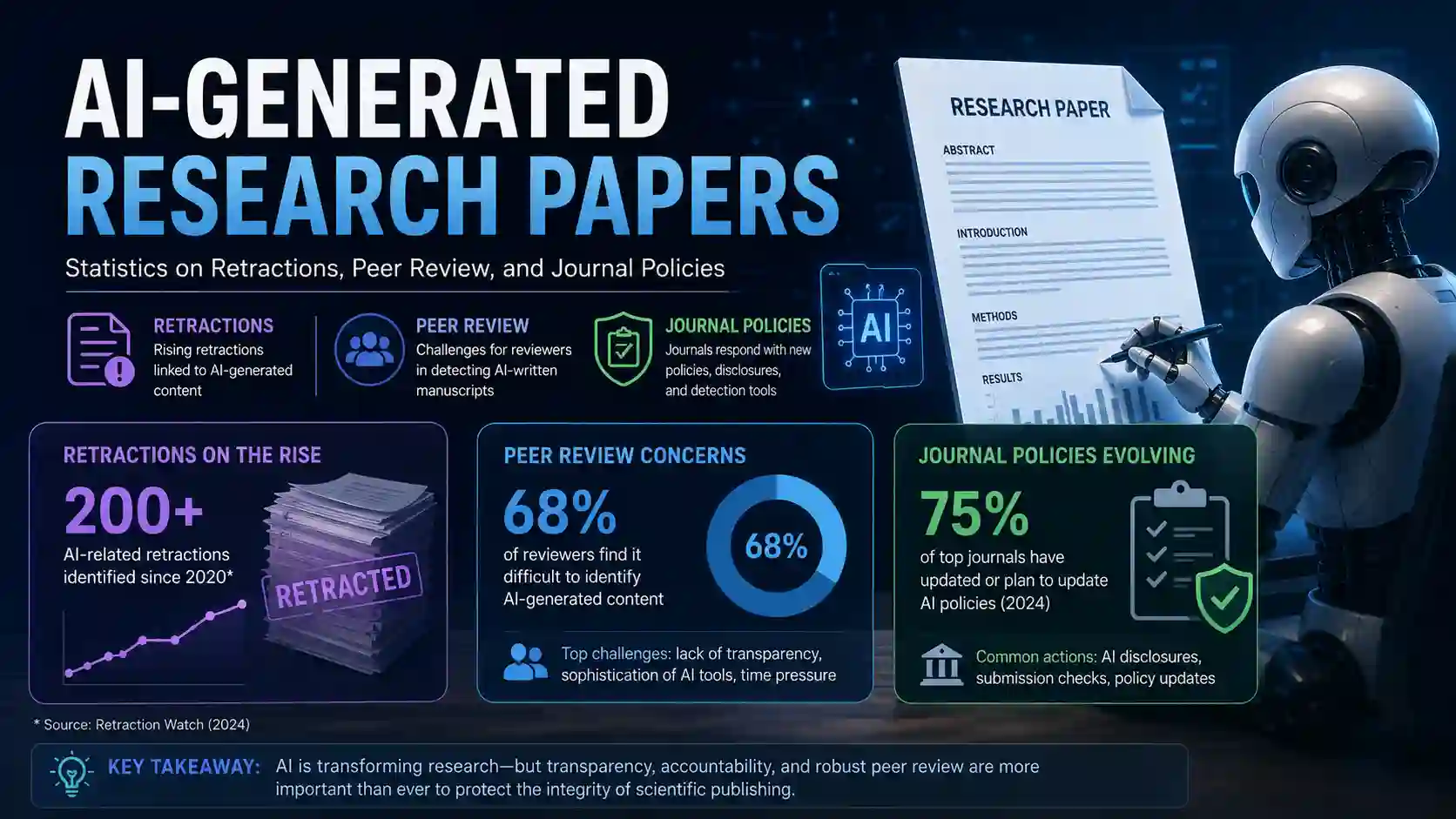
This is part of a larger pattern worth tracking alongside ChatGPT hallucination statistics and AI-generated research paper statistics: AI systems, both generative and detective, tend to perform least reliably at exactly the margins — linguistic, disciplinary, or demographic — that get the least attention during development and benchmarking.
Real-World Fallout: Cases and Policy Change
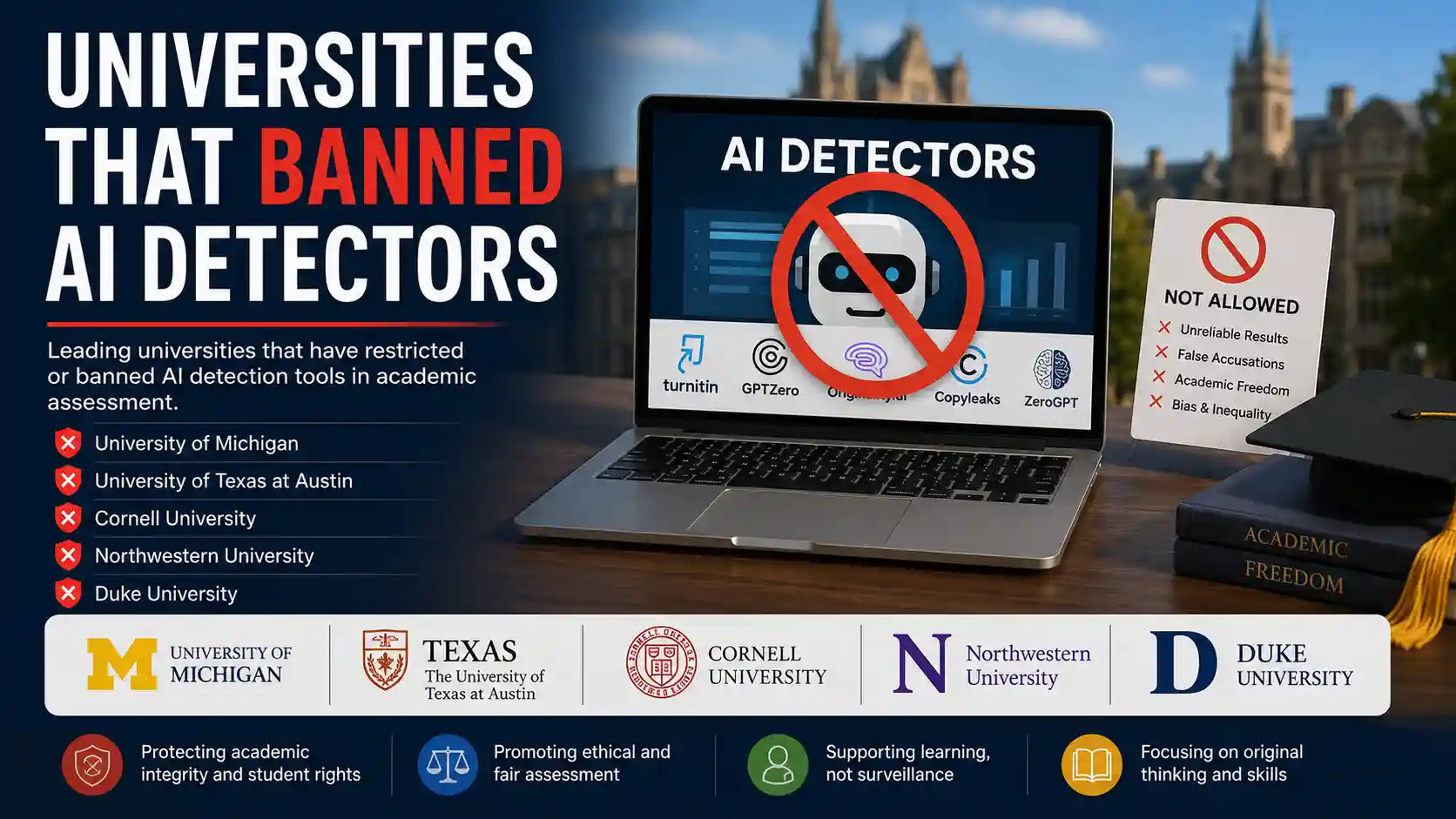
The Stanford findings did not stay confined to academic journals. Vanderbilt University cited concerns about bias against non-native English speakers directly in its August 2023 decision to disable Turnitin’s AI detector, alongside broader false-positive concerns. Multiple other institutions followed with similar policy reversals, cataloged in our running list of universities that banned AI detectors.
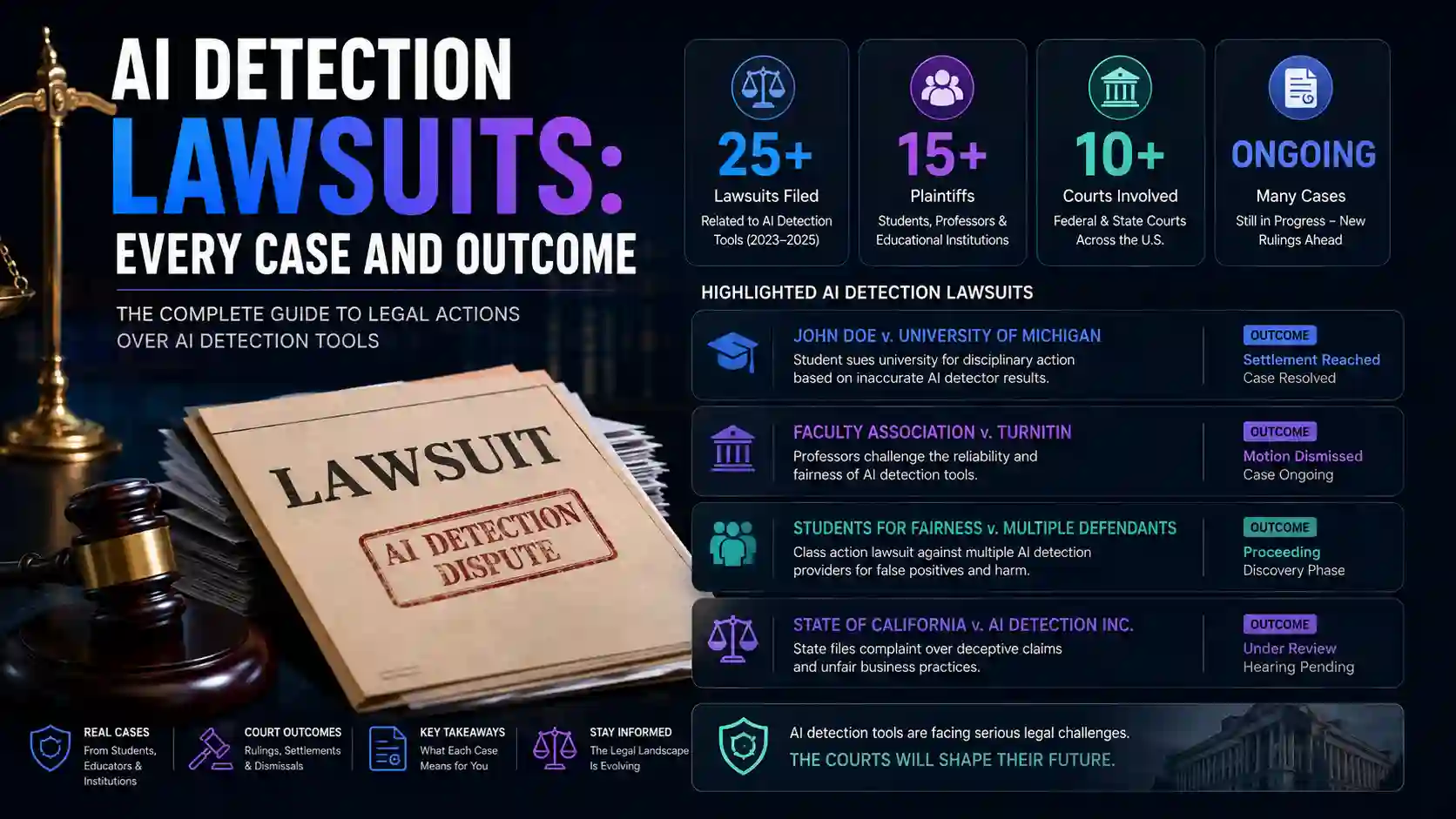
The bias question has also become a live legal issue. Complaints alleging discriminatory impact on non-native and international students have appeared in litigation against universities and detector vendors, tracked in our AI detection lawsuits review. International students face a uniquely high-stakes version of this risk: a misconduct finding can jeopardize the visa status that permits them to study in the U.S. at all, a consequence the original Stanford paper explicitly raised as a downstream harm of false accusations.
What Non-Native Writers Can Do
- Keep your process evidence by default — drafts, outlines, notes, and version history are the strongest counter-evidence to any single detector score, and matter more for ESL writers given the documented false-positive gap.
- Ask what standard your institution actually applies — some schools, per our 50-university policy study, explicitly caution against treating detector scores as standalone proof; know your school’s stated policy before a dispute happens.
- Cite the specific research if you’re flagged — referencing the Liang et al. (2023) Patterns study and Turnitin’s own published caveats is more persuasive than a general claim that “detectors are unreliable.”
- Understand tool-specific supported languages — if your submission is not in English, Spanish, or Japanese, Turnitin’s AI detection may not meaningfully apply, which is itself worth raising in any dispute.
- Use the formal appeal channel — informal pushback is weaker than a documented academic-integrity appeal that cites both your process evidence and the published bias research.
Reducing Your Exposure to Bias-Driven False Flags
Because the documented mechanism behind this bias is linguistic simplicity and predictability — not authorship — one practical step for writers who are permitted to revise their own AI-assisted or heavily-edited drafts is polishing that draft so it reads with more natural variation in sentence length, idiom, and structure, rather than in the flat, uniform register detectors are tuned to catch.
WriteHuman is built for exactly that revision step. It is not a way to bypass an instructor’s or employer’s rules, and non-native English writers should only use it where AI-assisted editing is explicitly permitted and disclosed. Used ethically, it targets the actual statistical pattern researchers say drives false positives, rather than trying to argue with a score after the fact.
Frequently Asked Questions
Are AI detectors biased against non-native English speakers?
The strongest peer-reviewed evidence, Liang et al. (2023) in Patterns, found seven widely used detectors averaged a 61.3% false-positive rate on genuine TOEFL essays, against near-zero on native-English essays. Some vendors dispute this applies to their current tools and have published their own data suggesting improvement.
Why does this bias happen?
Detectors largely score “perplexity” — how predictable word choices are. Non-native English writers tend to use simpler, more common vocabulary, a pattern that statistically overlaps with how language models write, since those models are also optimized to predict the most likely next word.
Has Turnitin fixed this problem?
Turnitin has published internal data showing a 0.014 false-positive rate for English Language Learner writing versus 0.013 for native-speaker writing, which the company presents as evidence of no statistically significant bias. This figure has not been independently replicated in the sources reviewed for this article.
Does this bias affect writers in other languages too?
Yes. Research cited in a 2023 survey of detection tools (Yang et al.) found detectors generally perform poorly on text outside English altogether. Turnitin’s AI detection currently supports only English, Spanish, and Japanese.
What should an international student do if falsely flagged?
Preserve drafts, notes, and version history, request the full basis for the allegation rather than just the score, cite the published bias research where relevant, and use your institution’s formal academic-integrity appeal process rather than relying only on informal pushback.
How to Cite This Article
For academic, journalistic, or policy citation:
JoshWP. "AI Detector Bias Against ESL Writers: Every Study." Updated August 2026. https://joshwp.com/ai-detector-bias-esl-writers/For the underlying peer-reviewed research, cite the original study directly:
Liang, W., Yuksekgonul, M., Mao, Y., Wu, E., Zou, J. (2023). "GPT detectors are biased against non-native English writers." Patterns, 4(7), 100779. https://doi.org/10.1016/j.patter.2023.100779Research Sources and Further Reading
This article draws on peer-reviewed research, vendor-published testing, and independent journalism. Every figure is attributed to its original source category in the text above; the links below allow direct verification.
View all sources
- Liang et al., 2023 — GPT Detectors Are Biased Against Non-Native English Writers (PubMed)
- Liang et al., 2023 — Full Text, Patterns (Cell Press)
- Stanford HAI: AI Detectors Biased Against Non-Native English Writers
- The Markup: AI Detection Tools Falsely Accuse International Students of Cheating
- Business & Human Rights Centre: Stanford Study Coverage
- Pangram Technical Report (arXiv 2402.14873)
- Originality.AI Response to the Stanford Study
- Turnitin: AI Checker Solutions and ELL Testing Data
- Vanderbilt University: Why We’re Disabling Turnitin’s AI Detector
- CSUF Faculty Development Center: AI Detection Tools — Considerations and Limitations
- Watermark in the Classroom: A Conformal Framework for Adaptive AI Usage Detection (arXiv)
- A Survey on Detection of LLM-Generated Content (arXiv)
- Title IX Attorneys: ChatGPT and AI Detection Tools — The Challenge of False Positives
- OmniDetect: Does Turnitin Detect AI? Independent Testing Summary
- Analysis: Is Turnitin’s AI Detector Biased Against Non-Native English Writers?