AI Data Centers and the Environment: Energy Use, Water Consumption, and Environmental Impact
AI data centers are being accused of draining towns, wrecking the grid, and creating an environmental crisis. This case study looks at the real numbers behind AI data center energy use, water consumption, cooling technology, nuclear power, geothermal, natural gas, renewables, hardware supply chains, and the political fight around who gets to build the future.
Quick Answer
The environmental panic around AI data centers is often exaggerated, politically useful, and technically shallow. AI infrastructure does create real short-term pressure on electricity supply, transformers, interconnection queues, land, chips, and local permitting. But the headline claim that AI data centers are automatically an environmental disaster collapses once you separate old evaporative cooling from closed-loop cooling, grid bottlenecks from generation scarcity, and ideological energy debates from engineering reality.
The practical answer is not to slow AI development. It is to build more firm power, especially nuclear and geothermal, use high-efficiency natural gas where it is the fastest bridge, deploy closed-loop liquid cooling where water is scarce, stop pretending intermittent power alone can run industrial AI, and force transparent local planning instead of fear-based moratoriums. The real environmental risk is not AI itself. It is energy scarcity dressed up as morality.
Build Your Own AI-Ready Website Infrastructure
If this case study has one practical takeaway for builders, it is this: own more of your stack. For WordPress sites, AI tools, automation projects, and content operations, a reliable VPS or managed hosting setup gives you more room to experiment without being boxed in by fragile shared infrastructure.
What People Searching This Topic Actually Want to Know
When people search for AI data centers and the environment, they are usually trying to answer a cluster of practical questions: how much electricity AI data centers use, whether AI data centers consume too much water, whether data center cooling is genuinely wasteful, whether nuclear power can solve AI’s energy demand, and whether the environmental impact of AI is being honestly described. This article answers those questions with statistics, technical context, and case-study analysis rather than treating “AI is bad for the planet” as a settled conclusion.
The short version is simple: AI data centers are energy intensive because intelligence at scale is industrial infrastructure. A GPU cluster is closer to an aluminum smelter or semiconductor fab than a laptop. That does not make it immoral. It means society needs serious energy policy. If we want advanced medicine, autonomous science, safer logistics, better software, faster engineering, robotics, drug discovery, national competitiveness, and local AI sovereignty, then we need abundant electricity and modern cooling. The environmental debate should be about how to build that infrastructure well, not how to shame it out of existence.
There are real impacts. Electricity demand is rising. Some locations face grid bottlenecks. Some older cooling systems consume water through evaporation. Some communities are right to demand transparency. Some natural gas projects produce local air pollutants that need controls. But the sweeping claim that AI is uniquely destructive is weak. Data centers are a visible target, while much larger water and energy users often escape the same scrutiny. In many debates, “environmental concern” quietly becomes a political language for rationing, delay, and control.
The Core Thesis: The Problem Is Scarcity, Not AI
The strongest argument about AI infrastructure is not that AI data centers have no footprint. Everything physical has a footprint. The stronger argument is that the footprint is manageable, technologically improvable, and often misrepresented by people who prefer stagnation over abundance.
AI data centers need electricity. The correct response is to build more reliable electricity. AI data centers need cooling. The correct response is to deploy the right cooling architecture for the local climate and water basin. AI data centers need chips, steel, concrete, transformers, fiber, batteries, and turbines. The correct response is to expand manufacturing and supply chains responsibly. These are engineering problems. They are not proof that AI development should be throttled by political panic.
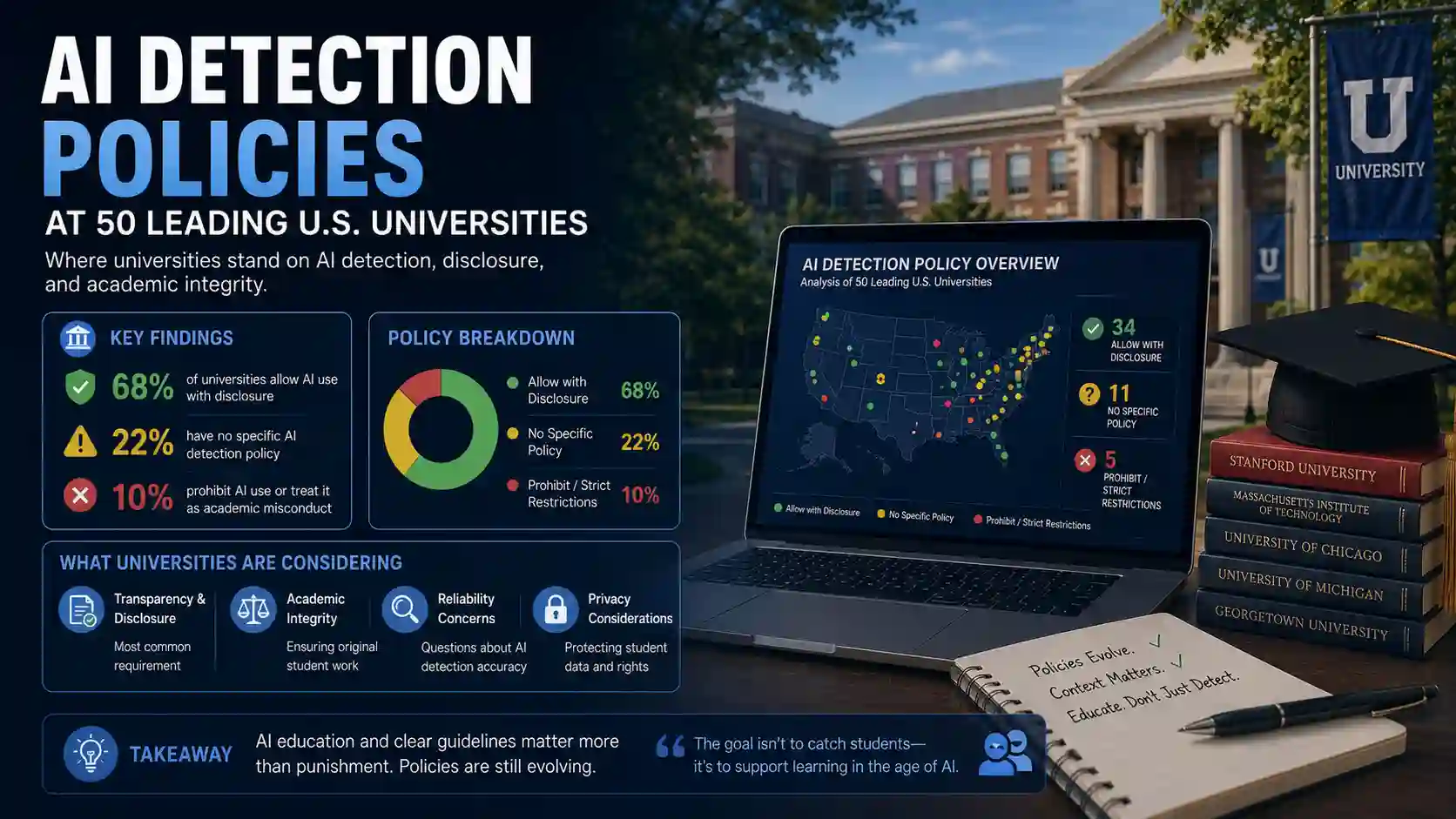
This infrastructure debate also sits behind the everyday AI products people use for writing, research, education, and business automation. The same AI boom that drives data-center demand is also reshaping academic integrity, scholarly publishing, and API-first startup platforms. For the policy side of that story, compare this case study with our analysis of AI detection policies at 50 leading U.S. universities and our report on AI-generated research papers, retractions, and journal policies.
A civilization that cannot expand firm electricity supply will start moralizing every new technology that needs power. First it was crypto. Then AI. Later it will be robotics, desalination, vertical farming, advanced manufacturing, and high-speed transport. The pattern is always the same: a new capability appears, it needs energy, and the scarcity mindset turns that energy demand into an environmental indictment.
That does not mean every data center project is good. A rushed facility in a constrained grid, an opaque water agreement in a drought-prone county, or a gas-turbine deployment without adequate pollution controls can be bad execution. But bad execution is not the same as bad technology. The solution is better siting, more firm generation, transparent water accounting, and local infrastructure investment.
Key Facts About AI Data Centers, Energy, and Water
The following facts set the scale. They show why AI data centers are a serious planning issue, but not evidence of an unavoidable environmental catastrophe.
| Metric | Reported or Projected Value | Why It Matters | Primary Source |
|---|---|---|---|
| Global data center electricity use, 2024 | About 415 TWh | Shows that data centers are meaningful but still a small share of total global electricity. | IEA Energy and AI |
| Global data center electricity use, 2030 base case | About 945 TWh | Confirms fast growth and the need for more generation and grid planning. | IEA Energy and AI |
| U.S. data center electricity use, 2023 | About 176 TWh, around 4.4% of U.S. electricity | Explains why the U.S. debate is sharper than the global average. | Berkeley Lab 2024 report |
| U.S. data center electricity use, 2028 projection | About 325 to 580 TWh, or 6.7% to 12% of U.S. electricity | Shows why grid interconnection, transformers, and local power prices are central issues. | Berkeley Lab 2024 report |
| Typical AI-focused data center scale | Can consume as much electricity as 100,000 households; largest projects can be 20 times larger | Shows that AI data centers are industrial assets, not normal office buildings. | IEA Energy and AI |
| Nuclear reliability | U.S. nuclear plants produce maximum power more than 92% of the year | Explains why nuclear is a strong match for 24/7 compute. | U.S. DOE |
| Google freshwater consumption, 2024 | About 7.2 billion gallons, with about 4.5 billion gallons replenished | Demonstrates that water use is real, reportable, and increasingly managed through stewardship programs. | Axios summary of Google water data |
| Closed-loop AI cooling | New Microsoft AI-focused designs recirculate coolant and avoid water-consuming cooling towers during normal operation | Shows why the phrase “AI consumes water forever” is technically wrong for some modern designs. | Axios on Microsoft cooling |
Responsive Graphs: The AI Data Center Environmental Debate in Numbers
The charts below are rendered with Chart.js in the browser. They are intentionally not static images, so they remain responsive, accessible, and easy to update when new data is available.
Global Data Center Electricity Demand Is Rising, But Still a Manageable Share of Global Power
Data: IEA 2025 Energy and AI executive summary. The IEA estimates 415 TWh in 2024, about 945 TWh by 2030, and about 1,200 TWh by 2035 in its base case.
U.S. Data Center Electricity Demand Has the Bigger Local Planning Problem
Data: Berkeley Lab 2024 United States Data Center Energy Usage Report. The 2028 range reflects low and high projection cases.
Lifecycle Emissions: Nuclear and Wind Are Near the Floor; Gas Is a Bridge, Not an End State
Data: IPCC/UNECE values summarized by Our World in Data. Values are median lifecycle grams CO2-equivalent per kWh and include supply-chain emissions.
Safety: Nuclear Is One of the Safest Energy Sources Per Unit of Electricity
Data: Our World in Data. Death rates include accidents and air pollution per terawatt-hour. Fossil fuels are much worse than nuclear, wind, and solar on this metric.
AI Data Center Energy Use: The Real Issue Is Firm Power
AI data centers use a lot of electricity because GPUs convert electricity into computation and heat. A training cluster with tens or hundreds of thousands of accelerators is not a normal digital service. It is heavy infrastructure. The demand profile also differs from many residential and commercial loads because AI clusters can run near full utilization for long periods. If the model is training, the machine does not politely stop because the evening peak arrived.
This is why electricity for AI is not merely a question of annual energy. It is a question of firm capacity, grid connection speed, transformer availability, transmission constraints, local reserve margins, and power quality. A region can have enough annual generation on paper and still struggle to connect a 300 MW or 1 GW data center campus on the timeline a hyperscaler wants.
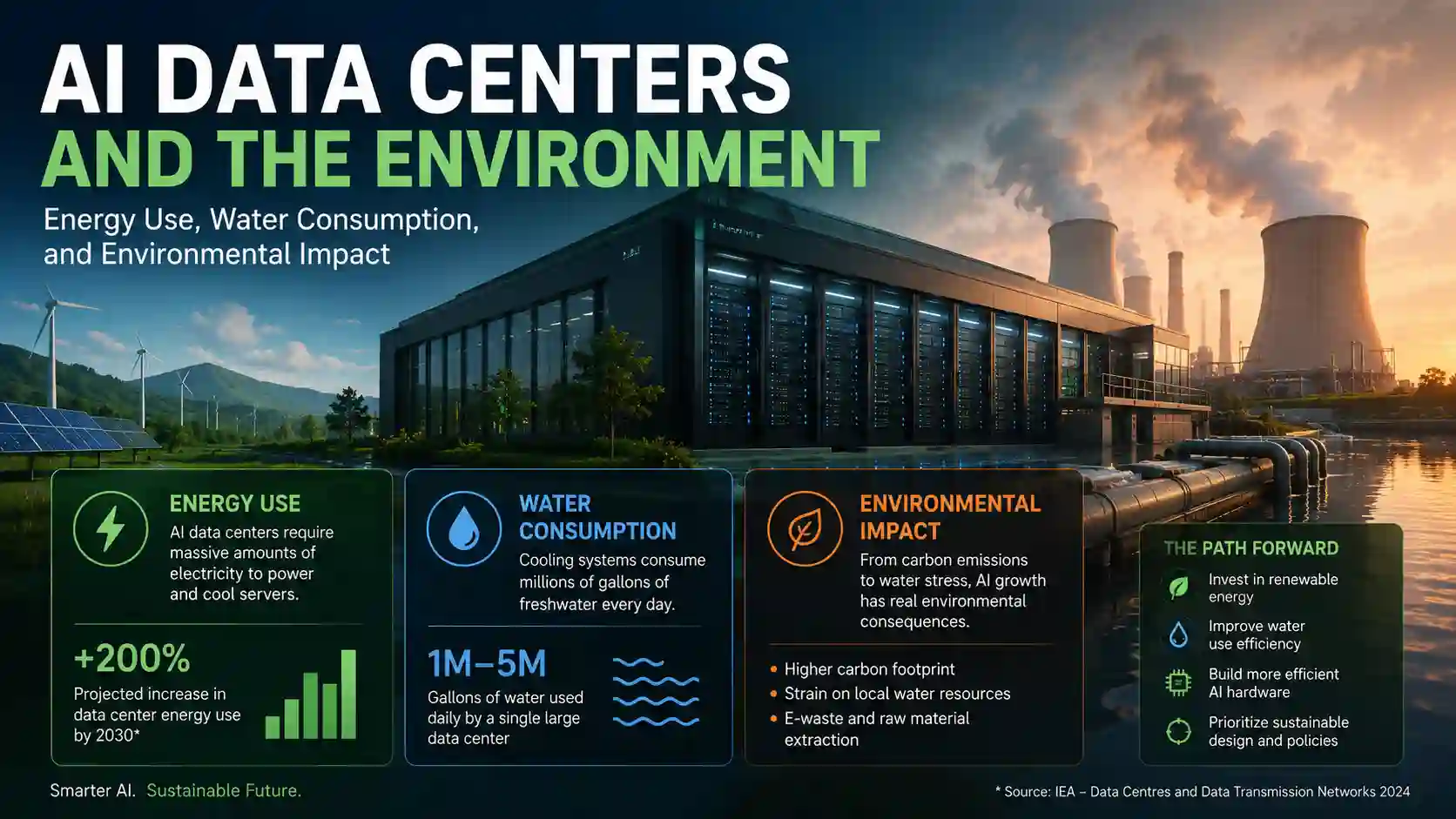
The IEA states that data centers consumed around 415 TWh globally in 2024, or around 1.5% of global electricity consumption, and projects around 945 TWh by 2030. That is a large jump, but it is not civilization-ending. For context, the same IEA executive summary notes that data centers account for around one-tenth of global electricity demand growth to 2030, less than the share from industrial motors, air conditioning, or electric vehicles. The local impact is the sharper concern: data centers can be clustered in a few regions, which makes the load feel enormous to a local utility even if the global share remains modest.
The Abundance View
When a new technology creates electricity demand, the answer should be to produce more electricity. A society serious about growth does not respond to steel mills, hospitals, factories, desalination plants, or AI clusters by asking everyone to want less. It builds the generation, grid, and permitting system required to support the next layer of civilization.
Hosting CTA: Start Small, Build Like Infrastructure Matters
You do not need a hyperscale data center to start building with AI. A practical first step is a dependable hosting account or VPS where you can run WordPress, test AI automations, deploy landing pages, and keep control of your projects as they grow.
The near-term pain is real. Data center growth can compete for transformers, turbines, skilled electricians, substation capacity, and generation interconnections. In some regions, utilities may shift infrastructure costs onto households if regulators do not design rates properly. This is not a reason to ban data centers. It is a reason to make large-load customers pay their fair share for grid upgrades, sign long-term firm-power contracts, and bring generation with them where possible.
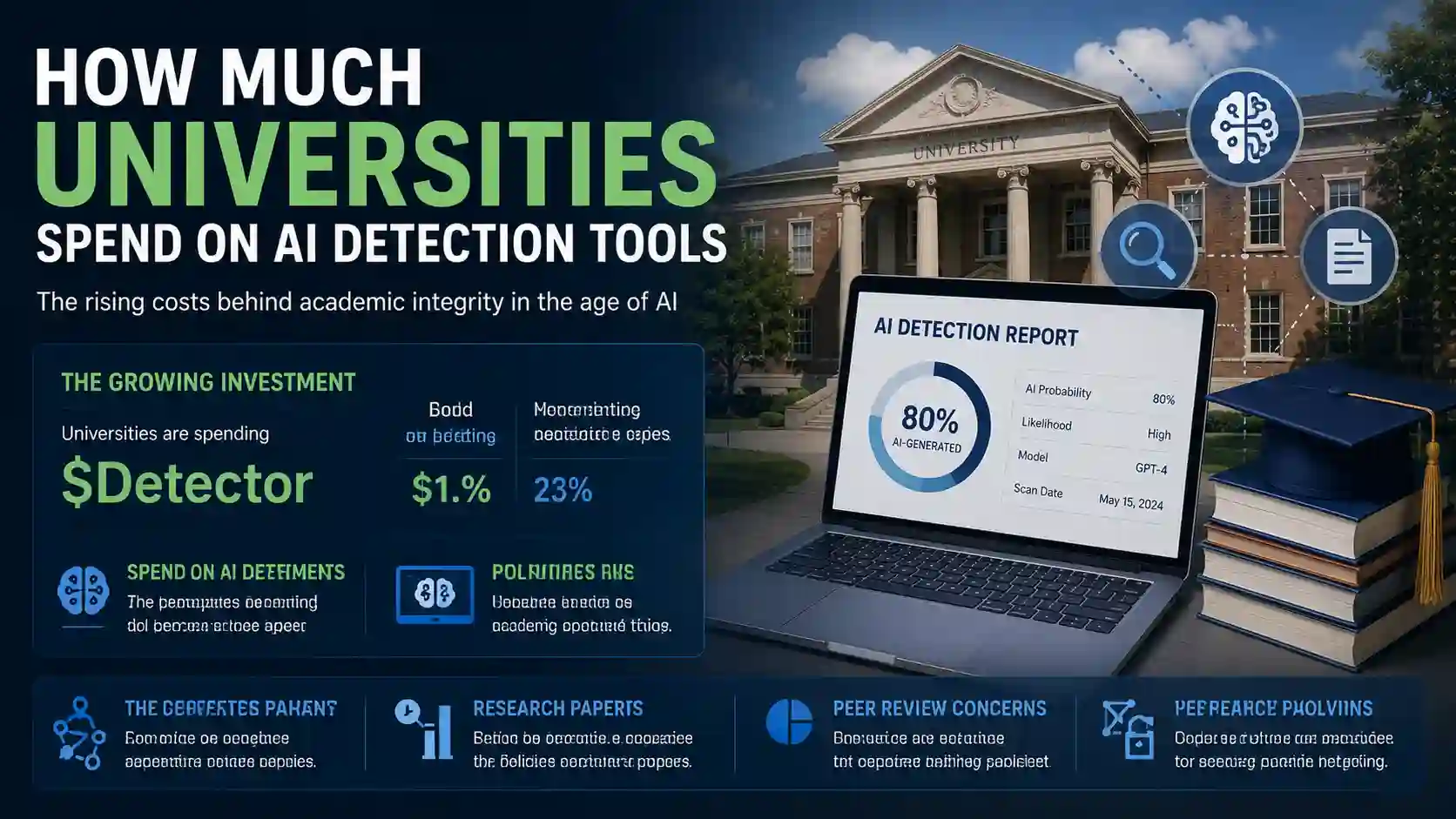
The same cost-accounting logic applies at a smaller scale inside institutions. Universities buying AI detection tools, for example, are not just buying software; they are buying integrations, review workflows, appeals, staff time, and policy enforcement. That budget problem is covered in detail in how much universities spend on AI detection tools.
The worst policy response is artificial scarcity. If regulators delay generation, block nuclear, restrict gas, slow transmission, and then complain that AI uses too much energy, they have created the crisis they claim to be solving. The better response is technology-neutral energy abundance: nuclear, geothermal, hydro where available, high-efficiency gas where needed, storage where it actually helps, and renewables where they are economically and physically appropriate.
AI Data Center Water Consumption: The Headline Is Usually Too Crude
The claim that “AI uses a lot of water” can be true, false, or misleading depending on what is being measured. There are at least four different water categories that get blurred together in public debate:
- Direct operational water used at the data center, often for evaporative cooling.
- Closed-loop coolant filled into a system and recirculated with very low ongoing consumption.
- Indirect water used by the power plants that generate electricity for the data center.
- Supply-chain water used in semiconductor manufacturing, construction materials, and hardware production.
Most viral claims skip those distinctions. They imply that every AI prompt drains fresh water from a town. That is not how modern cooling works. Some data centers do consume water continuously through evaporative cooling. Others use air cooling. Newer high-density AI facilities increasingly use direct-to-chip liquid cooling or closed-loop systems where the coolant is filled once and recirculated. In those facilities, the idea that the system keeps consuming large amounts of water for cooling is not necessarily true.
Microsoft’s newest AI-focused designs, for example, recirculate coolant directly to chips and use air-cooled chillers outside the building, avoiding traditional cooling towers during normal operation. Nvidia has also promoted high-temperature liquid-cooling designs that reduce or nearly eliminate water used by cooling towers. This matters because the highest-density AI hardware is pushing the industry toward water-efficient liquid cooling, not away from it.
The Important Correction
It is too broad to say AI data centers do not need ongoing water. Some do. It is also too broad to say AI data centers are water guzzlers by nature. Closed-loop liquid cooling can reuse the same coolant for long periods, while evaporative cooling consumes water. The environmental impact depends on the design, the local climate, the water source, and the electricity supply.
Where water criticism is strongest is siting. A water-efficient data center in a water-rich region using reclaimed wastewater is one thing. A large evaporatively cooled campus in a drought-prone basin with weak disclosure is another. Communities are justified in asking for water-use estimates, peak withdrawal data, source-water details, wastewater plans, and drought contingency plans.
But the comparison must be honest. Agriculture, lawns, golf courses, thermoelectric generation, and industrial processes often use far more water than data centers. That does not excuse bad data center siting, but it does expose the selective outrage. If the political class suddenly discovers water scarcity only when AI arrives, the debate is not purely about water. It is about who gets permission to build.
Cooling Technology: The Difference Between Consumption and Circulation
Cooling is the heart of the misunderstanding. Servers turn almost all consumed electricity into heat. That heat must be moved away from chips, racks, rooms, and buildings. The method used determines the water and energy trade-off.
| Cooling Method | How It Works | Water Impact | Energy Impact | Best Fit |
|---|---|---|---|---|
| Evaporative cooling | Uses evaporation to reject heat efficiently. | Can consume significant water because evaporated water leaves the system. | Often energy efficient, especially in dry climates. | Water-secure regions or sites using non-potable/reclaimed water. |
| Air cooling | Uses fans, outside air, and chillers to remove heat. | Low direct water use. | Can require more electricity in hot conditions. | Moderate climates, lower-density racks, water-constrained sites. |
| Direct-to-chip liquid cooling | Moves coolant through cold plates attached to chips. | Can be very low if closed loop. | Efficient for dense GPU racks; reduces fan burden. | AI training and inference clusters with high rack density. |
| Immersion cooling | Submerges hardware in dielectric fluid. | Low water use depending on heat rejection design. | Can be efficient, but operational complexity is higher. | Specialized high-density compute environments. |
| Closed-loop liquid cooling plus dry coolers | Coolant circulates repeatedly; heat is rejected to air. | Very low ongoing water consumption after fill. | Strong fit for AI hardware; energy depends on climate and design. | Water-sensitive regions and next-generation AI campuses. |
The phrase “uses water” is sloppy because it confuses water as a circulating thermal fluid with water consumed through evaporation. A car radiator uses coolant. That does not mean it constantly drinks the same amount of coolant every hour. A closed-loop AI cooling system uses water or a water-glycol mixture as a heat-transfer medium, but if designed properly it does not constantly withdraw fresh water for cooling towers.
This distinction is central to the case against alarmism. The industry is not frozen in 2015. GPU density is forcing more advanced thermal engineering. As chips get hotter, direct liquid cooling becomes more attractive. That can reduce both water consumption and mechanical cooling overhead. The future of AI infrastructure is not necessarily more water waste. It may be less.
Nuclear Power Is the Best Long-Term Match for AI Data Centers
If AI is going to become a major industrial load, nuclear power deserves to be at the center of the conversation. Nuclear is firm, dense, low-carbon, high-capacity-factor electricity. It runs day and night. It does not depend on weather. It uses little land per unit of energy. It can support the kind of 24/7 compute load that AI requires.
The U.S. Department of Energy states that nuclear energy has the highest capacity factor of any energy source and that U.S. nuclear plants produce maximum power more than 92% of the year. That single number explains why tech companies are now revisiting nuclear. GPU clusters do not need moral symbolism. They need stable megawatts.
Safety objections to nuclear are often wildly out of proportion to the data. Our World in Data summarizes the evidence bluntly: fossil fuels are the dirtiest and most dangerous energy sources, while nuclear and modern renewables are vastly safer and cleaner. Nuclear’s death rate per unit of electricity is extremely low, comparable to wind and solar, and much lower than coal, oil, or gas. The public imagination is still shaped by a few famous accidents, but risk should be measured per terawatt-hour, not by emotional vividness.
| AI Data Center Need | Nuclear Advantage | Constraint |
|---|---|---|
| 24/7 power | High capacity factor and stable output. | New build timelines remain slow in many countries. |
| Low lifecycle emissions | Lifecycle emissions are among the lowest of major electricity sources. | Public acceptance and regulatory friction can delay projects. |
| Small land footprint | High energy density reduces land pressure compared with sprawling generation. | Sites require serious safety, security, and cooling-water planning. |
| Industrial heat and power integration | Potential for colocation, district heat, hydrogen, and advanced industrial systems. | Commercial models for small modular reactors still need proof at scale. |
The honest weakness of nuclear is not that it is unsafe. The weakness is speed and institutional competence. If a hyperscaler needs hundreds of megawatts in two years, a conventional nuclear plant is unlikely to arrive on time. That is why gas turbines, grid purchases, and renewables are filling the gap today. But if the AI buildout is a decade-long industrial transformation, nuclear is not optional. It is one of the few technologies with the physics to carry the load cleanly and reliably.
Geothermal Is the Underused Natural Partner for AI
Geothermal power deserves far more attention in the AI data center debate. It is firm, low-carbon, local, and not weather-dependent in the way wind and solar are. Enhanced geothermal systems are especially interesting because they use drilling techniques from the oil and gas industry to access underground heat in more places.
Google’s partnership with Fervo Energy in Nevada is a useful signal. Google announced that the enhanced geothermal project began delivering carbon-free electricity to the grid serving its Nevada data centers. Google also noted that geothermal complements variable renewables because it can provide round-the-clock carbon-free energy. That is exactly the kind of energy profile AI infrastructure needs.
The Department of Energy has estimated that geothermal could provide up to 120 GW of reliable, flexible U.S. generation capacity by 2050. Even if that target is ambitious, the direction is important. AI data centers could become anchor customers that make advanced geothermal financeable, just as long-term power purchase agreements helped scale wind and solar.
Why Geothermal Should Be Bigger in the Debate
Geothermal has the moral appeal of clean energy without the same intermittency problem. It is not a complete replacement for nuclear, gas, hydro, or storage, but it is one of the most practical firm clean resources for data centers in the right geology.
Natural Gas and the xAI Colossus Case: Fast Power Is Not the Same as Perfect Power
The xAI Colossus supercomputer in Memphis is often used as a symbol in the AI energy debate. Supporters point to speed, ambition, and the practical use of natural gas turbines to overcome grid constraints. Critics point to local air pollution, permitting concerns, and the risk of building massive AI load before the grid is ready.
A serious case study has to hold both ideas at once. Natural gas can be a rational bridge fuel for AI infrastructure because it is dispatchable, fast to deploy compared with nuclear, and compatible with existing pipeline and turbine supply chains. High-efficiency gas generation can also be cleaner than coal and can support local reliability while longer-term firm clean power is built.
But “natural gas is useful” is not the same as “natural gas has no environmental impact.” Gas turbines still emit CO2 and local air pollutants such as nitrogen oxides unless controlled properly. If temporary turbines operate without adequate transparency or pollution control, local residents have a legitimate complaint. The abundance position should not defend sloppy permitting. It should defend building fast while meeting clear standards.
Colossus Is a Lesson, Not a Free Pass
The lesson from Colossus is that AI infrastructure can move faster than utilities and regulators. That speed is powerful. It is also why large AI campuses need pre-approved power strategies, emissions controls, grid-upgrade commitments, and community disclosure before the controversy erupts.
Natural gas is best understood as a bridge and reliability tool. It can keep AI development moving while nuclear, geothermal, transmission, and advanced storage scale. The mistake would be to let gas become the permanent ceiling. The equal and opposite mistake would be to block gas in the short term and then pretend AI can run on slogans while waiting ten years for perfect infrastructure.
Solar, Wind, and the Problem With Green Energy Ideology
Solar and wind are not useless. That would be too simple and technically wrong. They can be cheap, fast to deploy, and low-carbon on a lifecycle basis. They are useful parts of a modern grid. The problem is not solar panels or wind turbines as technologies. The problem is the ideology that treats variable generation as if it can replace firm power without cost, storage, transmission, overbuilding, backup, land, mining, and grid complexity.
AI data centers expose that weakness because they need reliable electricity at industrial scale. A GPU cluster cannot run only when the weather cooperates. If a region relies heavily on solar and wind, it needs some combination of batteries, long-duration storage, transmission imports, hydro, geothermal, nuclear, demand flexibility, or gas backup. Those additions are not footnotes. They are the system.
Green energy politics often hides the material footprint of its favored technologies. Solar panels require land, glass, aluminum, polysilicon, silver, inverters, and transmission. Wind turbines require steel, concrete, blades, gearboxes, rare earths in some designs, roads, and large spacing. Batteries require lithium, nickel, manganese, graphite, copper, cobalt in some chemistries, and a large mining/refining chain. That does not make these technologies evil. It makes them physical. The same standard applied to AI should be applied to every energy technology.
For data centers, solar is most attractive when it is paired with firm resources or when the computing workload can shift in time. It can also make sense for space-based concepts because orbital solar has a different resource profile. On Earth, solar is valuable but incomplete. Treating it as the foundation of AI development without firm backup is not environmental wisdom. It is grid fragility with a pleasant brand.
| Source | Strength for AI | Weakness for AI | Best Role |
|---|---|---|---|
| Nuclear | Firm, dense, low-carbon, high capacity factor. | Slow permitting and high upfront capital in many markets. | Long-term backbone power. |
| Geothermal | Firm, clean, local, small land footprint. | Geology, drilling risk, and emerging commercial scale. | Firm clean power where resources are available. |
| Natural gas | Dispatchable, fast, mature supply chain. | CO2 and air pollution unless controlled; fuel price exposure. | Bridge power and reliability support. |
| Solar | Cheap daytime energy; fast deployment. | Variable, land-intensive at scale, needs storage or backup. | Supplemental energy and daytime load support. |
| Wind | Low-carbon bulk energy in strong wind regions. | Variable output, transmission needs, siting resistance. | Portfolio energy source, not sole AI backbone. |
| Hydro | Firm or dispatchable in some regions; low operating emissions. | Geographically limited; ecological and drought constraints. | Excellent where already available. |
Space Data Centers: Fascinating, But Not the Near-Term Answer
Space data centers are not science fiction in the loose sense. Serious proposals exist. The appeal is obvious: constant solar energy in certain orbits, no local water consumption, radiative cooling, and reduced pressure on terrestrial land. Some concepts imagine orbital AI inference, edge processing for satellite data, or eventually large compute platforms powered by space solar.
But a realistic case study must separate long-term possibility from near-term infrastructure. Space data centers face difficult constraints: launch cost, satellite mass, radiation hardening, heat rejection, orbital maintenance, latency, ground communications, lifecycle replacement, debris risk, and economics. Recent research on orbital data centers suggests that space-native preprocessing and edge compute may be credible earlier than general-purpose terrestrial replacement.
So yes, space solar makes more intuitive sense for space data centers than for many Earth-bound AI campuses. But for the next several years, the decisive AI infrastructure battle remains on Earth: power plants, grids, cooling systems, chips, substations, fiber, land, and permits.
Hardware, Mining, and E-Waste: The Part Both Sides Understate
The environmental footprint of AI data centers is not only electricity and water. Hardware matters. GPUs, memory, networking gear, racks, power distribution systems, backup batteries, chillers, transformers, and buildings all carry embodied impacts. Semiconductor manufacturing uses ultrapure water and complex chemicals. Mining and refining supply the copper, aluminum, rare earths, lithium, nickel, cobalt, and other materials required by digital and energy infrastructure.
This is where some green-energy arguments become selective. Critics point to AI hardware supply chains while ignoring the material intensity of battery-heavy renewable grids. Supporters of AI sometimes point to nuclear and gas while underplaying chip manufacturing impacts. The serious position is to count everything and improve everything.
AI can also reduce environmental waste elsewhere. Better AI systems can optimize power grids, reduce industrial energy use, speed materials discovery, improve logistics, detect methane leaks, model fusion and fission systems, improve geothermal drilling, reduce failed experiments, and increase utilization of existing infrastructure. The IEA notes that AI could unlock major efficiency and operational gains in energy, including better grid fault detection, improved transmission capacity, and industrial energy savings. Those gains are not automatic, but they matter.
Lifecycle Thinking Beats One-Issue Panic
A fair environmental accounting includes operational electricity, direct water, indirect water from power generation, embodied carbon in buildings and hardware, mineral supply chains, useful life, recycling, and the benefits AI creates in other sectors. Anything less becomes advocacy dressed as analysis.
Environmental Concern or Political Control?
Some concerns about AI data centers are legitimate. Communities should know how much power and water a project needs. Utilities should not socialize private infrastructure costs onto households without scrutiny. Permitting should require air-quality controls where on-site combustion is used. Local governments should understand noise, land use, tax incentives, emergency services, and long-term water availability.
But the tone of the debate often reveals a deeper agenda. When energy demand itself is framed as suspicious, the result is not environmental stewardship. It is managed decline. The public is told that building less, consuming less, computing less, traveling less, and wanting less are moral necessities. Meanwhile, the same institutions often block the very energy sources that could solve the problem: nuclear, geothermal, transmission, pipelines, and modern industrial infrastructure.
The phrase “AI environmental impact” can become a political cover for throttling technological progress. AI is powerful. It reduces the cost of knowledge work. It threatens bureaucratic bottlenecks. It changes labor markets. It gives small teams leverage that used to belong only to institutions. It is not surprising that some of the resistance arrives wrapped in environmental language.
This does not mean every critic is dishonest. Many are sincere. But good-faith environmentalism should welcome solutions: nuclear licensing reform, geothermal drilling, advanced cooling, reclaimed water, transparent reporting, waste heat reuse, high-voltage transmission, competitive power markets, and siting data centers where power and water are abundant. If the proposed solution is always delay, denial, or restriction, then the real preference may be control.
A Practical Framework for Responsible AI Data Center Growth
The right policy is not “build anything anywhere.” It is also not “stop AI because it uses resources.” A serious AI infrastructure framework would require the following:
- Firm power plans. Large AI campuses should show how they will secure reliable power without destabilizing local grids.
- Technology-neutral generation. Nuclear, geothermal, hydro, high-efficiency gas, renewables, and storage should compete on reliability, cost, land, water, emissions, and build time.
- Closed-loop cooling in water-stressed regions. Evaporative cooling should not be the default where water scarcity is serious.
- Transparent water reporting. Operators should disclose direct water use, peak withdrawal, water source, wastewater plan, and drought contingencies.
- Local grid-cost protection. Rate design should prevent households from subsidizing hyperscale interconnection upgrades without clear public benefit.
- Air-quality controls for combustion. Natural gas bridge power should use appropriate permits, monitoring, and emissions controls.
- Waste heat planning. Where feasible, data center heat should support district heating, greenhouses, industrial processes, or absorption cooling.
- Hardware lifecycle management. Operators should plan for reuse, resale, recycling, and safe disposal of accelerators, batteries, and power equipment.
- Fast permitting for good projects. Projects that bring firm power, low water impact, and local investment should move quickly.
- No ideological bans. Moratoriums should be a last resort, not a substitute for competent infrastructure planning.
Final Verdict
AI data centers have an environmental footprint, but the popular panic is often overstated, technically confused, and politically convenient. The strongest path forward is energy abundance: nuclear for long-term firm power, geothermal where geology allows, efficient natural gas as a bridge, renewables where they make grid sense, and modern closed-loop cooling to reduce water stress.
The future should not be decided by people who think every new megawatt is a moral failure. The future belongs to societies that can build clean, firm, cheap, reliable energy faster than their demand grows.
Ready to Build on Reliable Hosting?
Whether you are publishing AI case studies, building a WordPress site, testing automation workflows, or launching an AI-powered project, Hostinger is a practical place to start because it gives you room to grow from a simple website into a more capable hosting setup.
Frequently Asked Questions
Are AI data centers bad for the environment?
They have environmental impacts, but “bad” is too broad. The impact depends on the electricity source, cooling system, water basin, hardware lifecycle, and local grid. A nuclear- or geothermal-powered AI data center with closed-loop cooling has a very different footprint from an evaporatively cooled site powered by uncontrolled fossil generation in a constrained region.
Do AI data centers really use billions of gallons of water?
Some large operators report billions of gallons of annual freshwater use across global operations. But that does not mean every AI system consumes water continuously. Evaporative cooling consumes water; closed-loop liquid cooling can recirculate coolant with very low ongoing water use. The correct question is facility-specific: what cooling system, what water source, what climate, and what power mix?
Is the water used in closed-loop cooling reused almost forever?
In a closed-loop system, the coolant is designed to circulate repeatedly rather than evaporate like water in a cooling tower. There can still be maintenance, leakage, treatment, and occasional replenishment, so “almost forever” is directionally right for the concept but too absolute as a universal claim. It is accurate to say that closed-loop systems can dramatically reduce ongoing water consumption.
Why not power AI data centers with solar and wind only?
Solar and wind are variable. AI data centers need reliable power at all hours. A solar-and-wind-heavy approach can work only with storage, overbuild, transmission, backup generation, flexible workloads, or firm clean resources. The problem is not solar and wind themselves; it is pretending their intermittency is free to solve.
Is nuclear safe enough for AI data center growth?
Yes. On deaths per unit of electricity and lifecycle emissions, nuclear is one of the safest and cleanest major power sources. The biggest obstacles are politics, financing, construction time, and regulatory complexity, not the basic safety record.
Could space data centers solve the environmental issue?
Maybe in limited future applications, especially space-native data processing and solar-powered orbital compute. But space data centers face major constraints in launch cost, maintenance, radiation, communications, thermal management, and economics. They are fascinating, not a near-term replacement for Earth-based AI infrastructure.
Sources and Further Reading
The article uses a wide source base: official energy reports, government sources, corporate sustainability disclosures, research papers, and reporting on current data center disputes. Projections vary, so the article treats them as planning ranges rather than prophecy.
View all research sources and further reading
- International Energy Agency: Energy and AI, Executive Summary
- Berkeley Lab: 2024 United States Data Center Energy Usage Report
- Our World in Data: What are the safest and cleanest sources of energy?
- U.S. Department of Energy: Nuclear Power is the Most Reliable Energy Source
- Google: A first-of-its-kind geothermal project is now operational
- Axios: Microsoft points to lower water use in AI era
- Axios: Google pushes water standards amid data center backlash
- Axios: Water joins energy as top AI flashpoint
- The Verge: Amazon’s data centers used 2.5 billion gallons of water last year
- The Verge: Nvidia says its AI data center design runs hotter to use a lot less water
- Tom’s Hardware: Microsoft closed-loop cooling water claims
- arXiv: Assessing the Carbon Emissions and Energy Consumption of U.S. Hyperscale Data Centers
- arXiv: Environmental Burden of United States Data Centers in the Artificial Intelligence Era
- arXiv: AI Data Centers and Power System Sustainability
- arXiv: Quantifying and Addressing the Impact of Data Centers on Public Water Systems
- arXiv: Orbital Data Centers – Spacecraft Constraints and Economic Viability
- arXiv: Toward Communication-Efficient Space Data Centers
- arXiv: Tether-Based Architecture for Solar-Powered Orbital AI Data Centers
- IPCC AR6 WGIII Annex III: Technology-specific cost and performance parameters
- UNECE: Life Cycle Assessment of Electricity Generation Options
- IEA: The Role of Critical Minerals in Clean Energy Transitions
- U.S. DOE: Enhanced Geothermal Shot
- NREL: Land-use requirements for solar power plants in the United States
- NREL: Land-use requirements of modern wind power plants
- Virginia JLARC: Data Centers in Virginia
- NERC: 2024 Long-Term Reliability Assessment
- Joule: To better understand AI’s growing energy use, analysts need a data revolution
- npj Clean Water: Data centre water consumption
- Environmental Research Letters: The environmental footprint of data centers in the United States
- NPR: Data centers are booming, but there are energy and environmental risks
- Reuters: xAI gas turbines and permitting concerns
- Southern Environmental Law Center: EPA confirms large methane gas turbines require permits
- The Guardian: Planned AI data centers and drought-hit land
- Houston Chronicle: Texas data center water reporting compliance