How Much Universities Spend on AI Detection Tools
If you are searching for how much universities spend on AI detection tools, the short answer is: anywhere from a few thousand dollars a year at small colleges to six-figure annual commitments at large universities, with major public systems signing multi-year contracts worth more than $1 million. This guide breaks down Turnitin AI detection pricing, institutional contract benchmarks, per-student costs, hidden appeal costs, and whether the spending actually makes sense in 2026.
Short Answer: The Real Cost Is Bigger Than the License
Universities typically do not buy “AI detection” as a clean standalone product. They buy an academic-integrity stack: plagiarism checking, similarity reports, LMS integration, grading feedback, document storage, AI-writing indicators, admin reporting, onboarding, and support. That means the public price often appears as a Turnitin, Copyleaks, GPTZero, or academic-integrity contract, while the AI detector itself is buried as an add-on or module.
Publicly reported Turnitin pricing benchmarks show a wide spread: from $1.79 per student in one large-system benchmark to $6.50 per student in a continuing-education benchmark. Reported California examples also show $2.71 per student for a plagiarism/similarity license and an additional AI-detection upgrade priced around $3.19 per student in 2024. At 30,000 students, that difference can move annual spend from roughly $53,700 to $195,000 before training, appeals, and staff time.
How Much Universities Spend on AI Detection Tools in 2026
The headline number depends heavily on enrollment, product bundle, and negotiation leverage. A community college buying a limited AI-checking module may spend less than $5,000 for a short term. A public university with 20,000 to 40,000 students can easily spend $40,000 to $200,000 per year once similarity checking and AI detection are bundled. A statewide system can push into seven figures over a multi-year term.
Important distinction: this article estimates spending on AI detection as part of the larger academic-integrity stack. In most university budgets, the AI detector is not neatly separated from plagiarism detection, writing feedback, LMS integrations, and compliance support.
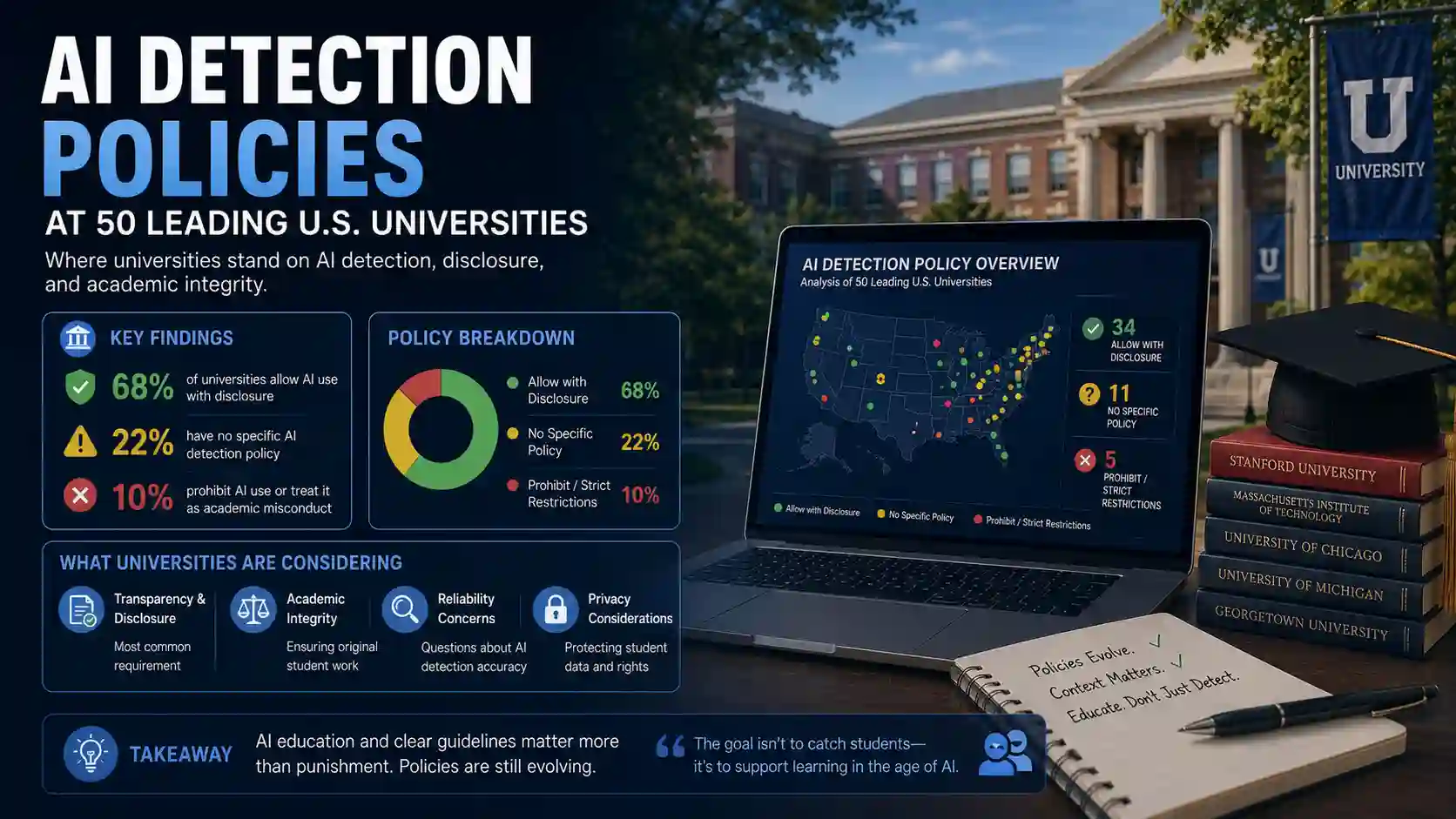
To understand why that spending is controversial, pair the budget numbers with our policy review of AI detection policies at 50 leading U.S. universities. The same tools also affect research integrity, where journals are dealing with AI-assisted manuscripts, hallucinated citations, and AI-shaped peer review; see the related report on AI-generated research papers in 2026.
| Institution Type | Enrollment Example | Likely Annual Software Spend | Why the Range Moves |
|---|---|---|---|
| Small community college | 3,000 to 8,000 students | $5,000 to $35,000 | May use a smaller AI detector, limited faculty seats, or a short-term module. |
| Mid-sized public college | 10,000 to 20,000 students | $20,000 to $100,000 | Costs rise when AI detection is bundled with plagiarism, LMS, feedback, and training. |
| Large public university | 25,000 to 50,000 students | $50,000 to $250,000+ | Campus-wide deployment, faculty adoption, and negotiated per-student pricing dominate. |
| Multi-campus university system | 100,000+ students | $500,000 to $2M+ per year equivalent | Large systems can get lower per-student rates but still spend seven figures over a contract term. |
| AI-light or detector-limited institution | Any size | $0 to renewal-only legacy cost | Some schools disable AI detection while keeping similarity/plagiarism tools. |
How We Estimate University AI Detection Spending
Exact AI-detection spending is difficult to audit because contracts are usually bundled. A university may buy “Turnitin Feedback Studio,” “Originality,” “iThenticate,” “Copyleaks Education,” or an LMS-integrated academic-integrity package. The AI detector may be included, free during a pilot, priced as an add-on, negotiated into renewal, or disabled after purchase.
This article uses four layers of evidence:
- Publicly reported procurement benchmarks: per-student Turnitin rates and multi-year contract values reported from public records and summarized in indexed sources.
- Vendor pricing pages: consumer and education-plan pricing from GPTZero, Copyleaks, and Originality.ai, plus custom-quote language for institutional plans.
- Usage and adoption signals: Turnitin’s 200-million-paper AI detector scale, 11% and 3% AI-flagged submission rates, and institution adoption reports.
- Reliability research: peer-reviewed and preprint studies on false positives, detector bias, and the limits of using a score as misconduct evidence.
Reading the numbers: every modeled estimate in this article is labeled as a model. Procurement examples are not a universal price list. They are negotiation benchmarks that show what universities can pay when enrollment, contract scope, and vendor leverage change.
Per-Student AI Detection Pricing: The Most Useful Benchmark
Per-student pricing is the cleanest way to compare universities because it normalizes for enrollment. A $100,000 contract can be cheap for a 70,000-student system and expensive for a 6,000-student college. The most useful public benchmarks show Turnitin-style institutional pricing ranging from below $2 per student to more than $6 per student, with AI detection capable of adding several dollars per student depending on the contract.
That spread matters. A university with 30,000 students paying $1.79 per student spends about $53,700 per year. The same enrollment at $6.50 per student spends $195,000 per year. If an AI detection add-on is priced around $3.19 per student, the add-on alone can cost about $95,700 per year for 30,000 students.
Chart 1: Reported Per-Student Pricing Benchmarks
These benchmarks show why procurement matters. The same institution size can produce radically different annual spend depending on negotiated per-student rates and whether AI detection is included.
| Rate | 10,000 Students | 30,000 Students | 60,000 Students | Interpretation |
|---|---|---|---|---|
| $1.79/student | $17,900 | $53,700 | $107,400 | Strong large-system negotiation benchmark. |
| $2.71/student | $27,100 | $81,300 | $162,600 | Common mid-range benchmark for similarity/plagiarism licensing. |
| $3.19/student | $31,900 | $95,700 | $191,400 | Illustrative AI-detection upgrade rate reported in public benchmarks. |
| $6.50/student | $65,000 | $195,000 | $390,000 | High-end benchmark that can triple the cost of a better-negotiated license. |
Public Contract Benchmarks: What Universities Actually Pay
Publicly visible contract examples show two things at once. First, academic-integrity software is not a tiny side expense anymore. Second, the cost is still small compared with full university operating budgets, which is why many institutions renew by inertia. The problem is not always the raw dollar amount. The problem is paying for a tool that faculty cannot safely use as evidence by itself.
Chart 2: Selected Contract Benchmarks
Contract lengths differ. The chart uses reported total values, so a 10-year contract is not the same as a one-year renewal. Use it as scale context, not a direct value-for-money ranking.
| Institution/System | Reported Vendor/Scope | Reported Value | Period | What It Tells Us |
|---|---|---|---|---|
| City University of New York system | Turnitin | $1.985M | 2020-2025 | Large systems can reach seven-figure totals even with low per-student pricing. |
| University of California, Berkeley | Turnitin | $1.2M | 10-year contract | Long contracts can lower annualized spend but increase switching friction. |
| California State University system | Turnitin | $6M+ | Seven years through 2024 | System-wide academic-integrity contracts become material budget lines. |
| San Joaquin Delta College | Turnitin AI detector upgrade | $2,768 | Seven months | Small or short-term AI-only modules can look inexpensive in isolation. |
| Representative 30,000-student institution | Modeled at $2.71 + $3.19/student | $177,000 | Annual model | Bundling base similarity plus AI detection changes the budget quickly. |
What Universities Are Actually Buying: Turnitin, GPTZero, Copyleaks, Originality.ai, and LMS Integrations
The university AI detection market is not one product category. It is a stack. At the top is the institution-facing academic-integrity platform, usually integrated into Canvas, Blackboard, Moodle, D2L Brightspace, or another learning management system. Under that are the detection services: plagiarism matching, AI writing probability, authorship verification, cross-language plagiarism, code similarity, source checking, grammar feedback, and analytics. The more pieces a school buys, the less comparable the price becomes.
Turnitin dominates the higher-education conversation because it already sits inside many assignment workflows. That incumbent position matters more than raw detector performance. A faculty member does not need to create a separate account or upload files manually; the report can appear inside the same LMS workflow used for grading. That integration is exactly why switching away from Turnitin can be politically and technically difficult, even when faculty distrust the AI score.
GPTZero is more visible as an AI-first detector. Its pricing page highlights free access, professional plans, team purchasing, API access, authorship verification, and education use cases. Copyleaks markets a broader suite with AI detection, plagiarism detection, AI image detection, LMS integrations, education plans, enterprise plans, and credit-based scanning. Originality.ai is better known among publishers, agencies, and SEO teams, but it is relevant because students and faculty often use consumer detectors as second-opinion tools when an institutional detector flags a paper.
| Vendor Type | Typical Buyer | Pricing Pattern | Strength | Weak Point |
|---|---|---|---|---|
| Incumbent academic-integrity suite | University-wide academic technology office | Per-student or multi-year institutional contract | LMS integration, similarity database, familiar faculty workflow. | Hard to isolate AI-only cost; can lock campuses into a disputed score. |
| AI-first detector | Faculty teams, departments, writing centers, pilot programs | Free tier, pro subscription, team plan, API quote | Fast deployment and AI-specific reporting. | Less embedded in formal gradebook and academic-integrity workflow. |
| AI + plagiarism platform | Schools wanting one report for multiple risks | Credit-based or institution-size custom pricing | Single report for AI, plagiarism, and sometimes cross-language detection. | Credit limits and custom quotes complicate budget forecasting. |
| Consumer second-opinion detector | Students, instructors, tutors, freelance editors | Monthly subscription or pay-as-you-go | Easy access when a student wants to test a draft. | Not authoritative for university misconduct decisions. |
| Authorship and process verification | Institutions shifting away from pure detection | Team or enterprise pricing | Tracks writing process instead of guessing from final text. | Privacy, surveillance, and workflow adoption concerns. |
Procurement insight: the cheapest detector is not necessarily the cheapest campus solution. If it creates manual work, student appeals, and policy confusion, a low license price can become expensive. Conversely, a more expensive platform can still be wasteful if faculty do not trust or use the AI module.
AI Detection Budget Model by University Size
A useful university budget model has to separate three costs: the base academic-integrity platform, the AI detection module, and the human cost of acting on flags. Most public debates focus on the first two. Administrators feel the third one when faculty, academic-integrity officers, and legal teams have to process false positives or ambiguous cases.
Chart 3: Modeled Annual Spend by Enrollment Size
The model compares a low negotiated rate, a mid-range bundled rate, and a high-end per-student rate. It excludes staff time and appeals.
Procurement Rule of Thumb
Every additional $1 per student costs $10,000 per year at a 10,000-student college, $30,000 per year at a 30,000-student university, and $100,000 per year in a 100,000-student system.
Renewal Trap
The AI module may appear small compared with the core plagiarism contract. But once it is embedded in faculty workflows, LMS menus, and policy language, it becomes harder to remove at renewal.
The Metric Universities Should Track: Cost Per Defensible AI Misconduct Case
Most AI-detection budget discussions stop at license cost. That is the wrong denominator. The more useful metric is not cost per student, cost per scan, or cost per faculty seat. It is cost per defensible academic-integrity case. In other words: after removing false positives, low-confidence flags, allowed AI use, student drafts that were transparently edited, and cases resolved through conversation, how many serious misconduct cases did the detector actually help prove?
Consider a modeled university that spends $100,000 per year on an AI-detection module and scans 100,000 submissions. If 11% of papers are flagged at 20% or more AI-written language, that is 11,000 conversations or triage events. If only 3% are high-AI flags, that is 3,000 high-concern reports. But if only 300 of those become defensible misconduct findings after human review, the tool costs $333 per defensible case before staff time. If each case consumes two staff-hours and the blended staff cost is $60 per hour, the operational cost adds another $36,000.
This is why high-volume universities need better dashboards. A campus should know how many AI flags were generated, how many faculty ignored, how many became student meetings, how many became formal reports, how many were overturned, how many involved multilingual writers, and how many were supported by evidence beyond the detector. Without those numbers, the renewal conversation is basically a fear tax.
| Metric | Scenario A: Conservative Use | Scenario B: Detector-First Use | What It Means |
|---|---|---|---|
| Annual AI module/software cost | $60,000 | $180,000 | Different licensing approaches change the starting point. |
| Submissions scanned | 50,000 | 100,000 | Blanket scanning raises volume and administrative exposure. |
| High-concern flags | 1,000 | 3,000 | Using Turnitin’s 3% high-AI public benchmark as an illustrative ratio. |
| Formal misconduct cases | 100 | 900 | Detector-first schools escalate a larger share of flags. |
| Defensible findings after review | 60 | 450 | The key number is confirmed cases, not flags. |
| Software cost per defensible finding | $1,000 | $400 | Detector-first can look cheaper per case, but only if findings are fair and well-supported. |
| Equity and trust risk | Lower | Higher | Aggressive escalation increases appeals, stress, and false-accusation risk. |
Why Some Universities Are Cutting Back on AI Detection
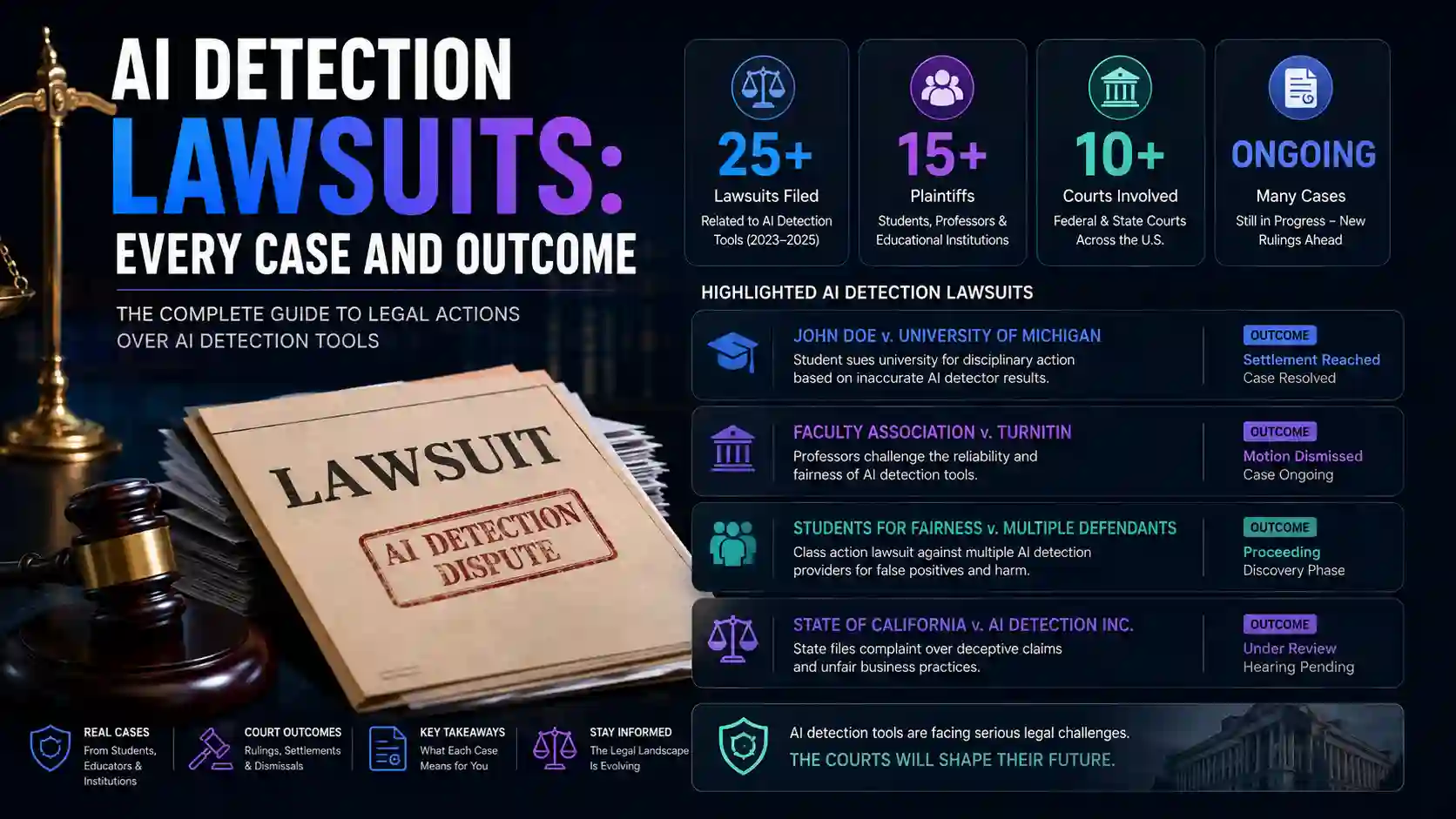
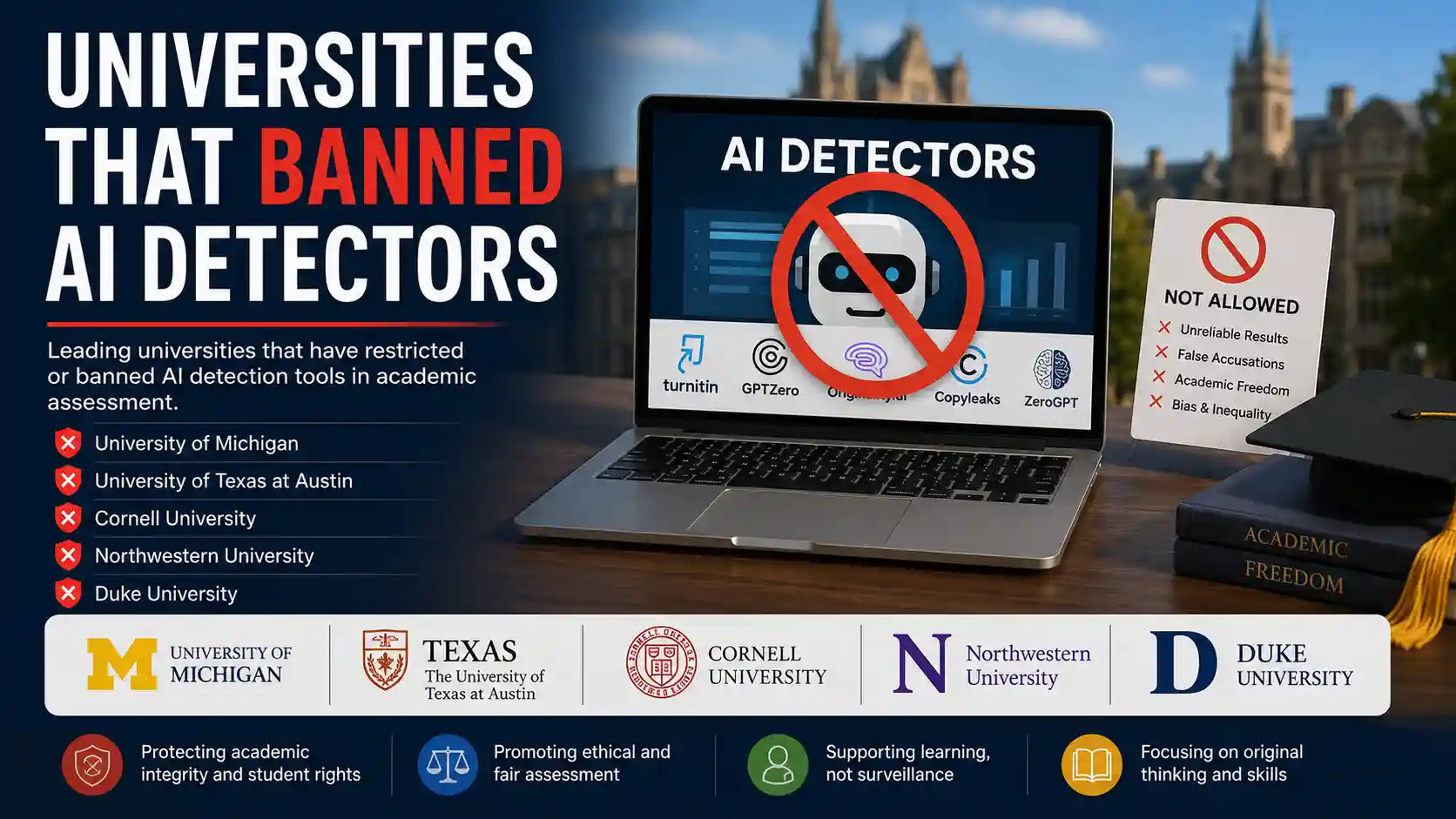
The spending trend is not one-directional. Many universities bought or piloted AI detection after ChatGPT arrived. Some then disabled, limited, or discouraged the tools after faculty raised concerns about reliability, legal defensibility, bias, and privacy. WIRED reported that Vanderbilt, Northwestern, Montclair State, and the University of Pittsburgh were among institutions that paused, disabled, or did not endorse AI detection in Turnitin-related workflows. For a broader roundup of schools that have restricted or banned AI detectors, see universities that banned AI detectors.
This does not mean universities are giving up on academic integrity. It means they are shifting from detector-first enforcement to process-based evidence: drafts, version history, oral defense, in-class writing, source logs, assignment design, and transparent AI-use policies. In practice, that often costs more faculty time but less legal risk.
The broader AI economy has the same accounting problem at a different scale: software, compute, infrastructure, energy, staff, and governance all sit behind the visible tool. For the physical-infrastructure side of AI growth, read AI data centers and the environment.
The New Policy Formula
- Do not use an AI score alone. Treat it as a signal, not proof.
- Require student process evidence. Drafts, prompts, outlines, citations, and version history are more useful than a single detector percentage.
- Publish AI-use rules by assignment. A course-level blanket ban is less useful than task-specific permission levels.
- Audit outcomes. Track who is flagged, who is charged, who wins appeals, and whether multilingual students are disproportionately affected.
- Negotiate renewals from evidence. If faculty are not using the AI module or cannot use it safely, the university should not pay premium pricing for it.
For Students: Make Your Writing Easier to Defend
WriteHuman can help polish your own writing so it sounds clear, natural, and less robotic. Use it ethically: keep drafts, understand every sentence, verify citations, and follow your course AI policy.
What Universities Can Fund Instead of More AI Detection
The most useful question for administrators is not “Should we buy an AI detector?” It is “What mix of tools, assessment design, faculty training, and student support produces the most trustworthy learning evidence?” A university can spend $150,000 on software and still have weak academic integrity if the assignments are easy to outsource and faculty have no time to review student process.
Some of the best alternatives are not anti-AI. They are AI-aware. They assume students have access to AI, then design assessment around reasoning, process, originality, and accountable explanation. That does not eliminate cheating, but it gives instructors more evidence than a probability score.
| Investment | Typical Cost Driver | Best Use | Tradeoff |
|---|---|---|---|
| Faculty assessment redesign grants | Stipends, course release, instructional design support | Replacing generic essays with process-based, oral, local, or project-specific assignments. | More durable than detection, but slower to roll out. |
| Writing center expansion | Tutors, graduate assistants, extended hours | Helping students write better before they reach for AI shortcuts. | Requires staffing and recurring budget. |
| AI literacy modules | Curriculum design, LMS content, workshops | Teaching acceptable AI use, citation of AI assistance, and verification habits. | Does not directly catch misconduct. |
| Version-history and authorship tools | Software licenses, privacy review, training | Showing how a document evolved rather than guessing from final text. | Can feel invasive if poorly governed. |
| Oral checks and defense interviews | Faculty time | High-stakes projects, capstones, graduate writing, suspicious cases. | Hard to scale across large general-education classes. |
Where WriteHuman Fits in the AI Detection Debate
AI detection spending creates a strange incentive. Universities pay vendors to flag machine-like text, students become anxious about sounding machine-like, and a new market emerges for tools that make drafts sound more human. That does not automatically make writing tools bad. The ethical question is how they are used.
WriteHuman is best understood as a revision assistant, not a misconduct shield. It can help students and writers smooth stiff phrasing, improve flow, and reduce generic wording. It should not be used to hide plagiarism, fabricated citations, or a paper a student cannot explain. In a detector-heavy environment, the safest writing strategy is not “beat the tool.” It is “own the process.”
Responsible Use
- Use it on your own draft, not on copied work.
- Keep version history and outlines.
- Verify facts, quotations, and citations manually.
- Disclose AI assistance when your course requires it.
Risky Use
- Using it to hide a fully AI-written assignment.
- Submitting text you cannot explain in a follow-up meeting.
- Masking fake sources or fabricated statistics.
- Ignoring a course rule that bans AI-assisted writing.
Polish Your Draft Before the Panic Starts
Use WriteHuman as part of a transparent writing workflow: draft, revise, verify, save versions, and submit with confidence.
What Universities Should Ask Before Renewing an AI Detector Contract
The smartest universities will not renew AI detection tools because they are scared of ChatGPT. They will renew only if the tool reduces real academic-integrity workload without creating a bigger appeal, equity, and trust problem. Procurement teams should ask for evidence that maps to their own campus workflow.
| Question | Why It Matters | Renewal Leverage |
|---|---|---|
| What is the AI-only add-on cost per student? | Separates the detector from the base plagiarism product. | Ask vendor to itemize the AI module. |
| How many faculty actively used the detector last term? | A paid feature with low use is a renewal target. | Negotiate based on actual adoption, not campus enrollment. |
| What is the appeal rate after AI flags? | A detector that creates many disputes may cost more than it saves. | Translate appeals into staff-hours and support cost. |
| Does the vendor allow local threshold settings? | One-size thresholds may not fit local policy. | Request configurable reporting and low-stakes labels. |
| Can the university disable AI detection while keeping similarity reports? | Some schools want plagiarism detection without AI accusations. | Separate module pricing and cancellation rights. |
| What data is retained and used for model improvement? | Student writing is sensitive intellectual work. | Demand clear storage, retention, and training-use terms. |
Frequently Asked Questions
How much do universities spend on AI detection tools?
Small colleges may spend a few thousand dollars per year for limited AI detection, while larger universities commonly fall in the tens of thousands to low hundreds of thousands per year once AI detection is bundled with plagiarism checking and LMS integration. Large systems can reach seven-figure totals over multi-year contracts.
How much does Turnitin AI detection cost per student?
Publicly reported Turnitin-related benchmarks show per-student pricing from about $1.79 to $6.50 depending on contract scope and negotiation. Some reports indicate AI detection can be priced as a separate upgrade at several dollars per student. Exact pricing varies because Turnitin is sold through institutional contracts rather than a public retail list.
Why is university AI detection pricing so inconsistent?
Pricing depends on enrollment size, contract length, whether the school buys plagiarism detection only or a larger originality suite, LMS integration needs, renewal timing, public-system leverage, and whether AI detection is itemized or bundled.
Do universities still use AI detectors in 2026?
Yes, many still do. But some universities have disabled or discouraged AI detectors because of reliability, privacy, and equity concerns. The trend is toward using detector output as a low-stakes signal rather than standalone proof of misconduct.
Are AI detection tools accurate enough for academic misconduct cases?
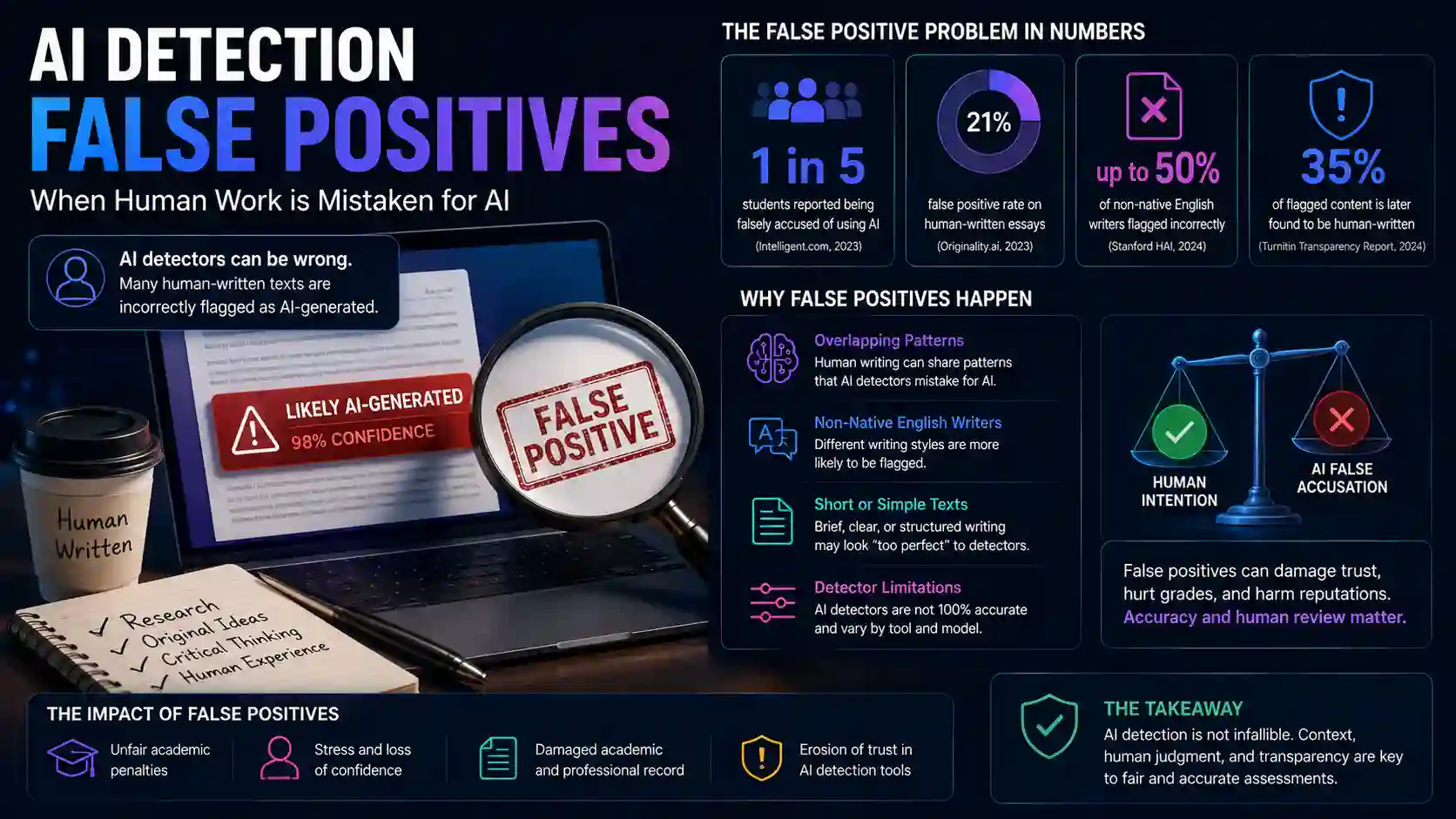
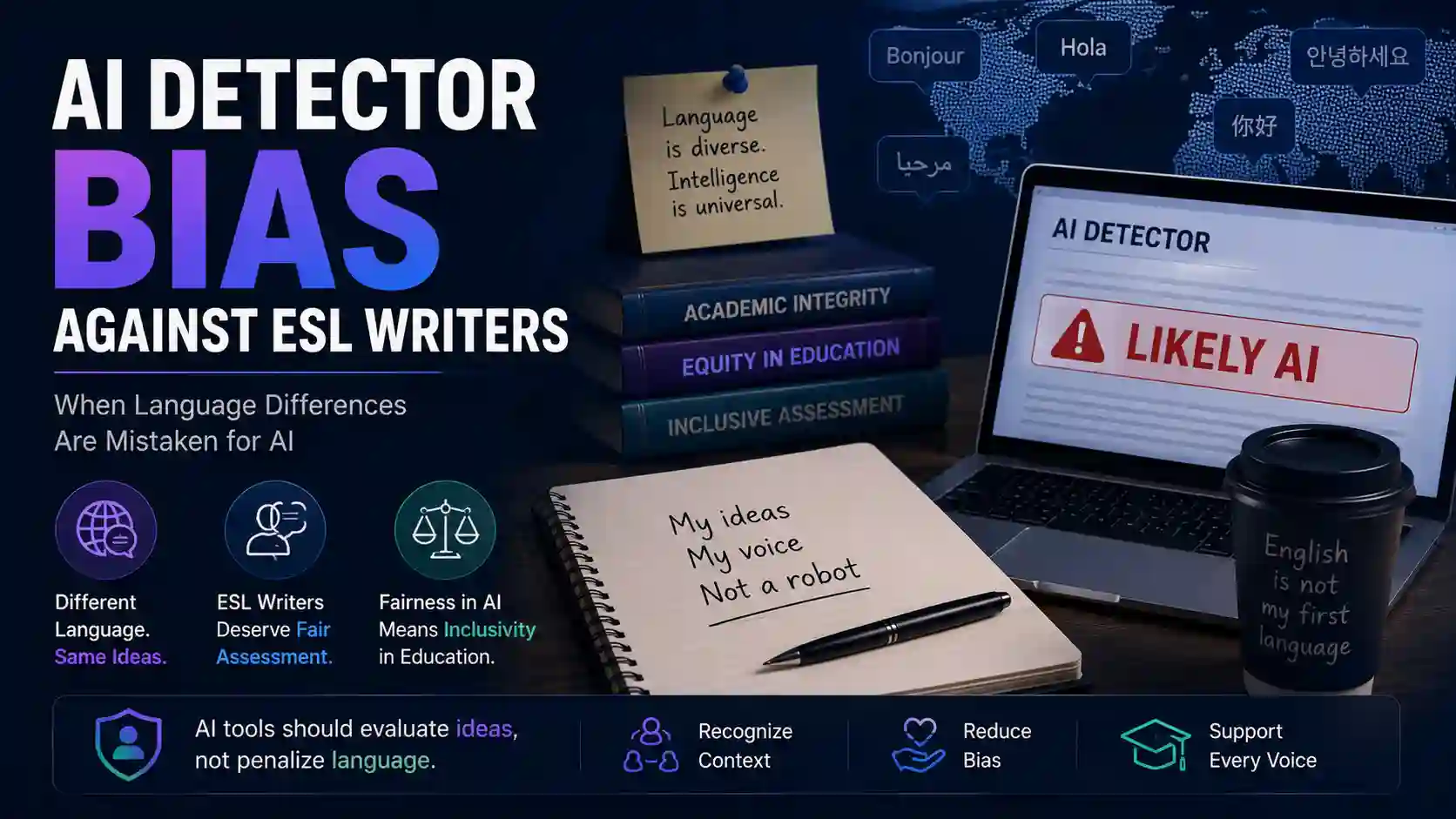
The research consensus is cautious. Some detectors can catch obvious AI-written text, but independent studies show accuracy drops with paraphrasing, short text, mixed human-AI writing, and non-native English writing. A detector score should not be the only evidence in a misconduct case.
Can WriteHuman help students avoid false flags?
WriteHuman can help make writing clearer and more natural, but students should use it ethically and in line with course rules. The strongest defense is a transparent writing process: drafts, outlines, notes, citations, version history, and the ability to explain the work.
Final Verdict: Universities Are Buying Risk Management, Not Certainty
Universities spend on AI detection because they want control in a moment when student writing, AI tools, and academic-integrity rules are all moving at once. But the invoice buys a probability signal, not certainty. A detector can support a conversation. It cannot replace evidence, context, or judgment.
The best 2026 strategy is not unlimited AI-detection spending. It is selective spending: negotiate hard, separate AI add-on pricing, audit false positives, protect multilingual students, redesign assessments, and use detection only where it improves learning rather than turning every assignment into a surveillance event.
Try WriteHuman for ethical writing revision, especially if your goal is clearer human expression rather than hiding how the work was made.
Sources and Further Reading
The sources are grouped by topic. Click each accordion to view the full list.
View spending, procurement, and vendor scale sources
View AI detector accuracy and false-positive sources
- Weber-Wulff et al.: Testing of Detection Tools for AI-Generated Text
- Liang et al.: GPT detectors are biased against non-native English writers
- Perkins et al.: Game of Tones, faculty detection of GPT-4 generated content
- Dik et al.: Assessing GPTZero’s accuracy in identifying AI vs. human-written essays
- Artificial intelligence content detection overview and accuracy concerns
View university policy-shift and reporting sources
- WIRED reporting on universities disabling or not endorsing Turnitin AI detection
- WIRED reporting on Montclair State, Vanderbilt, and Northwestern pausing or ditching tools
- Washington Post opinion: Why honest students fear AI detectors
- Tom’s Guide: Indiana University’s Kelley School of Business AI detector ban
- The Guardian: inside the university AI cheating crisis