Are Anti-Detect Browsers Safe and Legal?
The software is legal, but what you do with it might not be. We break down the difference between breaking the law and breaking Terms of Service, malware risks, and how to stay compliant.
Are Anti-Detect Browsers Safe and Legal?
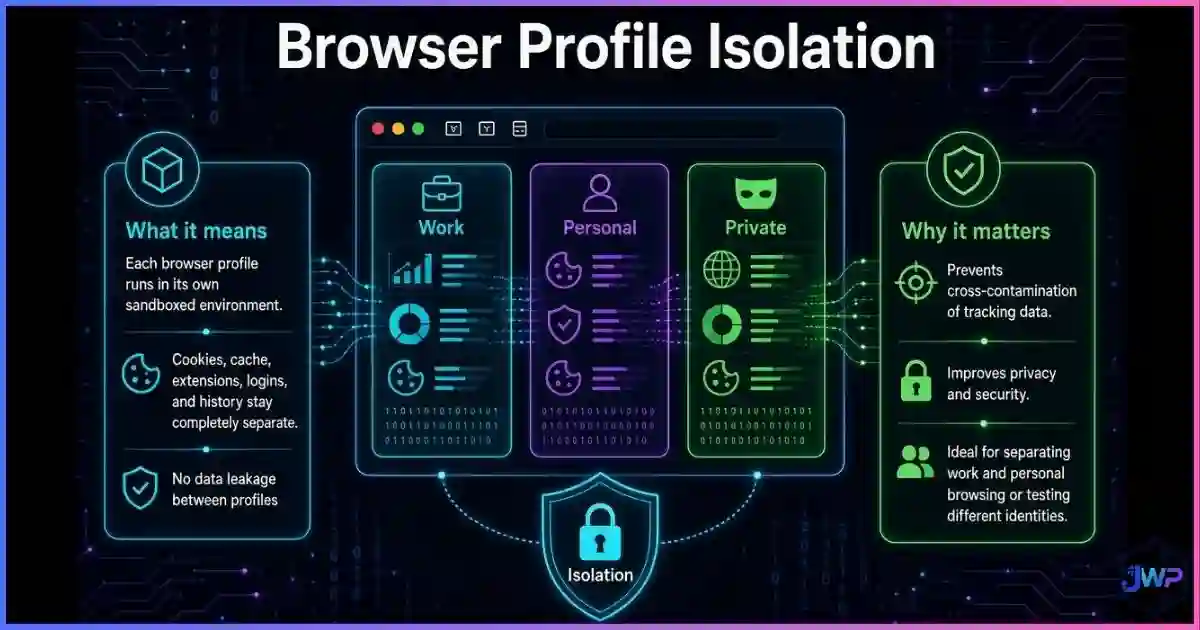
Yes, the software itself is 100% legal. An anti-detect browser is simply a privacy tool that manages browser profile isolation and spoofs hardware fingerprints. However, how you use it determines whether you cross into illegal territory or simply violate a platform’s Terms of Service (TOS). Multi-accounting for affiliate marketing or e-commerce is generally a TOS violation (a civil contract breach), not a crime. But using the tool for identity theft, financial fraud, or bypassing legal sanctions is illegal. Safety depends entirely on the provider: reputable tools like Incogniton are secure, but cracked or free versions found on forums often contain malware.
of all web traffic was automated (bots) in 2025, surpassing human traffic for the first time (Imperva).
of total internet traffic is classified as “bad bots” (scrapers, scalpers, fraud) according to Imperva’s 2025 report.
federal laws in the US or EU explicitly ban the possession or use of anti-detect browser software.
Circuit Court ruled in hiQ v. LinkedIn that scraping public data does not violate the Computer Fraud and Abuse Act (CFAA).
Table of Contents
The Legality: Criminal Law vs. Terms of Service
The most common question users ask is whether anti-detect browsers actually work without landing them in legal trouble. To answer this, you must separate criminal law (statutes enforced by the government) from contract law (Terms of Service agreements between you and a private company).
1. Criminal Law (The CFAA and Fraud Statutes)
There is no law in the United States, the European Union, or the UK that makes it illegal to download, install, or use an anti-detect browser. The software is classified as a privacy and security tool, similar to a VPN or the Tor Browser. You only break criminal law if you use the tool to commit a crime, such as:
- Identity Theft: Using stolen PII (Personally Identifiable Information) to create fake profiles.
- Financial Fraud: Using spoofed profiles to commit credit card fraud, money laundering, or bonus abuse.
- Unauthorized Access: Hacking into systems or bypassing authentication barriers you do not have permission to access.
2. Contract Law (Terms of Service Violations)
This is where 95% of users operate. Platforms like Facebook, Amazon, TikTok, and betting exchanges explicitly forbid “multi-accounting” or “automated access” in their Terms of Service (TOS). Violating a TOS is a breach of contract, not a crime.
| Action | Legal Status | Platform Consequence |
|---|---|---|
| Managing 5 client Facebook Ad accounts | Legal (but violates Meta’s “one person, one account” TOS) | Account bans, ad account restrictions, withheld ad spend. |
| Running 3 Amazon Seller accounts | Legal (but violates Amazon’s Seller Code of Conduct) | Store suspension, frozen funds, permanent ban. |
| Scraping public pricing data | Legal (per hiQ v. LinkedIn) | IP blocks, CAPTCHAs, cease-and-desist letters. |
| Using stolen IDs to open bank accounts | Illegal (Identity Theft / Fraud) | Criminal prosecution, prison time. |
Bot Traffic & Enforcement Charts
Because anti-detect browsers are frequently used for automation and multi-accounting, they operate in an environment where platforms are actively hunting for non-human behavior. The data below illustrates the scale of the bot problem that platforms are fighting.
Internet Traffic Composition (Imperva 2025)
Source: Imperva 2025 Bad Bot Report. Automated traffic reached 53% of all web traffic in 2025, surpassing human traffic for the first time. Because “bad bots” make up 37% of the internet, platforms have invested heavily in fingerprinting and behavioral analysis to block them.
Risk of Legal vs. Platform Action by Use Case
Editorial scoring based on legal precedents and platform enforcement patterns. Managing client accounts carries zero criminal risk but high platform risk if the platform detects shared hardware. Bonus abuse (using fake IDs to claim crypto airdrops or betting bonuses) crosses into wire fraud territory.
Is Web Scraping with an Anti-Detect Browser Legal?
Web scraping is one of the most common uses for proxies and anti-detect tools. The legal landscape in the United States was largely defined by the landmark case hiQ Labs, Inc. v. LinkedIn Corp.
- The Ruling: The Ninth Circuit Court of Appeals ruled that scraping publicly available data does not violate the Computer Fraud and Abuse Act (CFAA) [[20]].
- The Caveat: This protection applies to data that is visible to anyone without logging in. Scraping behind a login wall (where you have agreed to a TOS forbidding scraping) or bypassing technical IP blocks can still lead to civil liability for breach of contract or trespass to chattels [[22]].
In the EU, the GDPR and the Database Directive add layers of complexity regarding personal data extraction and copyright. If you are scraping for commercial intelligence, using an anti-detect browser to rotate fingerprints and avoid IP bans is standard practice and generally legal, provided you are not harvesting private PII or violating copyright.
Are Anti-Detect Browsers Safe from Malware?
When users ask “is it safe?”, they are often asking about cybersecurity, not legality. The safety of an anti-detect browser depends entirely on the vendor.
| Vendor Tier | Examples | Safety Profile |
|---|---|---|
| Tier 1: Reputable Commercial | Incogniton, Multilogin, GoLogin, AdsPower | Very Safe. These are registered companies with privacy policies, encrypted local databases, and regular security audits. They do not sell your session data. |
| Tier 2: Open Source / Niche | Undetectable (some versions), community forks | Moderate. Safe if you audit the code, but lack enterprise support and may have unpatched browser engine vulnerabilities. |
| Tier 3: “Cracked” or Free Forum Tools | Random GitHub repos, Telegram “cracked” versions | Extremely Dangerous. These frequently contain keyloggers, clipper malware (steals crypto), and session hijackers. Using them guarantees your accounts will be stolen. |
Legitimate vs. Malicious Use Cases
Understanding what anti-detect browsers can hide helps explain why they are used by both Fortune 500 security teams and underground fraud rings. The tool is neutral; the intent is what matters.
Legitimate & Legal Use Cases
- Cybersecurity & QA: Testing web applications across different geolocations and device fingerprints.
- Ad Verification: Brands checking if their ads are being displayed correctly and not falling victim to ad fraud.
- Agencies: Managing social media and ad accounts for 50 different clients without getting flagged for “suspicious login locations.”
- Privacy Advocates: Journalists and researchers avoiding cross-site tracking and surveillance capitalism.
Gray Area (TOS Violations)
- E-commerce Arbitrage: Running multiple Amazon or eBay accounts to dominate a niche (violates platform TOS, risks bans).
- Sneaker/Ticket Botting: Using automation to buy limited inventory (violates TOS, often blocked by Akamai/Cloudflare).
- Sports Betting Arbitrage: Maintaining multiple accounts on betting exchanges to avoid being “gubbed” or limited.
Illegal Use Cases
- Carding: Testing stolen credit card numbers on e-commerce sites.
- Identity Theft: Creating synthetic identities to open fraudulent bank or credit accounts.
- Review Manipulation: Posting fake 5-star reviews from spoofed devices to manipulate product rankings.
Use a tool that respects your privacy and your business.
Incogniton provides enterprise-grade profile isolation and local encryption. Your cookies, session data, and fingerprints stay on your machine, keeping you safe from both platform bans and vendor snooping.
Try Incogniton Free →Affiliate link — we may earn a commission at no extra cost to you.
How to Stay Safe and Compliant
If you are using an anti-detect browser for legitimate business operations (agencies, scraping, QA), follow these rules to minimize risk:
- Never use stolen PII: Always use real, verifiable identities (your own, your employees’, or your clients’ with permission) when creating accounts. Synthetic identities cross the line into fraud.
- Use Residential Proxies: Datacenter proxies are easily flagged as “bot traffic.” High-quality residential proxies make your spoofed profiles look like legitimate home users.
- Respect the “No Scraping” Header: If a site explicitly forbids scraping in its
robots.txtor TOS, and you bypass it, you open yourself up to civil litigation. - Keep Business and Personal Separate: Never log into your personal bank or primary email inside an anti-detect profile used for high-risk multi-accounting.
- Choose Transparent Vendors: Read the privacy policy of your anti-detect browser. Ensure they do not claim ownership of your profile data or session cookies.
The Compliance Checklist
- Verify that your anti-detect browser vendor uses local encryption or zero-knowledge cloud sync.
- Ensure you are using legitimate, owned identities for account creation (no synthetic/fake IDs).
- Confirm that your use case does not violate the Computer Fraud and Abuse Act (CFAA) or local hacking laws.
- Accept that platform TOS violations carry the risk of account bans and frozen funds, not criminal charges.
- Pair your anti-detect browser with high-quality residential or mobile proxies to avoid “bot” classification.
- Regularly audit your profiles to ensure no cross-contamination between high-risk and low-risk accounts.
Build a compliant, multi-account infrastructure.
Incogniton gives you the isolation you need to run legitimate agency and e-commerce operations without the risk of data leaks or vendor lock-in.
Get Incogniton →Affiliate link — we may earn a commission at no extra cost to you.
Frequently Asked Questions
Is it illegal to use an anti-detect browser?
Does multi-accounting break the law?
Is web scraping with an anti-detect browser legal?
Are anti-detect browsers safe from malware?
Can platforms sue me for using an anti-detect browser?
Sources and Research Notes
Sources & Research Notes (click to expand)
The legal and security analysis in this guide is based on federal court rulings, cybersecurity threat reports, and platform enforcement documentation.
- Imperva (2025). “Bad Bot Report 2025: Bots in the Agentic Age.” — Automated traffic reached 53% of all web traffic; bad bots account for 37%. imperva.com
- United States Court of Appeals, Ninth Circuit (2022). “hiQ Labs, Inc. v. LinkedIn Corporation.” — Ruling that scraping public data does not violate the CFAA. law.justia.com
- Morgan Lewis (2022). “LinkedIn v. hiQ: Landmark Data Scraping Suit Provides Guidance.” — Analysis of CFAA liability vs. breach of contract in scraping. morganlewis.com
- SEON.io (2024). “Multi-Accounting | Who is Affected & How to Stop It.” — Distinction between criminal identity theft and TOS-violating multi-accounting. seon.io
- Sumsub (2024). “Combating Multi-Accounting.” — Analysis of when multi-accounting crosses into fraud and money laundering. sumsub.com
- Electronic Frontier Foundation (EFF). “Panopticlick & Cover Your Tracks.” — Research on browser fingerprinting and tracking vectors used by platforms to detect spoofed profiles.