ChatGPT Hallucination Statistics: Every Published Number
How often does ChatGPT actually make things up? This is a single, sourced reference for every major published hallucination statistic: OpenAI’s own system-card numbers, the Vectara and SimpleQA benchmarks, Stanford’s legal-citation research, medical reference audits, newsroom accuracy studies, and software package hallucination data. Every figure below is attributed to its original benchmark, paper, or publisher so you can verify it yourself.
Quick Answer
There is no single “ChatGPT hallucination rate,” and any article that gives you one number without naming the benchmark is oversimplifying. The honest picture, based on every major published test, looks like this: on grounded summarization tasks where the model is handed a document and asked to summarize only what’s in it, top models now hallucinate in roughly 1.5% to 10% of outputs. On open factual recall without web search, where the model has to answer from memory alone, OpenAI’s own GPT-5 system card reported a hallucination rate around 47% on the SimpleQA benchmark. In specialized domains such as law, medicine, and academic citation, published rates climb even higher: 58% to 88% for legal citations from general-purpose models, and 47% to 69% for fabricated academic references in several peer-reviewed audits.
The single most consistent finding across every study below is that grounding beats guessing. Every mitigation that forces a model to check a real source before answering, retrieval-augmented generation, web search access, or citation-graph verification, cuts hallucination rates by 75% to 90%+ in the studies that measured it. Every mitigation that only tells the model to “be careful” through prompting cuts rates by a much smaller 5% to 15%.
Publishing AI-Assisted Work? Verify Before You Ship It
The statistics on this page show that AI-generated drafts, summaries, and citations frequently need human verification before they’re safe to publish. WriteHuman helps writers revise AI-assisted drafts for natural, readable prose so a verification pass doesn’t have to feel like starting over, provided your use case and any applicable policy allow AI-assisted editing.
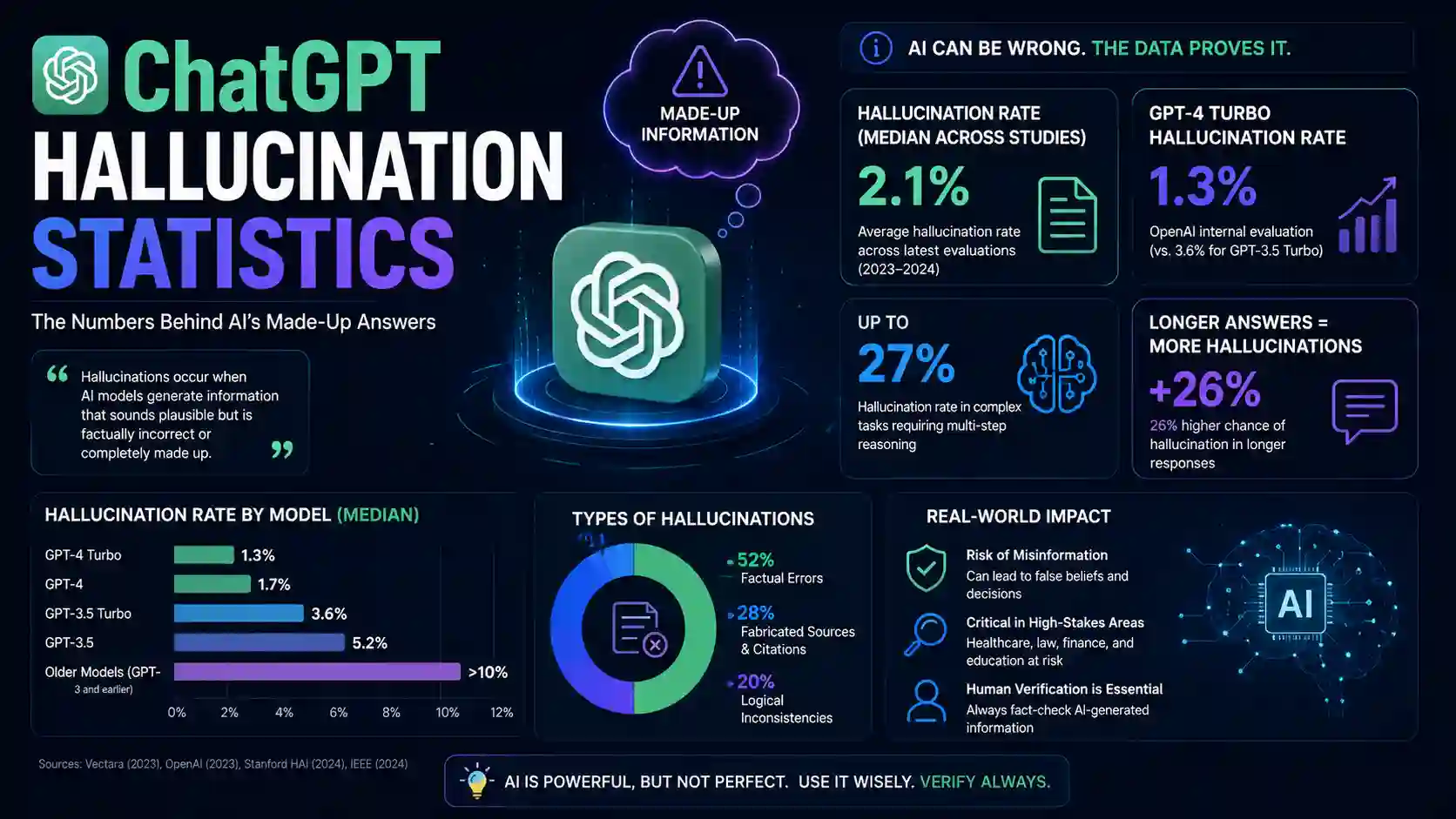
Table of Contents
What This Page Answers
People land on a page like this wanting one of a few things: the current headline hallucination rate for ChatGPT and its rivals, a comparison of hallucination rates across GPT, Claude, Gemini, and Grok, evidence for a specific domain like law or medicine, or citable numbers for a research paper, policy brief, or news article. This page is built to answer all of those, with every statistic traced back to its original source.
One warning up front: hallucination rate is not a fixed property of a model the way a parameter count is. The same model can score under 2% on one benchmark and over 45% on another, depending on whether it’s summarizing a document it can see or answering from memory, whether web search is enabled, and how strictly the benchmark defines a hallucination. Any single “X% hallucination rate” headline you see elsewhere is almost certainly describing one specific benchmark, not a universal truth about the model.
How This Page Was Built
Sourcing Rules
- Primary sources first: vendor system cards, peer-reviewed papers, and named benchmark leaderboards are weighted above secondary blog summaries wherever both exist for the same figure.
- Every number is labeled with its benchmark or study so figures are never presented as a single universal hallucination rate.
- Self-reported vendor numbers are marked as self-reported. Independent academic benchmarks are marked separately. The two are not directly comparable and this page does not blend them into one score.
- Numbers change fast. Model releases in 2026 have shipped on a roughly monthly cadence, and each new release typically reports new benchmark numbers. This page reflects the most recent publicly reported figures as of August 2026 and will read as a historical snapshot for older models.
Because benchmark methodologies differ so much, this page deliberately keeps benchmark families separate rather than manufacturing a single cross-benchmark ranking. A model that leads on grounded summarization is not automatically the model with the lowest hallucination rate on open factual recall, and several 2026 flagship releases demonstrate exactly that split.
Key Findings Across Every Study Reviewed
The clearest pattern across every domain studied is a split between grounded and ungrounded tasks. When a model is given a source document and asked to stay faithful to it, the best current systems hallucinate in the low single digits. When a model has to answer purely from memorized training data, with no document or web search to check against, hallucination rates jump into the double digits and frequently exceed 40%. That single distinction explains most of the apparent contradictions between different “hallucination rate” headlines you may have seen.
The second pattern is domain risk. Specialized, high-stakes domains, law, medicine, and academic citation, consistently show higher hallucination rates than general benchmarks. That is the opposite of what many users assume, since these are exactly the domains where a fabricated case citation or a fake journal reference does the most damage. For the education-policy side of this same problem, see our companion review of AI detection policies at 50 leading U.S. universities, and for how fabricated citations feed into misconduct cases, see our AI academic misconduct statistics from every published survey.
Charts: Hallucination Rates by Model and Task
Grounded Summarization: Vectara Leaderboard (2026)
Hallucination rate on Vectara’s HHEM-based grounded summarization benchmark, where lower is better. This is the narrowest, most favorable task type for LLMs, since the model only has to stay faithful to a document it can see rather than recall facts from memory.
Same Models, Two Very Different Tasks
Grounded summarization rates come from Vectara’s leaderboard; open-recall rates come from SimpleQA-style factual-question testing reported in OpenAI’s and third-party 2026 evaluations. The gap illustrates why “hallucination rate” needs a task label attached.
Legal Query Hallucination Rates by Tool Type
General-purpose LLM figures and specialized legal-research-tool figures from Stanford RegLab / Institute for Human-Centered AI research (Dahl et al. and Magesh et al.).
Academic Citation Fabrication Across Six Published Studies
Each bar is one peer-reviewed audit of ChatGPT-generated bibliographic citations, compiled in Walters & Wilder’s cross-study analysis. Model versions and disciplines vary by study; see the master table for details.
Master Table: Every Benchmark Number in One Place
This table consolidates every model-level hallucination figure referenced on this page. “Self-reported” means the number comes from the model vendor’s own system card or blog post. “Independent” means it comes from a third-party academic benchmark or research team with no commercial stake in the result.
| Model | Benchmark | Reported Rate | Task Type | Source Type |
|---|---|---|---|---|
| GPT-5 (gpt-5-main) | SimpleQA, no web search | 47% | Open recall | Self-reported |
| GPT-5.5 | SimpleQA, no web search | 47% | Open recall | Self-reported |
| GPT-5.5 | SimpleQA, web search enabled | 9.6% | Grounded recall | Self-reported |
| GPT-5.5 | AA-Omniscience Index | 86% | Broad factuality | Independent |
| GPT-4.5 | SimpleQA, no web search | 37.1% | Open recall | Self-reported |
| OpenAI o1 / o3 (reasoning) | Internal factuality evals | 16–51% | Mixed, task-dependent | Self-reported |
| GPT-4o | HealthBench, thinking mode | 1.6% | Grounded medical QA | Self-reported |
| GPT-4 | Vectara leaderboard (2023 dataset) | 3.0% | Grounded summarization | Independent |
| GPT-4o | Vectara leaderboard | 1.5% | Grounded summarization | Independent |
| GPT-4o | HalluLens (Meta, 2025) | 1.5% | Precise open QA | Independent |
| GPT-4.1 | Vectara leaderboard | 2.0% | Grounded summarization | Independent |
| GPT-5.4 nano | Vectara leaderboard (2026) | 3.1% | Grounded summarization | Independent |
| GPT-5 (production, browsing on) | ChatGPT production traffic sample | 9.6% | Real-world claim accuracy | Independent |
| GPT-3.5-Turbo | FaithBench summarization | ~37.7% fully consistent | Grounded summarization | Independent |
| GPT-3 (davinci) | TruthfulQA | 14.1% truthful | Adversarial factual QA | Independent |
| Gemini-2.0-Flash | Vectara leaderboard | 0.7% | Grounded summarization | Independent |
| Gemini-2.0-Flash (GA) | SimpleQA | 29.9% accuracy | Open recall | Independent |
| Gemini 2.5 Flash-Lite | Vectara leaderboard (2026) | 3.3% | Grounded summarization | Independent |
| Gemini 3 Pro | Vectara leaderboard (2026) | 13.6% | Grounded summarization | Independent |
| Gemini 3 Pro | FACTS Grounding Index | 68.8 | Multi-dimensional factuality | Independent |
| Claude 3.5 Sonnet | HalluLens (Meta, 2025) | 4.6% | Precise open QA | Independent |
| Claude Sonnet 4.5 | Vectara leaderboard | >10% | Grounded summarization | Independent |
| Claude Haiku 4.5 | Vectara leaderboard (2026) | 9.8% | Grounded summarization | Independent |
| Claude Opus 4.5 / 4.6 | Vectara leaderboard (2026) | 10.1–12.2% | Grounded summarization | Independent |
| Llama-3.1-405B-Instruct | HalluLens (Meta, 2025) | 3.9% | Precise open QA | Independent |
| Llama-3.3-70B-Instruct | HalluLens (Meta, 2025) | 4.0% | Precise open QA | Independent |
| Llama-3.1-8B-Instruct | HalluLens (Meta, 2025) | 5.4% | Precise open QA | Independent |
| Llama 2-70B | Legal query hallucination (Dahl et al.) | 88% | Specific legal queries | Independent |
| Grok 3 | Vectara leaderboard (2026) | 5.8% | Grounded summarization | Independent |
| Grok 3 | Fake medical reference test (9-chatbot study) | worst tested | Medical citations | Independent |
Rates for late-2025 and 2026 models are drawn from vendor system cards and third-party benchmark aggregators; because release cadence has been roughly monthly, treat any single number as a snapshot rather than a permanent ranking. See the Sources section for direct links to every underlying benchmark and paper.
SimpleQA, TruthfulQA, and the Accuracy-vs-Hallucination Tradeoff
SimpleQA is a benchmark of short, fact-seeking questions with a single verifiable answer, an event date, a birthplace, a publication year. It is designed to be hard to game with retrieval tricks and easy to score automatically. On this benchmark, without web search enabled, OpenAI’s own GPT-5 system-card data shows a 47% hallucination rate against 46% accuracy, meaning the model is roughly as likely to confidently invent an answer as to get one right. GPT-4.5 posted a 37.1% hallucination rate on the same test.
OpenAI’s own explanation of this pattern, published in its research on why language models hallucinate, is that older reasoning models like o4-mini can post a slightly higher raw accuracy score than newer models while producing a much higher hallucination rate, because the older model guesses more often instead of abstaining. A model that answers every question will look impressive on an accuracy leaderboard while quietly generating far more fabrications than a model that says “I don’t know” when it’s genuinely uncertain.
| Model | Benchmark | Result | Interpretation |
|---|---|---|---|
| GPT-3 (davinci) | TruthfulQA | 14.1% truthful | Baseline for adversarial factual questions designed to invite misleading answers |
| GPT-3.5 vs GPT-4 | OpenAI internal adversarial factuality evals | +19 percentage points | GPT-4’s own technical report shows a 19-point gain over GPT-3.5 across nine internal factuality evals |
| GPT-4 vs GPT-3.5 | OpenAI internal evaluations | 40% more factual | OpenAI’s public GPT-4 launch materials state GPT-4 is 40% more likely to produce factual responses than GPT-3.5 |
| GPT-4o | HalluLens PreciseWikiQA | 1.5% | Best-performing model on this precise-answer open QA test |
| GPT-4o | HalluLens, “when not refusing” | ~45% | Rate climbs sharply once refusal is excluded, showing how much abstention lowers headline hallucination figures |
The gap between GPT-4’s 3% Vectara summarization rate and GPT-5’s 47% SimpleQA rate is not a contradiction; it is two different tasks. Summarization gives the model a document to stay faithful to. SimpleQA asks it to recall a fact with nothing to check against. That distinction should be the first thing any reader checks before quoting a single hallucination percentage.
Legal Citation Hallucinations
Legal research is the domain with the most rigorous, most cited hallucination research to date, largely because of a string of sanctioned court filings that began with the 2023 Mata v. Avianca case, where a submitted brief cited entirely fictitious judicial decisions generated by ChatGPT. For a full accounting of that case and every subsequent sanctioned filing, see our tracker of AI detection lawsuits and their outcomes.
Stanford RegLab and the Stanford Institute for Human-Centered AI ran the two most-cited empirical studies. The first, led by Dahl and colleagues, tested general-purpose LLMs including GPT-4 and Llama 2 across roughly 15,000 federal court queries and found hallucination rates ranging from 69% to 88%, with GPT-4 at the lower end near 58% in the underlying citation analysis and Llama 2 at the higher end near 88%. The researchers also found hallucination rates were systematically higher for lower federal courts than for the U.S. Supreme Court, and higher for less-prominent cases, meaning the tail of American case law is the least reliably represented.
The second Stanford study, led by Magesh and colleagues, tested commercial legal AI research tools, Lexis+ AI, Ask Practical Law AI, and Westlaw AI-Assisted Research, that use retrieval-augmented generation against real case databases specifically to avoid this problem. Even these purpose-built tools hallucinated in 17% to 33% of tested queries, well above the “hallucination-free” language some vendors had used in marketing at the time. Accuracy also varied widely between products, with one tool answering accurately 65% of the time and another only 18% of the time on the same query set.
| Tool Category | Hallucination Rate | Study |
|---|---|---|
| General-purpose LLM (ChatGPT / GPT-4, legal queries) | 58–88% | Dahl et al., Stanford RegLab (2024) |
| General-purpose LLM, broad legal-query sample | up to 82% | Legal Dive coverage of Stanford RegLab findings |
| Specialized legal-research AI (RAG-based) | 17–34% | Magesh et al., Stanford RegLab / HAI (2024) |
| Academic citation fabrication in legal writing tools | 17% | Stanford RegLab preprint, follow-up testing |
Because these numbers directly inform institutional policy, they connect to two of our companion reports: how universities are spending on AI detection tools in response to reliability concerns, and how those concerns have led some institutions toward banning AI detectors outright rather than trusting automated verdicts built on the same underlying technology that hallucinates.
Medical and Healthcare Hallucinations
Medical hallucination research splits into two categories: fabricated citations in AI-written medical content, and fabricated clinical facts inside AI-generated answers to health questions. Both are well studied and both show consistently elevated rates compared with general-purpose benchmarks.
| Study | What Was Tested | Result |
|---|---|---|
| Mount Sinai clinical vignette study | 6 AI models, 300 physician-validated notes with planted fake details | 50–82% hallucination, varying by model and prompt wording |
| Nine-chatbot fake medical reference test (2026) | 9 AI chatbots asked for medical references | 0–34% hallucination; 5 of 9 models produced zero fabricated references |
| High Rates of Fabricated References study | 115 references across 30 ChatGPT-3.5 medical papers | 47% fabricated, 46% authentic but inaccurate, only 7% fully correct |
| Alkaissi & McFarlane (2023) | 5 references on one medical topic | 100% fabricated titles, mismatched PubMed IDs on retry |
| Systematic review study, rotator cuff disease | ChatGPT and Bard generating references for a systematic review | >25% hallucinated references |
| GPT-4o mental health citation study | Citations across depression, binge eating disorder, body dysmorphic disorder | 6–29% fabricated, depending on topic familiarity |
| GPT-4o HealthBench (thinking mode) | OpenAI’s own clinical-reasoning benchmark | 1.6%, one of the best medical scores recorded |
The mental health citation study is worth a closer look because it shows how topic familiarity, not model version, is often the strongest predictor of fabrication risk. For well-studied conditions like major depressive disorder, GPT-4o fabricated only 6% of citations, with 64% of the remaining “real” citations fully accurate. For less-studied conditions like binge eating disorder and body dysmorphic disorder, fabrication rates jumped to 28% and 29% respectively, and accuracy among the real citations fell as low as 29%. Newer model versions did not clearly resolve this gap, suggesting the underlying limitation is training-data density on a topic, not just raw model capability.
Academic Citation Fabrication
The most widely cited cross-study analysis, by Walters and Wilder, pooled six separate peer-reviewed audits of ChatGPT-generated bibliographic citations across medicine, geography, and radiology. Citation fabrication rates in the individual studies ranged from 17% to 94%, with a pooled rate of 51% fabricated across all 732 citations reviewed.
| Study | Model | Discipline | Fabrication Rate |
|---|---|---|---|
| Day | GPT-3.5 | Geography | 94% |
| Gravel et al. | GPT-3.5 | Medicine | 69% |
| Wagner & Ertl-Wagner | GPT-3 | Radiology | 64% |
| Hueber & Kleyer | GPT-4 | Medicine | 58% |
| Bhattacharyya et al. | GPT-3.5 | Medicine | 47% |
| Athaluri et al. | GPT-3 | Medicine | 17% (up to 23% including books/websites) |
Broader testing on GPT-3.5 vs. GPT-4 by the same research group found the newer model fabricated 18% of citations against 55% for GPT-3.5, and produced substantive errors, wrong volume, page, or issue numbers, in 24% of its real citations against 43% for GPT-3.5. A related DOI-specific analysis found that hallucinated DOIs were far more common in the humanities (up to 89.4%) than the natural sciences (about 29.1% invalid), reinforcing the same topic-density pattern seen in the medical citation research above.
These figures sit directly behind the growing concern over AI-generated research papers, tracked in our 2026 statistics roundup, and they are a core driver of the broader concerns documented in our academic misconduct statistics from every published survey. A fabricated citation is not just a factual error, in an academic submission it can constitute misconduct in its own right, independent of any AI-detector verdict.
Journalism and News Accuracy
The largest public-interest study of AI hallucination in news came from the European Broadcasting Union and the BBC in October 2025. Twenty-two public service media organizations across 18 countries, working in 14 languages, had professional journalists evaluate more than 3,000 AI assistant responses from ChatGPT, Copilot, Gemini, and Perplexity against news-specific accuracy, sourcing, and fact-versus-opinion criteria.
| Metric | Result |
|---|---|
| Responses with at least one significant issue | 45% |
| Responses with any problem, including minor | 81% |
| Responses with significant sourcing errors | 31% |
| Responses with major accuracy issues, incl. hallucinated details | 20% |
| Gemini responses with significant sourcing issues | 72%, vs. under 25% for other assistants |
| Earlier BBC-only study (Feb 2025), BBC-specific queries | 51% had significant issues |
| UK adults who say a factual error would hurt their trust in AI news | 84% |
A separate academic analysis of AI-generated content in American newspapers, comparing 100 articles flagged as AI-generated against 100 human-written articles, found AI-labeled articles were 8.2 times more likely to contain at least one hallucinated claim, with rates of 26% to 41% depending on how a “hallucination” was scored, compared with just 5% for human-written articles. Typical errors included fabricated quotes, incorrect statistics, and misdated events, exactly the category of error a reader has no easy way to catch without independently verifying the underlying facts.
Software Package Hallucinations
Hallucination isn’t limited to prose. A 2025 USENIX Security study generated 576,000 code samples across 16 popular code-generating LLMs and two languages, Python and JavaScript, then checked every recommended software package against real package repositories. The average hallucination rate was 5.2% for commercial models and 21.7% for open-source models, for an overall average around 19.7%, and the researchers catalogued 205,474 unique hallucinated package names across the dataset.
| Model Category | Hallucinated Package Rate |
|---|---|
| Commercial models (GPT-series and similar) | 5.2% |
| Open-source models | 21.7% |
| Overall average across all 16 models tested | 19.7% |
| Best result after RAG + fine-tuning mitigation | under 3% |
This matters beyond code quality: researchers flagged “package confusion” as a genuine supply-chain attack vector, since a hallucinated package name is a prediction attackers can pre-register with real, malicious code before a developer downloads it. GPT-family commercial models were found roughly four times less likely to hallucinate packages than open-source alternatives, but the researchers noted that even a hallucination rate of a fraction of a percent, at the scale of tens of millions of daily code completions, still produces thousands of fictitious packages every day.
Why ChatGPT Hallucinates
OpenAI published its own explanation of the root cause in 2025, and the argument is more about incentives than about a technical bug. Most benchmarks are scored the way a multiple-choice exam is scored: a correct answer earns points, a wrong answer earns nothing, and a blank answer also earns nothing. Under that scoring system, a model that always guesses will out-score a model that says “I don’t know” whenever it should, because guessing has a positive expected value even when it’s frequently wrong.
A second driver is task type, covered throughout this page: grounded tasks with a document or search results to check against give the model something to be faithful to, while open recall tasks depend entirely on statistically likely-sounding completions drawn from training data, with no mechanism to verify the output before it’s generated. A third driver, seen clearly in the medical and academic citation research, is topic density: well-represented topics in training data produce far fewer fabrications than niche or specialized ones, even from the same model on the same day.
What Actually Reduces Hallucination Rates
Across every mitigation study reviewed for this page, one architectural choice consistently outperforms every prompting trick: grounding the model’s output in a real, retrievable source at generation time.
Retrieval Grounding (RAG)
Connecting the model to a live database of real documents, cases, statutes, or citations and instructing it to answer only from retrieved material. Published estimates put the reduction at 75% to 90% for citation-heavy tasks, and legal-research vendors use this exact technique to bring general-purpose LLM hallucination rates of 58–88% down to a still-imperfect but much lower 17–34%.
Web Search / Browsing Access
OpenAI’s own GPT-5.5 numbers show SimpleQA hallucination dropping from 47% without web access to 9.6% with it enabled. The pattern holds broadly: browsing-enabled production ChatGPT traffic showed roughly 9.6% claim-level error rates versus much higher rates for the same model family without browsing.
Extended Reasoning / “Thinking” Modes
Independent 2026 benchmark testing found extended-thinking configurations roughly halved hallucination rates compared with the same model’s fast-response mode, for example moving one flagship model from 8.3% to 4.2% on factual recall. The tradeoff is cost and latency, extended reasoning is significantly more compute-intensive per response.
Prompting Alone
Instructing a model to “only state what you’re sure of” or “cite your sources” produces a real but modest 5% to 15% reduction in hallucination in published tests, far below what grounding or retrieval achieves. Prompting is the cheapest mitigation and the least reliable one.
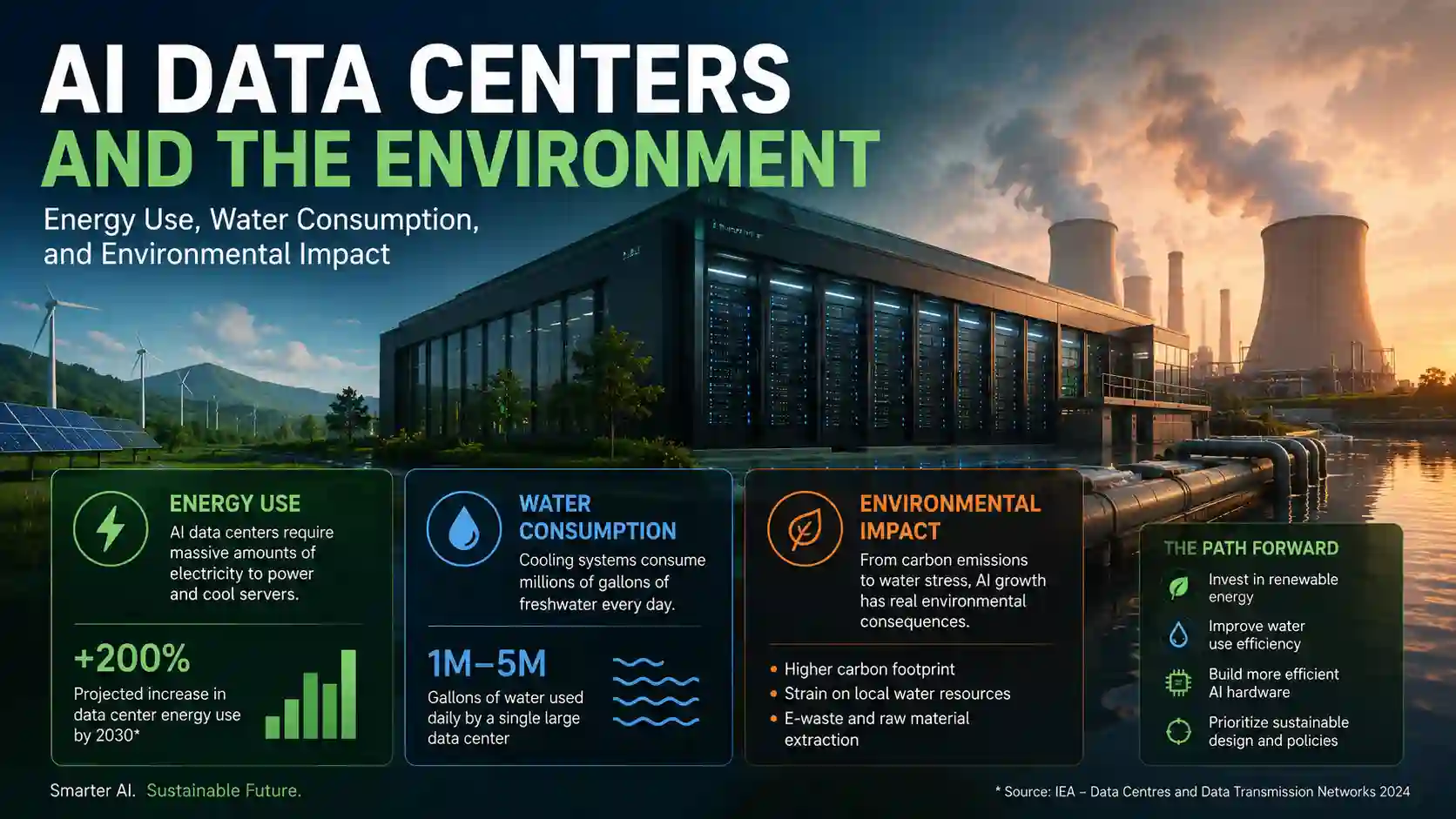
These compute-hungry mitigations are not free: extended reasoning and retrieval pipelines both increase the energy and hardware demand behind every query, a tradeoff explored in our broader look at AI data centers and the environment. Institutions weighing whether to invest in retrieval-grounded tools versus general-purpose chat access are effectively weighing accuracy against both direct product cost and this indirect infrastructure cost.
Editing an AI-Assisted Draft? Don’t Skip the Fact Pass
Given how consistently the research above shows AI drafts needing verification, especially citations, statistics, and quotes, treat every AI-generated first draft as a first draft, not a final one. WriteHuman can help smooth the prose of an AI-assisted draft into natural, readable writing once you’ve verified the underlying facts and citations yourself, and where your course or workplace policy permits AI-assisted editing.
A Practical Verification Checklist
Before you trust a citation
- Search the exact title in Google Scholar, PubMed, or the relevant database, not just the author name
- Check that the DOI resolves to the actual claimed article, not just any article
- Verify page numbers, volume, and issue independently; these are among the most commonly altered fields
Before you trust a legal cite
- Pull the case directly from a court database or a paid legal research platform
- Confirm the case actually supports the proposition it’s cited for, not just that the case exists
- Treat specialized legal AI tools as a starting point, not a final answer; published hallucination rates for these tools still run 17% or higher
Before you trust a factual claim
- Prefer answers generated with web search or retrieval enabled over answers from memory alone
- Cross-check any specific date, statistic, or quote against a primary source
- Be more skeptical on niche or under-documented topics, where fabrication rates are consistently higher across every domain studied
Before you trust generated code
- Confirm every imported package actually exists in the official package registry before installing it
- Be especially cautious with less common libraries and open-source model output, where hallucination rates are highest
- Run the code in a sandboxed environment before trusting it against production systems
Frequently Asked Questions
What percentage of the time does ChatGPT hallucinate?
It depends entirely on the task. On grounded summarization benchmarks like Vectara’s leaderboard, recent GPT models hallucinate roughly 1.5% to 10% of the time. On open factual recall without web search, OpenAI’s own system card reported a 47% hallucination rate for GPT-5 on SimpleQA. In specialized domains like law, published rates run as high as 88%. There is no single accurate number without a task label attached.
Has ChatGPT’s hallucination rate improved over time?
On narrow, grounded tasks, yes. Vectara’s leaderboard shows rates falling from roughly 3% for early GPT-4 to under 2% for GPT-4o and GPT-4.1. On open-ended recall without retrieval, the picture is murkier, and several 2026 flagship models score worse on broad factuality indexes than earlier or smaller models, largely because they answer more confidently instead of abstaining when uncertain.
Why does ChatGPT invent fake citations and sources?
OpenAI’s own published research on the causes of hallucination argues that language models are trained and graded in ways that reward confident guessing over honest uncertainty, similar to a multiple-choice test that scores blank answers the same as wrong ones. A model that always attempts an answer tends to score better on many benchmarks than one that abstains, even though the guessing model produces measurably more fabrications.
How often does ChatGPT fabricate academic or legal citations specifically?
Peer-reviewed studies of bibliographic citations found GPT-3.5 fabricating roughly 55% of citations across multidisciplinary tests, falling to about 18% for GPT-4, with a pooled fabrication rate around 51% across six studies. In law, Stanford RegLab researchers found general-purpose LLM hallucination rates of 69% to 88% on specific legal queries, and even specialized RAG-based legal research tools hallucinated in 17% to 33% of tested queries.
Is a hallucination the same thing as an AI-detector false positive?
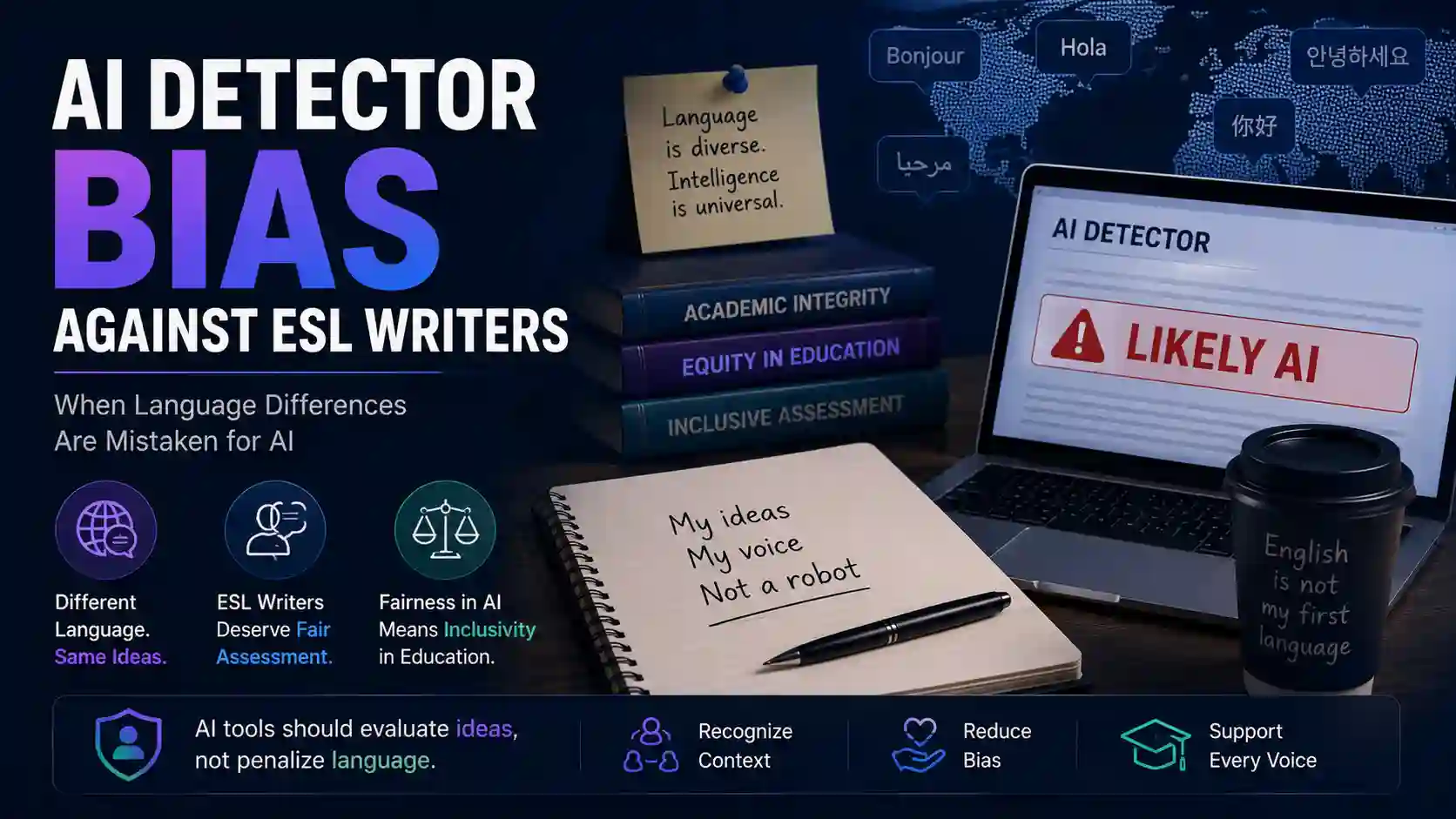
No, they are opposite failure modes. A hallucination is AI-generated content that is confidently fabricated or wrong. A false positive is an AI-detection tool incorrectly flagging genuine human writing as AI-generated. Both stem from automated systems producing confident-sounding output that isn’t fully reliable; for the second problem specifically, see our tracker of AI detection false positives and every published number.
Which AI model hallucinates the least in 2026?
It depends on the benchmark. On Vectara’s grounded summarization leaderboard, lightweight models like Gemini 2.5 Flash-Lite and GPT-5.4 nano post some of the lowest rates, in the 3% range, while several reasoning-heavy flagship models score above 10% on the same test. On broader factuality indexes like AA-Omniscience, the rankings shift again. No single model leads every published benchmark simultaneously.
Does web search or browsing reduce hallucination?
Substantially. OpenAI’s own reported numbers for GPT-5.5 show SimpleQA hallucination dropping from 47% without web access to 9.6% with it enabled, a pattern consistent with the broader finding that grounding a model’s output in retrievable sources is the single most effective mitigation measured across every domain in this article.
Research Sources and Further Reading
This page prioritizes primary sources, vendor system cards, peer-reviewed papers, and named benchmark leaderboards, and labels secondary aggregator sources where a primary figure was not directly available. All links open in a new tab so you can verify any number directly.
View all sources and benchmark links
- OpenAI: Why Language Models Hallucinate
- OpenAI: Introducing GPT-4
- GPT-4 Technical Report (OpenAI)
- GPT-4 Technical Report, full text (arXiv)
- Vectara: Next Generation Hallucination Leaderboard
- HalluLens: LLM Hallucination Benchmark (Meta)
- FaithBench: A Diverse Hallucination Benchmark for Summarization
- Stanford Law: Hallucinating Law (RegLab)
- LawSites: Stanford Legal AI Tools Hallucination Study
- Legal Dive: Legal GenAI Tools Mislead 17% of the Time
- Detecting and Correcting Reference Hallucinations in Commercial LLMs
- Fabrication and Errors in Bibliographic Citations Generated by ChatGPT
- High Rates of Fabricated and Inaccurate References in ChatGPT-Generated Medical Content
- ChatGPT and Artificial Hallucinations in Stem Cell Research
- JMIR: Hallucination Rates and Reference Accuracy of ChatGPT and Bard
- Learning to Fake It: Fabricated References Provided by ChatGPT for Medical Questions
- Nature: ChatGPT — These Are Not Hallucinations, They’re Fabrications
- StudyFinds: ChatGPT’s Hallucination Problem, GPT-4o Reference Study
- Medscape: AI Chatbots Vary Widely on Fake Medical References
- The Limbic: ChatGPT and Rivals Prone to Dangerous Medical Hallucinations (Mount Sinai)
- ASIS: With AI News Summaries, Verify Then Trust (EBU/BBC Study)
- CBC: Top AI Assistants Misrepresent News Content, Study Finds
- Al Jazeera: AI Models Misrepresent News Events Nearly Half the Time
- Statista: Chatbot Accuracy 2025, Rate of Inaccurate Responses
- AI Use in American Newspapers Is Widespread, Uneven, and Rarely Disclosed
- USENIX Security 2025: Package Hallucinations by Code Generating LLMs
- We Have a Package for You! Package Hallucination Analysis (arXiv)
- InfoWorld: LLMs Hallucinating Non-Existent Developer Packages
- AIMon: The Un-Leaderboard — Self-Reported Hallucination Rates
- SuprMind: Latest AI Hallucination Rates and Benchmarks (2026)
- GPT vs Claude vs Gemini Hallucination Rates — 2026 Benchmark Data
- AgentBreaking: GPT-5.5 Deep Dive, Benchmarks and the 86% Hallucination Problem
- Digital Applied: AI Hallucination Rate Benchmarks 2026 Study
- Mayhem Code: Vectara Hallucination Leaderboard Comparison