GoLogin vs Incogniton: Which Anti-Detect Browser Wins in 2026?
By JoshWP Team | Published: September 2, 2026 | ~18 min read
We put GoLogin and Incogniton through the same independent stealth checkers, priced out their free and paid tiers, and compared proxies, automation and platforms — so you know exactly which one fits your workflow and budget.
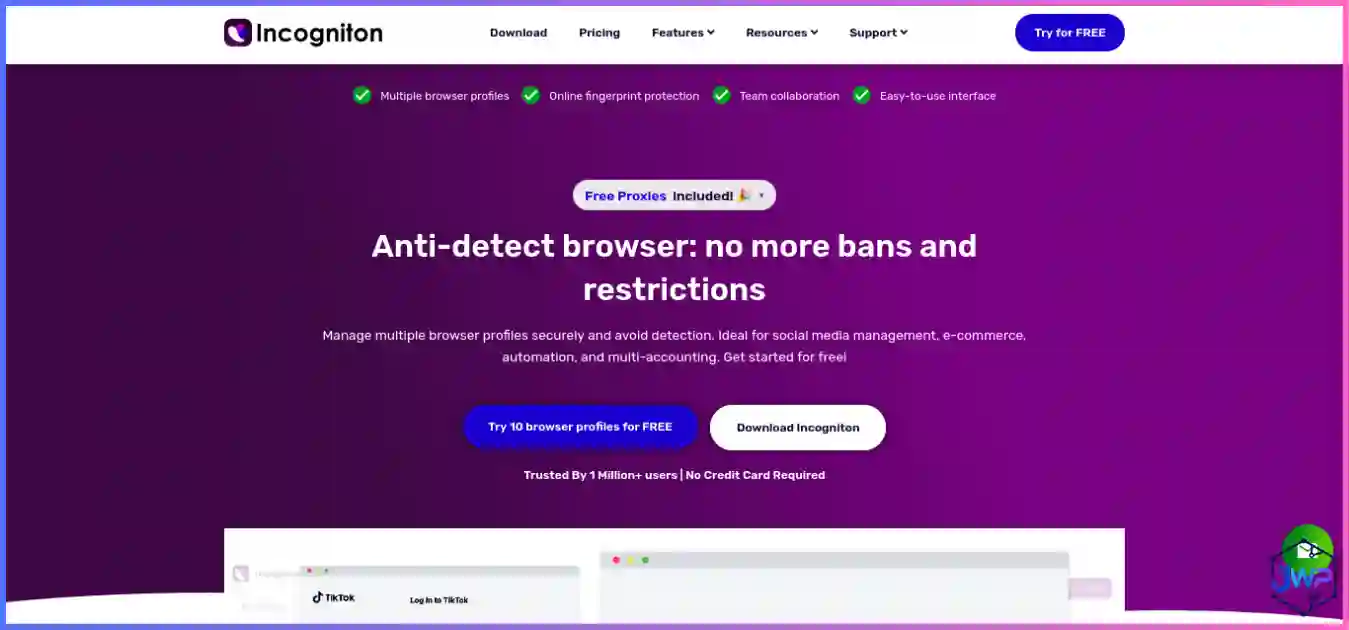
GoLogin and Incogniton sit at opposite ends of the budget anti-detect browser conversation. Incogniton is famous for the biggest free headroom in the category — 10 profiles to start, then 3 free forever. GoLogin is famous for being the cheapest tool whose default fingerprints pass every independent stealth checker we throw at them. So when readers ask us GoLogin vs Incogniton — which one should I actually use?, the honest answer is: it depends on whether you are optimizing for free learning headroom or for fingerprints that survive real platform checks.
In this head-to-head we compare both tools across ten categories using independent 2026 stealth-test data (Pixelscan, Iphey, CreepJS), verified August 2026 pricing, and hands-on workflow evaluation. If you are new to the category, skim what is an anti-detect browser first — then come back and pick your tool.
Incogniton vs GoLogin: The Short Answer
For most users, GoLogin wins. It is cheaper as a paid plan ($4.50/mo annual vs $13.99), passes all three independent stealth checkers on default settings (Incogniton passes zero out of the box), bundles residential proxy traffic, runs on Linux, and ships the only native Android app in the category.
Incogniton wins one specific job: the $0 classroom. Its 10 free profiles (then 3 forever) give beginners the biggest sandbox in the category to learn browser profile isolation, proxy pairing and cookie handling without spending a cent.
Rule of thumb: learn on Incogniton’s free tier if your budget is literally zero; run anything valuable on GoLogin. The moment an account carries ad spend, inventory or payout history, stealth quality matters more than free headroom — and that is exactly where Incogniton’s defaults fail. See our best anti-detect browsers guide for the full five-tool ranking.
Get GoLogin — 3 Free Profiles Get Incogniton — 10 Free Profiles
GoLogin vs Incogniton: At-a-Glance Comparison
| Category | GoLogin | Incogniton | Winner |
|---|---|---|---|
| Independent stealth (3 checkers) | 3/3 clean on defaults | 0/3 defaults; 1/3 after heavy tuning | GoLogin |
| Free plan headroom | 3 profiles | 10 profiles (2 months) | Incogniton |
| Free plan quality & permanence | 3 profiles forever, 3/3 stealth | Drops to 3; weak defaults | GoLogin |
| Entry paid price | $4.50/mo annual ($9 monthly) | $13.99/mo (6-mo billing) | GoLogin |
| Cost per profile (entry) | $0.45 | $1.40 | GoLogin |
| Bundled proxy traffic | 2 GB residential + free DC IPs | None | GoLogin |
| Platforms | Win, macOS, Linux + Android app | Win, macOS only | GoLogin |
| Automation API access | From Professional tier | Entrepreneur tier only | GoLogin |
| Beginner learning sandbox | 3 profiles | 10 profiles to practice on | Incogniton |
| Unique safety tools | Cloud Browser / Cloud Android | Deleted-profile recovery, human-like typing | Split |
Ten categories judged. GoLogin takes seven outright, Incogniton takes two (free headroom and learning sandbox), one is split. Pricing verified August 2026.
Meet the Contenders
GoLogin
Runs its own Chromium fork (Orbita) with coherent, real-hardware-style fingerprints. Native clients for Windows, macOS, Linux and Android; Cloud Browser and Cloud Android products on higher tiers; REST API, Selenium/Puppeteer guides and a Browser MCP for AI agents. Full details in our GoLogin review.
Incogniton
A Chromium-based anti-detect browser from a European team, positioned at beginners and budget users. Fingerprint randomization, synchronizer, bulk creation, cookie management, human-like paste typing and deleted-profile recovery. Windows and macOS only. Full details in our Incogniton review.
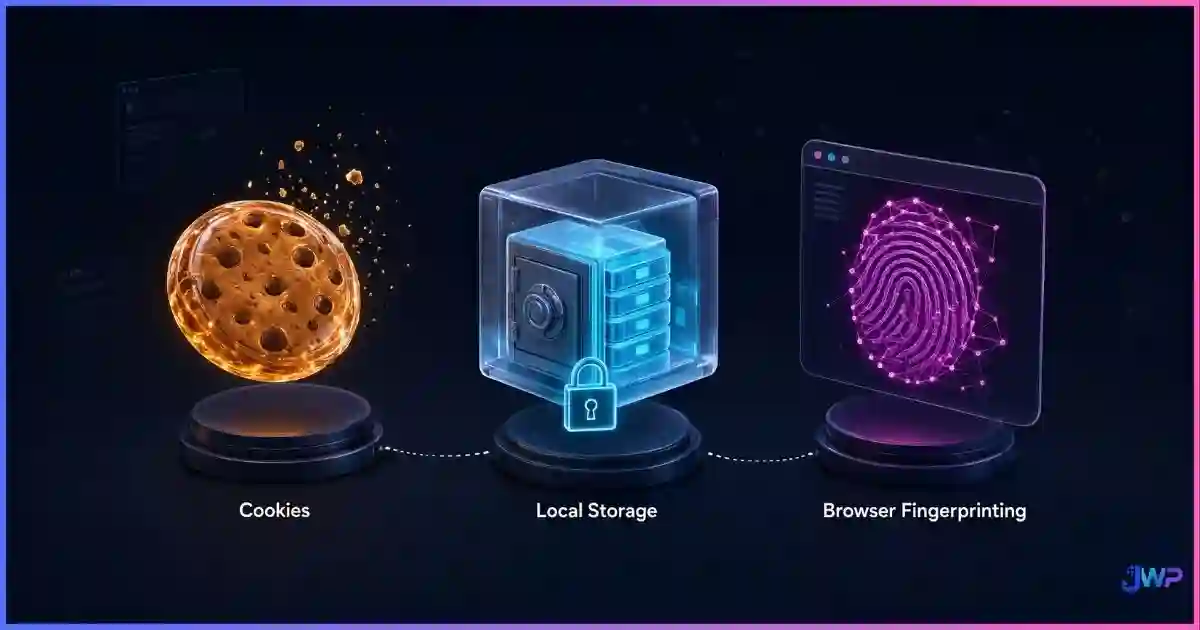
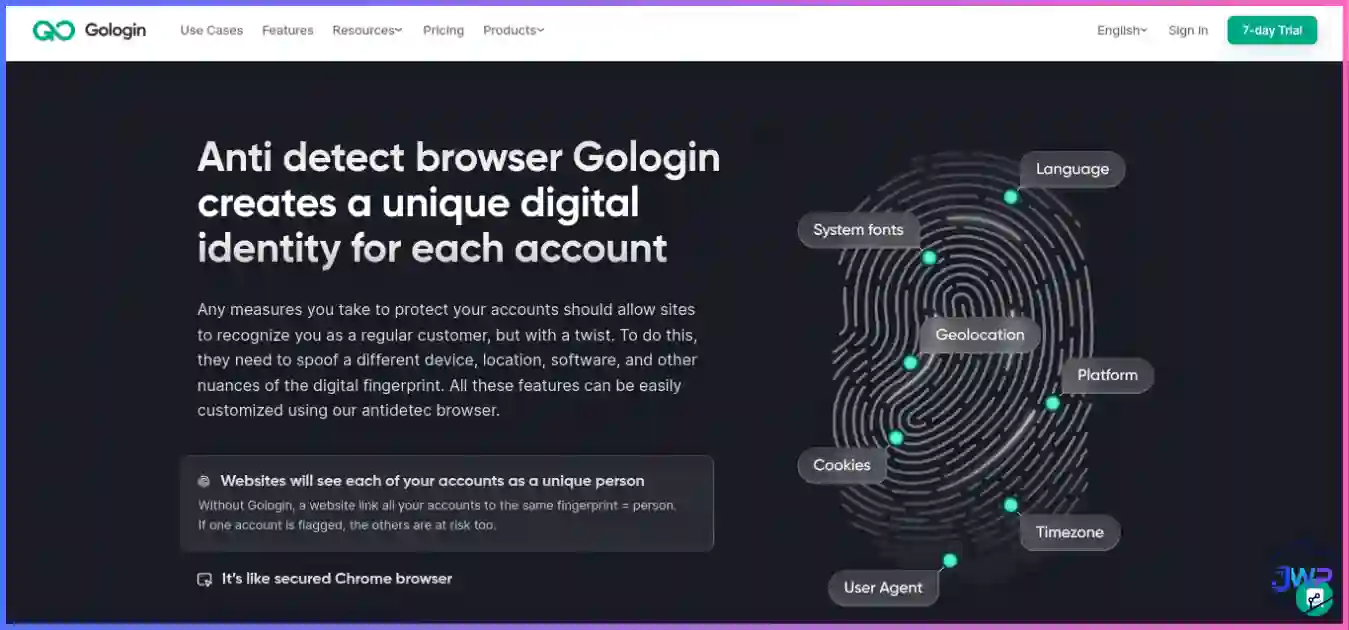
Both tools solve the same core problem: websites combine dozens of signals into a browser fingerprint that links your accounts even after you clear cookies or change IPs. Both create isolated profiles to break that link. The difference is how reliably each one spoofs those signals out of the box — and that single difference drives almost every verdict below.
Free Plans Face-Off: 10 Profiles vs 3 Profiles
On paper, Incogniton’s free plan looks unbeatable: 10 browser profiles for your first two months, then 3 profiles free forever, no credit card. GoLogin’s free tier is smaller — 3 profiles, no time limit, no card. But free plans have two dimensions: headroom and quality.
- Headroom: Incogniton wins. Ten profiles is the biggest practice sandbox in the category — perfect for learning proxy pairing, cookie swaps and warm-up routines.
- Quality: GoLogin wins. Its 3 free profiles pass Pixelscan, Iphey and CreepJS on defaults. Incogniton’s 10 free profiles fail strict checkers out of the box, so anything valuable you run on them is at risk regardless of profile count.
- Permanence: GoLogin’s 3 never expire. Incogniton’s 10 shrink to 3 after 60 days — at which point both tools offer the same count, but only one offers clean stealth.
Pricing Face-Off: GoLogin Is Cheaper at Every Level
Once you pay, the comparison stops being close. GoLogin’s Professional tier costs $9/mo monthly or $4.50/mo billed annually for 10 profiles plus 2 GB of residential proxy traffic. Incogniton’s Starter Plus costs $13.99/mo on 6-month billing ($19.99 monthly) for 10 profiles — with no automation API and no bundled proxies. That makes GoLogin roughly 3× cheaper at entry while including more.
Entry paid price, best-case $/month (lower = cheaper)
GoLogin annual billing vs Incogniton 6-month billing. Monthly billing widens the gap further ($9 vs $19.99).
Cost per profile at entry tier (lower = better)
Entry subscription ÷ profiles included. GoLogin’s $0.45 also includes 2 GB of residential proxy traffic; Incogniton’s $1.40 includes none.
| Tier | GoLogin | Incogniton |
|---|---|---|
| Free | 3 profiles forever, no card | 10 profiles (2 months) → 3 forever |
| Entry paid | $9/mo or $4.50 annual — 10 profiles, 2 GB proxy traffic, API 300 req/min | $13.99/mo (6-mo) or $19.99 monthly — 10 profiles, no API |
| Mid tier | Business ~$49–59/mo — 100 profiles, team seats | Entrepreneur ~$21–30/mo — 50 profiles + API |
| Top tier | Enterprise ~$149–299/mo — 1,000 profiles, cloud launches | Professional/Business — 200–1,000+ profiles |
| Best discount | ~50% annual | Up to 40% yearly |
For the wider budget landscape, see our cheapest anti-detect browsers guide — GoLogin ranks #1 for value there too, while Incogniton’s crown is strictly the free plan.
Stealth & Fingerprint Quality: The Category That Decides Everything
Independent 2026 testing ran fresh default profiles from both tools, each behind a clean residential proxy, through three respected checkers: Pixelscan (fingerprint + proxy consistency), Iphey (does it read as a natural device?) and CreepJS (adversarial spoofing detection). The gap between the two tools is the widest we have measured in this category.
Out-of-the-box stealth: checks passed (of 3)
Incogniton recovered Pixelscan only after heavy manual tuning; Iphey kept flagging the browser. GoLogin passed all three on defaults.
Multi-dimensional comparison (editorial /10)
Incogniton’s only spike is free-plan headroom; GoLogin leads every other axis.
Why does Incogniton fail? CreepJS traced the root causes on default profiles: a Safari-style WebGL string served on a Chrome user-agent, a 2011 Intel HD 3000 GPU spoofed onto an Apple-silicon Mac, a dual-core CPU claim, and a non-frozen macOS user-agent version. These are exactly the kinds of inconsistencies that let platforms link accounts — the failure mode websites use to detect anti-detect browsers. GoLogin’s Orbita engine instead substitutes coherent, real-hardware-style values, which is why it reads clean on all three checkers.
Test both free tiers this week — then keep the one that passes.
Both tools are free to start. Create the same profile on each, bind the same proxy type, run the same checker, and let the data make your decision.
GoLogin — 3 Free Profiles Incogniton — 10 Free ProfilesProfiles, Platforms & Team Tools
- Profile model: Both tools create isolated Chromium containers with separate cookies, cache and storage — proper profile isolation either way. Incogniton adds deleted-profile recovery (a genuinely useful safety net); GoLogin adds folders, tags and cloud sync on paid plans.
- Platforms: GoLogin runs on Windows, macOS, Linux and Android (native app — the only one in the category). Incogniton is Windows and macOS only. If any of your team is on Linux or needs mobile access, the decision makes itself.
- Scale ceiling: GoLogin’s Enterprise tier handles 1,000+ profiles with cloud launches; Incogniton tops out around 1,000 on Business tiers and feels less engineered for four-figure fleets.
- Team features: Both support sharing on paid tiers; GoLogin’s seat and permission model is more mature for agencies.
Proxy Support: GoLogin Bundles, Incogniton Doesn’t
Both tools support HTTP, HTTPS and SOCKS5 with sticky one-profile-one-IP binding — the correct model for multi-account work. The difference is what comes included: GoLogin ships free datacenter IPs from five locations on every plan plus 2 GB of residential traffic on Professional; Incogniton includes nothing, so its advertised price is never the full price.
On either tool, serious work needs clean residential (or mobile) IPs from a reputable proxy provider, with timezone and locale matched to the proxy region. Remember that a new IP alone changes nothing about your fingerprint — see why changing your IP doesn’t change your browser fingerprint — which is precisely why the fingerprint layer (where GoLogin leads) matters as much as the IP layer.
Automation & API: Earlier Access on GoLogin
GoLogin exposes a REST API (300–1,200 req/min on paid plans), official Selenium and Puppeteer guides, and a Browser MCP for AI-agent control, starting from the Professional tier. Incogniton supports Selenium, Puppeteer and Playwright via a local API with Python/TypeScript SDKs — but only from the Entrepreneur tier (~$21–30/mo), so automation is gated one pricing level deeper.
Both include a profile synchronizer for mirroring actions across open profiles, and Incogniton’s human-like paste typing is a nice touch for form-heavy workflows. But if automation is central to your operation at budget prices, GoLogin unlocks it sooner; if your automation needs are heavy enough to demand the deepest tooling, also compare our GoLogin vs AdsPower matchup, since AdsPower’s built-in RPA changes that calculus.
Usability & Performance
Both dashboards are approachable: profile list on the left, launch button, visual fingerprint editor. Incogniton’s interface feels a generation older but the mental model is simple; GoLogin’s customizable dashboard is cleaner and more modern. Performance is a near tie — both run local Chromium engines with 1–2 second cold launches on current hardware, and both handle dozens of concurrent profiles comfortably on 16 GB machines.
The usability gap that actually matters is tuning time. GoLogin’s guided defaults produce clean fingerprints without effort; Incogniton demands manual parameter fixing and re-testing before production use. Your hourly rate is a cost too — and it is a cost Incogniton quietly charges.
Security & Privacy Considerations
- Local-first storage: Both store profiles locally by default; cloud sync is optional and paid on both.
- Leak handling: GoLogin showed no WebRTC leakage in testing. Incogniton’s WebRTC controls exist but its overall package leaked coherence issues elsewhere — configure it explicitly.
- Real risk profile: With either vendor, the bigger risk is your own configuration, not the company. Weak defaults (Incogniton) simply raise that risk by default.
- Legality: Both are legitimate infrastructure for ads, QA, research and privacy workflows; how you use them is what matters. Read are anti-detect browsers safe and legal? before deploying at scale.
Who Should Pick Which?
Choose GoLogin if…
- You run accounts with any real value (ads, stores, payouts).
- You want clean stealth without manual tuning.
- You need Linux or a native Android app.
- You want bundled proxy traffic to cut total costs.
- You plan to scale past ~100 profiles or add teammates.
- You want the cheapest paid entry with 3/3 stealth.
Choose Incogniton if…
- Your budget is literally $0 and you want to learn.
- You need 10 practice profiles for airdrops or referrals.
- Your targets fingerprint lightly (classifieds, small platforms).
- You value deleted-profile recovery and human-like typing.
- You accept manual tuning and checker-gated deployment.
- You’ll graduate to a stealthier tool once accounts matter.
GoLogin vs Incogniton: Frequently Asked Questions
Is GoLogin better than Incogniton?
Is Incogniton better than GoLogin for beginners?
Which is cheaper, GoLogin or Incogniton?
Can websites detect Incogniton more easily than GoLogin?
Do GoLogin and Incogniton include proxies?
Does either tool work on Linux or mobile?
Which has the better free plan?
Can I switch from Incogniton to GoLogin easily?
GoLogin vs Incogniton: Final Verdict
Across ten judged categories, GoLogin wins seven — stealth, free-plan quality, entry price, cost per profile, bundled proxies, platforms and automation access — while Incogniton wins two (free headroom and learning sandbox), with one split. That scoreboard tells the whole story: Incogniton is the best $0 classroom in the anti-detect category, and GoLogin is the best value everywhere money actually changes hands.
The practical recommendation we give every reader: if your budget is zero and your accounts are disposable (airdrops, referrals, learning), claim Incogniton’s 10 free profiles and learn the craft. The moment an account carries ad spend, inventory, clients or payout history, move it to GoLogin — its $4.50/mo annual entry is cheaper than one banned account, and its defaults pass the checks Incogniton fails.
| Tool | Best For | Rating | Get Started |
|---|---|---|---|
| GoLogin | Best overall value, cleanest defaults, cheapest paid stealth | 4.9 / 5.0 | Try Free |
| Incogniton | $0 beginners, airdrops, learning sandbox | 4.2 / 5.0 | Try Free |
Disclosure: This comparison contains affiliate links. If you purchase through them, we may earn a commission at no extra cost to you. Rankings reflect independent stealth-test data and vendor documentation verified in August 2026 — confirm current pricing on vendor sites before committing, especially annual billing.
Sources & Research Notes
View sources and research notes
All vendor pricing and plan limits were verified against official pricing pages in August 2026 and change quickly. Stealth results come from independent 2026 testing; editorial scores are our own judgments, not laboratory benchmarks.
- Independent stealth testing (Pixelscan / Iphey / CreepJS): ScrapingBee, “10 Best Antidetect Browsers in 2026 (Tested + Free Picks)” — GoLogin 3/3 clean pass on defaults; Incogniton default failures (masking detected, timezone spoofed, Safari WebGL on Chrome UA, 2011 Intel HD 3000 GPU on Apple silicon, non-frozen macOS UA) with partial recovery only after heavy tuning.
- GoLogin pricing: gologin.com/pricing & support.gologin.com — free 3 profiles forever; Professional $9/mo ($4.50 annual) with 10 profiles and 2 GB proxy traffic; Business ~$49–59/mo (100 profiles); Enterprise ~$149–299/mo (1,000 profiles); free datacenter IPs from five locations; API 300–1,200 req/min; native Android app.
- Incogniton pricing: incogniton.com/pricing — free 10 profiles for 2 months then 3 forever; Starter Plus $13.99/mo on 6-month billing ($19.99 monthly) for 10 profiles; Entrepreneur ~$21–30/mo for 50 profiles + API; yearly discounts up to 40%; Windows/macOS only.
- Feature cross-checks: AIMultiple, “Ranked the 12 Best Antidetect Browsers in 2026” — OS support, free plans, automation gating and proxy policies for both tools.
- Fingerprinting statistics: Eckersley & Englehardt, “How Unique Is Your Web Browser?” (EFF Panopticlick lineage) — ~18.1 bits of entropy, 1-in-286,777 uniqueness; arXiv measurement study (2021) — ~10% of Alexa top 100k sites load fingerprinting scripts; Texas A&M University Engineering research (June 2025) on covert fingerprinting.